Valencia food guide 2026: what locals actually eat
Forget what tourist menus told you. Here is what your Valencian neighbors will be eating this Sunday, what it costs in 2026, and where to go without paying the photo-menu tax.
The guide we wish we had had on day one
Valencia eats on its own clock. Lunch is the main meal, dinner is light, and the social glue is a small glass of something between meals. This guide is built for the first six months: where to find the real version of a dish you have only heard about, what to order so you do not get the tourist menu, and what it actually costs in 2026.
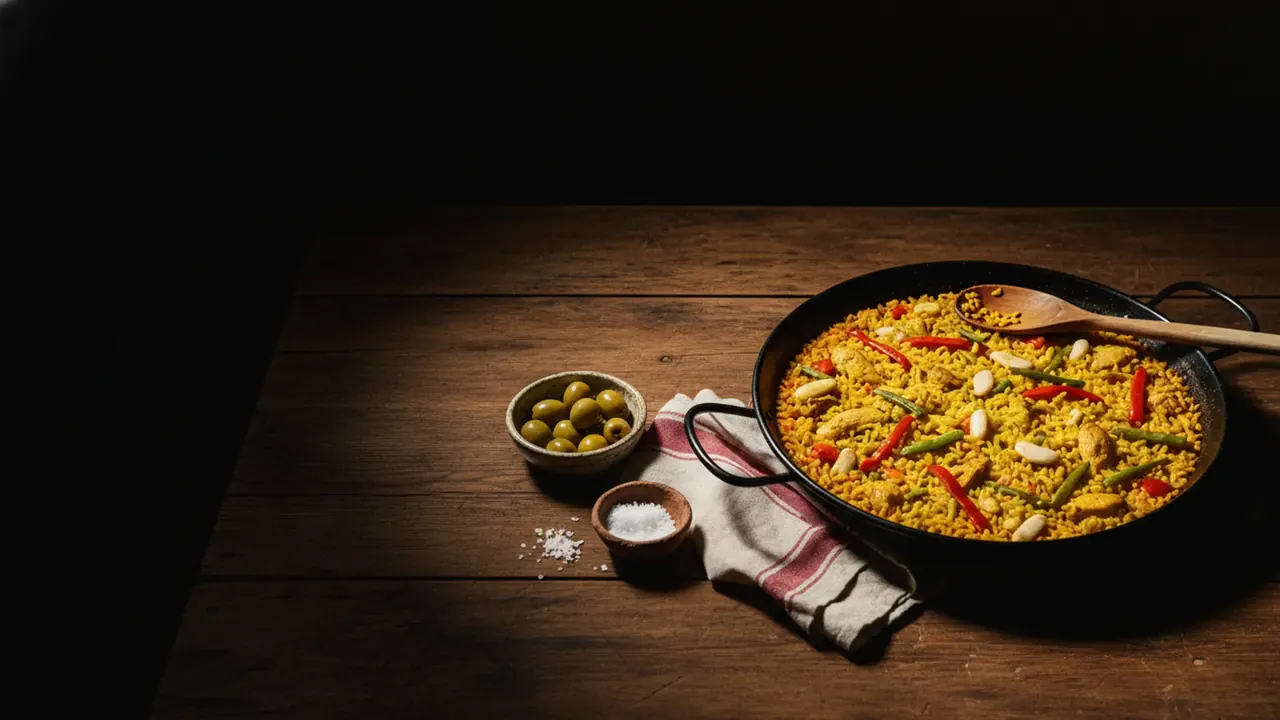
It is lunch food, not dinner. Eating paella for dinner is a tourist tell; locals sit down for it between 14h and 15h30, and Sunday is the sacred slot. The orthodox, protected recipe uses bomba or senia rice, chicken, rabbit, garrofo beans, bajoqueta (flat green beans), tomato, paprika and saffron, with snails when in season. No seafood (that is paella de marisco, a separate dish). No chorizo (adding it is treated as a culinary crime here, and the locals are not joking). Expect EUR 18-28 per person for the rice itself at a reputable spot in 2026; with starters, wine and dessert a full meal reaches EUR 40-50 a head.
arrow_rightCasa Carmela, Malvarrosa, wood-fired paella since 1922, book weeks ahead
arrow_rightBon Aire, El Palmar, in the Albufera where the rice is actually grown
arrow_rightRestaurante Levante, Benisano, often cited as the textbook version
arrow_rightEl Raco de la Paella, Campanar, one of the few in-city spots still cooking over a wood fire (lena)
restaurant_menu
Beyond paella: the other Valencian classics
Rice is the headline, but the region eats far wider than one pan. Learn these four and you order like someone who has been here a while rather than a first-week visitor.
arrow_rightFideua, paella's short-noodle cousin from nearby Gandia, cooked with monkfish, squid and shrimp
arrow_rightArros a banda, a fishermen's dish from Alicante: fish broth, rice and shrimp, with the fish served separately under alioli
arrow_rightAll i pebre, a soul-warming Albufera stew of eel and potato in garlic, paprika and almonds
arrow_rightEsgarraet, the classic tapa of salted cod strips and roasted red peppers in good olive oil
breakfast_dining
Esmorzaret, the working breakfast you will fall in love with
A 9h-11h ritual. A baguette sandwich loaded with sobrasada and cheese, blood sausage and egg, or peppers and tuna. Comes with olives, peanuts, a black coffee, and traditionally a small shot of cazalla (anise spirit). Friday is the unofficial esmorzaret day. EUR 5-8 in 2026, drink included. Read our full esmorzaret guide for the classic bocadillos and where locals go.
arrow_rightBar Almudin, old town, queue for a stool at the bar
arrow_rightCasa Guillermo, El Cabanyal, anchovy specialists since 1950
storefront
The three markets that will change your shopping rhythm
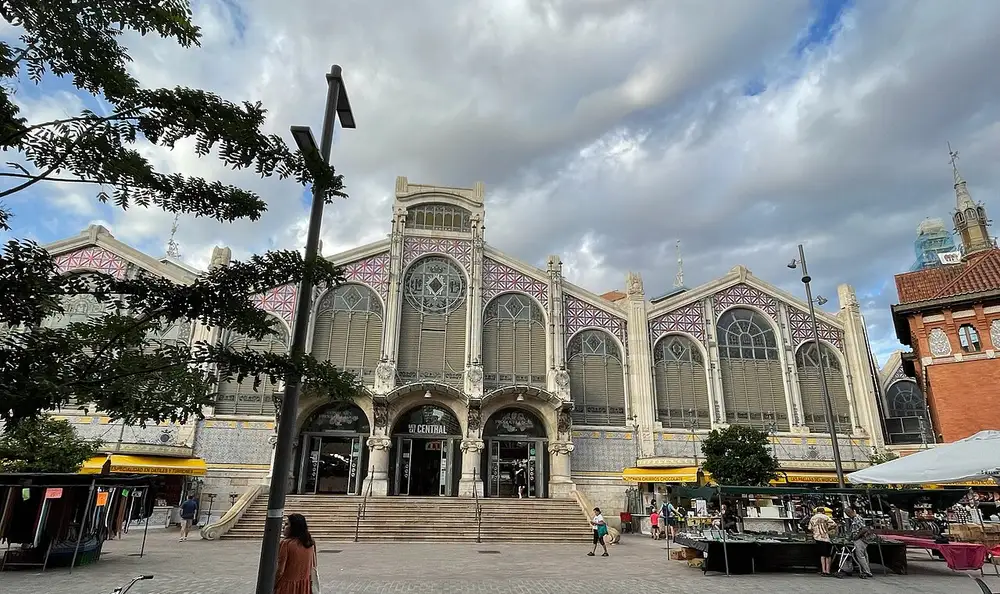
Mercado Central (1928, the biggest functioning Modernista market in Europe at over 8,000 square meters) is your fish-meat-produce HQ, mornings only Mon-Sat; grab tapas at Ricard Camarena's Central Bar inside. Mercado de Ruzafa is smaller and hipster-leaning, strong on cheese and wine. Mercado de Colon is now more brunch-and-drinks than groceries, gentrified but pretty. A market-fresh menu of fish, vegetables and bread for two lands around EUR 18-22 in 2026, against EUR 25-30 at Mercadona for the same quality. For opening hours, the Sunday Rastro flea market and how the queue works, see our complete Valencia markets guide.
arrow_rightMercado Central: arrive before 11h for the best fish
arrow_rightMercado de Ruzafa: weekday lunches at the bar stalls are excellent
arrow_rightMercado de Colon: brunch and aperitif territory, not the weekly shop
Mercado Central's facade on the Plaza del Mercado, 2023.
You will not find Basque-style pintxo bars on every corner. Valencia tapas means sit-down small plates, ordered round by round, with a beer or vermut while you wait. A solid order in 2026: patatas bravas (EUR 4-5), calamares a la romana (EUR 8-10), croquetas de jamón (EUR 6-8), ensaladilla rusa (EUR 5-7), bombas (EUR 6).
arrow_rightSant Jaume, Plaza Mercado, terrace built for people-watching
arrow_rightBodega Casa Montana, El Cabanyal, since 1836, the institution
arrow_rightLa Pilareta, classic clochinas mussels in season (May to August)
local_drink
Horchata and fartons
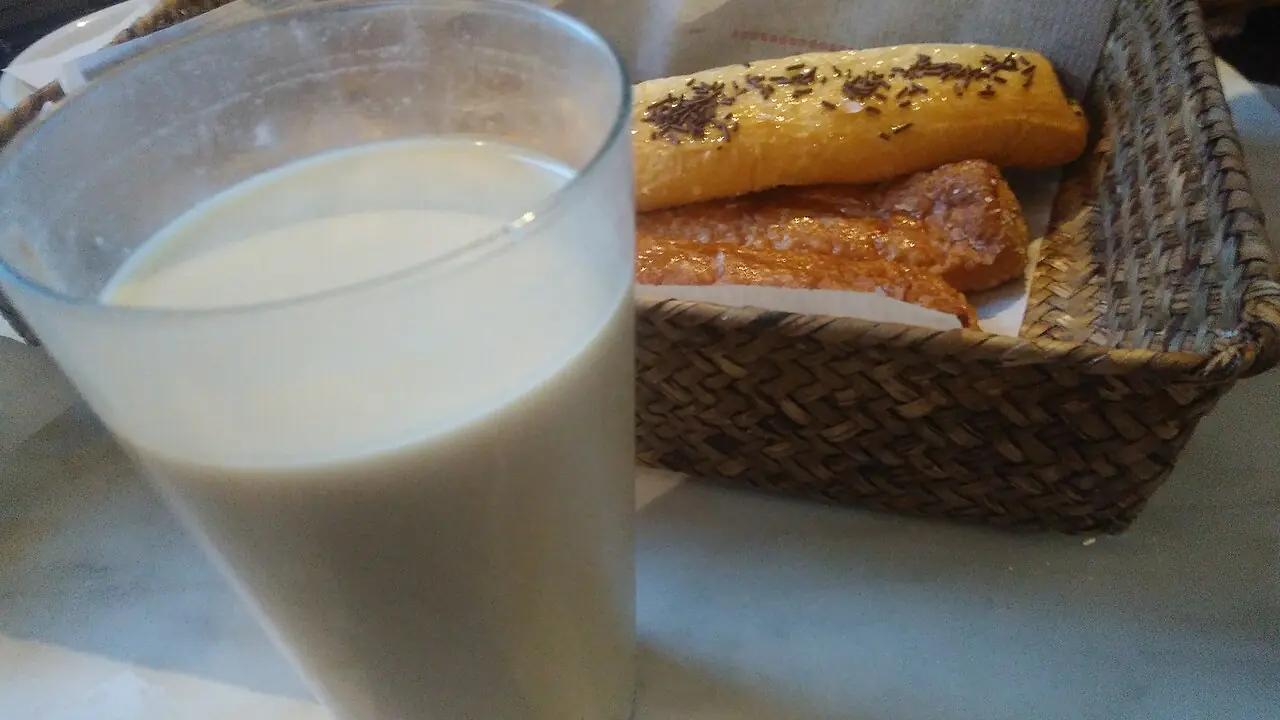
The Valencian summer cooler. Made from chufa (tiger nut), grown only in L'Horta around Alboraya. Drink it cold with fartons, the sugary finger pastries made for dipping. Daniel in Alboraya is the source pilgrimage. In the city, EUR 2.50-3.50 per glass plus fartons in 2026. Two more local rituals are worth knowing: the pre-lunch vermut, served on ice with an orange slice and an olive, and the region's wines, from Utiel-Requena's Bobal reds to the DO Valencia whites.
arrow_rightHorchateria Daniel, Alboraya, 25 minutes by metro line 3
arrow_rightHorchateria Santa Catalina, old town, the tourist-friendly classic
arrow_rightEl Siglo, Plaza Santa Catalina, neighborhood favorite
Horchata and fartons in Alboraya, where the chufa is grown.
The menu del dia is your friend: 3 courses, a drink and bread, weekday lunches, EUR 14-16 in 2026. Every neighborhood has one or two reliable spots. Avoid the ones around Plaza de la Reina with photo menus and English-only signage; you are paying double for half the quality.
arrow_rightGoya Gallery, near Mercado de Colon
arrow_rightYarza, classic menu del dia with regional rotation
Better than five years ago. The traditional bars will swap meat in tapas if you ask politely (croquetas de espinacas, patatas bravas, ensaladilla without the tuna). For dedicated places, Russafa and Eixample have the densest cluster.
arrow_rightMercadona has a credible plant-based range for everyday cooking
star
The fine dining and Michelin scene
Valencia is not only tascas and market stalls; the city holds 8 Michelin-starred restaurants as of 2026. Book weeks out and go at lunch, when the tasting menus land at their softest prices.
arrow_rightRicard Camarena, two stars, seasonal produce from local growers with precise, inventive textures
arrow_rightEl Poblet, two stars, Quique Dacosta's haute-cuisine take on Valencian cooking
arrow_rightLa Salita, one star, Begona Rodrigo's modern Valencian kitchen in a calm Ruzafa setting
tips_and_updates
Newcomer ground rules
A few habits that will save you money and embarrassment in your first months.
arrow_rightLunch is sacred 14h-16h; many kitchens close hard at 16h
arrow_rightTipping is light. Round up or leave 5-10 percent for a good meal. No percentage logic, less than France, the UK, or the US.
arrow_rightBread, water and bread basket are often charged a token EUR 1-2 per cover
arrow_rightSundays: paella for lunch, a long sobremesa, no plans afterwards
restaurant
Craving a taste of home instead of another paella?
Valencia restaurants cover the local classics well, but if you are missing your own country's food, a growing roster of private chefs will cook it in your own kitchen instead: Korean home cooking like bulgogi and kimchi jjigae, fresh Italian pasta and risotto, or a Spanish chef who teaches the real paella technique at your own table.
arrow_rightHands-on classes or full catering, your kitchen or a rented villa
arrow_rightPopular for birthdays, homesick cravings and small dinner parties
arrow_rightBook a few days ahead, most chefs work with 4 to 20 guests
Settling in past the menu del dia?
We help newcomers get the rest of the picture: visa, NIE, neighborhood, school, doctor. Write to us through the form and tell us about your move.