
Las Fallas
Valencia 2027
A 19-day festival that builds to a five-day climax of fire, art, explosions, flowers and processions, ending on the night the city burns its own monuments. Valencia's largest fiesta draws over 1.5 million visitors and is a UNESCO Intangible Cultural Heritage event. Here is what you need to know as an expat.
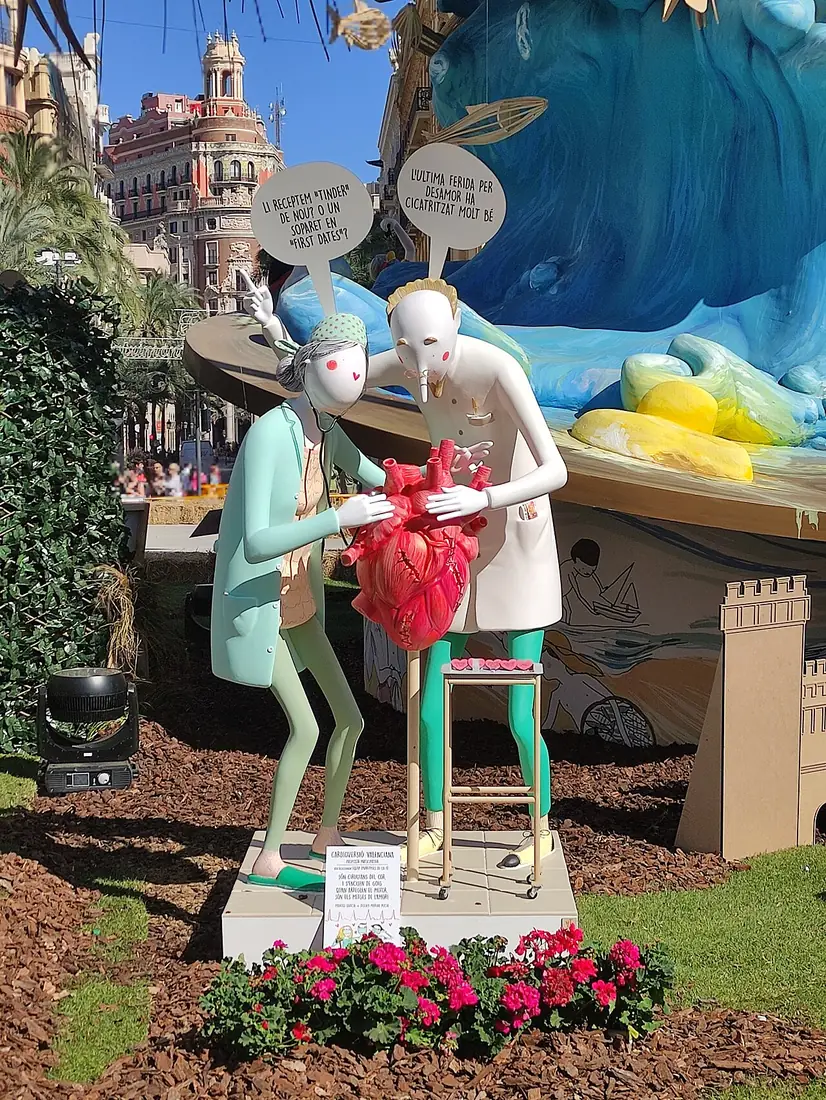
Key dates and events
From La Crida on February 28 to the final flames on March 19, 2027.
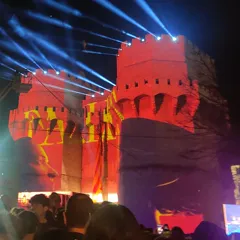
February 28, 2027
La Crida
The official opening ceremony of Las Fallas at the Torres de Serranos. From the medieval towers, the Fallera Major de València () and the Fallera Major Infantil address the city and make la Crida (), the call for the festival to begin. Fireworks follow. Arrive early - the square fills up fast.
Photo: Vicente Mocholi Grau, CC BY-SA 4.0
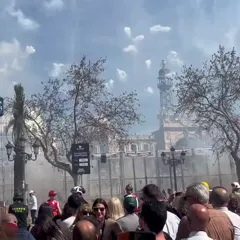
March 1-19
Daily Mascletàs
Every day at 2:00pm sharp in Plaça de l'Ajuntament (Plaza del Ayuntamiento). A mascletà () is not a fireworks show - it is a daytime barrage of gunpowder designed to be felt, not seen, and each one ends in the terratrèmol (), the earthquake of ground-level bangers. The ground shakes. Your chest vibrates. It is loud, chaotic, and utterly Valencian. Bring earplugs.
Hear a mascletà
Valencia mascletà, 7 March 2025, 6 minutes 34 seconds. Best through speakers or headphones, and turn the volume down first: the finale is very loud.
Audio: Robert.Crosley, Freesound, CC BY 4.0
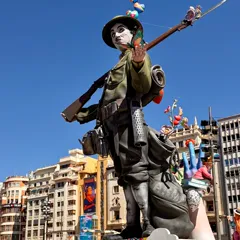
March 15 to 16
La Plantà
The Plantà () happens over two nights, when every falla commission, the neighbourhood association that runs its own casal faller (clubhouse), raises its monument in its own street or square. By the morning of March 15 the children's monuments (fallas infantiles) are standing. By 08:00 on March 16 the adult monuments (fallas mayores) are up too. Over 750 sculptures appear across the city, ranging from a few metres to towering 25-metre structures of wood, cardboard and papier-mâché, each crowded with satirical ninots.
March 17-18
La Ofrenda (l'Ofrena)
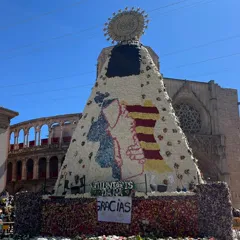
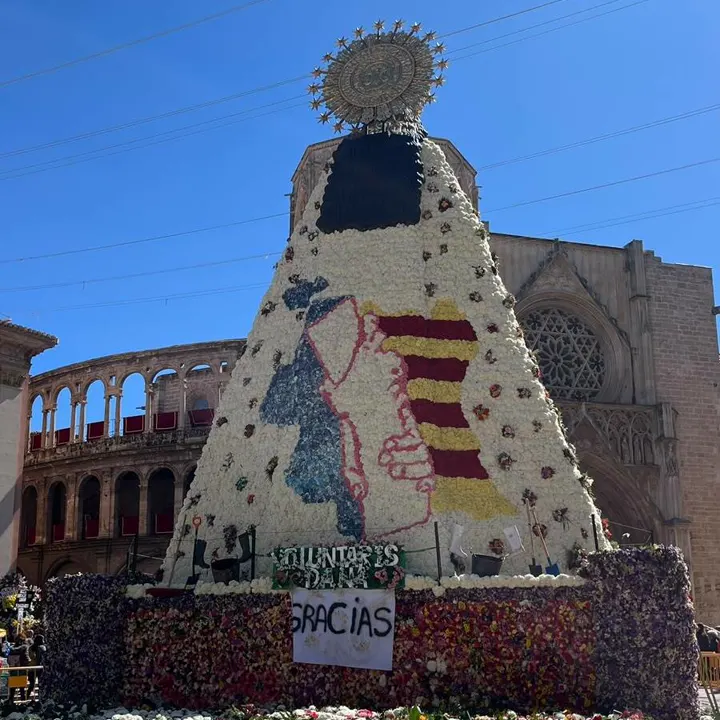
Tens of thousands of falleros and falleras in traditional dress walk in procession, commission by commission, to Plaza de la Virgen for the Ofrena de flors (), the flower offering to the Mare de Déu dels Desemparats (), Valencia's patron Virgin. Their bouquets are woven into her giant mantle on a wooden frame, with a design that changes every year. One of the most photogenic events of the festival.
March 18
Nit del Foc
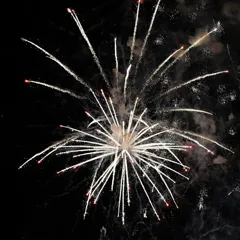
La Nit del Foc (), the Night of Fire: the biggest fireworks display of the festival, 30+ minutes launched from the old riverbed near Paseo de la Alameda. Hundreds of thousands of people line the Turia to watch. Get your spot by 10pm for the midnight display.
Photo: Rafa Esteve, CC BY-SA 4.0
March 19
La Cremà
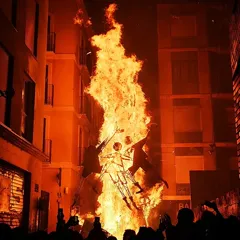
The Cremà (), the burning. Every falla in the city is set on fire in a single night, starting with the children's fallas at 10pm. The main fallas burn from midnight, and the municipal falla in Plaza del Ayuntamiento burns last, around 1am.
Only the ninot indultat () escapes: the adult and children's figures pardoned each year by public vote at the Exposició del Ninot go to the Museu Faller instead. Firefighters stand by, hosing down building facades. Months of work go up in flames in minutes.
Photo: Monoyamonobooks, CC BY-SA 4.0
Coming to Valencia just for Fallas?
This page explains what Fallas is and how the week unfolds. If you are travelling in specifically for the festival, our plan your Fallas trip guide covers where to stay, booking accommodation before hotels fill up and guided tours for the mascleta and La Crema.
And if the gunpowder is what draws you, read how the mascleta works and discover who orchestrates Nit del Foc to understand what all that noise and fire actually is. Curious what it all costs? Our real Fallas budget breakdown has the numbers. And if a week of Fallas leaves you wondering what living here year-round would be like, our Valencia relocation services cover the move from visa to keys.
Ready to plan the trip itself?
Where to stay for Las Fallas
Accommodation is the decision that shapes your whole Fallas trip. Get it right and the festival is magic. Get it wrong and you spend four sleepless nights resenting a firecracker. Here is how we would book it.
See the guideLas Fallas guided tours
Fallas is overwhelming your first time. Over 750 monuments, satirical detail you will miss without context, and crowds that make the best viewing spots a matter of knowing where to stand. A guide, or good local intel, turns chaos into the trip of a lifetime.
See the guideBest places to experience Fallas
Where to stand, when to arrive, and what to look for.
Plaza del Ayuntamiento
Daily mascletaes + final Crema
Arrive by 1:00pm for a good mascletae spot. For La Crema on March 19, get there by 10pm or you will not get close.
Torres de Serranos
La Crida opening ceremony
The medieval towers are stunning at night. Combine with a walk through El Carmen to see the neighbourhood fallas lit up.
Paseo de la Alameda
Nit del Foc fireworks
The old riverbed gives the best unobstructed views. Bring a blanket and arrive 2+ hours early. The Turia gardens on either side are also excellent.
Ruzafa
Neighbourhood fallas + street parties
Ruzafa has some of the most creative, artistic fallas. The neighbourhood bars stay open late and the atmosphere is electric.
Na Jordana / El Pilar
Award-winning fallas
The Na Jordana commission consistently produces prize-winning fallas. Worth a dedicated visit to study the craftsmanship and satirical detail.
Should you stay in Valencia for Fallas?
Five honest questions. We have lost count of the expats who said "I love festivals" in January and fled to Calpe by March 17. Take the quiz before you decide.
Mascletàs hit 120+ decibels at 2pm every day for 19 days. How does that sit with you?
Expat survival guide
Practical advice from expats who have been through Fallas.
Protect your ears
Mascletaes and firecrackers are genuinely loud - 120+ decibels. Bring foam earplugs or loop earplugs. This is especially important for children and pets. Many pharmacies sell them during Fallas.
Plan for your pets
Fallas is extremely stressful for dogs and cats due to constant firecrackers. Many expats leave the city with their pets or arrange a pet-sitter in a quieter town. If staying, keep windows closed and consider calming supplements from your vet.
Forget driving
Hundreds of streets are closed. Parking is nearly impossible. Metrovalencia runs extended evening service throughout Fallas and goes all-night on Nit del Foc (18-19 March) and the Cremà (19-20 March). Other nights the last train is typically around 02:00. Walk, bike, or take the metro - taxis are hard to find during peak evening hours.
Eat like a local
Street food stalls sell buñuelos (pumpkin doughnuts) and churros con chocolate throughout the festival. Traditional Fallas food includes paella cooked on the street by falla commissions. Many restaurants have special Fallas menus.
Book accommodation early
If friends or family are visiting, book hotels by January. Prices triple during Fallas week. Airbnb availability drops dramatically. The closer to the centre, the more expensive - consider staying in Benimaclet or Campanar for better rates.
Stock up on groceries
Supermarkets get very busy during Fallas week. Some smaller shops close for the main days (March 17-19). Stock your fridge before March 15. Mercadona stays open but expect queues.