
Paella in Valencia is a Sunday lunch ritual, born in the rice fields of L'Albufera, not a generic Spanish dish you eat at any hour. The honest answer to where to eat it in 2026 is: the further you get from the tourist belt around the Cathedral and the beach paseo, the better the chances. Many central spots cook for visitors who will not return, while the great kitchens sit in El Cabanyal, El Palmar, El Saler, and quiet barrio bars where families book a 14:00 table every weekend. Paella valenciana (chicken, rabbit, beans) is the standardised recipe declared a protected Bien de Interés Cultural in 2021, but arroz a banda, arroz negro, fideuà and arroz al horno are siblings worth ordering too. The rules below come from the locals who eat this every week.
The true paella belt is the rice-growing edge of L'Albufera, which means most of the legendary spots sit close to Poblats Marítims and the old fishing district of El Cabanyal. If you are deciding where to live within walking distance of an arroz dominical, that barrio guide pairs neatly with this list. One date in particular fills these tables: World Paella Day on 20 September, when booking ahead stops being optional.
Authentic Paella Basics
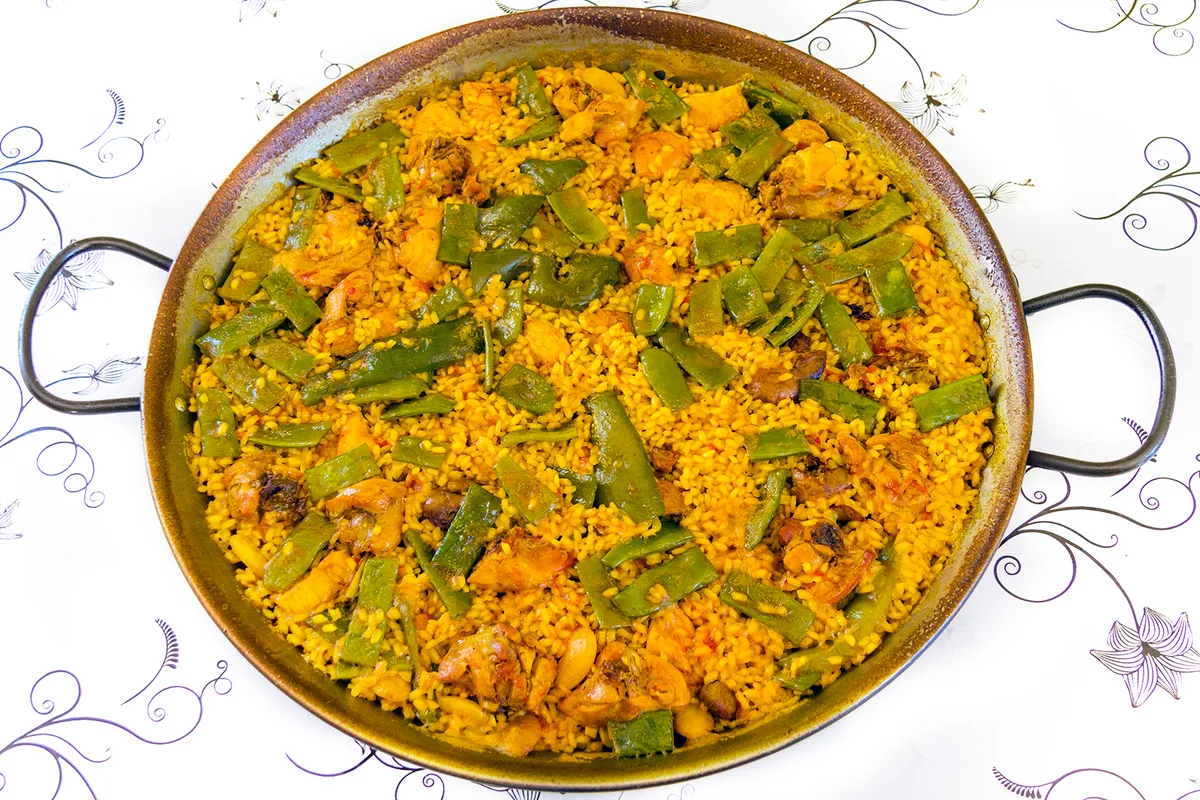
Photo: Jan Harenburg, CC BY-SA 4.0
- The protected paella valenciana recipe uses rice, chicken, rabbit, garrofó beans, green beans (ferraúra and tavella), tomato, saffron, sweet paprika, olive oil, water and salt. No chorizo. No seafood. No onion.
- It is cooked over open fire from orange-wood embers (leña de naranjo). Gas-only kitchens skip the smoky note that defines the dish.
- Rice is short-grain bomba or sénia. Long-grain or basmati is the single fastest way to spot a fake.
- The pan is wide and shallow (paella means the pan, not the dish), and the rice sits only one finger deep across the surface.
- Socarrat is the caramelised crust on the bottom of the pan. Locals fight politely over it with the spoon. No socarrat means it was not cooked over real fire.
- The rice phase is roughly 18 to 20 minutes once the broth goes in. The full order to table window is 25 to 35 minutes from when you sit down.
- Real paella is served and eaten from the pan. Each diner takes from their wedge of the edge, traditionally with a spoon, not a fork.
- It is a Sunday lunch dish above all else, and a weekday lunch dish in some spots. Dinner paella in 2026 is still a tourist menu cue.
- Most kitchens require a minimum of two diners per pan, and the better ones ask you to pre-order one to two hours ahead so the rice can rest before service.
- Paella valenciana (chicken + rabbit) is the only rice dish covered by the standardised recipe declared a Bien de Interés Cultural in 2021. Seafood paella, arroz a banda and arroz negro are all legitimate Valencian rice dishes, but they are not technically paella valenciana.
Best Paella Restaurants in Valencia: Our Picks
Casa Carmela
- Best for: The wood-fire Sunday institution
- Address: Calle Isabel de Villena 155, El Cabanyal
- Order: Paella valenciana cooked over orange-wood embers
- Price: EUR 40-55 per person
- Tip: Pre-order required, often 24 hours ahead. Book the 14:00 sitting and plan a slow afternoon.
La Pepica
- Best for: Historic beachfront with caveats
- Address: Paseo de Neptuno 6, Playa de la Malvarrosa
- Order: Paella valenciana or arroz a banda, with the sea view as the draw
- Price: EUR 30-40 per person
- Tip: Hemingway ate here in 1959, which is also why service can run on autopilot. Go for the room, manage expectations on the rice.
Restaurante Navarro
- Best for: Old-school central lunch with no fuss
- Address: Calle Arzobispo Mayoral 5, Ciutat Vella
- Order: Paella valenciana or arroz del senyoret (peeled seafood)
- Price: EUR 25-35 per person
- Tip: Family-run since 1951. Good fallback when you do not want to trek out to the beach.
Llisa Negra
- Best for: Modern fire kitchen, central, dinner-friendly
- Address: Calle Correos 8, Ciutat Vella
- Order: Arroces cooked over open fire, plus grilled fish from the wood embers
- Price: EUR 45-60 per person
- Tip: Quique Dacosta's casual concept, now in a smaller 35-seat room on Calle Correos after moving there in June 2026. Book ahead, especially for weekend lunch.
L'Alqueria del Pou
- Best for: Rice dishes on the edge of the Albufera rice fields
- Address: Entrada Rico 6, 46013 Valencia (on the edge of the Albufera Natural Park, near El Saler)
- Order: Arroz a banda or paella valenciana with the rice paddies out the window
- Price: EUR 35-50 per person
- Tip: Closed on Sundays. Open Monday to Saturday, lunch only (13:30 to 17:00), and reservations are by phone only - no online booking.
Casa Salvador
- Best for: Lakeside arroces at L'Estany
- Address: L'Estany de Cullera, Cullera (~35-40 minutes by car)
- Order: All i pebre de anguila as a starter, then paella valenciana or arroz a banda
- Price: EUR 40-55 per person
- Tip: Sit on the terrace over the water. Cars only, no metro. Worth the trip for the setting alone.
Bon Aire
- Best for: Wood-fire arroz in El Palmar
- Address: Calle Caudete 41, El Palmar
- Order: Paella valenciana over leña de naranjo
- Price: EUR 35-50 per person
- Tip: Big, busy, popular with local families. Reserve. Lunch only most days.
Goya Gallery Restaurant
- Best for: Sunday paella close to Mestalla without leaving the city
- Address: Calle Burriana 3, Pla del Remei
- Order: Paella valenciana with a modern dining-room feel
- Price: EUR 35-50 per person
- Tip: Good central pick if you want a proper rice without a taxi to El Palmar. Pre-order recommended.
Best Neighborhoods for Paella in Valencia
- El Cabanyal-Canyamelar: the historic fishermen's grid where the wood-fire Sunday kitchens sit. Casa Carmela anchors the area. Walk the tiled facades after lunch.
- Malvarrosa: the beach paseo with the famous historic spots like La Pepica. High volume, high tourist traffic, mixed quality. Go for the view and the rhythm, not always for the best plate in town.
- El Saler and El Palmar: the rice belt itself, 20 to 30 minutes south by car or bus 25. This is where the rice is actually grown. Sunday-only standalone restaurants in the paddies. The most committed paella day-trip from the city.
- Ruzafa: not a paella destination historically, but a few modern neighbourhood bars now serve weekday menú del día with a small arroz course for under 18 EUR. Good for casual rice without a reservation.
- Mestalla and Pla del Remei: central-east residential area near the old stadium. A few solid Sunday options like Goya Gallery. Easy from anywhere in the centre on foot.
- El Carmen and Ciutat Vella: the medieval centre. Convenient, scenic, and the highest concentration of tourist menus with photos. Restaurante Navarro is the exception that keeps things honest.
- Patacona and Alboraya: north of the city up the coast. Quieter beachfront with a few neighbourhood paella spots, plus the famous horchata bars of Alboraya for after lunch.
- Benimaclet: the student and family barrio inland. No-show on tourist guides, but several family-run bars do an honest weekday paella for locals at fair prices.
Paella Price Guide in Valencia
- Sunday paella for two at a wood-fire institution (Casa Carmela, Bon Aire, L'Alqueria del Pou): EUR 38-55 per person including a starter, drink, and coffee.
- Neighbourhood family bar weekday paella: EUR 16-22 per person, drink included, with a small starter or salad.
- Tourist-belt paella on the beach paseo or Plaza de la Reina: EUR 22-30 per person, often a half-portion sized to look bigger on the plate than it is.
- Menú del día with a small arroz as the main: EUR 15-18 in 2026, three courses plus bread and a glass of wine, weekday lunch only.
- Paella valenciana raw kit from Mercat Central or Mercat de Russafa, cooked at home: EUR 12-18 for two, plus the cost of saffron and a small pan if you do not own one.
- Top-end modern fire kitchens (Llisa Negra, Goya Gallery): EUR 45-60 per person with starters, more if you order wine from the Utiel-Requena list.
- Pre-order or reservation fee at the best wood-fire kitchens: usually none. The kitchen just needs the lead time, not a deposit.
- Tipping: round up the bill, or leave 5 percent for memorable service. The American 18 to 20 percent norm is not the local expectation and tends to read as awkward.
Tourist traps to avoid
- The menu offers paella in eight, ten, or twelve languages with thumbnail photos on every line. A real paella kitchen does not need to sell the dish that hard.
- Chorizo on top of the rice. This is the cleanest, fastest tell. No Valencian household paella has ever contained chorizo, and the meme that it does makes Valencians furious.
- Photos of the dish on the door with frozen pink shrimp lying on bright yellow rice. The colour is too even and the shellfish too symmetrical to be made to order.
- Price under 12 EUR per person at lunch. At that price the rice is pre-cooked in bulk, portioned, microwaved, and topped with one shrimp. It is not paella, it is a microwave bowl.
- Paella served at 12:00 or available continuously through dinner. Real paella is a once-a-day dish made to order. A spot serving paella at 11:30 has it sitting under a heat lamp.
- Long-grain, jasmine, or basmati rice in the pan. Bomba and sénia are the only correct rices for paella valenciana, and the grain length is visible on the plate.
- Menus that include paella alongside burgers, pizza, and pasta. A kitchen that cooks all of those well does not exist anywhere in Valencia.
- No mention of cooking time on the menu and no offer to pre-order. Honest kitchens warn you it takes 25 to 35 minutes. Instant paella was pre-made.
- Aggressive bright yellow uniform colour. Saffron stains rice unevenly, in patches. Food colouring (tartrazine) stains it perfectly evenly, which is the giveaway.
How to Order Paella in Valencia
- Book Sunday lunch for 14:00 at one of the wood-fire institutions. Weekday lunch service is less competitive and easier to walk in to.
- When you reserve, ask directly: does the kitchen need a pre-order? Many wood-fire spots want the rice request one to two hours ahead, and Casa Carmela often wants 24 hours.
- Order one rice dish per two people minimum. Solo diners can order arroz al horno (oven rice, individual portion), arroz meloso, or the menú del día with a small arroz course.
- Pair with starters that share the slow-fire philosophy: ensaladilla rusa, esgarraet (roasted pepper and salt cod), all i pebre, clóchinas valencianas in season (May to August), or sepia a la plancha.
- Drink choices: a tinto from Utiel-Requena (Bobal grape) is the local pairing, agua de Valencia (cava, gin, orange juice) for a long sit, beer for a casual midweek meal. Skip sangria - locals do not drink it.
- Wait. Real paella takes 25 to 35 minutes from order. This is the rhythm of a Valencia Sunday in 2026, and trying to rush it is the surest way to mark yourself as a visitor.
- When the pan lands at the table, eat from your wedge of the edge with a spoon. Push the rice gently inward. The socarrat at the bottom centre is the prize - it gets divided last.
- Close with a café cortado (never an Americano, which most Valencian kitchens cannot make well), and optionally a chupito of mistela, herbero, or licor de hierbas.
Saturday lunch in Valencia is a slow ritual - book a 14:00 table, then walk the medieval streets profiled in our hidden gems of Valencia guide. For visiting friends, our Calle Colón bars roundup is the natural follow-up after the rice and aioli.
Want our local shortlist?
We keep a practical list of dependable paella spots by neighborhood.
See More Valencia Food Picks
About the author
Michael Bastin
Founder, ValenciaMove - Valencia since 2016
Michael moved to Valencia in 2016 and has helped dozens of families relocate since. He writes every guide on this site personally and verifies every fact against Spanish government sources before publishing.
Buy Michael a coffeeNeed help with your move?
Contact us. We handle visa, admin, and housing so you can focus on the exciting part.