
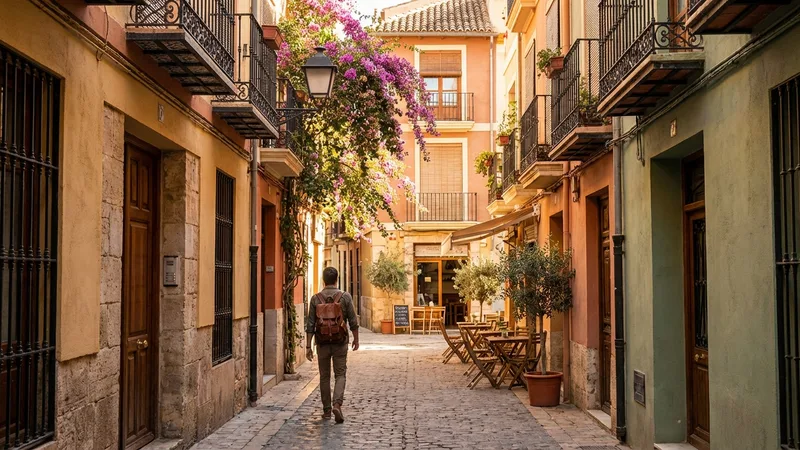
Most Valencia guides recycle the same dozen stops: the City of Arts, the Mercat Central, a paella by the Malvarrosa beach. They are all worth doing once. But the city we actually live in is the one you find on the third week, when you stop following the tourist herd and start noticing the quiet corner garden, the tram stop that drops you at an empty beach, the hill town an hour out that costs nothing to wander. This is the shortlist we wish someone had handed us when we arrived: spots that are genuinely overlooked, easy to reach without a car in most cases, and free or near-free to enjoy. We have grouped them by mood, added rough timings and transport notes, and left off anything that turns into a coach-park circus by 11am in summer.
Half of these gems sit in two specific districts: the medieval core of Ciutat Vella, Valencia's old town, and the working port pocket of Poblats Marítims around Veles e Vents and El Cabanyal. If you are scoping a barrio while ticking off the list, those two guides cover what daily life there actually feels like.
Quiet beaches beyond Malvarrosa
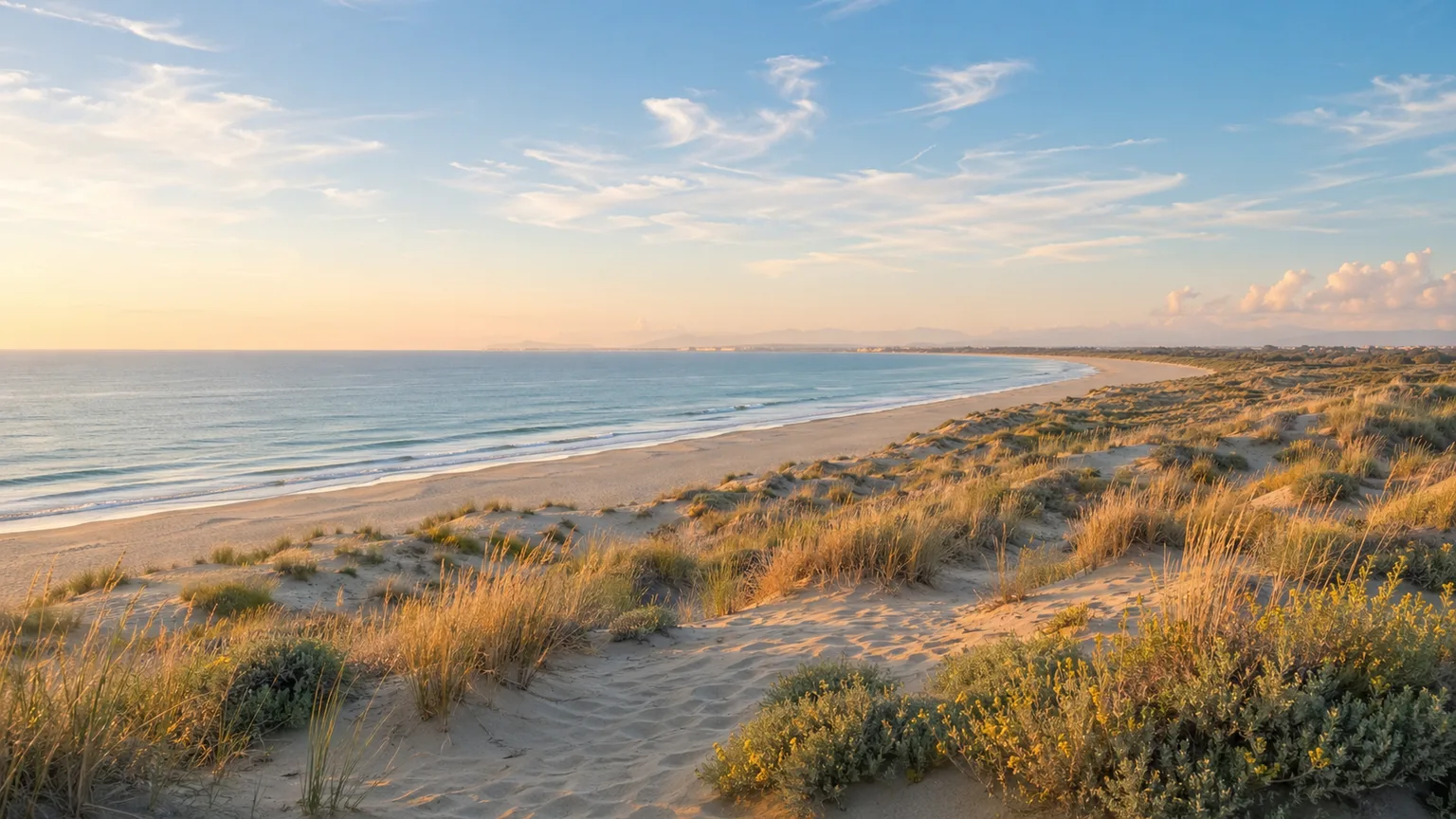
Playa de la Devesa (El Saler)
A long pine-backed strip inside the Albufera natural park, about 12 km south of the centre. Bus 25 from Porta de la Mar runs roughly hourly and costs around 1.50 EUR each way. Even in August the southern end past the car parks stays calm. No sun-lounger rental, no jet skis, just dune grass and the occasional flamingo overhead.
Pinedo
The closest of the quiet beaches, 7 km south and reachable by bus 25 or a flat 25-minute bike ride down the old riverbed and along the coast road. A working-class local beach with a handful of unfussy chiringuitos doing a midday paella for around 14 to 16 EUR a head. Sundays it fills with valencianos, weekdays it is nearly yours.
El Saler dunes and L'Estany
Where the protected dunes meet the lagoon. Walk the wooden boardwalk trails for free, then time it for the sunset boat trip on the Albufera from El Palmar (about 4 EUR for 30 to 40 minutes). Bring water, there is little shade once you leave the pines.
Patacona at dawn
Technically Alboraya, not Valencia, but the northern continuation of Malvarrosa with wider sand and a calmer crowd. Before 9am the runners and dog-walkers have it to themselves and the horchata bars along the back row open early. Tram line 6 to Patacona puts you two streets from the water.
Overlooked gardens and green corners
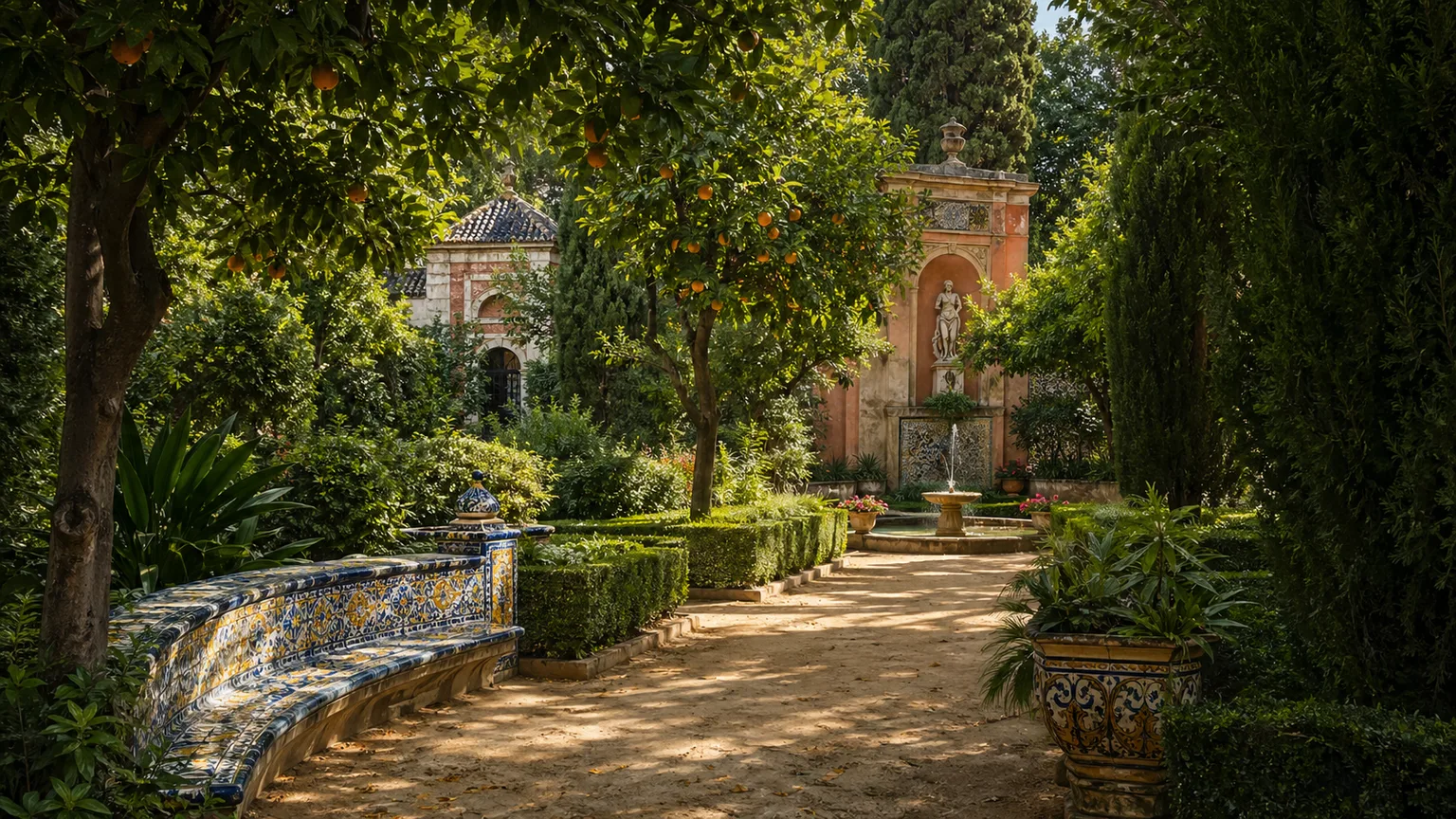
Photo: Onderwijsgek, CC BY-SA 3.0
The quiet Turia stretches
Everyone knows the Turia, the 9 km river-park that loops the city. Fewer people walk the western end past Bioparc towards the Cabecera lake, where there is real shade, a small boating pond, and benches you can actually get on a Sunday. Free, open dawn to dusk, and the calmest stretch for a morning run.
Jardines de Monforte
A pocket-sized neoclassical garden near the Turia with marble statues, clipped hedges and a hidden bench or two. It is free, rarely crowded, and a favourite for wedding photos at weekends, so go on a weekday morning for it to yourself.
Jardin Botanico
The university botanical garden just inside the old city walls. Around 3.50 EUR entry, often free on the first Sunday of the month. Two hundred years of trees, a tropical greenhouse, and resident cats. The best value quiet hour in central Valencia when the streets get too hot.
Cementiri General
Not morbid, genuinely beautiful. Valencia's 19th-century cemetery is an open-air museum of modernista mausoleums and avenues of cypress. Free to enter, very few visitors, and home to the grave of the painter Sorolla. Treat it the way locals treat a cathedral visit.
Jardin de Ayora
A walled municipal garden in Camins al Grau, next to the Ayora metro and tram interchange. Palm-lined paths lead past a mature cactus and succulent collection and benches under century-old trees. Free to enter, open dawn to dusk, and quiet enough that you may have it to yourself on a weekday morning.

Viewpoints worth the climb
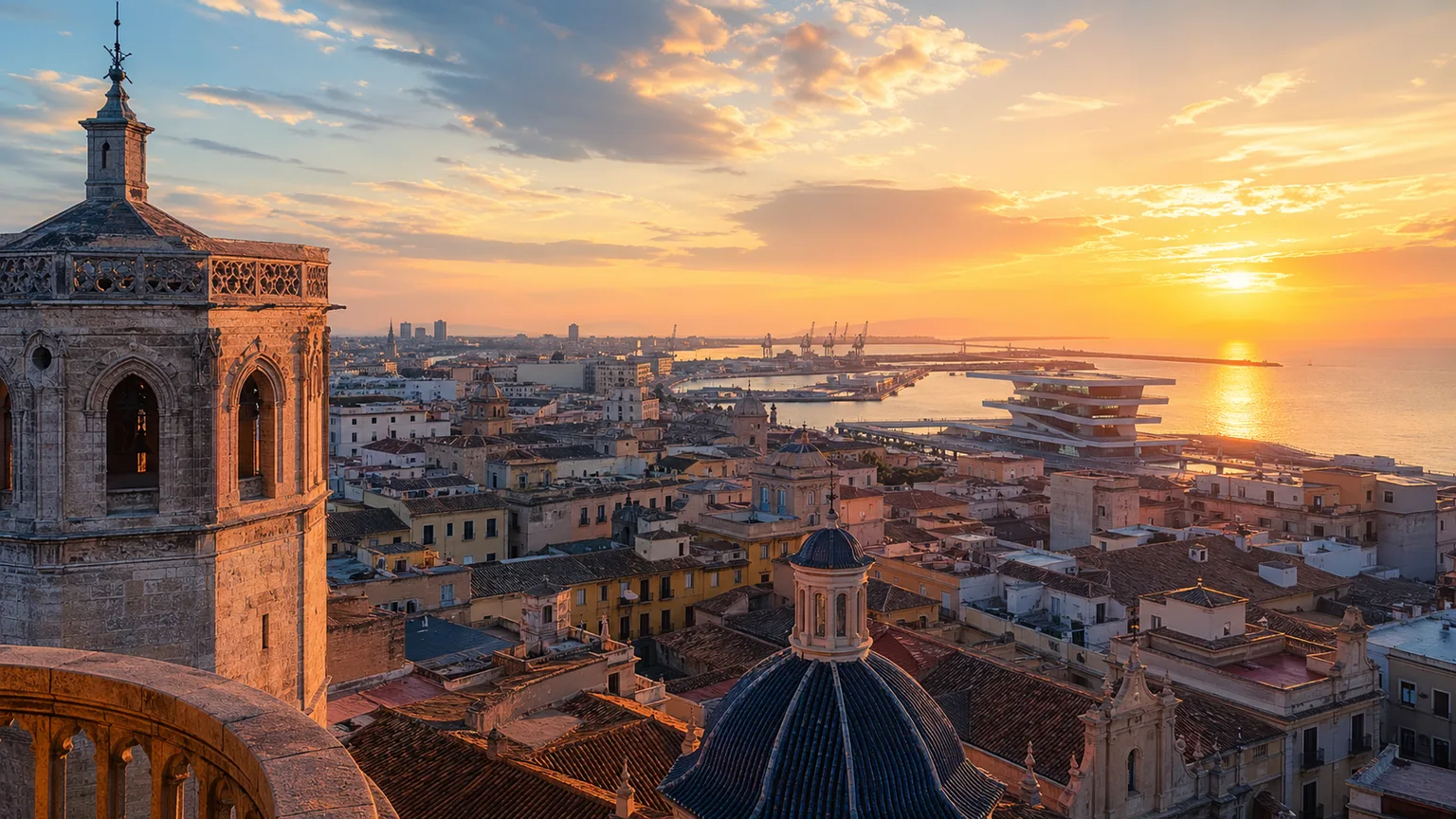
Photo: Juan Carlos, CC BY-SA 2.0
El Micalet tower
The cathedral bell tower, 207 spiral steps, around 2 EUR. The classic old-city panorama: a sea of terracotta roofs, the dome of the cathedral, and the City of Arts glinting to the south. Go at opening or in the last hour before close to skip the queue.
Torres de Serranos
The 14th-century city gate, around 2 EUR, free on Sundays. Lower and faster to climb than the Micalet, with the best angle on the Turia gardens and the old town rooftops. The Fallas crowd packs it in March for the Crida, so visit any other month.
Veles e Vents
The white cantilevered building at the marina, built for the 2007 America's Cup. The upper terraces are free to walk and give you the harbour, the cranes, and the open Mediterranean in one sweep. Pair it with a wander through the regenerating El Grau and Marina district.
Rooftop of the Mercado de Colón
Most people only see the modernista market from inside. The quieter trick is a drink on one of the upper-level terraces at golden hour, looking down the iron-and-glass nave. A vermouth runs about 3 EUR and the light through the stained glass at 7pm is the photo.
Day trips locals actually take
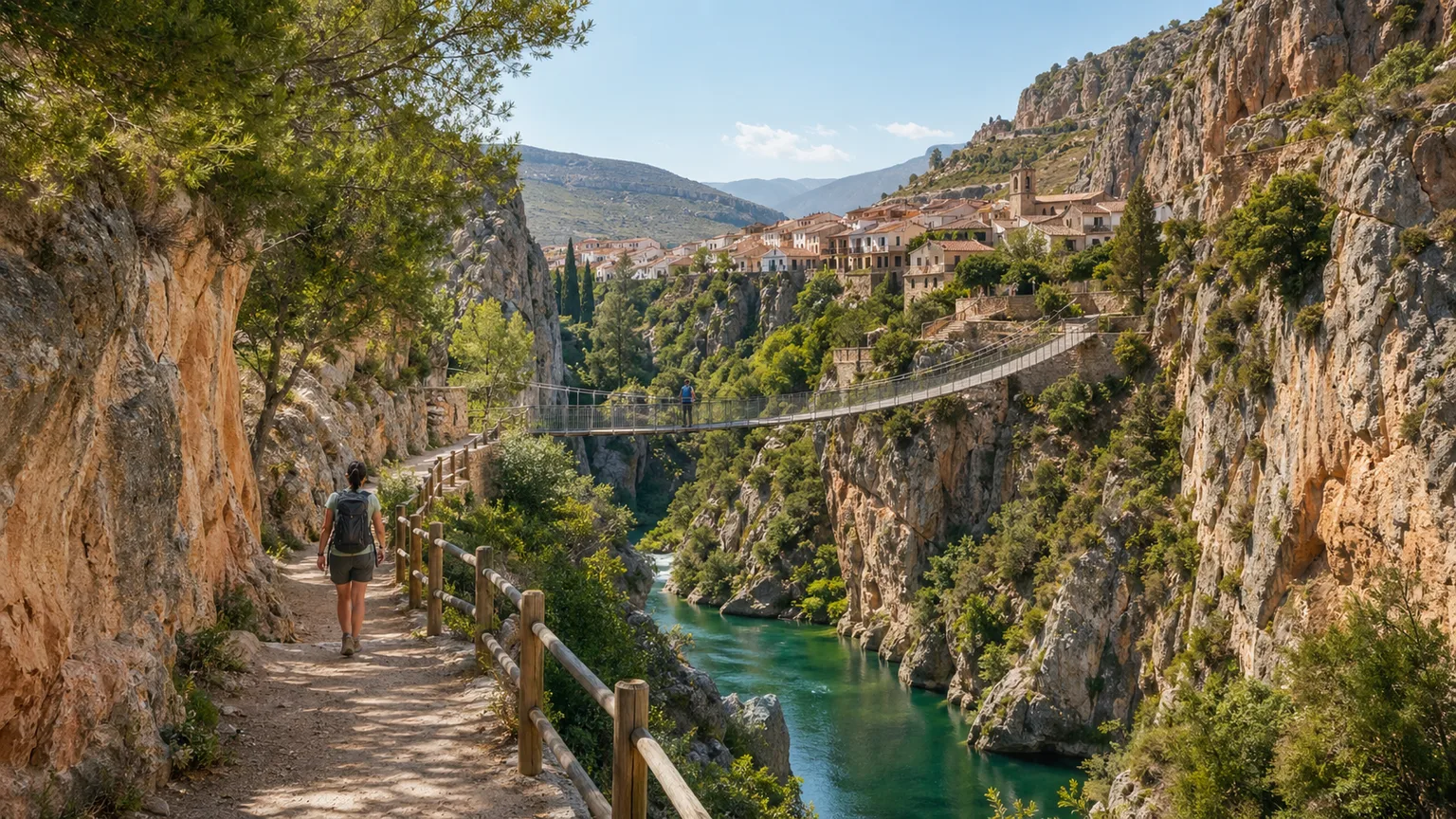
Photo: Diego Delso, CC BY-SA 4.0
Chulilla
About 60 km inland, an hour by car. The draw is the Los Calderones gorge: a free walking route through a slot canyon with two hanging footbridges over turquoise water. Easy enough for most fitness levels, spectacular, and busy only on summer Sundays. There is no practical public transport, so it is a hire-car or car-share day.
Serra Calderona
The pine-covered mountain range on Valencia's northern doorstep. Cercanías line C5 to Segart or Albalat dels Tarongers gets you to trailheads in under an hour for a few euros. Marked routes range from a gentle 90-minute loop to a half-day climb up the Garbi viewpoint.
Xativa
Forty minutes south on the Cercanías C2 line, around 5 EUR each way. A handsome old town under a long ridge-top castle (the Castell de Xativa, roughly 6 EUR entry). One of the easiest car-free day trips from the city and almost entirely free of foreign tour groups.
Requena and the wine country
An hour west by Cercanías C3, in the Utiel-Requena wine region. The old quarter has a network of medieval underground cellars you can tour, and the surrounding bodegas pour Bobal reds for a few euros a glass. A calmer alternative to a packed coastal day.
Best Time to Explore Valencia's Hidden Gems
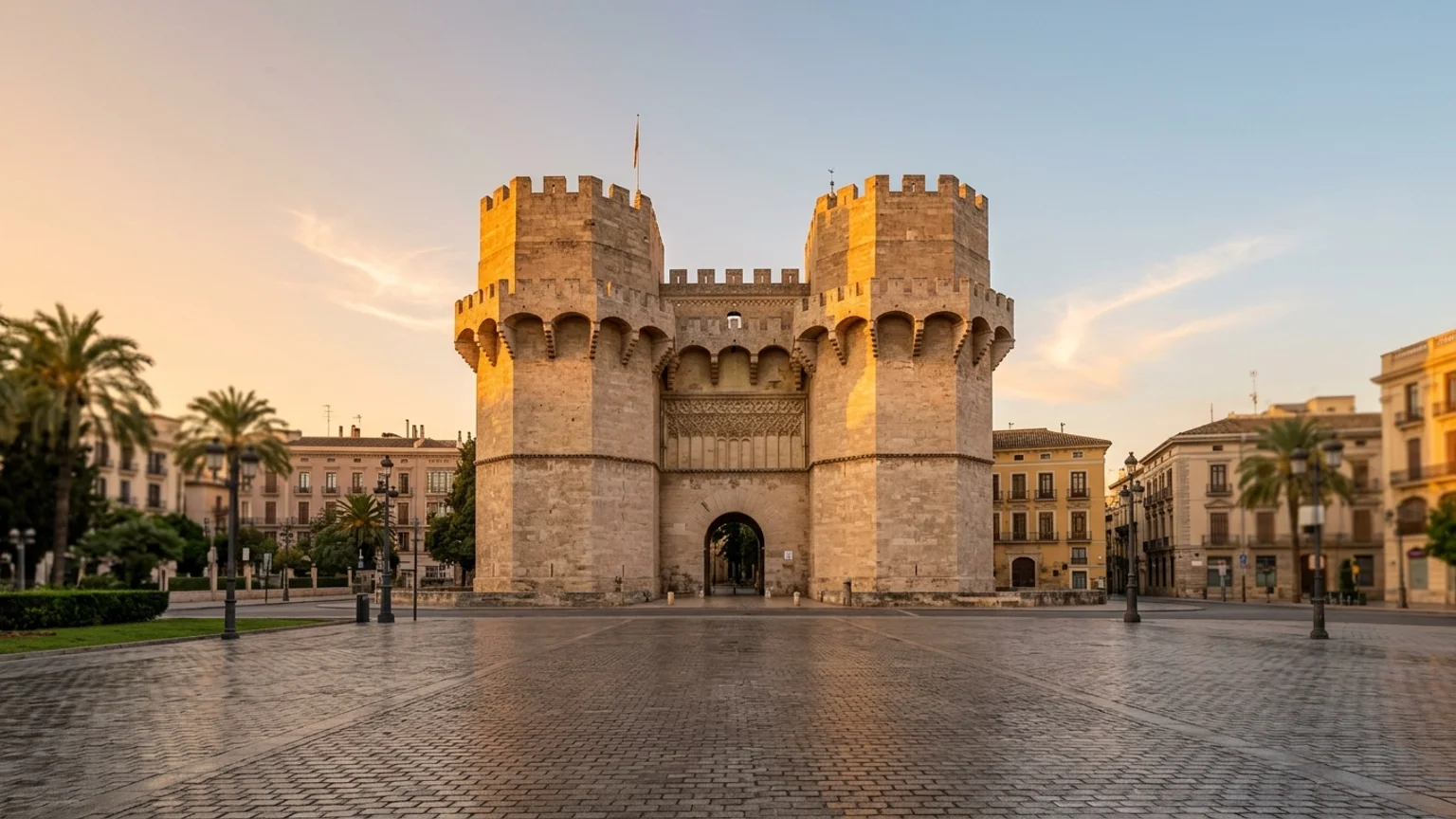
Photo: Diego Delso, CC BY-SA 4.0
- For beaches and viewpoints, aim for before 10am or after 6pm. Midday in June to September is genuinely punishing and the light is flat for photos anyway.
- Weekdays are quieter almost everywhere. Valencianos do their countryside and beach trips on Sundays, so a Tuesday at Pinedo or Chulilla feels like a different place.
- Many museums and gardens, including the Jardin Botanico and the Torres de Serranos, are free on the first Sunday of the month or on Sundays generally. Worth planning a culture day around.
- Avoid the week of Las Fallas in mid-March if you want calm. The city is loud, joyful and completely full. Go anyway if you want the spectacle, just not for the quiet list.
- Spring (April to early June) and autumn (late September to November) are the sweet spots: warm enough for the coast, cool enough for the inland gorges and castle climbs.
Half of these gems are easiest to reach with a TuiN bonobus rather than a taxi. The Valencia metro ticket guide shows which Mobilis travelcard pays off, and our best paella restaurants in Valencia list pairs nicely as a lunch stop on any old-town walk. The Albufera gems all sit in two rice-country barrios worth their own read: El Palmar, the floating village of the lagoon, and El Saler, where the dunes meet the pine forest.
Thinking of staying longer than a holiday?
We help people move to Valencia and settle in properly: the visa and the paperwork, choosing a neighbourhood, and the practical side of daily life here. Tell us where you are in your move through the form.
Contact us
About the author
Michael Bastin
Founder, ValenciaMove - Valencia since 2016
Michael moved to Valencia in 2016 and has helped dozens of families relocate since. He writes every guide on this site personally and verifies every fact against Spanish government sources before publishing.
Buy Michael a coffeeNeed help with your move?
Contact us. We handle visa, admin, and housing so you can focus on the exciting part.