

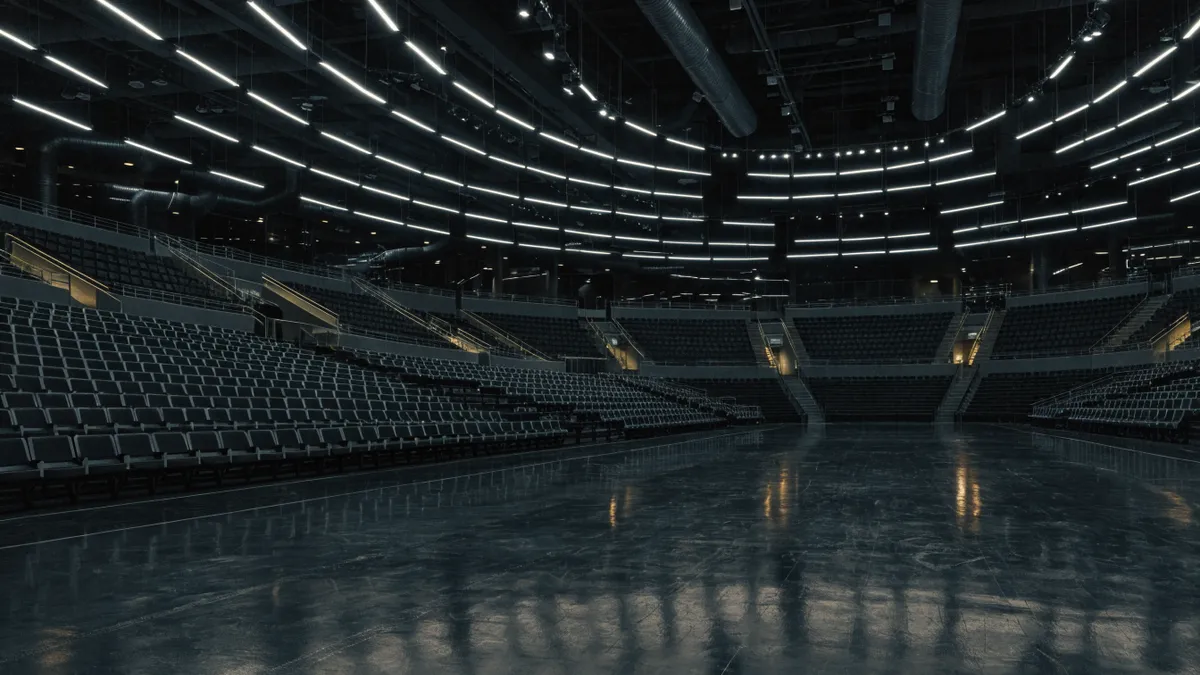
Valencia Basket has had two acts. For 40 years the club lived inside a 9,000-seat box called La Fonteta, which earned a reputation as one of the loudest rooms in European basketball. Then, in October 2025, the club moved into Roig Arena, a 15,600-seat venue located at Carrer del Bomber Ramón Duart, 12, in the Quatre Carreres district, near the City of Arts and Sciences. The change is more significant than the seat count. It reshapes what a game night in Valencia feels like, opens the city up to concerts that used to skip it, and quietly redraws the southeastern edge of town. If you are moving to Valencia in 2026, here is the story behind the building and the team that fills it.
Where Valencia Basket comes from
The club was founded on 27 September 1986, the day Valencia CF disbanded its basketball section and a new club took the wheel. It built itself up through the 1990s in a city that already cared deeply about football but had room to fall for a second sport. Locally, everyone calls the team Taronja, Valencian for orange, after the famous shirts.
Juan Roig, the founder of supermarket chain Mercadona, has bankrolled the club's rise since 1998. That patience is unusual in Spanish basketball, and it shows in the trophy cabinet. Valencia Basket has won the EuroCup four times, in 2003, 2010, 2014 and 2019, more than any other Spanish club. In 2017, the men's team won the Liga ACB title, beating Real Madrid 3-1 in the finals, with the deciding game played on 16 June. The club currently sits sixth in the all-time ACB historical classification, with more than 37 seasons in the top flight and over a dozen official men's titles.
The women's side is one of the strongest in Spain too, with 11 official titles to its name. Putting the two squads together gives Valencia an end-to-end basketball calendar that few cities its size can match.
The Fonteta era
From 1986 to 2025, the club played at Pabellón Fuente de San Luis, known to absolutely everybody as La Fonteta. The pavilion opened in 1983 for the European Basketball Championship. Located in the Fonteta de Sant Lluís neighbourhood in the Quatre Carreres district (south of the city centre), it held around 9,000 fans across three tight tiers.
What players and visiting coaches always mentioned was the proximity. La Fonteta puts the front row almost on the floor and stacks the upper tiers steeply over the action, so the noise lands hard. EuroLeague visitors who played there talked about the orange wall of fans and a decibel level that did not quite match the size of the building. It became the kind of road trip rival benches dreaded.
For four decades, La Fonteta was simply Valencia basketball. Every title above was lifted in or alongside that building.
Why Roig Arena exists
By the late 2010s, the picture was clear. The club was a regular in the EuroLeague and EuroCup, the women's side was winning, and La Fonteta was full almost every night. The 9,000 seats could not meet the growing demand, and there was no modern indoor arena in the Valencia region that could host major international concerts and events. The city was bypassed by tours and conferences that needed something bigger than La Fonteta but smaller than a stadium.
Juan Roig set out to fix both problems at once with a single venue, privately funded through his family's holding company, Licampa 1617. The project was framed as a gift to the city: a world-class indoor arena that would house Valencia Basket's men's and women's teams, and double as a top-tier concert and events venue. No public money, a multi-hundred-million-euro private investment, and a site chosen in the Quatre Carreres district, near the City of Arts and Sciences. This location reinforces the southern part of Valencia as a major sport, cultural, and events corridor, building on the area's existing world-class infrastructure.
Construction moved fast for a building this size. Ground was broken in 2022, and the doors opened on 6 September 2025.
Roig Arena capacity and design
Design is by HOK, the Kansas City-based studio that ranks among the world's top sports architecture firms, in partnership with Valencia-based ERRE Arquitectura. The brief was a flexible, modern venue that could pivot from basketball to a 180-degree concert to a full 360-degree show without compromise.
The numbers reflect that. The arena seats 15,600 for basketball, 18,600 for a 180-degree concert with a stage at one end, and up to 20,000 for a 360-degree show with the stage in the centre of the floor. Three tiers of seating, 1,300 parking spaces underneath, a glass and steel facade that lights up at night, and a sustainability package built around water reuse, solar generation, and high-efficiency systems.
Functionally, Roig Arena is now home to Valencia Basket's men's and women's teams, a regular tour stop for international concerts, and a credible host for corporate events, conventions, and one-off productions. For a city the size of Valencia, that is a significant upgrade in indoor capacity.

First season at home
The opening competitive fixture in the new building was on 3 October 2025: Valencia Basket vs Virtus Bologna in the EuroLeague. The arena was full, the new sound system was tested, and the club walked away with a win that fans will talk about for years.
The shift in atmosphere across the first season has been the talking point. With around 70 percent more seats, the big EuroLeague and ACB nights now sound bigger and feel like proper European event nights. Some long-time supporters quietly miss the intimacy of La Fonteta on smaller fixtures, where the room could feel half-empty if it were not packed and the closeness was the entire experience. The honest take from inside the club: the new building suits the marquee games beautifully, and the smaller midweek games are still finding their rhythm.
Season ticket pricing has stayed deliberately accessible. Tiers run from entry-level seats well under the equivalent in Madrid or Barcelona up to courtside and hospitality at the top end. Single-match tickets for ACB games can typically be found from around 20 to 30 euros, with EuroLeague nights and Real Madrid or Barcelona derbies sitting higher. By European top-flight basketball standards, this remains one of the cheaper great nights out you can buy.
What it means if you are moving to Valencia
From a relocation standpoint, Roig Arena rebalances Valencia's after-dark calendar. If you are moving to the city in 2026, you have year-round access to top-flight basketball, both ACB and EuroLeague, at a venue that holds its own against anything in Madrid or Barcelona, at ticket prices that still feel local. Plan on a roughly 35-game home season between October and June across all competitions.
The concert side is the second story. International artists who used to route a Spain tour through Madrid and Barcelona now have a reason to add Valencia, because the room is finally there. Expect bigger names, more often, on weeknights you can actually attend without travelling.
The third change is geographic. Roig Arena is located at Carrer del Bomber Ramón Duart, in the Quatre Carreres district, near the City of Arts and Sciences on the southeastern side of the city. This southeastern location integrates the arena into an established cultural and leisure corridor. Public transport access is excellent: Metrovalencia Line 10 (tram) stops at Quatre Carreres and Ciutat de les Arts i les Ciències, both just a five-minute walk from the arena, and multiple EMT bus lines connect directly to the city centre and surrounding neighbourhoods. While matchday traffic around the City of Arts and Sciences has naturally increased, the area is already well-equipped with wide avenues, dedicated parking facilities, and pedestrian infrastructure to handle large crowds.
Want to plan around this? Our Things to Do in Valencia guide has a sports section, the Nou Mestalla story covers the football side of the city's ongoing stadium upgrades, our neighbourhoods overview walks you through Quatre Carreres and the southern pockets, and the renting in Valencia pillar is the practical place to start.
Planning a move to Valencia in 2026?
We help newcomers with visas, NIE, housing, schools and the day to day calls that turn a move into a real life here.
Contact Us
About the author
Michael Bastin
Founder, ValenciaMove - Valencia since 2016
Michael moved to Valencia in 2016 and has helped dozens of families relocate since. He writes every guide on this site personally and verifies every fact against Spanish government sources before publishing.
Buy Michael a coffeeNeed help with your move?
Contact us. We handle visa, admin, and housing so you can focus on the exciting part.