
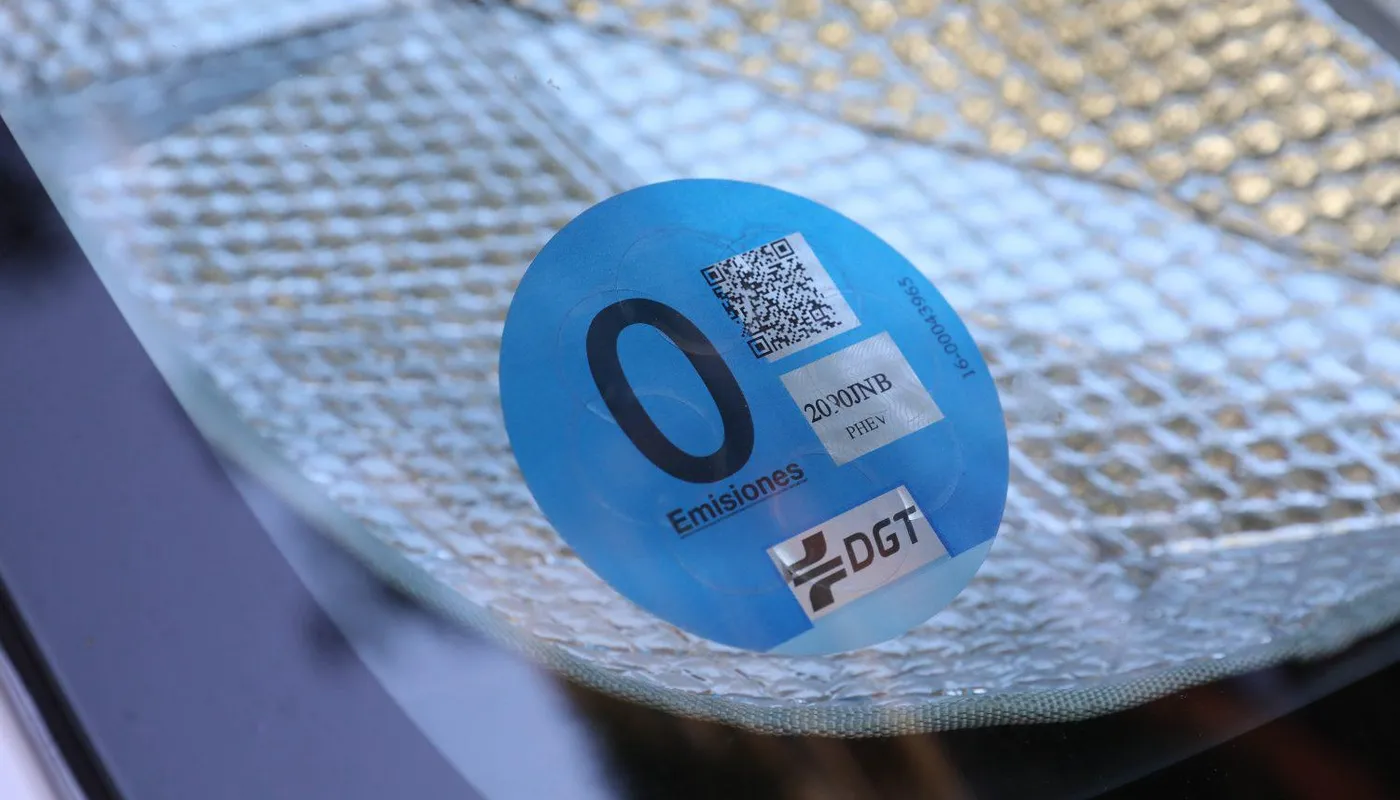
If you are driving a car in Spain, the distintivo ambiental (DGT environmental sticker) is worth understanding before you need it, not after a fine or a blocked entry into a city low-emission zone. Getting one is technically voluntary nationwide, but a growing number of Spanish cities now fine unlabelled cars in their low-emission zones, which makes it functionally necessary rather than optional. Valencia's own zone was still not ratified or enforced when we last checked in spring 2026.
Spain's Environmental Sticker: The Four Categories
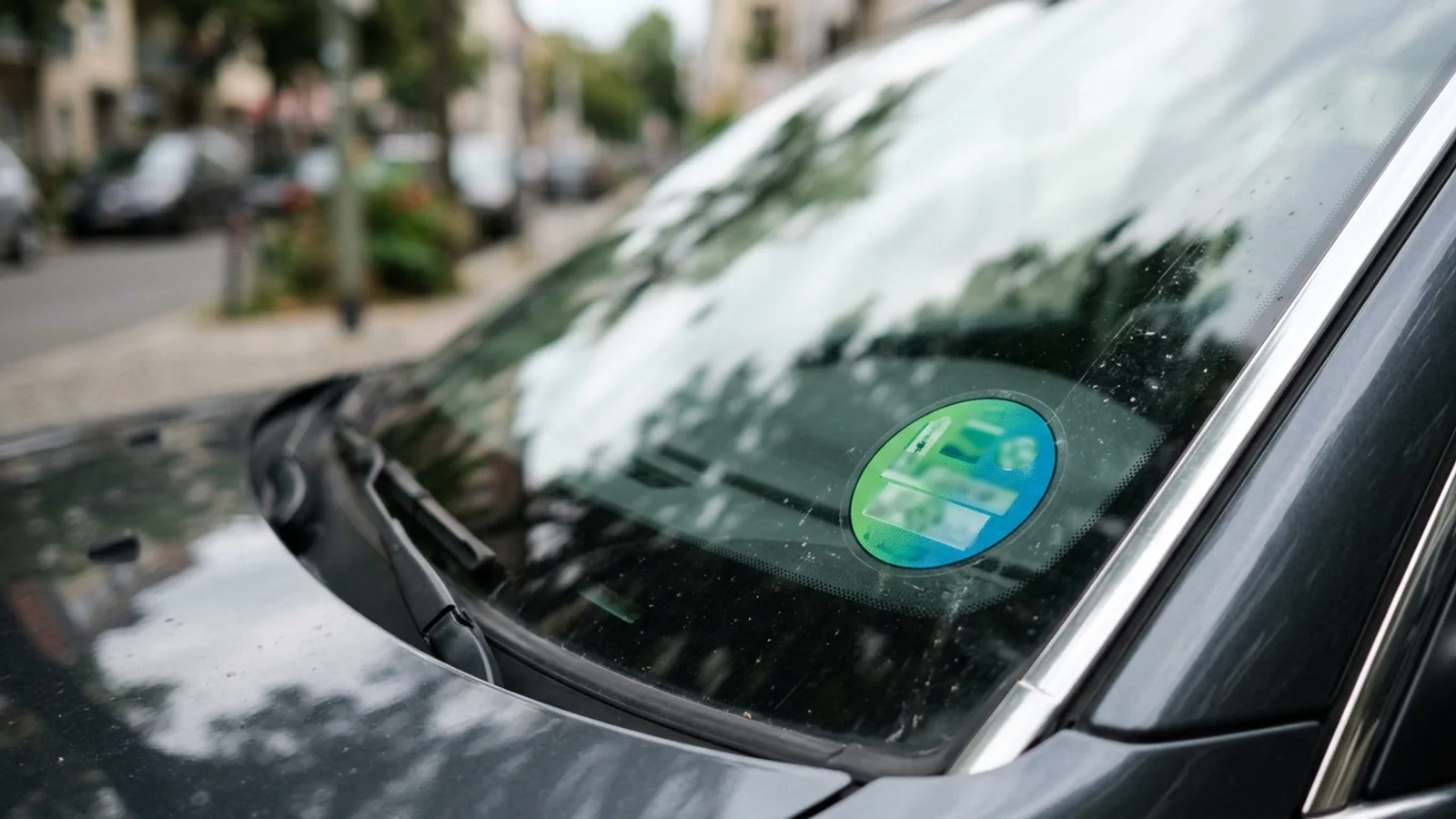
The DGT classifies vehicles into four tiers, most to least clean. Etiqueta CERO (blue) covers zero-emission vehicles: battery electric, extended-range electric, plug-in hybrids with at least 40km (about 25 mi) of electric range, and fuel cell vehicles. Etiqueta ECO (green and blue) covers plug-in hybrids under 40km (about 25 mi) electric range, non-plug-in hybrids, and gas-powered vehicles (CNG/LPG) meeting Euro 4 to 6 standards depending on fuel type.
Etiqueta C (green) covers less-polluting combustion vehicles, generally gasoline meeting Euro 4 to 6 or diesel meeting Euro 6. Etiqueta B (yellow) covers older combustion vehicles, gasoline meeting Euro 3 or diesel meeting Euro 4 to 5. Anything below these tiers gets no sticker at all, sometimes informally called Etiqueta A.
How to Get Spain's Environmental Sticker and What It Costs
You can get the sticker at post offices (Correos), authorized workshops, gestores administrativos, or authorized online distributors, typically with just your DNI or driving license and the vehicle's registration certificate (permiso de circulación). The DGT tariff is 5 EUR, though the channel you use adds to it: Correos charges 6 EUR over the counter, and online distributors add shipping or handling on top. Display is technically voluntary nationwide, but municipal ordinances can restrict circulation based on it, and without a visible sticker traffic agents cannot confirm your vehicle qualifies, so it is worth getting regardless.
Driving into Valencia's low-emission zone
Valencia also runs its own low-emission zone (ZBE), a city rule that would sit on top of this national sticker. Its draft calendar runs to 2028, but at our last check in spring 2026 the ordinance had not been ratified and no fines were being issued. Read the full ZBE guide for the zone boundary, the current status, the 48-day occasional-access rule, and what a foreign-plated or rental car needs to do to enter.
Bringing a foreign-plated car over? Read how matriculación works
Need a Spanish licence too? Read the canje guide
Environmental Sticker Fines in Spain: What It Actually Costs
Driving in a restricted zone without the correct label, or without displaying a label your vehicle actually qualifies for, is a serious infraction under Article 80 of Spain's Traffic Law, currently fined at 200 EUR. Pay within 20 calendar days of the notification and the prompt-payment discount halves it to 100 EUR; either way it costs you no licence points. The fine applies even if your vehicle would technically qualify for a sticker if traffic agents cannot visually confirm it, which is the practical argument for getting and displaying one regardless of whether a city's camera system alone would catch it.
How this compares to France's Crit'Air
Spain's system uses four main categories against Crit'Air's six (0 through 5) plus an unclassified tier, both anchored to Euro emission standards and vehicle age. The DGT sticker is a flat 5 EUR through several purchase channels; Crit'Air is ordered online for about 3.11 EUR plus postage domestically, a bit over 5 EUR from abroad. Spain's sticker is voluntary nationwide but practically essential in ZBEs; France's Crit'Air is mandatory by law for driving in ZFE-m zones and must be displayed on the windshield. Both systems recognize foreign equivalents in principle, though Spain's approach for genuinely unclassified foreign vehicles is somewhat more flexible than France's blanket requirement to obtain its own sticker.
Sorting out the car, or the whole move?
Getting the paperwork right before you drive here is one small piece of settling in properly. If you are planning the bigger move, we can help with the visa and the rest of the practical side.
Contact us
About the author
Michael Bastin
Founder, ValenciaMove - Valencia since 2016
Michael moved to Valencia in 2016 and has helped dozens of families relocate since. He writes every guide on this site personally and verifies every fact against Spanish government sources before publishing.
Buy Michael a coffeeNeed help with your move?
Contact us. We handle visa, admin, and housing so you can focus on the exciting part.