
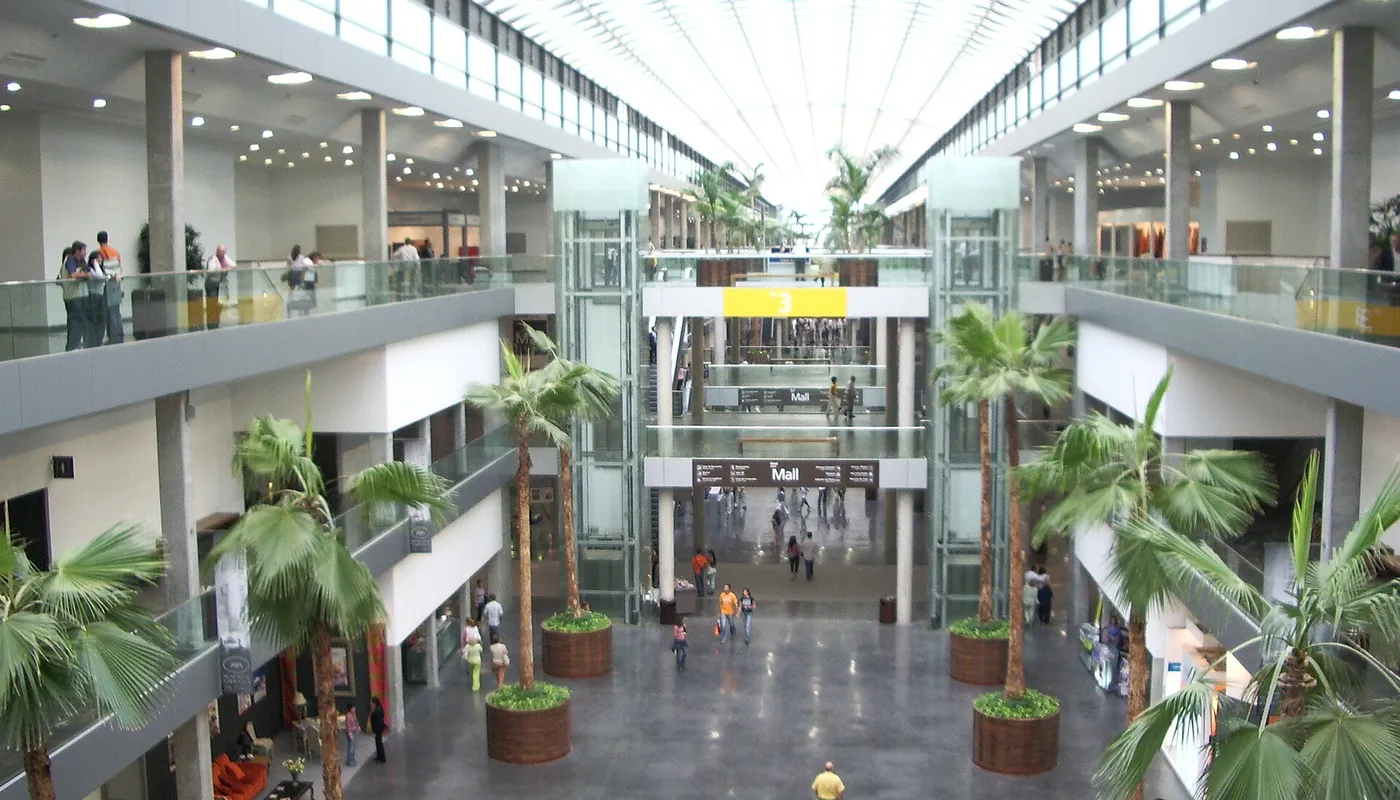
Valencia is Spain's third largest city and one of the Mediterranean's busiest exhibition hubs. Most of its international trade fairs run at Feria Valencia, the city's main exhibition centre, pulling in buyers from across Europe, North Africa and Latin America.
If you are relocating a business here, exporting through Valencia, or simply scoping the local business calendar before you move, the trade fair scene is one of the fastest ways to read the city's economy. This guide covers the fairs worth knowing, what each one actually delivers, and how to make a stand pay for itself.
Why Valencia works as a trade fair base
Exhibiting in Valencia costs noticeably less than Madrid or Barcelona, and the city has direct flights to Paris, Frankfurt, London, Casablanca and Algiers. The Port of Valencia, Spain's busiest container port and one of the largest in the Mediterranean, sits a few kilometres from the fairground, which matters if your business ships physical goods.
For furniture, ceramics, horticulture and construction materials in particular, Valencia's fairs remain one of the most efficient ways to meet qualified international buyers in a single week.
The second advantage is the industrial base around the city. These are not fairs that arrived looking for a venue; they sit on top of real regional clusters, which means the suppliers, manufacturers and logistics firms a buyer might want to visit are within driving distance of the stand rather than in another country.
The practical consequence is that a visit can be more than the fair. A serious buyer can see the show, tour a factory and meet a freight forwarder in the same trip, and building that into your invitation is considerably more persuasive than asking someone to fly in for a stand.
The main B2B fairs on the Valencia calendar

Photo: Punteador, CC BY-SA 4.0
Feria Habitat Valencia, held in September, is Spain's leading furniture, lighting and interior design fair, drawing several hundred exhibitors and tens of thousands of professional visitors from dozens of countries.
CEVISAMA, held in February, covers ceramics, bathroom fittings and construction materials, with the nearby Castellon ceramic cluster behind much of Europe's tile and sanitaryware supply. Iberflora, in October, is the reference event for ornamental horticulture and landscaping, and FIMMA plus MADERALIA, held in alternating years, cover wood, furniture manufacturing and industrial fit out.
Each fair pulls a different buyer base. Ceramics and construction skew toward Latin America and North Africa, while furniture and interior design pull more evenly from across the EU.
Because the dates move year to year and the alternating-year events are easy to miss, confirm the current edition with the organiser before you build a plan around it. A calendar assembled from last year's dates is the most common avoidable mistake in this whole process.
What exhibiting at a Valencia trade fair actually costs
The stand space is rarely the biggest number. Budgeting properly means counting the space, the stand build, the furniture and services, the freight for your samples, the staff and their travel and accommodation, and the marketing material you need in more than one language.
Accommodation is the line that moves most. Fair weeks are exactly when the city is fullest and rates are highest, so booking late costs real money, and a stand budget that assumed ordinary hotel prices will be wrong.
Staffing is the one people underestimate. A stand needs enough people to keep it covered through the day without anyone spending eight hours on their feet unable to leave, and it needs at least one person who can hold a commercial conversation rather than only a technical one.
The sensible way to size all of this is against a target rather than a feeling. Decide how many qualified conversations would make the week worth it, and judge the budget against that number rather than against the headline cost of the space.
Getting real value out of a trade fair stand
Showing up is the easy part. International buyers respond to a clear commercial pitch rather than a technical one: margins, minimum order quantities and lead times matter more on the floor than a product's specifications.
Have a one page summary translated into English, French and German at minimum, and follow up within 48 hours of a real conversation while it is still fresh. A quarterly check in with a specific proposal converts far better than a string of unplanned pings.
Qualify while you are still talking. The most useful thing to leave a conversation with is not a business card but a note of what that buyer actually needs, what volume, and what would have to be true for them to place an order, because that is what makes the follow-up specific rather than generic.
Book the meetings you care about before you arrive. The buyers worth seeing have their fair week planned in advance, and a stand that relies entirely on passing traffic is leaving most of its value on the table.
How to work a Valencia fair you are not exhibiting at
Visiting before you exhibit is the cheapest research available. A day walking a fair tells you which competitors are here, what they are leading with, what the stands in your category actually look like and whether your product is priced anywhere near the room.
It also answers the question that decides the budget: whether the buyers you want are genuinely in this hall. A fair with tens of thousands of visitors is not useful if none of them buys what you sell, and that is much easier to establish by walking it once than by reading an attendance figure.
Visiting is also a legitimate way to meet people. Exhibitors are there to talk, the quieter hours late in the day are when real conversations happen, and turning up with a clear ask rather than a sales pitch tends to be welcome.
If you are relocating a business rather than selling into Spain, the same visit doubles as a read on the local supply chain and on who the serious regional players are.

Photo: Punteador, CC BY-SA 4.0
What to do in the ninety days after the fair
Most of the value of a fair is created after it ends, and most of it is lost there too. The follow-up window is short, the contacts go cold quickly, and the exhibitor who sends something specific in the first week is competing against a dozen who sent a generic email in the third.
Sort the contacts honestly rather than treating them as one list. A buyer who asked about lead times is not the same as someone who took a brochure, and sending both the same message wastes the first and annoys the second.
Second contact is where most deals are actually made. A follow-up with a concrete proposal, a sample, a price for their volume, a date, gives the other side something to react to; a polite check-in gives them nothing and gets nothing back.
Then keep the calendar running to the next edition. These are annual relationships in most cases, and a buyer who has seen you twice takes you considerably more seriously than one seeing you for the first time.
If you are weighing whether to set up a business presence in Valencia around one of these fairs, our business registration guide and admin support service cover the practical side of establishing here before the fair season starts.
Setting up a business around Valencia's fair calendar?
Our admin support service handles the registration and paperwork side so you can focus on the show floor.
Get admin support
About the author
Michael Bastin
Founder, ValenciaMove - Valencia since 2016
Michael has lived in Valencia since 2016 and helps people move here.
Buy Michael a coffeeNeed help with your move?
Contact us. We handle visa, admin, and housing so you can focus on the exciting part.