
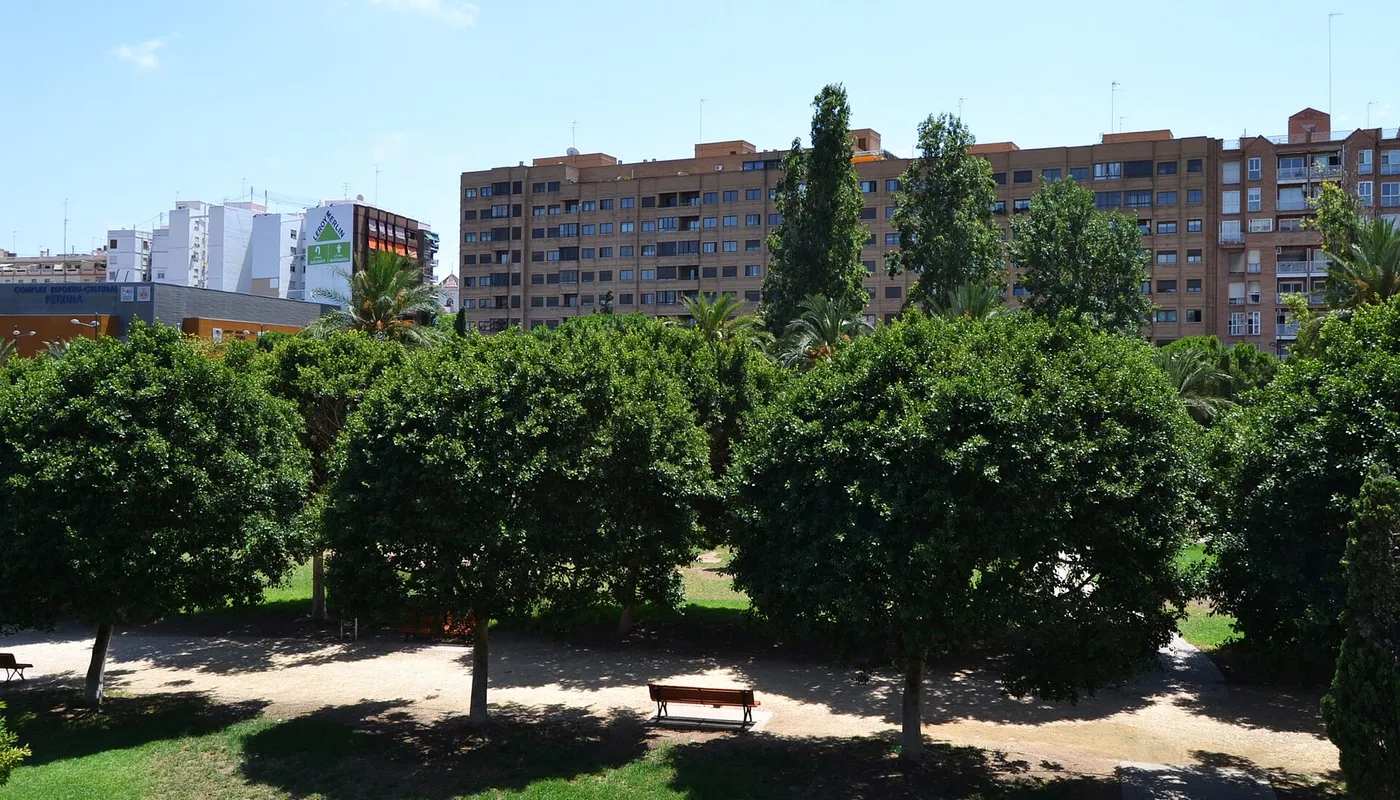
Almost nobody moves to Valencia for the quiet, and almost nobody is warned how loud it is either. The sunshine, the food and the beach get described in detail; the sound does not. Then you arrive, and the first month is a run of small surprises: a shop shutter at eight, a firecracker on an ordinary Tuesday, a car alarm nobody comes to switch off.
None of it is a scandal. All of it is real, and it is worth knowing before you sign a twelve month lease rather than after. In Valenciano the word for noise is soroll, and the city has a genuine talent for it.
What the measurements actually say
Valencia's reputation for noise is older than most of the people repeating it, and the loudest version of it - that the city was once formally crowned the noisiest in Europe - does not survive a check. What does hold up is a Fundación La Caixa study reported in March 2003, which measured the city's road network at an average of 73.3 decibels. Only about 1 percent of the points it sampled came in below 65 decibels, and a third were above 75.
Those numbers need a scale to mean anything. Normal conversation sits around 60 decibels and busy traffic commonly runs 70 to 80, so a 73.3 average describes a city where the background is roughly as loud as the conversation you are having over it. The World Health Organization's 2018 guidance puts the point at which road traffic noise starts doing measurable harm at 53 decibels Lden. And because the decibel scale is logarithmic rather than linear, the distance between 65 and 75 is far larger than those ten points suggest.
There is no current league table crowning a noisiest European city, so treat anyone who names one with suspicion, this page included. The European Environment Agency publishes exposure data by country and by agglomeration, not a podium.
For a current, city-wide picture there is the European Environment Agency's modelled noise mapping, published under the EU Environmental Noise Directive (2022 round) and republished by DecibelShield. It puts Valencia's noise-exposed residents at 55 to 75 dB Lden by day and 50 to 65 dB at night, mostly from road traffic, and DecibelShield's ranking of the same data places the city 63rd of 314 European cities and third loudest of Spain's 19 mapped agglomerations. The WHO road-traffic guideline is 53 dB Lden and 45 dB at night, so exposed residents run roughly 12 dB above the daytime figure. The model counts road, rail, aircraft and industry only, so sirens, nightlife and building work sit outside it.
Firecrackers are a year round fact, not a March one
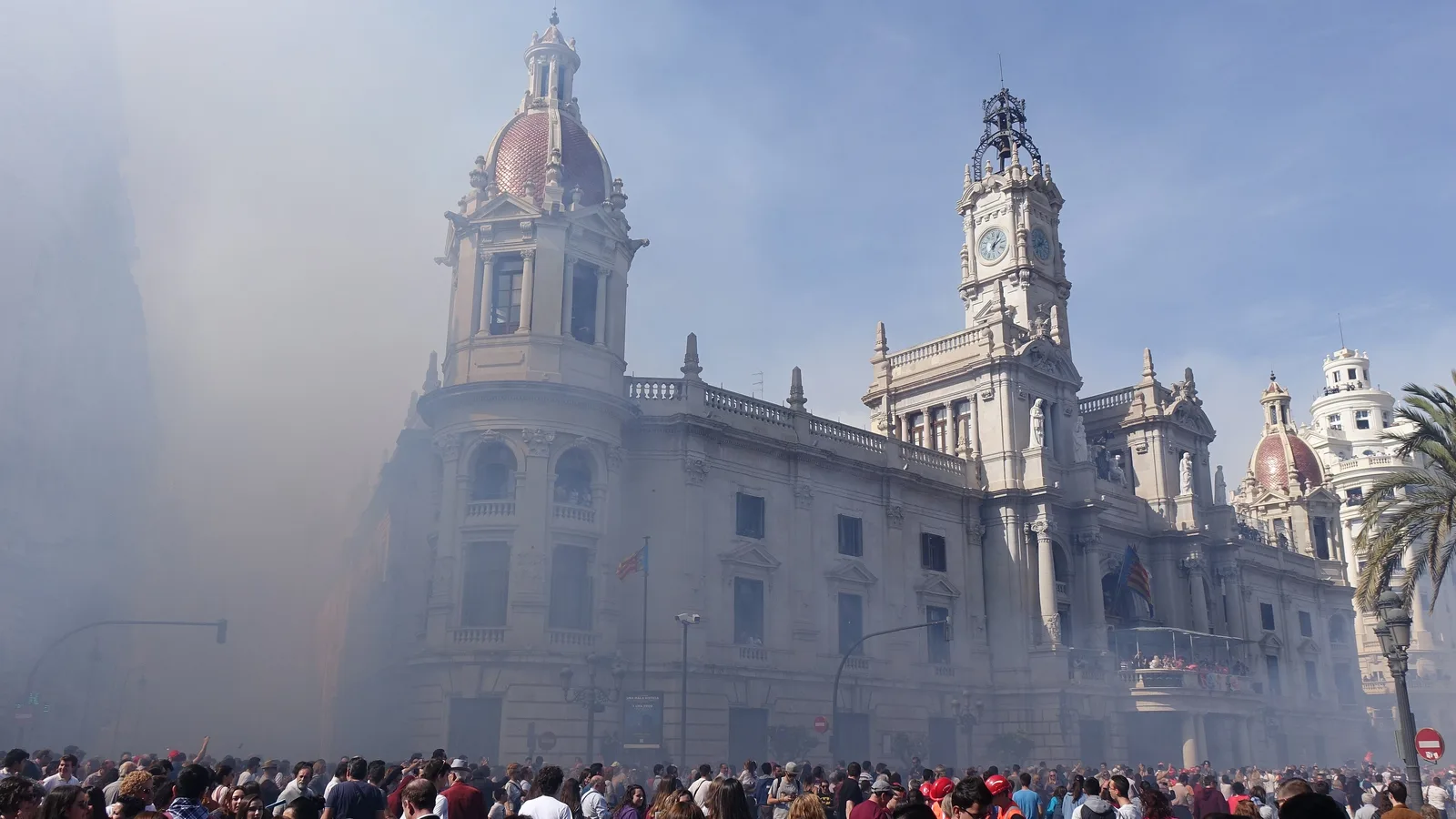
Photo: Maria19731008, CC BY-SA 4.0
Las Fallas gets the headlines, but petardos go off across the whole calendar: saints' days, neighborhood fiestas, a Casal Fallero marking something the rest of the street has not been told about. In March it becomes structural. The mascleta fires at 2pm sharp every day of the month in the Plaza del Ayuntamiento, which at least is a daytime event you can plan around, and it is loud in a way that is hard to convey in writing. It is built to be felt in the chest rather than heard.
Valencians grow up inside this and have a tolerance you do not have yet. Most people do build it, but it takes a season or two, and the first Fallas is a lot. For the background see our Las Fallas guide, and for why the mascleta is a craft rather than chaos, the story behind it.
Hear a mascletà
Valencia mascletà, 7 March 2025, 6 minutes 34 seconds. Best through speakers or headphones, and turn the volume down first: the finale is very loud.
Audio: Robert.Crosley, Freesound, CC BY 4.0
The everyday layer is the one that wears you down
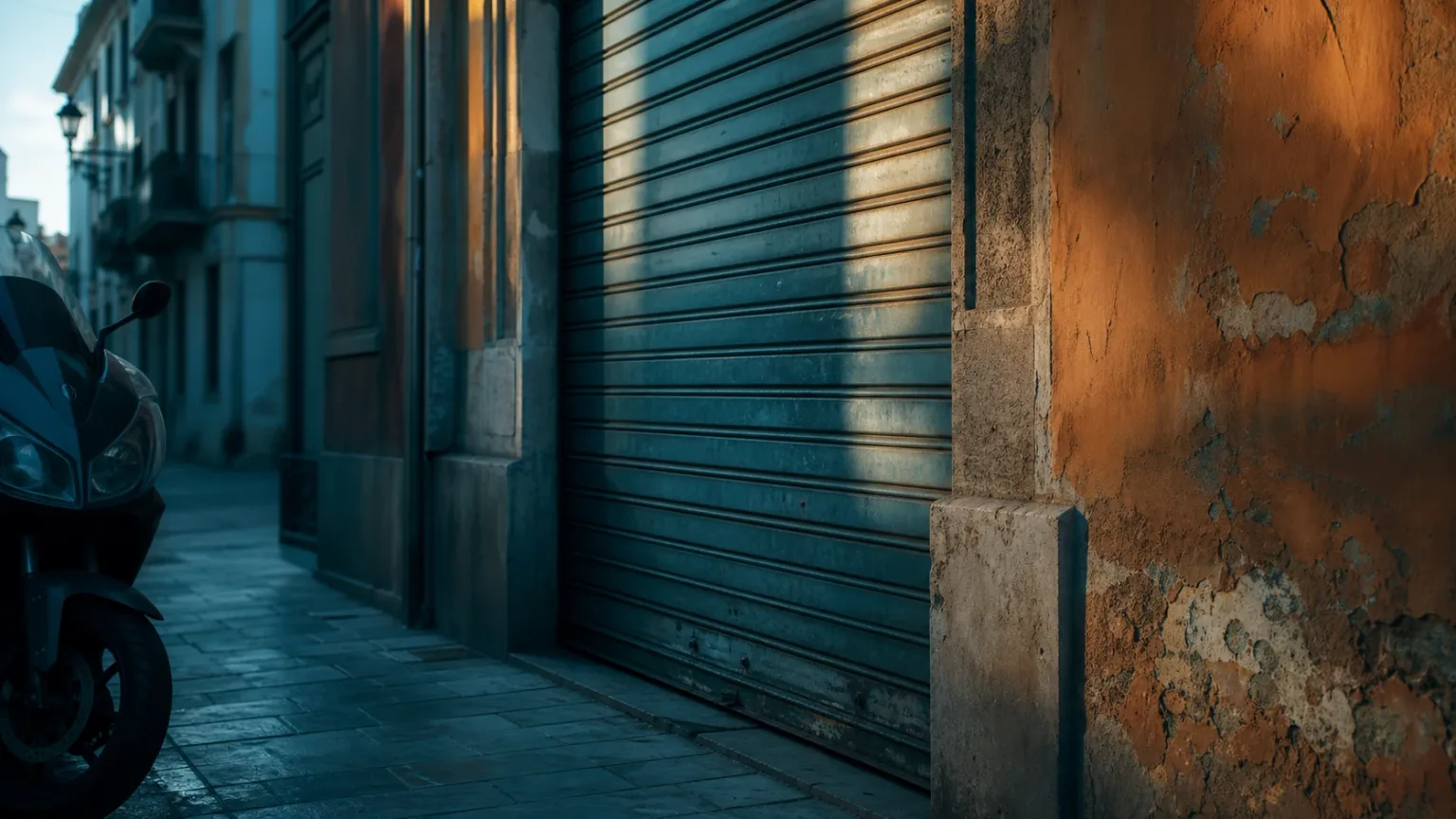
Festivals are memorable; the background is what actually costs you sleep, because it never announces itself. Scooters are a real share of city journeys and a tired exhaust is audible several streets away. Metal roller shutters go up around eight with a sound somewhere between a rattle and a small avalanche. Bin lorries run early, and the glass banks are the worst of them: a few hundred bottles tipped into a metal hopper carries a very long way at two in the morning.
Car and building alarms go off for no reason and often run their whole cycle, because the owner is away for the weekend. Tiled floors and thin interior walls pass on everything from a dragged chair to a neighbour's television. None of this is unique to Valencia. What makes it noticeable is the building stock: narrow historic streets bounce sound between facades, and much of the housing predates any serious thought about insulation.
Building work, and what the rules actually allow
Renovation is close to a civic hobby here, and in an older block you will eventually live above or below one. It is worth knowing the limits rather than guessing at them. The municipal noise rules allow domestic works Monday to Saturday from 08:00 to 22:00, and on Sundays and public holidays only from 09:30 to 22:00. Glass banks are off limits between 22:00 and 08:00.
Enforcement is uneven, and calling the police about a drill at nine on a Saturday morning will get you nowhere, because at that hour it is legal. Knowing the hours is still worth it. It tells you when you have a complaint worth making and when you do not, and that is most of the difference between adapting to the city and quietly seething at it.
The fiesta calendar genuinely does not stop

Casal Fallero clubhouses, neighborhood verbenas, live bands on summer terraces, the night of San Juan on the beach, the July fair: Valencia treats a party as something close to a civic duty, and permissions frequently run to four in the morning. If you live near a Casal or a bar strip, several weekends a year are simply not sleeping weekends. Read that whichever way you like.
It is the same quality that makes the city feel alive at street level instead of shuttered at nine, and most people who stay decide the trade is a good one. But it is a trade, and pretending otherwise does new arrivals no favors.
The rule that changed in Russafa
Valencia has a legal instrument for this, and the most significant one landed recently enough that older guides will not mention it. A Zona Acusticamente Saturada, an acoustically saturated zone, is a formal declaration that an area's accumulated night noise exceeds what the rules permit, and it carries restrictions on new bar and terrace licences with it.
El Carme has held one for years. Russafa's took a court to force. The Tribunal Supremo confirmed in June 2021 that the neighbourhood qualified, and the city council approved the definitive declaration on 30 April 2026, roughly six years after being ordered to. It entered into force the following month, and the hospitality trade appealed it almost immediately.
For a resident this matters in a concrete way. A ZAS is the city conceding in writing that a barrio is too loud at night, so if you are weighing Russafa or El Carme against a quieter street, that declaration is evidence rather than opinion. It is also why a ground-floor bar below your flat may not simply be replaced by another one when it closes.
How to choose a flat you can sleep in
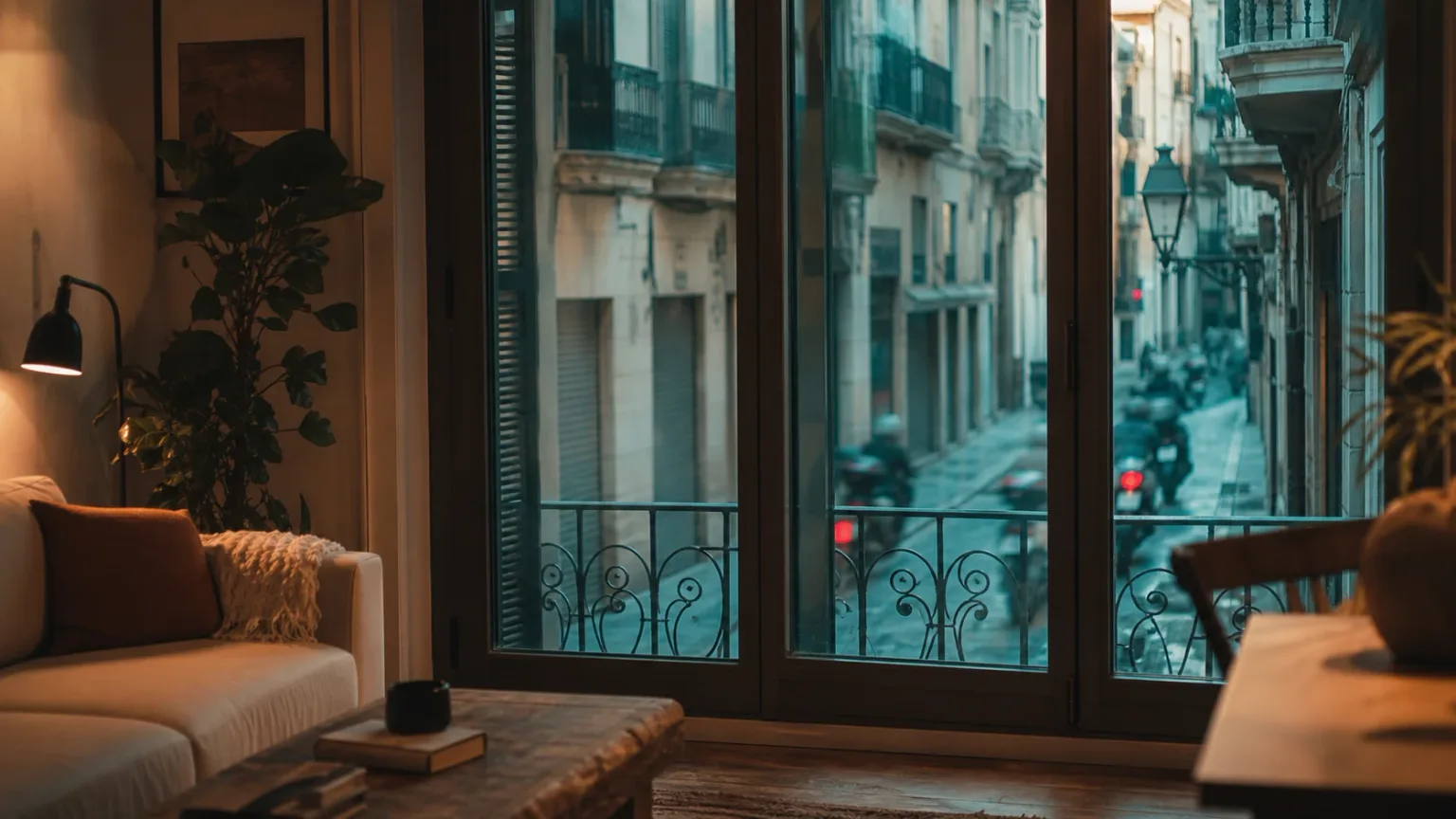
More of your noise experience is decided by the lease than by the city, and nearly all of it is checkable before you sign. Stand on the street at eleven on a Friday night and again at eight on a Saturday morning, not at noon on a weekday when the agent shows you round. Ask specifically about double glazing, whether any bedroom faces the interior patio, what sits directly below you (a bar, a bakery that starts at five, a shop with a shutter), how close the nearest Casal Fallero and glass bank are, whether the street hosts a weekly market, and whether the building has works planned.
Top floors escape footsteps but catch terrace noise. Interior flats are darker and much quieter, which is a real trade rather than a free win. Our renting guide covers the rest of the lease, and the neighborhood guide flags which areas run calmer if that matters more to you than having everything downstairs.
If noise bothers you: what actually helps in a Valencia flat
Most noise problems in Valencia are solved by a few cheap fixes rather than one big purchase. Start with what is free or inexpensive, and only pay for building work once you know which noise you are fighting and whether your lease allows it.
Earplugs for sleeping through street noise
Foam and moulded silicone plugs are the cheapest fix and work for most night-time noise. Look for the SNR figure on the pack, the decibel rating that EU hearing protectors carry. Real-world protection is usually lower than the lab number, so a seal that fits matters more than a bigger figure. If your ears hurt or feel blocked after using them, stop and ask a pharmacist or doctor.
Masking sounds and grey noise for light sleepers
A steady sound can cover irregular street noise such as scooters and voices. White, pink and grey noise are variations on this idea, and grey noise is shaped to sound evenly loud across pitches. The research is cautious: studies of white and pink noise show no consistent effect on sleep, with the best results in hospitals. Try it for a week without expecting a miracle, and keep the volume low.
Acoustic double glazing and sealing gaps in windows
Ordinary double glazing is sold mainly for temperature. Against noise, look for laminated panes and two panes of different thickness, which stops them resonating together. Before paying for new windows, seal the gaps around frames and shutter boxes, where sound leaks in. If you rent, ask the landlord first, and in a building with a community of owners check how community approval works for changes visible from the street.
Soundproofing wall panels: absorbing versus blocking noise
Foam or fabric acoustic panels reduce echo inside a room, which makes it feel calmer, but they do little to stop a neighbour's sound coming through the wall. Blocking noise takes mass and separation, such as a second layer of plasterboard on a separate frame. That is building work and needs the landlord's permission in a rented flat. For renters, heavy curtains, a bookcase against the shared wall and a rug are the realistic options.
Talking to noisy neighbours before you complain
A friendly word works more often than a formal complaint, and it costs nothing. Knock, talk about the hour and the sound rather than the person, and offer something concrete, such as quieter footsteps after eleven. If that fails, tell the building administrator. For street noise from bars and events, the ZAS section above explains what the city has actually declared.
A quiet cabin or room to retreat to
If you work from home or need silence to recover, a small dedicated space helps more than fighting the whole flat. That can be a room on the courtyard side, a portable acoustic booth for calls, or a quiet desk in a coworking space or a library. Booths are expensive and bulky, so try the free version first: a room with a closed door, headphones and a quieter hour.
So is it a reason not to come?
For most people, no. The honest version is that Valencia is louder than northern European cities and fairly normal for a Spanish one, that the noise concentrates in identifiable places and hours, and that a well chosen flat removes most of it. The people who struggle are the ones who need reliable silence to work, who sleep lightly and cannot use earplugs, or who took the balcony over the lively street because it looked wonderful in the listing photos.
If that is you, the answer is not to skip Valencia. It is to take the apartment search far more seriously than you were planning to.
Give it a season. The first few weeks are the worst of it, partly because the sound is unfamiliar and partly because you have not yet learned which noises stop and when. Most of them stop. Pack earplugs for March, choose the street with more care than the kitchen, and the rest genuinely does become background.
Want a street that matches how you actually sleep?
Tell us how you work, when you sleep and what you can live with, and we will tell you which areas to look at and which to rule out.
Contact us
About the author
Michael Bastin
Founder, ValenciaMove - Valencia since 2016
Michael moved to Valencia in 2016 and has helped dozens of families relocate since. He writes every guide on this site personally and verifies every fact against Spanish government sources before publishing.
Buy Michael a coffeeNeed help with your move?
Contact us. We handle visa, admin, and housing so you can focus on the exciting part.