
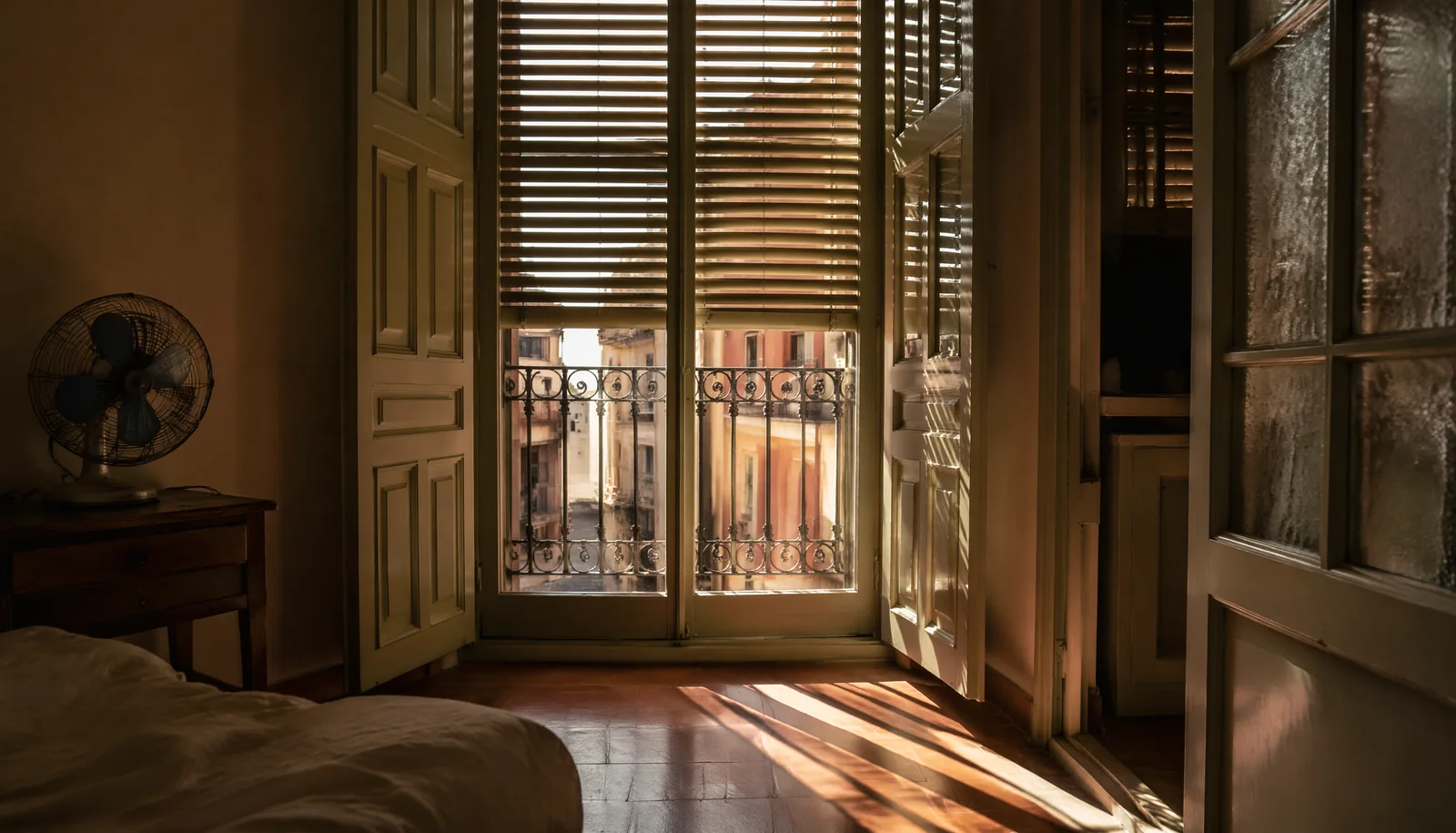
This is not a weather post; for the month-by-month picture, our Valencia climate guide has you covered. This is about the part of summer nobody photographs: what an August afternoon feels like inside a Valencia apartment, and what residents actually do about it. Highs brush 30C at the peak of summer and the humidity makes it feel stronger than the thermometer suggests, so the difference between a flat that stays livable and one that turns into a greenhouse comes down to orientation, shutters, airflow and, only then, air conditioning.
Why Valencia flats run hot in the first place
Three structural reasons. First, orientation: south and south-west facing flats overheat from June to September, the exact reason our viewing checklist tells you to visit at the time of day you will actually be home. Second, building stock: much of the city's older housing was built with thin walls, single glazing and little or no insulation, so heat that gets in stays in.
Third, your floor: top-floor flats take direct roof heat all day (the flip side of the light and the views), while a bajo or first-floor flat stays several degrees cooler in summer but darker and colder in winter. None of these are deal breakers, but if you are still choosing a home, they should shape the shortlist as much as the rent does.

Persianas: the free air conditioning locals swear by
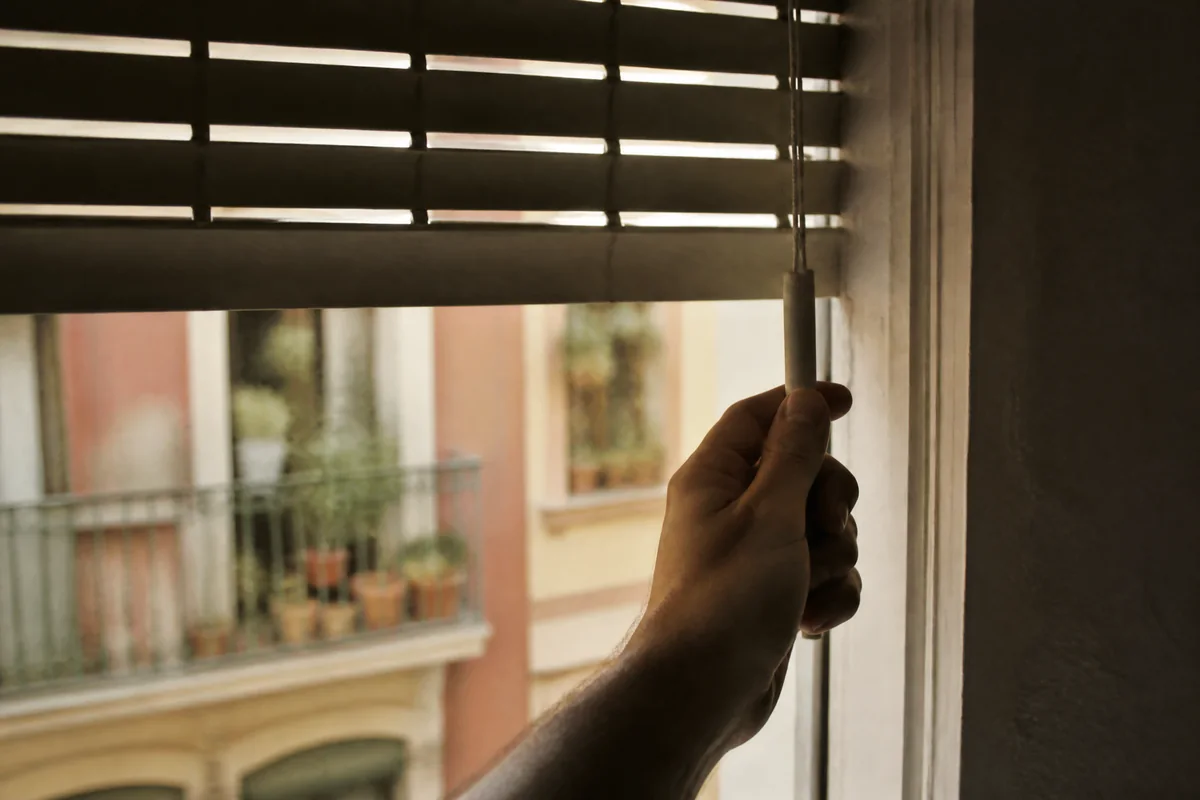
Every Valencia flat comes with persianas, the roller shutters on every window, and the local routine is the opposite of the northern European instinct to let the light in. Locals close shutters and windows during the hottest hours of the day to keep the sun and hot air out, then open everything after sunset to let the cooler night air flow through. It feels counterintuitive to live in half-darkness in one of the sunniest cities in Spain, but a closed persiana over a closed window keeps a room several degrees cooler through the afternoon at zero cost. If a flat you are viewing has broken or missing shutters, treat it as a real defect, not a cosmetic one.
Cross-ventilation and ceiling fans
The classic Valencia flat runs from a street-facing facade to an interior patio de luces, and that layout exists partly for this reason: open a window on each side at night and the pressure difference pulls air through the whole flat. When you view a home, check whether it actually has openings on two orientations; a flat with all its windows on one hot facade cannot cross-ventilate no matter what you do. Ceiling fans are the other underrated tool: they cost very little to run compared with AC and make a room feel noticeably cooler, which is often enough for the milder weeks of June and September, saving the AC for the July and August core.
Air conditioning: options and what installation really involves
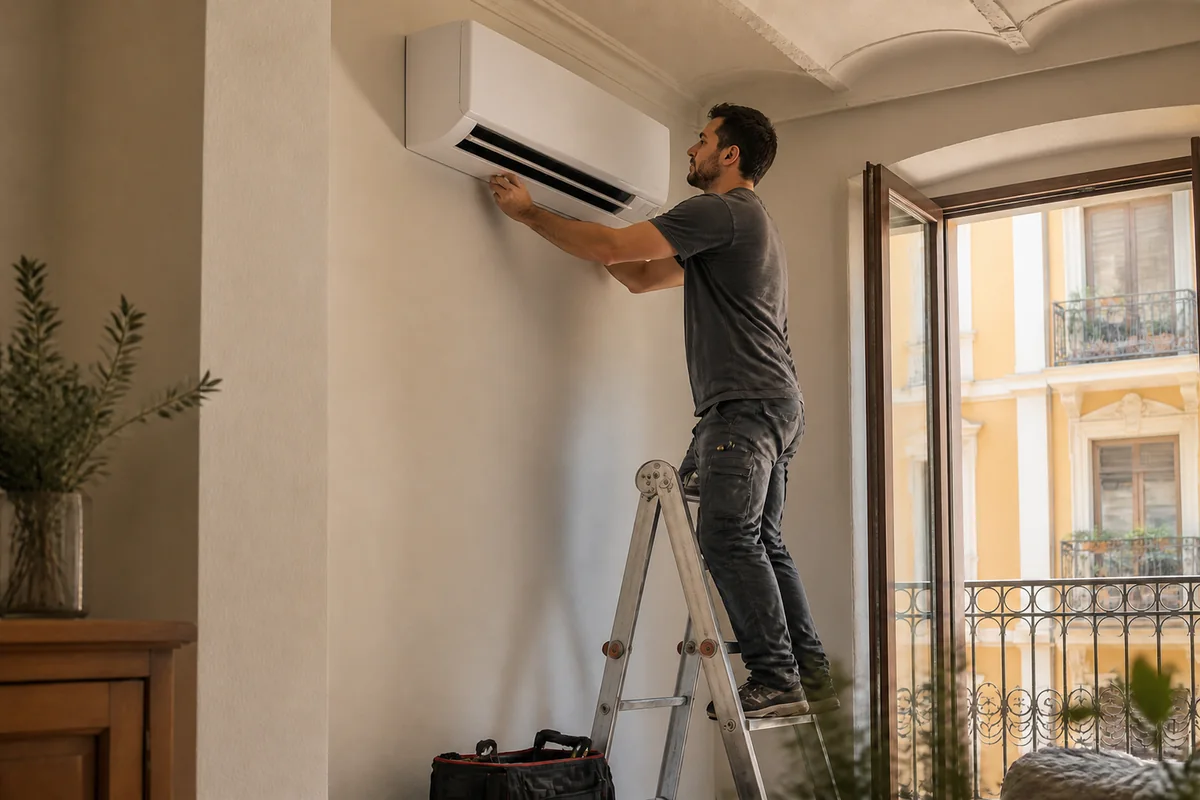
The standard solution in apartments is a split unit: an interior wall unit connected to an exterior condenser. Portable units exist but are noisy and much less efficient, so most residents who stay past their first summer end up with at least one split in the main bedroom or living room.
On cost, be careful with anyone quoting a single confident number: the final price depends on the unit's capacity and brand, how far the condenser sits from the interior unit, whether the pipework can reuse an existing run, and access to the facade or roof, so get two or three written quotes from installers rather than budgeting off a forum post. Expect the running cost to show up too: summer aircon is the swing factor in Valencia electricity bills. Whatever you do, sort it before the first heatwave; installers' books fill up exactly when everyone decides at once that this is the year.
If the summer bill is what really worries you, part of the fix sits in the contract rather than the thermostat: our guide to what drives a Spanish electricity bill covers contracted power, PVPC and the cheap hours.
The comunidad wrinkle: you cannot just bolt a condenser to the facade
The exterior condenser is where renters and new owners get caught. The facade of the building is a common element that belongs to the comunidad de propietarios, the owners' community, so placing a condenser on it usually needs the community's permission, and many buildings restrict units to the roof, an interior patio or existing designated spots. Renters need the landlord's written consent on top of that, since a split install drills through the wall. Ask the administrator or president of the comunidad before you buy anything, and if you are renting, make AC either present or pre-agreed in the contract; our renting guide covers what belongs in writing before you sign.
When a reform beats another AC unit
If you own the flat, there is a point where adding more cooling is treating the symptom. Single-glazed windows and uninsulated walls leak the cool air out as fast as the AC makes it, so a window upgrade to double glazing or insulation work often does more for August afternoons (and January mornings, and your electricity bill, and street noise) than a second split unit. It is also the kind of targeted reform that Valencia's older building stock rewards: the structure is usually sound, the envelope is what dates from another era. Treat persistent overheating as a data point about the building, and price a reform quote alongside the AC quote before deciding where the money goes.
How locals complain about the heat
Complaining about the heat is a summer sport here, in two languages. Tap play and try these out loud - dropping one at the panadería counter earns instant smiles.
¡Qué calor!Castellano
'What a heat!' The baseline complaint, said to nobody in particular.
Me estoy asando.Castellano
'I am roasting.' The standard reply to the first one.
Esto es un horno.Castellano
'This is an oven.' For flats, buses and the metro platform.
Hace un sol de justicia.Castellano
'A sun of justice' - a merciless, punishing sun.
Estoy sudando la gota gorda.Castellano
'Sweating the fat drop' - sweating buckets.
Quina calor!Valencià
The Valencian 'what a heat!' - note that calor is feminine here.
Quina basca!Valencià
Basca is that sticky, airless mugginess - a very Valencian word.
Açò és un forn!Valencià
'This is an oven', Valencian edition.
Want to go beyond complaining about the weather?
Our guide to learning Spanish in Valencia covers apps, intercambios and realistic timelines for getting conversational.
Compare Spanish schools in ValenciaThe honest summary: pick your orientation carefully if you have not signed yet, use the persianas the way the neighbors do, ventilate at night, add a fan before you add a compressor, and if you own the walls, consider fixing the envelope before cooling the leak. Valencia summers are long, but they are also exactly what the city's housing has quietly adapted to for generations. And if the summer you are bracing for includes the smell of smoke carried on the poniente, our guide to wildfires in the Valencia region explains the official alert levels and what they actually restrict.
Still choosing the flat itself?
Orientation, shutters and airflow are easiest to get right before you sign. A consultation can help you weigh a specific flat, and our home-finding service does the summer stress test for you.
Contact us
About the author
Michael Bastin
Founder, ValenciaMove - Valencia since 2016
Michael has lived in Valencia since 2016 and helps people move here.
Buy Michael a coffeeNeed help with your move?
Contact us. We handle visa, admin, and housing so you can focus on the exciting part.