

Photo: Diego Delso, CC BY-SA 3.0
Taxis and ride-hailing in Valencia
A street taxi, Cabify, or FreeNow: three real ways to get a car here, and one big misconception about a fourth. Here is how to choose and what it costs.
Visiting for a few days and wondering whether to hail a cab or open an app? Living here and want the cheapest reliable option for a night out? Both questions have the same starting point: know which apps actually run private cars in Valencia, and which ones only book you a taxi.
For a short visit, any of the three options below works without registration or a Spanish phone number in most cases. Cabify's upfront pricing is usually the simplest for a first-time visitor.
Living here changes what matters: knowing the night and holiday supplements, keeping a taxi company's phone number for a quick pickup, and understanding that Valencia's Uber is not the private-hire Uber you may know from elsewhere.
Getting a car in Valencia, at a glance
Who actually operates here, and how each one works.
Street taxis
White cars with a roof light. An illuminated green light means the taxi is free to hail; ranks are also common outside stations and major squares.
Cabify
A genuine private-hire (VTC) fleet with upfront fares shown before you confirm. The most established ride-hailing app operating in the city.
FreeNow
Combines licensed taxis and private-hire cars in one app. Adds a small EUR 0.30 sustainability charge per trip in Valencia.
Uber, in practice
Uber's own private-hire fleet left Valencia in 2019. The Uber app today books Uber Taxi, a licensed taxi at the standard metered rate.
Bolt
Not currently operating in Valencia, unlike several other Spanish cities.
Day fares
Flag-fall EUR 2.00 plus EUR 1.36 per km by day; night and holiday rates run higher, from EUR 2.60 flag-fall.
Hailing a street taxi: the roof light and the ranks
Valencia's official taxis are white, licensed by the Area de Prestación Conjunta covering the city and several surrounding municipalities, and identifiable by a roof-mounted light box. A lit green light signals the taxi is free; a driver with the light off is already carrying a fare.
Ranks are easy to find outside the train stations, the airport, major squares and along the main avenues, and hailing one on the street works just as well as walking to a rank. Phone booking is also common, and several radio-taxi numbers operate citywide for exactly that.
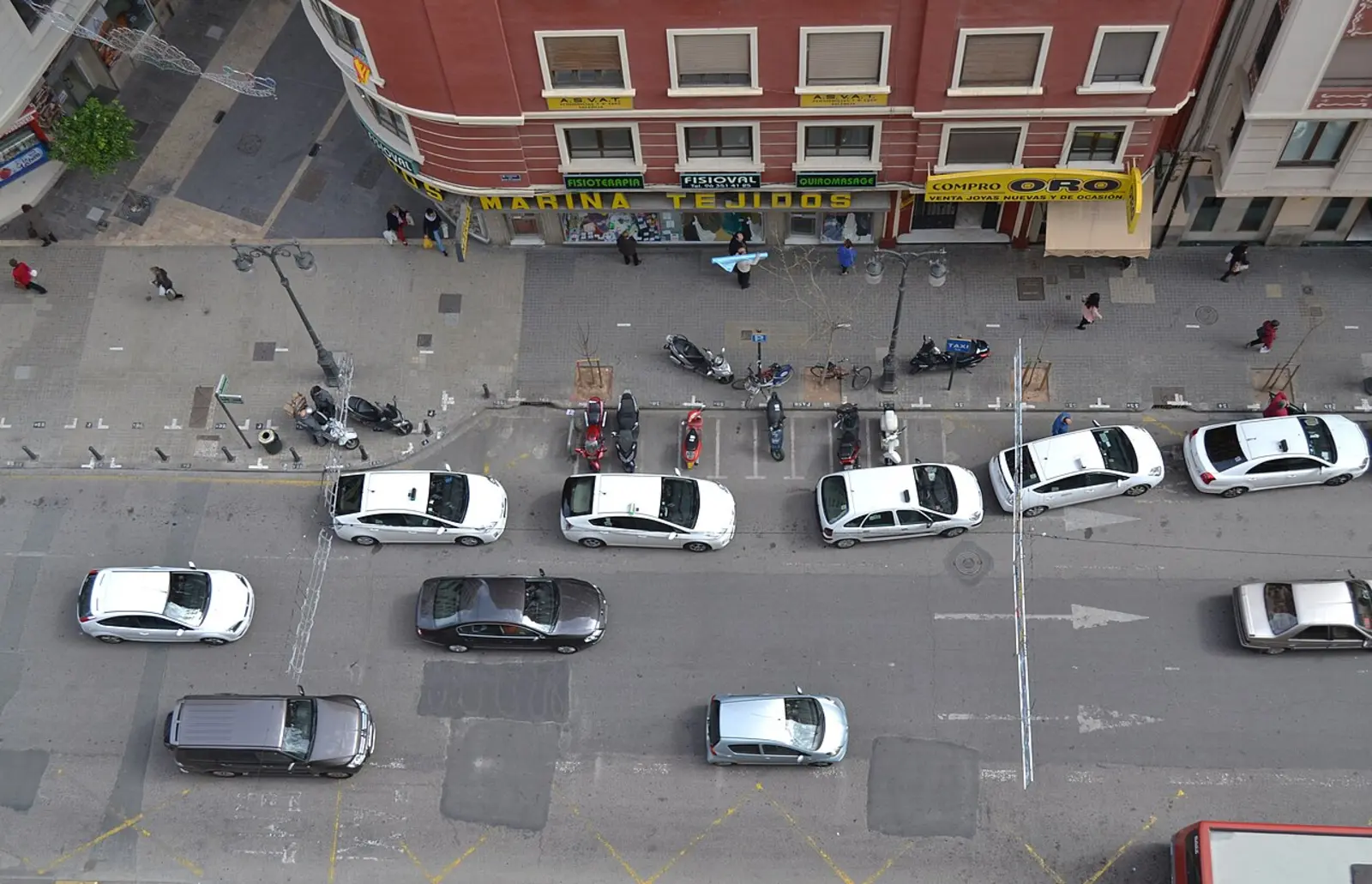
Photo: Joanbanjo, CC BY-SA 3.0
Cabify and FreeNow: how app booking works here
Cabify shows a fixed or estimated fare before you confirm the ride, takes payment through the app, and is the option most similar to ride-hailing apps in other major cities. It is generally the most reliable app-based pickup in Valencia outside peak surge periods.
FreeNow blends both worlds in one app, letting you book either a licensed taxi or a private-hire car depending on availability, and adds a small EUR 0.30 per-trip sustainability charge on Valencia journeys. Either app works well for a booking from a specific address rather than a street hail.
Why Uber in Valencia is not what it is elsewhere
This is the single most common point of confusion for newcomers and visitors alike. Uber ran its own private-hire fleet in Valencia until May 2019, when it withdrew rather than comply with a rule requiring VTC bookings 15 minutes in advance.
What operates under the Uber app today, since late 2021, is Uber Taxi: opening the app and requesting a ride dispatches a licensed taxi, charged at the same official metered rate a street hail would cost. There is no separate, cheaper private car behind the Uber button here, and comparing Uber prices against Cabify on the assumption both are private-hire fleets will give a misleading picture.
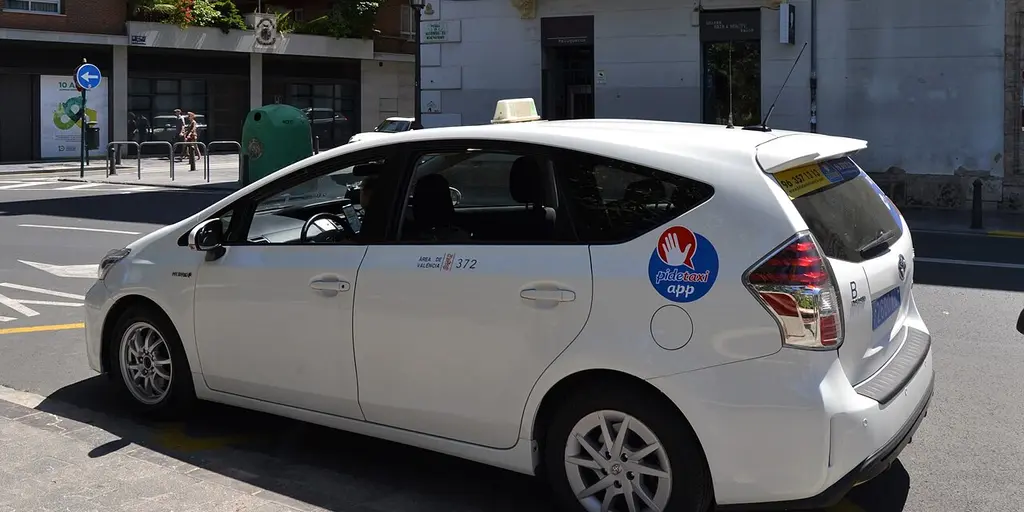
Photo: Joanbanjo, CC BY-SA 4.0
Fares: day, night, holiday and the phone-booking supplement
Daytime tariff 1 runs a EUR 2.00 flag-fall plus EUR 1.36 per kilometre, with a EUR 4.95 minimum fare. Night and holiday tariff 2 steps up to a EUR 2.60 flag-fall plus EUR 1.48 per kilometre, with a EUR 7.20 minimum, and fares rose by around 9 percent across the board in 2026, the first above-inflation increase since 2014.
Booking by phone or app adds a supplement, up to EUR 5.00 for a standard pickup and up to EUR 8.10 for certain special services, on top of the metered fare. It is a modest cost for the convenience of a guaranteed pickup at a specific time and address.
When a taxi is cheaper than the apps, and when it is not
For a short, direct hop through the centre during the day, a street-hailed taxi and Cabify tend to land close to the same price, and hailing on the street avoids any booking supplement. A taxi rank also wins hands-down at busy moments, major events, Fallas, a Friday night, when app cars can be scarce or surging.
Cabify and FreeNow generally edge ahead for an advance-booked, off-peak trip where seeing the fare upfront matters, or for airport pickups scheduled around an early flight when a guaranteed booking beats hoping to find a free taxi on the street.
Mistakes that cost money or time
Assuming Uber offers a cheaper private car
Uber here books a standard licensed taxi at the metered rate. There is no separate private-hire fleet behind it in Valencia.
Not knowing about FreeNow's small surcharge
The EUR 0.30 sustainability charge is minor but shows up on every FreeNow trip in Valencia; it is not a pricing error.
Applying night rates by mistake, or missing them
Tariff 2 (night and holidays) is noticeably higher than the daytime tariff 1. Check which applies rather than assuming a flat rate around the clock.
Expecting Bolt to be an option
Bolt does not currently operate in Valencia, unlike several other Spanish cities. Do not plan around an app that is not here.

Resident in Valencia since 2016. Founder of BeTranslated. 25+ years in translation, interpretation and multilingual SEO.
Reviewed 29 August 2026 by Michael Bastin