
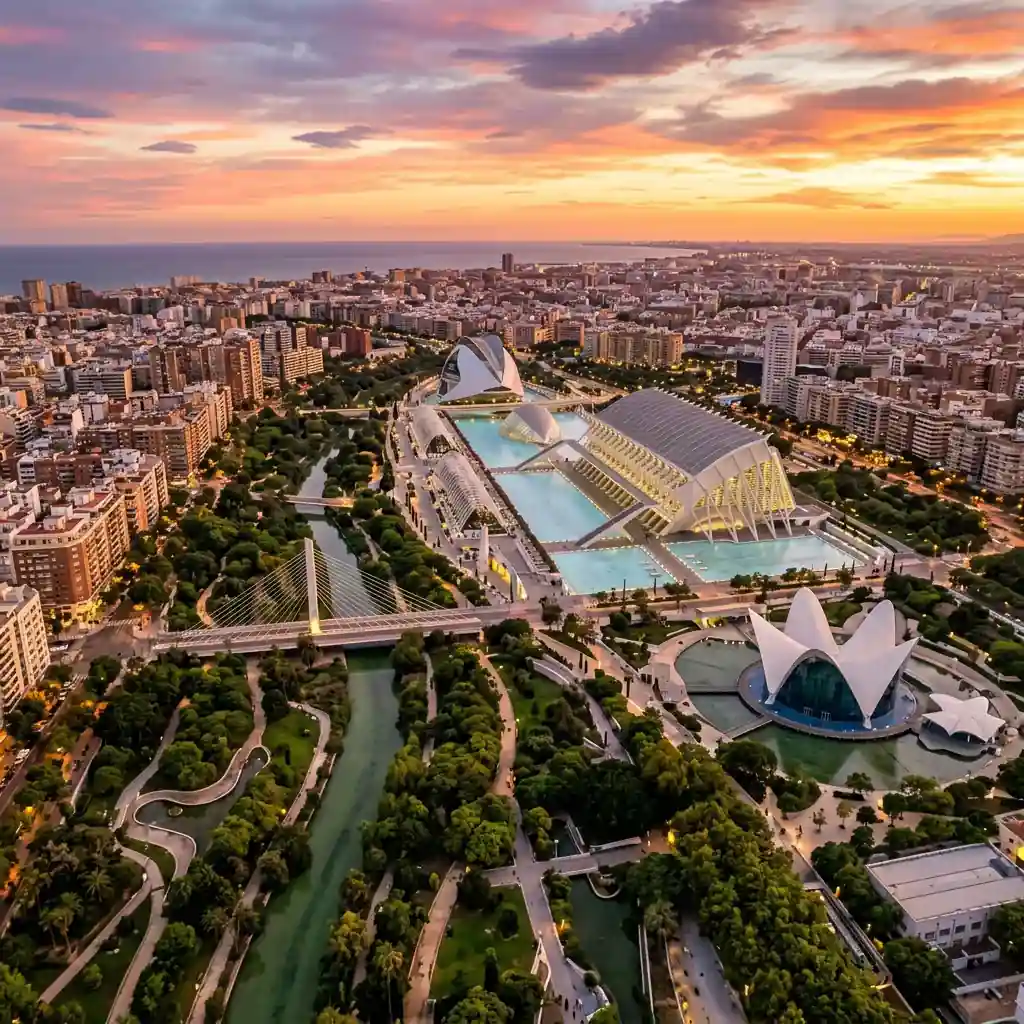
Photo: Diego Delso, CC BY-SA 3.0
Where to live in Valencia: find your area by budget, transport and lifestyle
Set the filters yourself and see which barrios and nearby towns actually fit. Every rent figure comes from the Fotocasa index and every metro line from Metrovalencia, so what you read here matches the full guide behind each result.
0 areas match
Start filtering
Pick the filters you want on the left, then press Show results. 57 areas compared in total.
Rents: Fotocasa asking-rent index, September 2026. Transport: Metrovalencia and the ATMV fare-zone table. Noise: the Ajuntament de Valencia ZAS register. Tourist pressure: INE experimental tourist-housing statistic, May 2026.
Room prices are an estimate, not listings data: each area's 70 m2 rent from the Fotocasa index, scaled so the city average matches the roughly 459 EUR a month reported for a room in Valencia in 2026. The real price depends on the flat, the bills included and how many people share it.
How this finder works, and what the numbers mean
One rent figure, measured the same way everywhere
Each area shows the monthly cost of a 70 square metre two-bedroom flat at its own asking-rent rate. That is the same calculation every barrio guide on this site publishes, so the finder and the guide can never disagree. Fotocasa publishes its index at barrio, district or municipality level, and each card says which one you are looking at.
Public transport, not only the metro
The metro is the most comfortable way into the centre, but plenty of good areas are served by tram, bus or Cercanías instead. Each result names the actual stations and lines rather than a vague rating. The historic centre has no metro station inside it at all, and the cards say so plainly.
Fare zones change what a commute costs
Godella, Rocafort, Alboraia, Paterna, Moncada and Torrent sit in the A to B overlap, so a trip into Valencia is billed as a single zone. Betera and L'Eliana are plain zone B, which makes the same journey two zones and roughly double the fare. That gap matters more than a few minutes of travel time.
Noise is a fact here, not an opinion
Rather than invent a quietness score, the finder reports whether the city has officially declared the area a Zona Acusticamente Saturada. Valencia has only a handful: the Barri del Carme since 2019, Russafa since April 2026, and the small Juan Llorens zone since 2009. Where a zone exists but its exact boundary is not published, the card says so instead of guessing.