
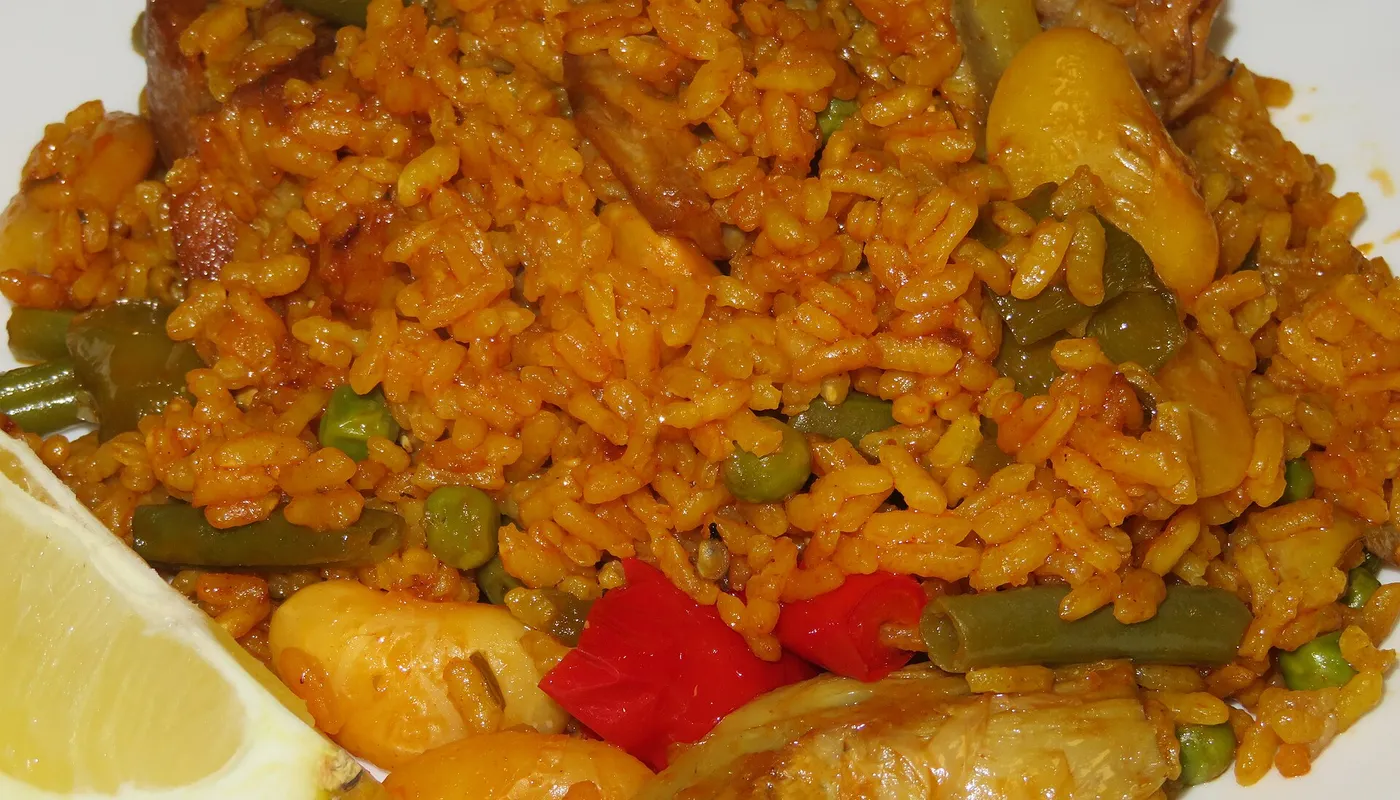
Paella Valenciana has a protected identity in its home region: the Generalitat Valenciana has recognized it as an intangible Bien de Interés Cultural, and a dedicated organization, Wikipaella, tracks restaurants that respect the traditional recipe. Valencians have a name for the version most of the world eats, loaded with chorizo, peas, and seafood: arroz con cosas, rice with stuff. Here is what the real version actually contains.
Paella Valenciana Ingredients: What's Actually Traditional
Wikipaella's own list of the ten essential ingredients: rice, chicken, rabbit, ferradura (flat green beans), garrofó (a lima-bean-like legume), tomato, olive oil, water, saffron, and salt. Rice matters more than people think: Bomba is the classic choice because it absorbs liquid and flavor without turning mushy, staying al dente, and Senia is a traditional alternative. Garrofó beans are essential precisely because they soak up the dish's flavors so well. Real saffron, ideally from La Mancha, not artificial coloring, gives the color and aroma.
A sprig of fresh rosemary goes in for aroma and comes back out before the rice does. Traditionally the liquid is plain water, not stock, since slow-cooked meat over an open flame builds its own rich broth directly in the pan, though home cooks are often advised to use chicken stock for a shortcut. Some purists also add snails as an optional ingredient, a recognized regional variation even though they are not on the list of ten essentials. Chorizo, peas, and onion are the three ingredients purists consider outright non-traditional.
Paella Valenciana Technique, Step by Step
The pan matters: a paellera is wide, shallow, and traditionally carbon steel, built so the rice cooks in a thin layer, which is what makes the socarrat possible. A 13 to 15 inch pan suits 4 to 6 servings. Season and cut the rabbit and chicken into small pieces. Sear them in olive oil until well browned, then push the meat to the edges of the pan.
Add the green beans and garrofó to the center and saute, then add grated tomato and cook it down until it reduces to a deep red, mixing everything together. Crumble in the saffron, add the water (or stock) at a ratio of roughly 3 parts liquid to 1 part rice, drop in the rosemary, and bring to a boil for a few minutes to let the flavors combine, then remove the rosemary before adding rice. Spread the rice evenly and do not stir it again once the liquid is in, stirring breaks the thin oil layer on the surface and ruins the texture. Cook on high heat for about 8 to 10 minutes, then reduce to medium-low for another 10 to 15 minutes without stirring, until the rice is al dente.
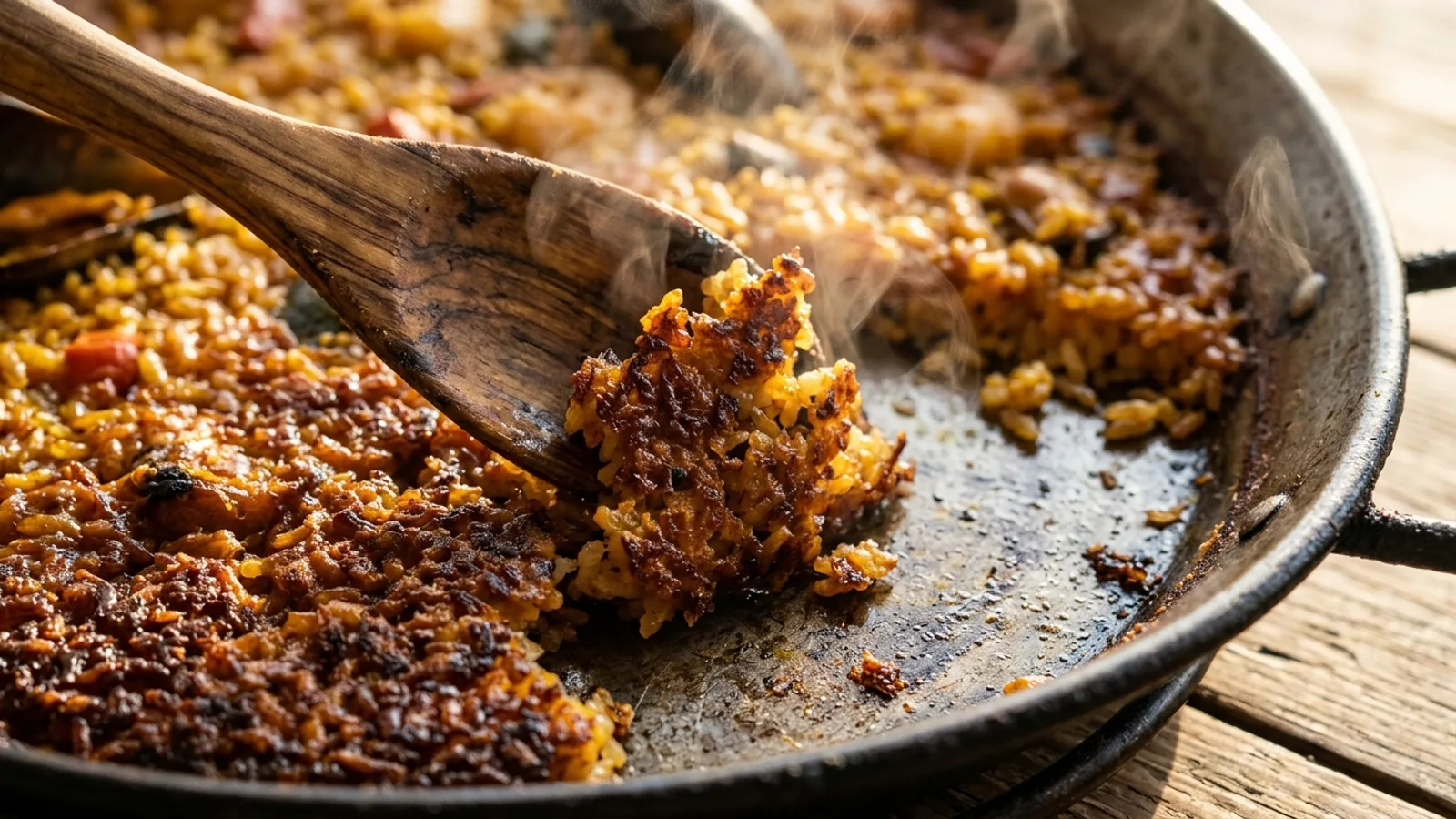
The socarrat: the whole point
Once most of the liquid is absorbed, crank the heat back up for the final 2 to 3 minutes to build the socarrat, the caramelized, crisp layer of rice stuck to the bottom of the pan. You are listening for a crackling sound and a faint toasted smell, not burning. Pull the pan off the heat once it forms, cover loosely (foil works), and let it rest 5 minutes before serving.
The mistakes that turn paella into something else
Stirring the rice after the liquid goes in is the single biggest error, it releases starch and kills any chance of a socarrat. Long-grain rice varieties that were never built to absorb broth without going mushy are the second most common mistake. Skipping the socarrat entirely is considered a real failure by purists, not a minor miss. And loading the pan with chorizo, peas, seafood, or onion produces a perfectly good dish that simply is not Paella Valenciana by the traditional definition.
How Valencians actually eat paella
Paella is a midday meal, not a dinner, traditionally a Sunday lunch, often cooked outdoors and eaten slowly with family. The most authentic way to eat it is straight from the pan: everyone gathers around, each person works their own wedge-shaped section with a flat spoon, from the outer edge toward the center, and no one rotates the pan to reach a better patch of rice. On the side it stays simple, just bread and a green salad, and the drink is plain water or a young red or rosé wine, not sangria, which is a tourist drink here. The crisp socarrat at the bottom is scraped up and shared at the very end, the reward for whoever is still at the table.
Where to buy real rice and garrofó in Valencia
Mercado Central has stalls selling Bomba, Senia and Albufera rice under the Denominación de Origen Arroz de Valencia label, alongside specialty grocers across the city that carry the same. Fresh garrofó beans are seasonal, but dried or frozen versions are available year round, and the Mercado Central is again the reliable source for the fresh, local version when it is in season.
Cooking a paella, or thinking about the whole move?
Getting the recipe right is one small piece of what makes Valencia feel like home. If you are thinking about the bigger move, we can help with the visa and the practical side of it.
Contact us
About the author
Michael Bastin
Founder, ValenciaMove - Valencia since 2016
Michael moved to Valencia in 2016 and has helped dozens of families relocate since. He writes every guide on this site personally and verifies every fact against Spanish government sources before publishing.
Buy Michael a coffeeNeed help with your move?
Contact us. We handle visa, admin, and housing so you can focus on the exciting part.