
Bringing your own car to Valencia sounds like the simple option. It is the item on a relocation checklist most likely to cost more than you budgeted and take longer than you planned.
This is what matriculación actually involves, what it costs, and the three situations where the sensible answer is to sell the car at home and buy one here.
Bring It or Sell It: Start With the Question, Not the Paperwork
Most people arrive having already decided to bring the car, then discover the cost after the fact. Do it the other way round.
Matriculación is the process of taking a foreign-plated vehicle off its old register and onto the Spanish one, with Spanish plates, a Spanish permiso de circulación and a Spanish tax history. It is entirely doable. It is also anywhere from several hundred to several thousand euros and a few weeks of your attention.
Four variables decide it: your car's CO2 figure, its age and value, whether it was built to EU specification, and how much you actually like the car.
The 30-Day Window After You Become Resident
Once you establish residency in Spain, a vehicle you brought with you has to be registered here. The deadline commonly applied is 30 days from establishing residency, and Tráfico can count from the date on your padrón or residency registration.
Driving indefinitely on foreign plates as a Spanish resident is the thing that gets people fined. Insurers treat it as a problem too: a foreign policy on a car whose owner is a Spanish resident is a claim waiting to be denied.
There is a relief worth knowing about. Someone transferring their normal residence to Spain who has owned and used the vehicle for at least six months before the move can usually apply for exemption from the registration tax, provided the car is not sold on quickly. It carries conditions and paperwork, but it is the single biggest saving available.
The ITV Inspection and the Ficha Técnica
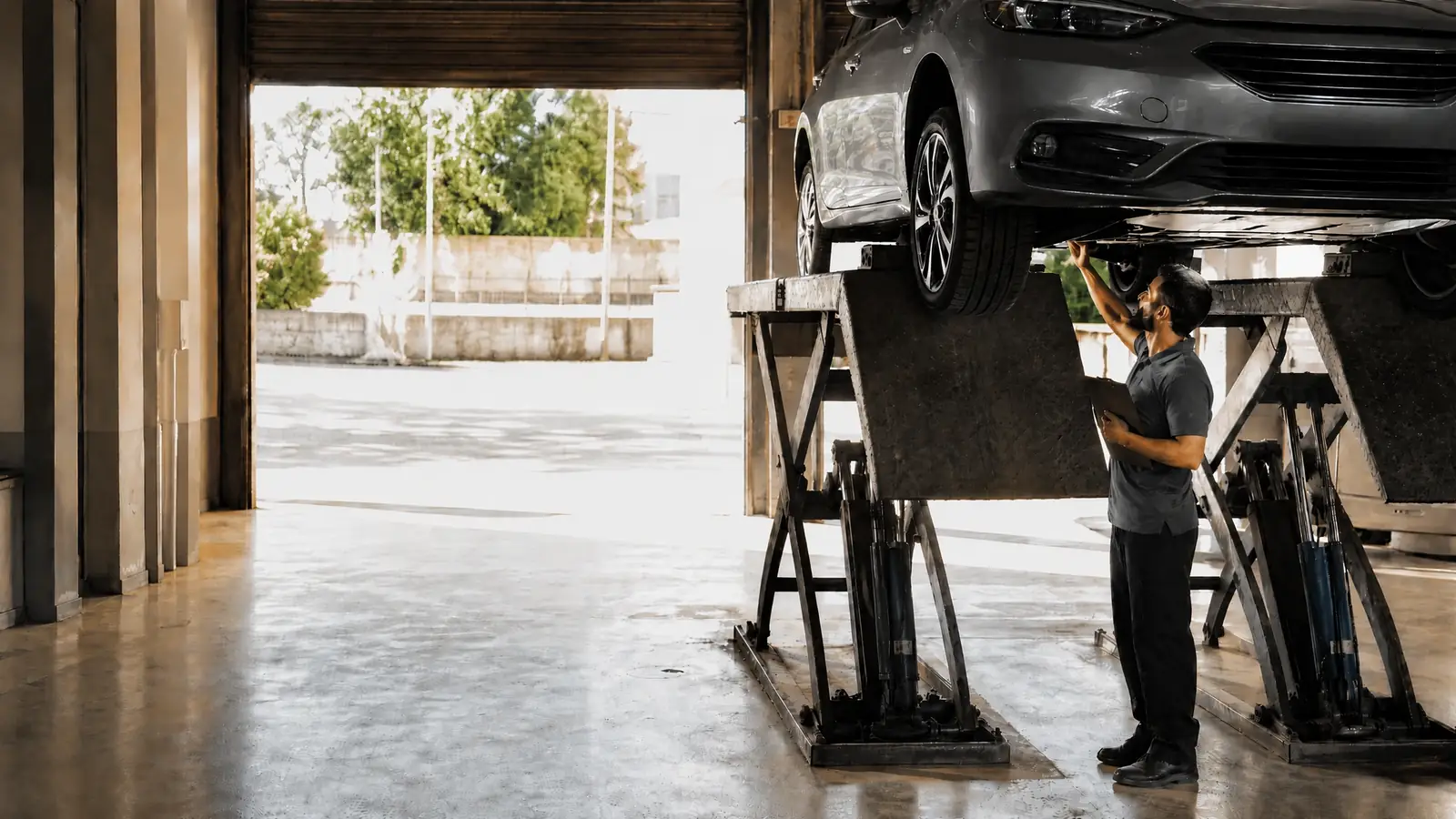
Before a foreign vehicle gets Spanish plates it has to pass an ITV inspection, Spain's roadworthiness test, at an authorised station.
For an import this is not the routine annual ITV. The station carries out the inspection for matriculación and issues the ficha técnica, the Spanish technical data sheet the vehicle needs in order to exist on the Spanish register.
If the car was built to EU specification you will usually need the European Certificate of Conformity from the manufacturer, which makes the whole thing straightforward. If it was not, a US-market or Japanese-domestic car for example, you are into individual homologation: changes to lights, speedometer and sometimes emissions equipment, with an engineer's report. That is where import costs stop being predictable.
ITV station fees vary by region and vehicle type. Budget for the inspection itself plus a re-test if something fails first time.

Photo: Arkangel, CC BY-SA 2.0
Impuesto de Matriculación and the CO2 Bands
The impuesto especial sobre determinados medios de transporte, universally called the impuesto de matriculación, is a one-off registration tax charged on the vehicle's value at the moment it joins the Spanish register.
It is banded by CO2 emissions, which is why a large diesel from 2012 can cost more to register than the car is worth, while a modern small petrol or hybrid can cost nothing at all.
Value is not what you paid. Hacienda applies its own valuation tables to used vehicles, based on the original list price with a depreciation scale by age, so you can end up taxed on a number higher than the car's real market value.
| CO2 emissions | Registration tax rate |
|---|---|
| Under 120 g/km | 0 percent |
| 120 to 159 g/km | 4.75 percent |
| 160 to 199 g/km | 9.75 percent |
| 200 g/km and above | 14.75 percent |
Thresholds and rates are set nationally and have been revised more than once, and the Canary Islands, Ceuta and Melilla apply different rates. Confirm the current bands with the Agencia Tributaria before you commit to shipping a car.

Photo: Grez, CC BY-SA 3.0
IVTM: The Annual Road Tax Nobody Mentions
Separate from the registration tax, every vehicle pays the impuesto de vehículos de tracción mecánica, an annual municipal road tax collected by the ayuntamiento where the car is registered.
It is calculated on fiscal horsepower rather than CO2, and each town hall sets its own rate, so the same car costs different amounts in Valencia city and in a village twenty minutes away.
It is modest next to the one-off registration tax, but it is the one that recurs, and it is tied to the address you register the car at.
The Full Cost Stack
Add these up before you decide: shipping or the drive down, the ITV inspection for matriculación, homologation and any required modifications, the registration tax if you do not qualify for the residence exemption, the Tráfico registration fee, new plates, and a gestoría if you would rather not do the filing yourself.
A gestoría handling the whole matriculación is a real option and a common one. It is not free, but the process runs through the ITV station, Hacienda and Tráfico in a specific order, and a mistake in that order costs more than the fee.
Then add Spanish insurance from day one and, if the car is older, the annual ITV thereafter.
The Environmental Sticker and Valencia's Low-Emission Zone
Once the car is on Spanish plates it can carry a DGT distintivo ambiental, the environmental sticker. That would matter more if Valencia's planned low-emission zone is ratified and starts to apply.
An older diesel that is expensive to register is also the car most likely to be restricted in the ZBE later. Factor the sticker category into the decision, not just the tax band.
Spain's environmental sticker (DGT distintivo) explained
You Also Need a Spanish Licence
Registering the car and exchanging your licence are separate processes on separate clocks: 30 days for the vehicle, six months for a non-EU licence. Doing one does not start the other.
Plenty of people get the plates sorted and then realise the licence deadline passed while they were dealing with the ITV.
How to exchange your driving licence in Spain
When It Is Cheaper to Sell Abroad and Buy Here
The maths turns against importing in three fairly common situations.
First, if the car emits over 160 g/km of CO2 and you do not qualify for the residence exemption, the registration tax alone can approach the price of a decent second-hand Spanish car.
Second, if it was not built to EU specification. Homologation on a non-EU vehicle can cost more than the car, and it can fail.
Third, if the car is old and low-value. You would be spending real money to import something the Spanish used market would replace for less, with a Spanish service history and no paperwork.
It works the other way when the car is recent, low-emission, EU-specification, and you have owned it long enough to claim the exemption. Then you are mostly paying for an ITV and a gestoría, and it is worth doing.
One more thing people forget: Valencia city is genuinely easy to live in without a car. Plenty of people import one and then discover it costs them a monthly parking space to sit still.
Planning the move, not just the car?
The vehicle is usually the fiddliest item on a relocation checklist and rarely the first one to handle. A consultation will tell you where it belongs in your sequence.
Contact us
About the author
Michael Bastin
Founder, ValenciaMove - Valencia since 2016
Michael has lived in Valencia since 2016 and helps people move here.
Buy Michael a coffeeNeed help with your move?
Contact us. We handle visa, admin, and housing so you can focus on the exciting part.