
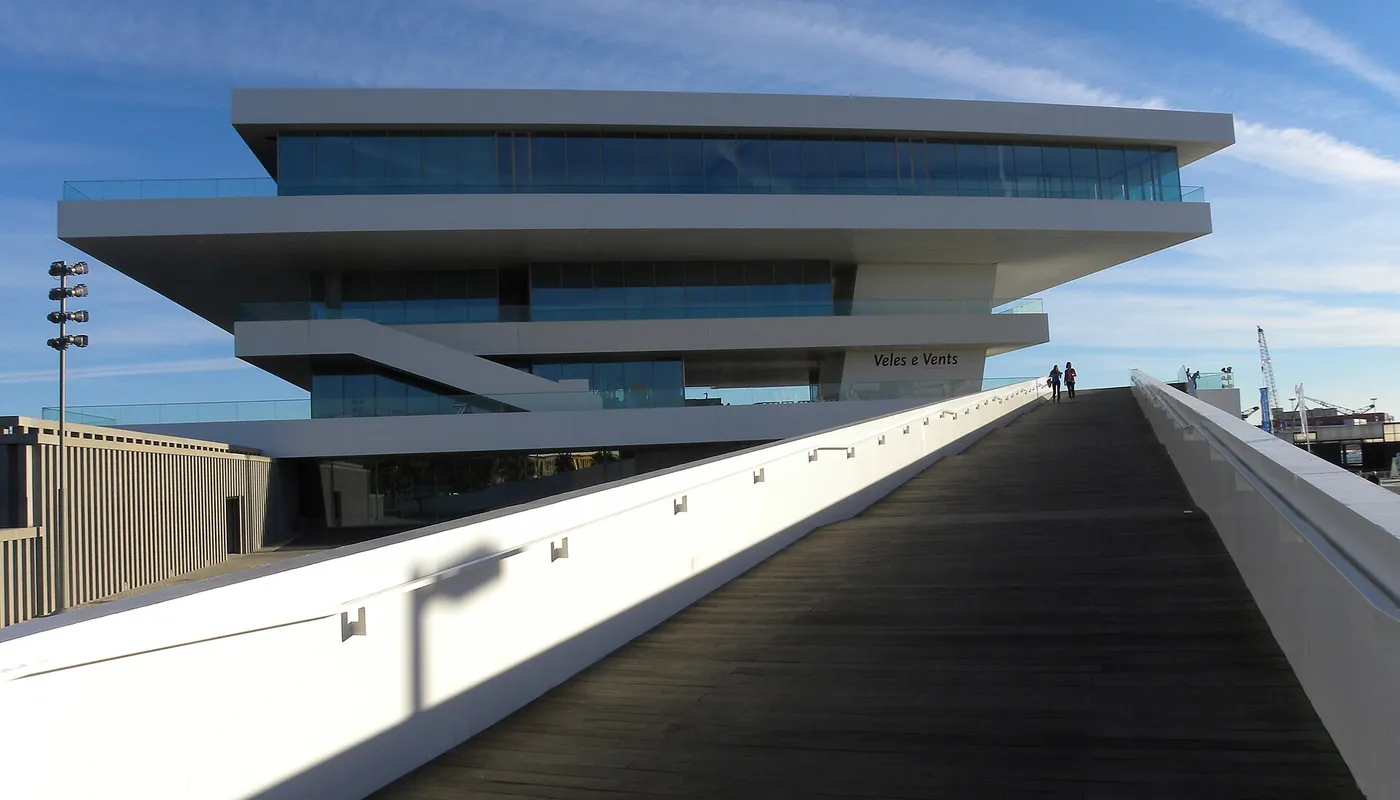
Valencia has quietly become one of Europe's strongest bases for remote work. Barcelona and Madrid get more attention, but Valencia pairs reliable infrastructure, a lower cost of living and a genuine work-life balance in a way that is harder to find in either of the bigger cities.
This guide covers the practical side: connectivity, coworking, cost, and where in the city to actually base yourself.
Internet and coworking for remote work in Valencia
Fibre coverage is strong across most of the city, with typical speeds from 100 Mbps well into gigabit territory and real competition between Movistar, Orange and Vodafone keeping prices reasonable. For working outside your flat, Valencia's coworking scene has grown well past simple desk rental, with full service spaces offering meeting rooms, printing and regular networking events.
Monthly coworking memberships typically run from around EUR 80 to EUR 200 depending on access level, with day passes and part time plans widely available if you want to test a space before committing. Our coworking guide covers what is currently open and what each kind of membership actually includes.
One practical warning about working from home. Fibre to the building is not fibre to the flat, and older buildings sometimes hand off to ageing internal wiring, so ask what is actually installed rather than what the street has. If your work depends on video calls, test the connection during a viewing or make the tenancy conditional on it.
Cafes are a weaker option here than the remote-work press suggests. Plenty have wifi, few are set up for someone occupying a table for four hours, and taking calls in one is not the local norm. Treat a cafe as somewhere to work for an hour between other things, not as a substitute for a desk.
What remote workers actually spend to live in Valencia
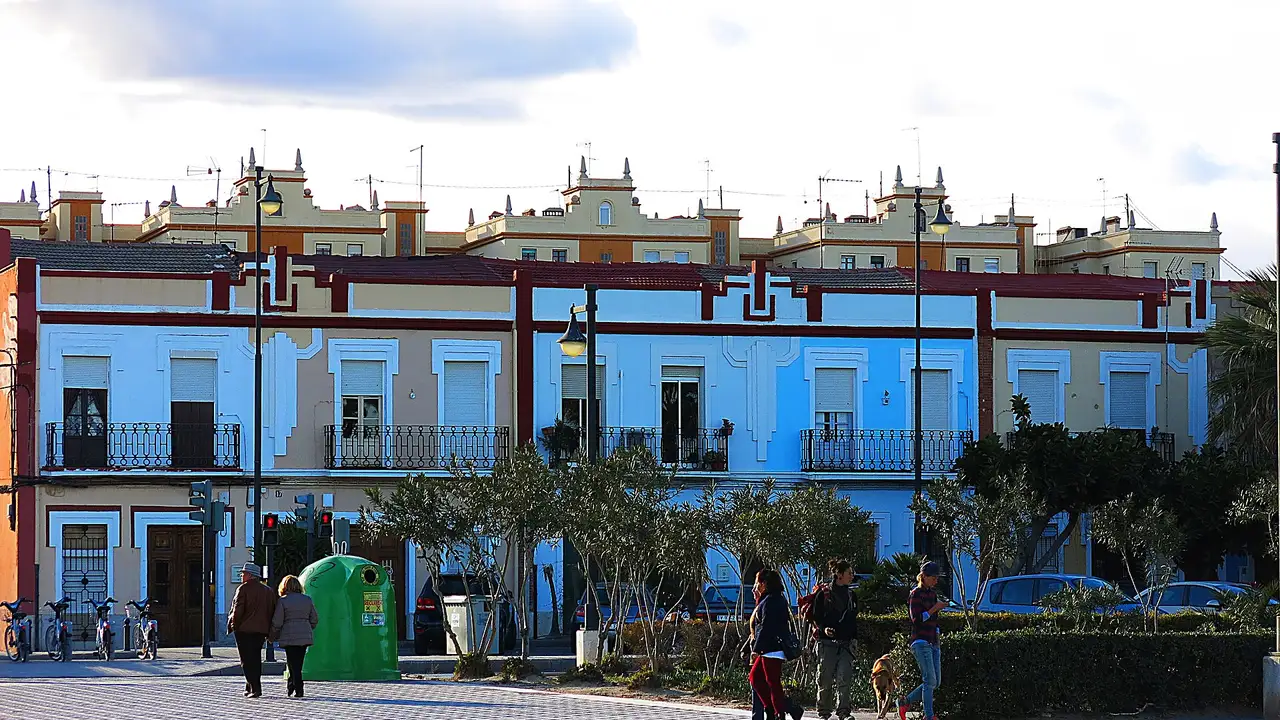
Photo: Enric, CC BY-SA 4.0
Housing is the largest single expense. A decent two bedroom flat runs noticeably below equivalent space in Barcelona or Madrid, where similar flats often cost 30 to 50 percent more. Our guide to Valencia's rental platforms and apartment listing sites cover where the real stock lives.
Daily costs stay reasonable too: a specialty coffee runs about EUR 2.50 to EUR 3, a monthly transport pass is around EUR 40, and a typical one bedroom flat's utilities run roughly EUR 80 to EUR 120 a month. Our full cost of living guide breaks down the complete monthly budget.
The cost that catches remote workers specifically is the workspace itself. A flat that works as a home does not automatically work as an office, and paying for a coworking membership on top of rent is a genuine monthly line rather than an optional extra. Budget for either a flat with a room you can close the door on, or the membership, because doing without both tends to end badly.
One more, easy to forget: private health cover. Depending on how you are working and where you are from, public healthcare may not be automatic, and the insurance question is worth settling before you arrive rather than after.
How the Valencian working day fits a remote schedule
Valencia runs on Central European Time, an hour ahead of the UK and six ahead of the US East Coast in most of the year. For UK-facing work the overlap is almost total. For a US employer the practical shape is a late start and an afternoon that runs into the evening, which fits the local rhythm better than it sounds because nothing social starts early here anyway.
The local day has a shape worth planning around rather than fighting. The middle of the afternoon is quiet, a lot of in-person business happens in the morning, and dinner is late enough that an evening call at 7 or 8 does not eat your night the way it would further north.
The mismatch to watch is with Asia-Pacific. An early call is genuinely early, and nothing around you is open to support it, so people working those hours tend to build their week differently rather than absorbing it daily.
One thing that works in Valencia's favour for anyone coordinating across time zones: the city is compact enough that a commute rarely eats the edges of the day, so an awkward schedule stays awkward rather than becoming unmanageable.
Where to base yourself in Valencia as a remote worker
Ruzafa is the city's unofficial digital nomad hub, dense with specialty coffee shops and coworking spaces. El Carmen offers the most historic setting but gets busy with tourists in peak season, and the beach neighbourhoods around Malvarrosa put the Mediterranean a short walk from your desk.
Each comes with a trade-off worth naming. Ruzafa is lively, which is the point and also the noise. El Carmen's streets are beautiful and its buildings are old, which is where the flat-quality questions bite hardest. The beach is wonderful in May and busy in August, and it is further from the centre than the map suggests once you are doing it daily.
The quieter residential districts are where many people end up after the first year, trading a little atmosphere for a bigger flat, a calmer street and a shorter distance to everything practical. That is not a downgrade, it is what happens when the city stops being a novelty and starts being where you live.
Our full neighbourhood guide for digital nomads breaks down rent, noise and vibe area by area, and the neighbourhood matcher is a faster way to narrow the list.

Photo: Joanbanjo, CC BY-SA 4.0
What remote workers underestimate about the Valencia summer
July and August are the months that decide whether the setup works. Working from a flat that holds heat is genuinely difficult, and a remote worker sits in that flat all day rather than leaving it for an office, which is exactly why flat quality matters more here than it would for someone on a normal commute.
The city also changes around you. Many smaller businesses close for two to three weeks, some coworking spaces run reduced hours, and the people you have built a routine with may simply be away. Anyone arriving in July and judging the social side of the city on that month is reading it wrong.
The workable pattern most people land on is to shift the day rather than endure it: start early, take the hot part of the afternoon away from the desk, and finish later. That is the local rhythm, and it is a better answer than running the air conditioning against the weather from nine to five.
It is also the argument for a coworking membership even if you would not otherwise want one. Air conditioning that somebody else pays for, in a building designed for it, is worth more in August than in any other month.
The residency and tax side of working remotely from Valencia
The first question is what lets you be here at all. For non-EU citizens the digital nomad visa is the route designed for this situation, and it has its own income and employment conditions. EU citizens have the right to be here but still need to register once a stay stops being a visit.
The second question is tax, and it is the one most likely to be got wrong. Spending more than 183 days in Spain in a calendar year generally makes you tax resident, which changes what you owe and where, regardless of who pays you or which country your contract is in. Our tax guide covers the shape of it.
How you are engaged matters too. Being employed by a foreign company, being self-employed as an autónomo, and qualifying under the Beckham Law regime are three genuinely different situations with different obligations, and the right one depends on facts specific to you.
None of this is a reason to be put off, and all of it is a reason to get advice before the first 183 days rather than after. It is much cheaper to structure this correctly at the start than to unwind it at the end of a tax year.
If you are ready to make the move official, our guide to work-life balance in Valencia and a consultation are the natural next steps.
Ready to plan your remote work move?
A consultation covers your visa route, budget and neighbourhood shortlist.
Book a Consultation
About the author
Michael Bastin
Founder, ValenciaMove - Valencia since 2016
Michael has lived in Valencia since 2016 and helps people move here.
Buy Michael a coffeeNeed help with your move?
Contact us. We handle visa, admin, and housing so you can focus on the exciting part.