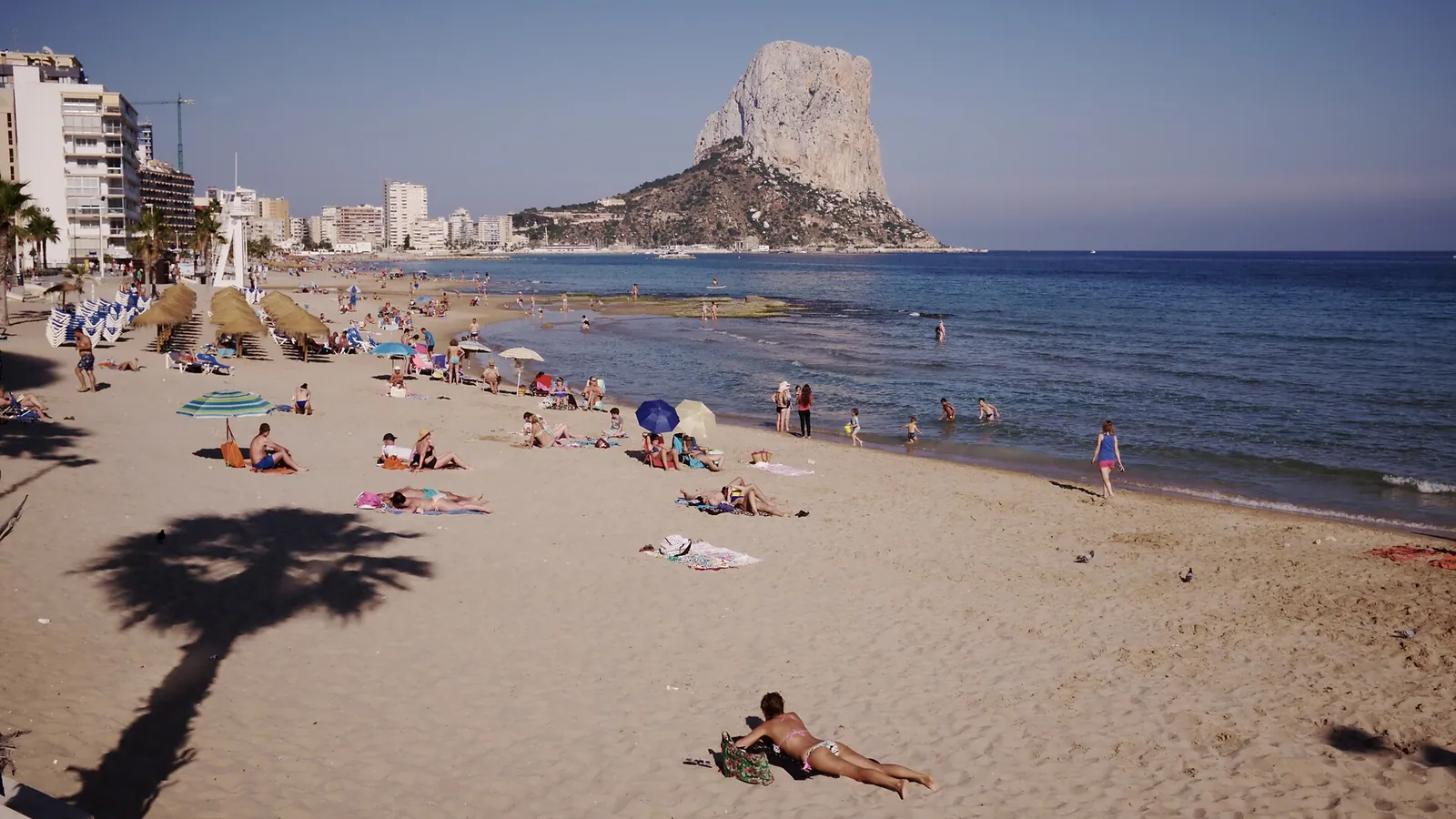
Photo: Nicolas Vigier, CC0 1.0
Calpe, Spain: a guide to Calp and the Peñón de Ifach
Calpe, Calp () in Valencian and in its official name, is a town of the Marina Alta built around the Peñón de Ifach. This guide covers the rock and its natural park, the salt lake, the old town, the beaches, who lives there and how to get there.
Calpe (Calp) quick facts
- Official name
- Calp, the form INE uses
- Residents, 1 January 2025
- 27,440, of whom 14,857 (54.1%) hold a foreign nationality (INE annual census)
- Coast and beaches
- 11 km (about 6.8 mi) of coast and 14 beaches, three with a Blue Flag in 2024 (Diputación de Alicante)
- Nearest airports
- Alicante-Elche at 70 km (about 43 mi), Valencia at 125 km (about 78 mi), per the council
- Climate data
- No AEMET standard station in the town; see the Alicante weather guide
Facts last checked against their sources: 15 November 2026
Where Calpe is, and how to get there from the airports
Calpe sits where the mountains of the northern Costa Blanca meet the sea, with Altea the next town to the south. The council's travel page puts Alicante-Elche airport 70 km (about 43 mi) away and Valencia airport 125 km (about 78 mi) away, and lists an ALSA bus from Alicante airport, direct or with a change in Benidorm.
By rail, Calpe is a stop on line 9 of the TRAM d'Alacant between Benidorm and Dénia.
The Peñón de Ifach natural park and how to climb it
The Generalitat's natural parks service gives the rock a height of 332 metres (about 1,089 ft) and 53.3 protected hectares. The regional tourist board notes that the climb to the summit must be booked in advance, and that an interpretation centre at the foot explains the park's plants and wildlife.
At the base of the rock lie the remains of the walled medieval village of Ifach, a 13th-century settlement where original structures survive.
Las Salinas de Calp, the salt lake and its flamingos
Just behind the beaches, Las Salinas is a wetland haven for water birds, with a flat, easy walking path, close to the Peñón de Ifach.
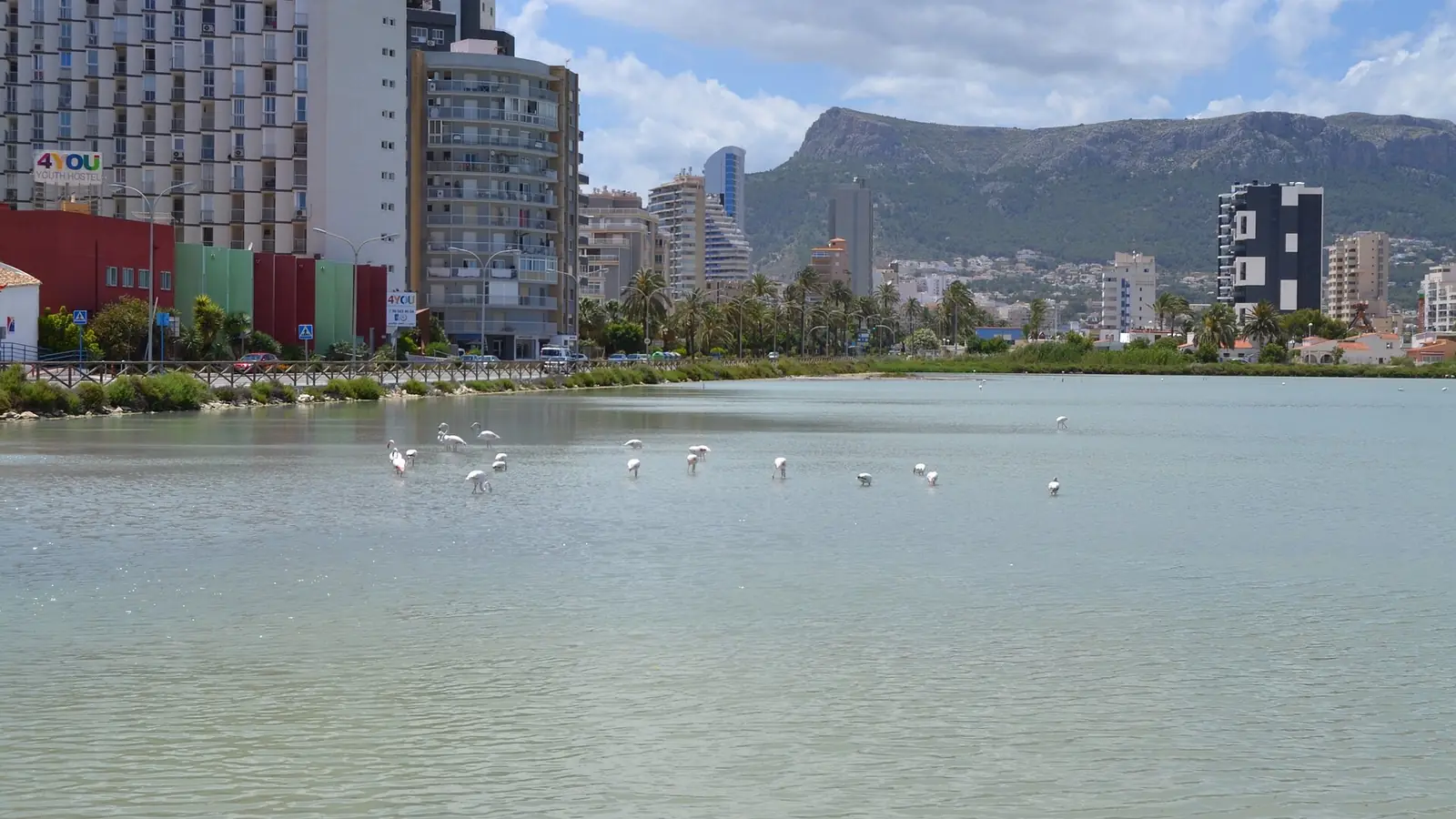
Photo: Joanbanjo, CC BY-SA 4.0
Calpe old town and the Roman Baños de la Reina
In the old town, the tourist board points to the remains of the 13th-century walls, the parish church of Nuestra Señora de las Nieves and the Calp History Museum.
By the sea, the Baños de la Reina, or Queen's Baths, are a Roman complex of pools and channels cut into the shore, next to the 19th-century Molino del Morelló. Further out, the board lists the 16th-century fortified farmhouse of Casa Nova and the 15th-century Torre del Castellet.
Calpe beaches and coves, from La Fossa to Les Bassetes
The tourist office's beach guide lists the sandy town beaches of Levante or La Fossa, Arenal-Bol and Cantal Roig, and a string of coves including El Collao or Racó del Corb, Gasparet, Les Urques, La Manzanera, Calalga and Les Bassetes.
The Diputación de Alicante counts 14 beaches along Calpe's 11 km (about 6.8 mi) of coast, three with a Blue Flag in 2024.
Who lives in Calpe: more than half the residents are foreign nationals
INE counted 14,857 residents of foreign nationality out of 27,440 in Calp on 1 January 2025, or 54.1%. The figure counts nationality, not country of birth.
We publish no rent or property price for Calpe. Our Valencia-city rent data does not apply here, and we have not found an official price series for the town.
Calpe weather: where to find official averages
AEMET's standard climate tables for Alicante province cover two stations only, Alicante city and Alicante-Elche airport, so there are no official month-by-month averages for Calpe itself. The Alicante weather guide gives AEMET's figures for both stations, with the station and the years stated.