Photo: EBV10, CC BY-SA 4.0
Jávea, Spain: a guide to Xàbia on the Costa Blanca
Jávea, Xàbia () in Valencian, is the easternmost town of the Marina Alta, in the north of Alicante province. This guide covers where it is, how to get there, its three centres, the beaches and coves, who lives there and its festivals.
Jávea (Xàbia) quick facts
- Official name
- Xàbia/Jávea, the bilingual form INE uses
- Province and comarca
- Alicante; Marina Alta
- Residents, 1 January 2025
- 30,817, of whom 14,625 (47.5%) hold a foreign nationality (INE annual census)
- Area and coast
- 68.4 km² (about 26 sq mi) and 25 km (about 16 mi) of coast, per the council
- Beaches
- 11, two with a Blue Flag in 2024 (Diputación de Alicante)
- From Valencia and Alicante
- 97 km (about 60 mi) and 90 km (about 56 mi), as the council gives them
- Public healthcare
- Xàbia health zone, Dénia health department
Facts last checked against their sources: 14 November 2026
Where Jávea is on the Costa Blanca
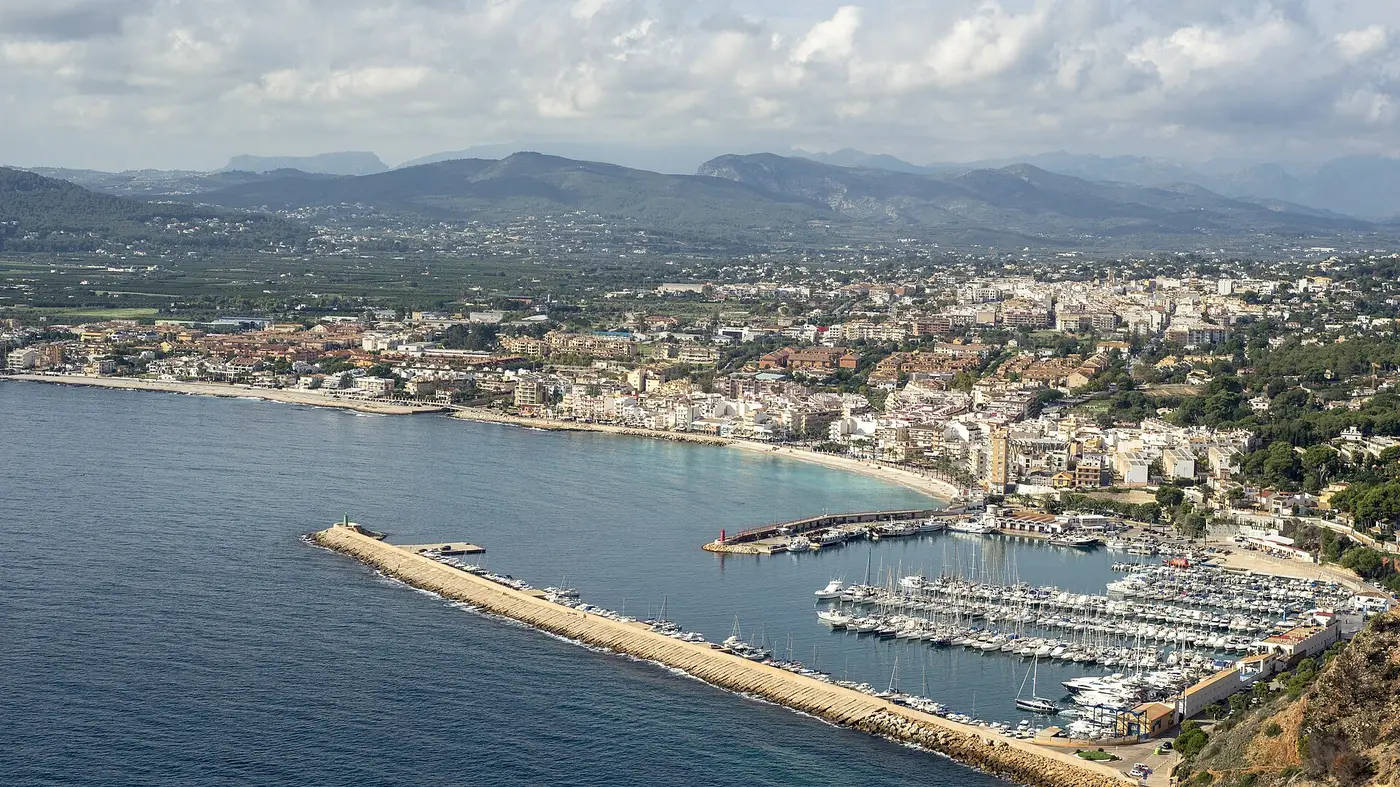
Jávea sits on the north of the Costa Blanca, at the eastern tip of the Marina Alta. The council's location page frames the municipality with Cap de Sant Antoni (167 m (about 548 ft)) to the north, the Montgó () (753 m (about 2,470 ft)) to the north-west, the valley of the Gorgos river to the west and the Granadella hills and Cap de la Nau to the south.
Dénia is the next town north, 8 km (about 5 mi) away per the council's itinerary page, and Moraira and Calpe lie to the south.
How to get to Jávea from Valencia, Alicante and the airports
Jávea has no railway station. The council's itinerary page gives three ways in by public transport: ALSA buses linking the town with Alicante, Valencia and Madrid; the TRAM, which connects neighbouring Gata de Gorgos with Dénia and Alicante; and Renfe trains from Gandia, 45 km (about 28 mi) north, which reach Valencia in about an hour.
The closest airports are Alicante-Elche at 100 km (about 62 mi) and Valencia at 113 km (about 70 mi), per the same page. The council's transport page lists the town's bus station on Avenida de Palmela.
Jávea's three centres: the old town, the port and the Arenal
Jávea grew as three separate places. The old town, inland, keeps its medieval street plan and buildings finished in the local tosca sandstone; at its centre the church of San Bartolomé dates from the 14th to 16th centuries, beside the 1946 Abastos market and the town hall.
The port, Duanes de la Mar (), grew on the raisin export trade of the 19th century and then on fishing. The council dates its first known jetty to 1871 and its modern church to 1967; the fish auction at the harbour market is still a daily sight.
The Arenal is the bay between the two, with the town's only sandy beach and the Parador at its northern end.
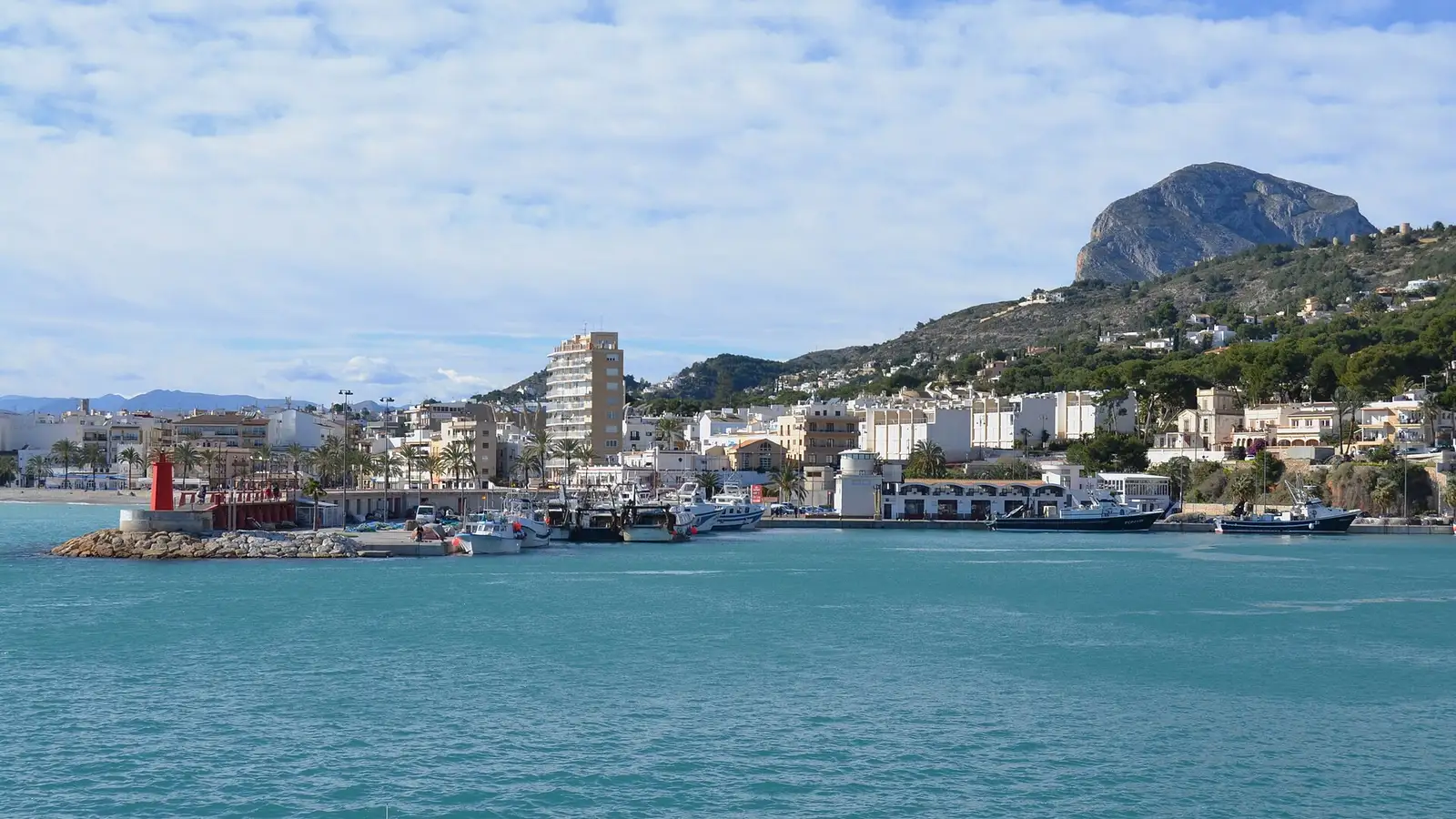
Photo: Joanbanjo, CC BY-SA 3.0
The Montgó, Cap de Sant Antoni and Jávea's protected coast
A large part of the municipality is protected. The council lists a natural park, a marine reserve and six plant microreserves: the Montgó Natural Park, the Cap de Sant Antoni reserve, the Cova Tallada sea cave, Portitxol bay and the Granadella forest park.
The same page points to waymarked walking routes and viewpoints across these areas. Check the council's pages before a walk in summer, when access to some coves and car parks is regulated.
Jávea beaches and coves, from the Arenal to the Granadella
The council's beach guide names eight beaches and coves. Only the Arenal is sand; the rest are gravel, pebbles or the flat tosca rock shelves the town was quarried from.
The urban beaches sit in the bay, and the coves lie under the cliffs to the south, most of them reached by car and a short walk.
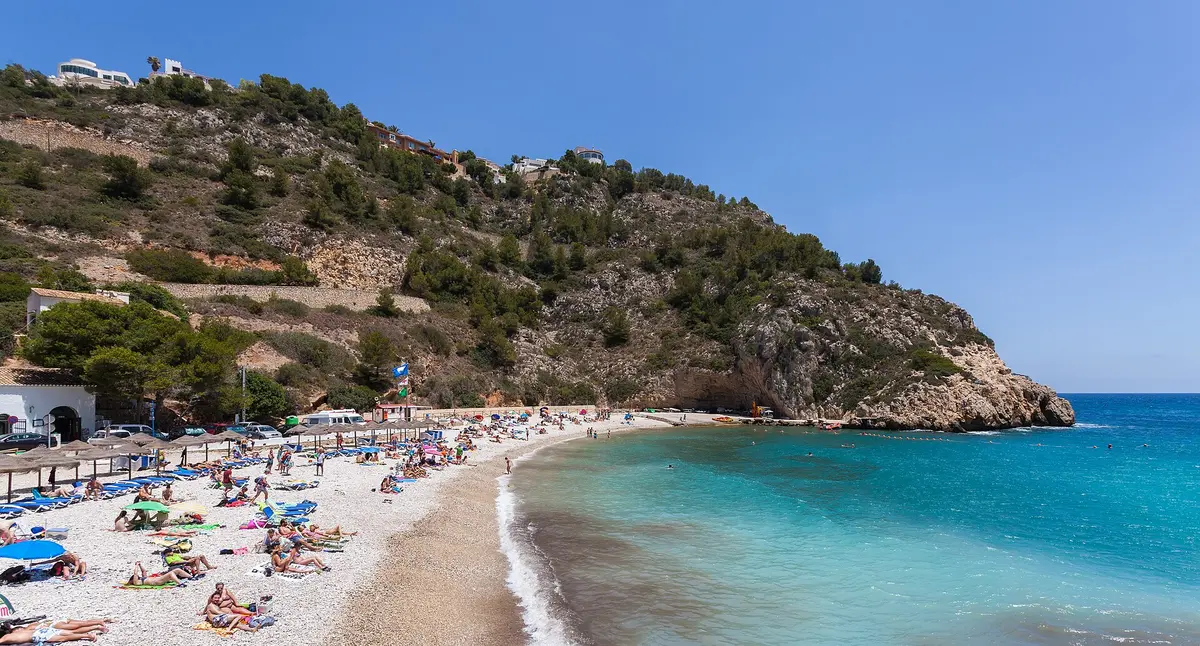
Photo: Diego Delso, CC BY-SA 4.0
| Beach or cove | Setting | Shore | Length or access |
|---|---|---|---|
| La Grava | Urban, at the port | Gravel | 290 m (about 951 ft) |
| Primer Muntanyar (Benissero) | Semi-urban, north of the Arenal | Gravel, pebbles and tosca rock | About 2 km (about 1.2 mi) |
| El Arenal | Urban, centre of the bay | Coarse sand, shallow water | About 480 m (about 1,575 ft) |
| Segon Muntanyar | Semi-urban, south of the Arenal | Pebbles and tosca rock | About 1,700 m (about 5,577 ft) |
| Cala Blanca | Rural cove | Gravel and pebbles | By car, then a 100 m (about 328 ft) walkway |
| Cala Sardinera | Undeveloped cove, Cap Prim | Gravel and boulders | On foot, by a trail |
| Cala Barraca (Portitxol) | Rural cove, facing Portitxol island | Gravel, boulders and pebbles | By car from the Cabo de la Nao road |
| Cala Granadella | Rural cove, far south | Gravel, boulders and pebbles | By car, off the Cabo de la Nao road |
From the council's page for each beach, read 14 November 2026. The Diputación de Alicante counts 11 beaches in Xàbia for 2024; the council's own guide names these eight.
Who lives in Jávea: residents, foreign nationals and healthcare
Jávea is one of the Costa Blanca towns where foreign residents are close to half the population: INE counted 14,625 residents of foreign nationality out of 30,817 on 1 January 2025, or 47.5%. The figure counts nationality, not country of birth.
For public healthcare the town is its own health zone, within the Dénia health department of the Conselleria de Sanitat, which lists the Xàbia health centre for the zone.
We publish no rent or property price for Jávea. Our Valencia-city rent data does not apply here, and we have not found an official price series for the town.
Jávea weather by month: the council's average temperatures
The council's weather page gives an average annual temperature of 18 degrees and the monthly averages below. It does not say which station or years they come from.
We have not found AEMET climate normals for a station in Jávea itself, so these are the only month-by-month figures on this page for now.
| Month | Average temperature |
|---|---|
| January | 11 °C (about 52°F) |
| February | 11 °C (about 52°F) |
| March | 14 °C (about 57°F) |
| April | 16 °C (about 61°F) |
| May | 19 °C (about 66°F) |
| June | 23 °C (about 73°F) |
| July | 26 °C (about 79°F) |
| August | 27 °C (about 81°F) |
| September | 23 °C (about 73°F) |
| October | 19 °C (about 66°F) |
| November | 15 °C (about 59°F) |
| December | 13 °C (about 55°F) |
Jávea festivals through the year, from Jesús Nazareno to Loreto
The Jesús Nazareno festivities carry the old town's strongest devotion, though Saint Sebastian is the town's patron. The statue comes down from the Ermita del Calvario to San Bartolomé on the third Sunday of Lent and returns on 3 May, with fireworks; on 2 May neighbours dress the old town's streets with flower crosses.
In June the Fogueres de Sant Joan () fill the old town. On the solstice night, the Nit dels Focs, bonfires burn at the gates of the old walls and people jump over them.
The port keeps two festivals of its own. Moors and Christians runs in the third week of July in Duanes de la Mar, and the Virgen de Loreto festivities run from the end of August to 8 September, with the bous a la mar (), young bulls run along the quay into the sea, and fireworks over the bay on the last night. The council's festival calendar lists the rest.