
Photo: Pacopac, CC BY-SA 4.0
Cycling in Valencia: Valenbisi and owning a bike
200km of cycle lanes, a bike-share network of 276 stations, and rules for e-scooters and helmets that catch newcomers out. Here is what actually applies.
Whether you are here for a week or moving in for good, Valencia is one of the easier European cities to get around by bike, and the choice that matters most is Valenbisi versus owning.
Visiting and want to ride the Turia Gardens or the beach path for a day? A short-term Valenbisi pass or a bike rental shop covers that with no paperwork. Living here and riding daily? The calculation below on owning versus subscribing is the one worth doing properly.
Cycling is a genuinely normal way to get around this city: flat streets, a dense lane network, and drivers who are used to sharing the road. The details below are the ones that trip up newcomers, not the basics.
Valenbisi at a glance (2026)
The city's bike-share network in one look, before the detail below.
Annual pass price
The Tarjeta Mobilis annual pass costs EUR 29.21 a year for unlimited trips. A 7-day pass costs EUR 13.30 if you only need it briefly.
Free-ride window
The first 30 minutes of every trip are free on any pass. Keep a ride under that and it costs nothing beyond the annual fee.
After the free window
On an annual pass, minutes 30 to 60 cost around EUR 0.52, then roughly EUR 2.08 for each additional hour. Short-term subscriptions (7-day and below) pay more: EUR 1.04 per 30 minutes and EUR 3.12 for each additional hour. Long single rides get expensive fast.
Registration
Register online at valenbisi.es or via the official Valenbisi app using your ID or passport. You can also sign up at any station kiosk where you will receive your card almost immediately.
Network size
276 stations and around 200km (about 124 mi) of cycle lanes citywide, one of the densest networks in Spain.
Helmets and e-scooters
Helmets are not required for casual city cycling, but the rules differ outside the city and for e-scooters. See below.
Valenbisi: registration, pricing and the free-ride window
Register online at valenbisi.es or via the official Valenbisi app using your ID or passport. The annual Tarjeta Mobilis pass is EUR 29.21 and covers unlimited trips for a year; a 7-day pass is EUR 13.30 if you are only in town briefly. Both include the same free-ride window.
Every trip gets the first 30 minutes free, no matter how many trips you take in a day. Dock the bike and pick up another one and the clock resets, which is the trick regular users rely on for longer journeys.
Go past 30 minutes on a single ride and, on an annual pass, it costs roughly EUR 0.52 for the next half hour, then about EUR 2.08 for every additional hour. Short-term subscribers (7-day and below) pay more: EUR 1.04 per 30 minutes and EUR 3.12 for each additional hour after that. The lowest per-minute rates apply exclusively to annual subscribers. That adds up quickly on a long ride, which is the main reason Valenbisi suits short hops better than a leisurely afternoon out.
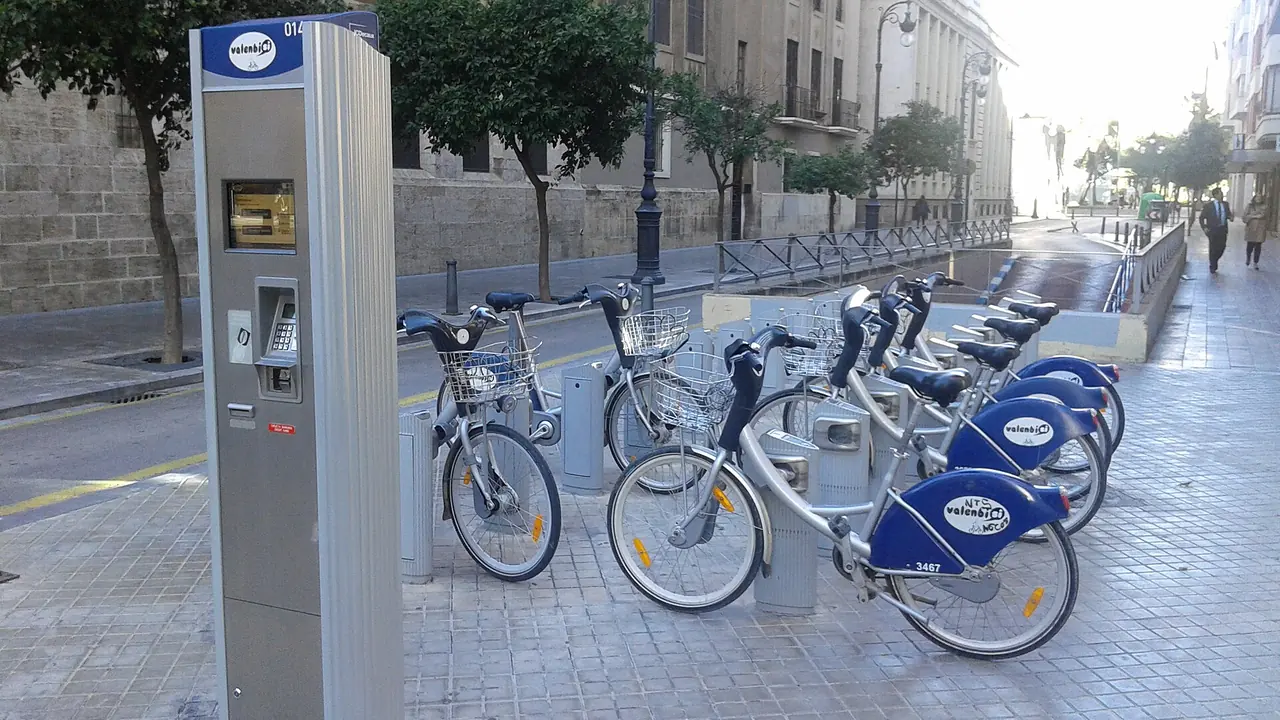
Photo: Pacopac, CC BY-SA 4.0
When owning a bike beats subscribing to Valenbisi
For most daily commuting inside the docking network, the EUR 29.21 annual pass is difficult to beat: no maintenance, no theft risk to you personally, and a station near most addresses in the centre. It is also the obvious choice for a short stay.
Owning wins once you regularly ride beyond 30 minutes. This is also better for going where there is no station, further along the coast or into the surrounding countryside or if you ride often enough that the per-trip friction of finding a free dock starts to matter. A decent second-hand bike pays for itself against Valenbisi overage charges faster than most people expect.
Bike theft and what lock to actually use
Bike theft is a real risk in Valencia, particularly for bikes left overnight near nightlife areas, train stations and university zones. A bike secured with only a cable lock is a target; cable locks can be cut in seconds.
Use a proper U-lock or a hardened chain, and secure the frame and a wheel to a fixed rack rather than just looping the lock through the wheel. Valenbisi bikes carry no personal theft risk while docked, which is one more point in bike-share's favour for anyone parking overnight in a higher-risk area.
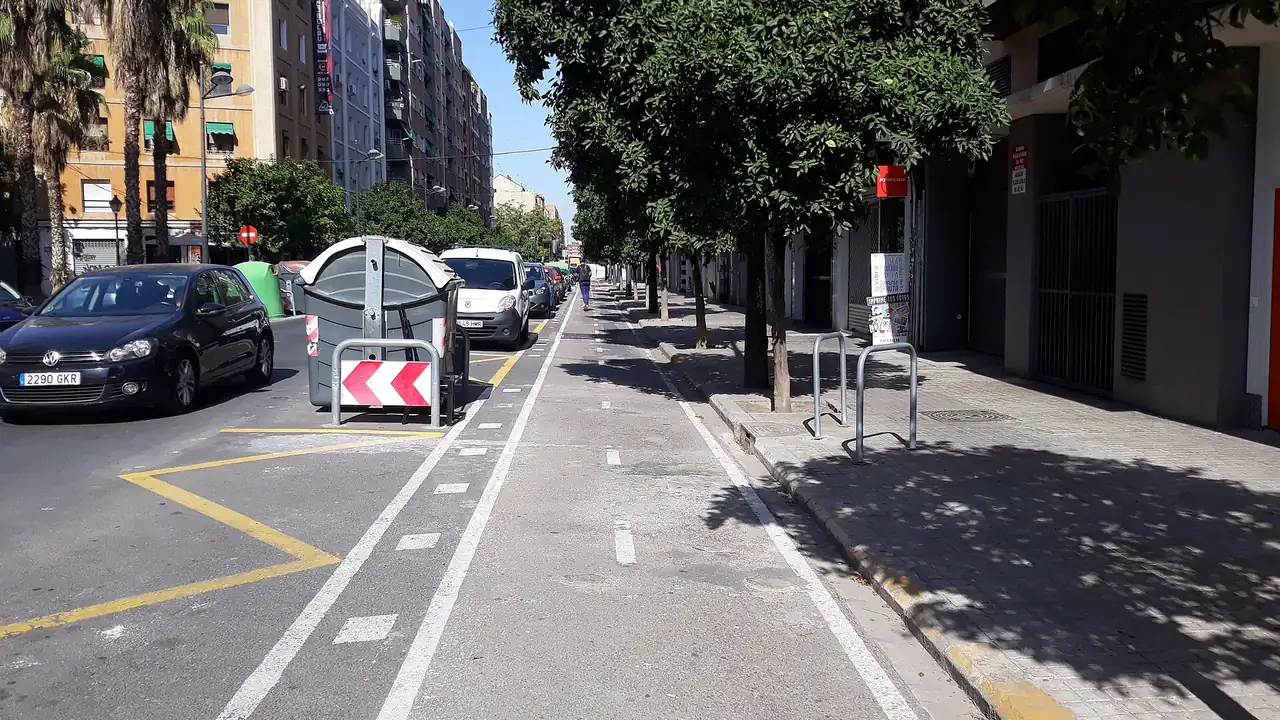
Photo: Pacopac, CC BY-SA 4.0
Helmets: what changes inside the city versus outside it
Casual cycling inside Valencia's city streets does not currently require a helmet. It is sensible, especially at night or on faster roads, but it is not the law for an ordinary adult rider on city streets.
That changes once you leave the urban area. A national reform taking effect on 1 October 2026 removes all previous exceptions, making helmets strictly compulsory for all cyclists on interurban roads, regardless of heat or terrain. A helmet is also strictly required for anyone doing paid delivery work anywhere in the city, as well as for rides out to the Albufera or along the coast road beyond the city limits.
Taking your bike on the metro
Since October 2025, Metrovalencia allows full-size non-electric bikes on surface sections of the network, up to four per train, every day of the week, in the last carriage. They are not allowed on underground sections or on the tram lines.
Folding bikes have it easier: they are allowed anywhere on the network, every line, any day, with no numeric limit, provided they travel folded as hand luggage. Both rules pause during Fallas, Nit de Sant Joan and a handful of other high-capacity event days, so check before those dates.
E-scooters: the rules Valencia actually enforces
Valencia's mobility regulations treat e-scooters like bicycles: they belong on the road or in a cycle lane, never on the pavement. Under new national legislation, the minimum age will be 15 from 1 October 2026 (previously 16). Speed is capped at 20 km/h (about 12 mph) in road-level cycle lanes and 15 km/h (about 9.3 mph) in pavement-level ones.
Nationally, third-party insurance has been compulsory for every e-scooter since 2 January 2026, with fines of EUR 600 to 800 in Valencia for riding without it, alongside a national vehicle registry that issues a small identifying plate. A helmet is mandatory (EUR 200 fine for non-compliance), carrying passengers is prohibited (EUR 100 fine), and drink and drug limits mirror those for motor vehicles.
This is one of the rules newcomers most often get wrong, usually by treating a scooter as a toy rather than a registered, insured vehicle in the eyes of the law. Treat it as the latter from day one.
Mistakes that cost money or get you fined
Locking a bike with only a cable
Cable locks are cut in seconds in the areas where theft is most common. Use a U-lock or a chain through the frame and a wheel.
Assuming Valenbisi is cheaper for a long ride
Past the free 30 minutes, per-minute charges climb fast. A two-hour ride on Valenbisi can cost more than renting a bike for the same afternoon.
Riding an e-scooter on the pavement
Valencia treats e-scooters like bikes: road or cycle lane only, never the pavement, and enforcement has increased alongside the new national insurance rule.
Bringing a full-size non-folding bike underground
Non-electric full-size bikes are only allowed on surface sections of the metro, and never on the tram. A folding bike avoids this limit entirely.
Where to actually ride
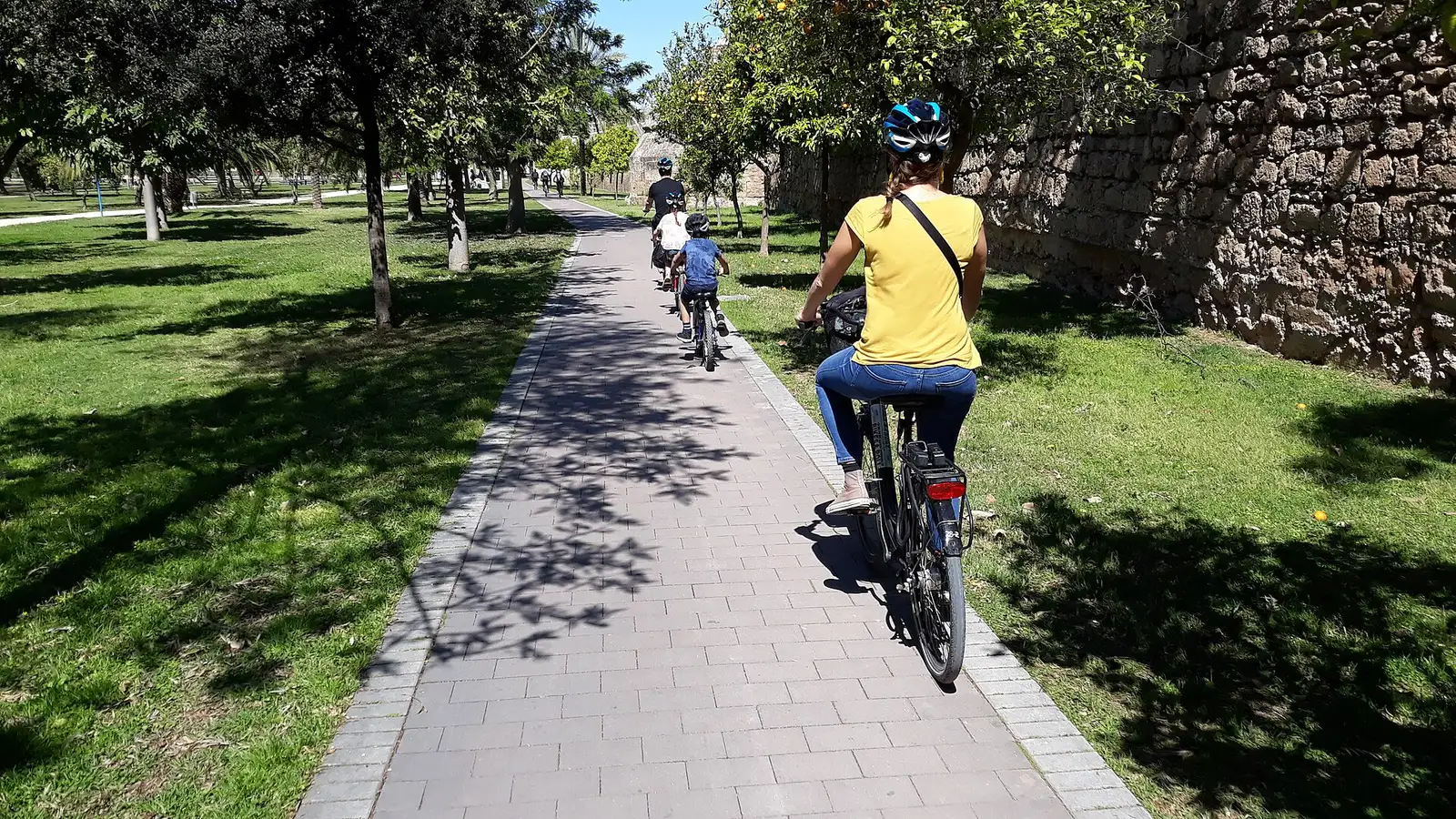
The Turia Gardens, the dried riverbed turned nine-kilometre park that loops through the city, is the single best stretch for an easy ride, entirely separated from traffic. From there the cycle lane network connects out to the beach at Malvarrosa and El Cabanyal in well under half an hour.
Further afield, the flat farmland roads around the Albufera natural park make for a popular longer ride, and are exactly the kind of route where the interurban helmet rule above applies. Rent from a shop near the Gardens if you need a bike for more than a short hop and are not going to subscribe to Valenbisi.

Resident in Valencia since 2016. Founder of BeTranslated. 25+ years in translation, interpretation and multilingual SEO.
Reviewed 29 August 2026 by Michael Bastin