
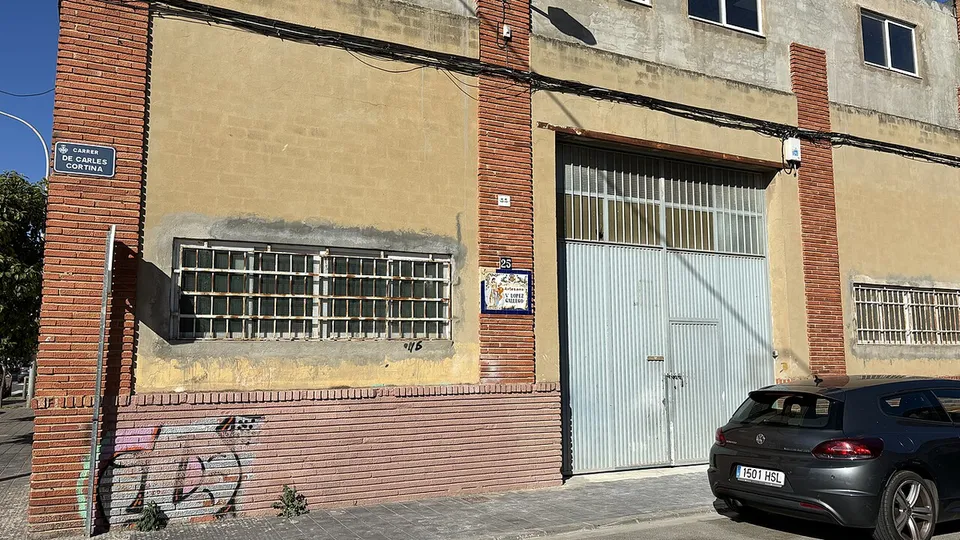
Photo: 19Tarrestnom65, CC BY-SA 4.0
Living in Ciutat Fallera, Valencia: a neighborhood guide
The barrio of Benicalap where Valencia's falla artists build the monuments, with the Parc de Benicalap and a residential half
Living in Ciutat Fallera
Ciutat Fallera () is a barrio of the Benicalap district, at the north-western edge of Valencia. Its full name is Ciutat de l'Artista Faller; in Castilian it is Ciudad Fallera or Ciudad del Artista Fallero. It is a small rectangle bounded by the Ronda Nord motorway to the north, the Avinguda dels Germans Machado to the east, Carrer de Salvador Cerveró and Carrer de Lluís Braille to the south, and Carrer de la Florista to the west. Beyond it lie the rest of Benicalap, Beniferri, the huerta of Poble Nou and Burjassot.
Ciutat fallera means "Fallas city". The barrio was built as a home for the workshops of the falla artists, the craftspeople who make the monuments burned every March. The idea is credited to Regino Mas, head of the falla artists' guild, in the 1940s; the first stone was laid on 17 March 1965, and its streets are named after legendary figures of the Fallas.
According to the Ajuntament's municipal register, 6,397 people lived in Ciutat Fallera on 1 January 2025, on 49.7 hectares. The barrio has two halves: the big workshops, where much of each year's Fallas takes shape, with the Museu de l'Artista Faller (opened in 1993), the guild house and the parish of Sant Josep Artesà; and a residential area with shops and a school. The Parc de Benicalap, despite its name, lies inside Ciutat Fallera.
Transport and trade-offs: tram line 4 stops at Florista, on the western edge, and EMT buses link the barrio to the centre. Rents follow the district and the park is a real asset, but the Ronda Nord brings traffic noise and the workshop half is an industrial landscape of warehouses. Benicalap lies to the south, and Beniferri to the west.
What rent costs in Ciutat Fallera (September 2026)
Ciutat Fallera asks 17 EUR per m² a month on Fotocasa's rent index for September 2026, below the 18 EUR the city of Valencia averages. At that rate a 70 m² two-bedroom lists at around 1,190 EUR a month, before you negotiate. These are asking prices on new listings, not what sitting tenants pay.
Asking prices here are 7% below a year earlier, while the city as a whole moved 7% the other way.
This is the figure for the barrio itself. The Benicalap district it belongs to reads 17 EUR on the same index.
Fotocasa publishes exactly the same figure and trend for Ciutat Fallera as for the whole Benicalap district, so read it as a guide to the district rather than a figure for this barrio.
Our renting guide explains what landlords ask for and what the fianza and agency fee add on signing day, and the upfront cost calculator runs the maths for any rent.
Public and concertado schools in this neighbourhood
The Conselleria's school guide doesn't allow direct links to an individual school's page, so each card below gives you the school's official code instead. Open the guide, paste the code into the search box and the school's page comes up. Like many Spanish public administration websites, it takes a little patience.
CEIP Ciutat Artista Faller
Plaça Regino Mas S/N
Centre Privat Argos
Avinguda Burjassot 291
Where Ciutat Fallera Sits in Valencia
What Living in Ciutat Fallera Is Really Like
Pros: What Residents Love
- The Parc de Benicalap inside the barrio
- The falla workshops and museum
- Rents in line with the district
- Tram line 4 nearby
Cons: What to Know First
- Traffic noise from the Ronda Nord
- Half the barrio is workshops and warehouses
- Far from the centre and the beach
- Few restaurants
Typical Properties in Ciutat Fallera
Local Amenities
Fallas
The falla artists' workshops and the Museu de l'Artista Faller
Green space
The Parc de Benicalap, with an open-air auditorium and sports facilities
Transport
Tram line 4 at Florista, on the western edge
Population
6,397 residents on 49.7 hectares (padrón, 1 January 2025)
More neighborhoods
Benicalap
The northern budget growth area - lower rents, big new park, regeneration on the way
Explore BenicalapBeniferri
Smaller Pobles de l'Oest barrio next to the Roig Arena and Nou Mestalla corridor
Explore BeniferriCampanar
Spacious flats, good schools, and the Turia Gardens on your doorstep - family-friendly Valencia without giving up the metro.
Explore CampanarThinking about moving to Ciutat Fallera?
Get in touch with our Valencia relocation team. We will help you find the right apartment, navigate the paperwork, and get settled faster.

Resident in Valencia since 2016. Founder of BeTranslated. 25+ years in translation, interpretation and multilingual SEO.
Reviewed 5 September 2026 by Michael Bastin