

Photo: Diego Delso, CC BY-SA 3.0
Oceanografic Valencia the complete visitor guide
Europe's largest aquarium by water volume: nine ecosystems, beluga whales, a 70-meter underwater tunnel and dolphin shows, all inside Santiago Calatrava's City of Arts and Sciences.
Oceanografic is the single largest keyword cluster we found researching Valencia's tourism content, and it earns it: 42 million liters of water and roughly 45,000 animals across 500 species, inside the most photographed building complex in the city. It calls itself Europe's largest aquarium by water volume, a claim Nausicaa in Boulogne-sur-Mer disputes on other metrics (visitor numbers, species diversity), but on raw water volume Oceanografic genuinely leads.
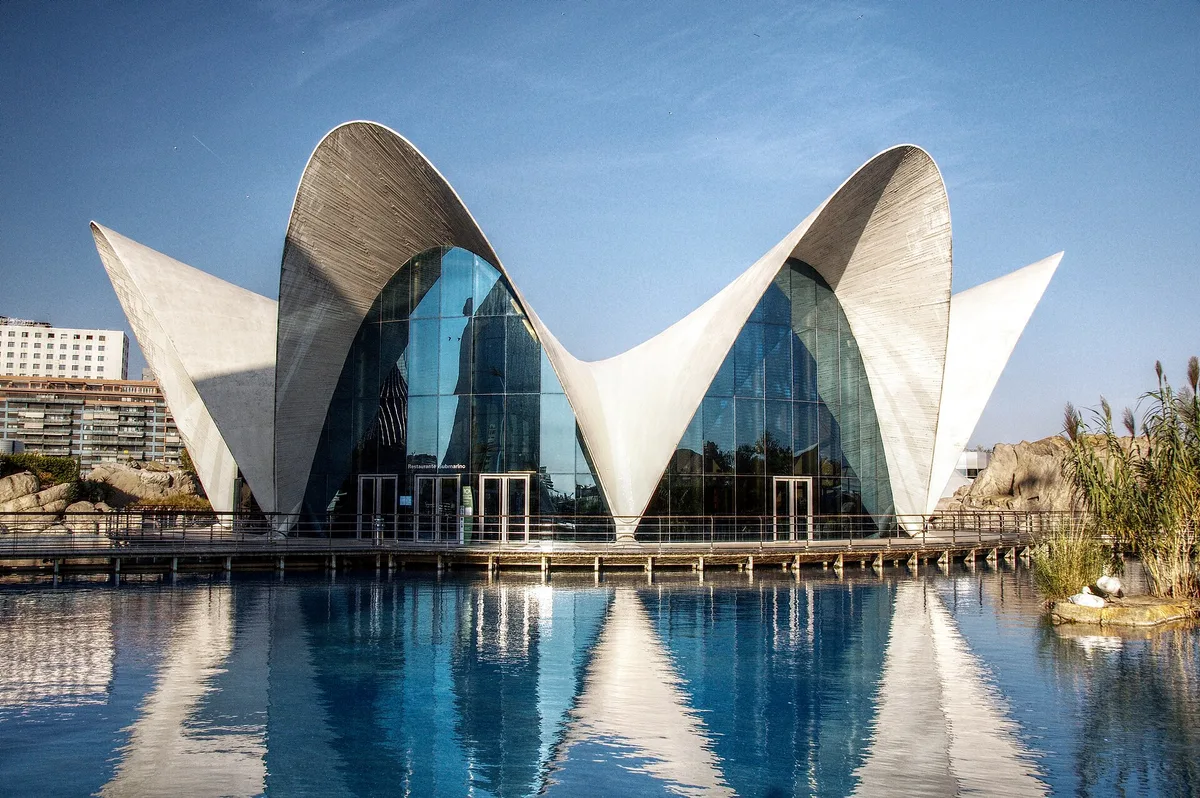
Photo: Felipe Gabaldon, CC BY 2.0
The nine zones, and what to actually look for
Oceanografic is organized as a walk through distinct marine ecosystems rather than one big tank. Each zone has a real highlight worth planning around.
Mediterranean
Local biodiversity: octopuses, moray eels, and the fish you would actually find diving off the Valencian coast, with a conservation focus.
Wetlands
Mangrove swamp and Mediterranean marsh side by side, home to wading birds and other wetland species.
Temperate and Tropical Seas
An underwater tunnel connecting an Atlantic-style zone to an Indian Ocean-style zone, with sharks, rays, clownfish, giant spider crabs, and puffer fish.
Oceans
The showpiece: a 70-meter underwater tunnel where you walk beneath sharks, groupers, and other large pelagic fish. This is the one everyone photographs.
Antarctic
A colony of Humboldt penguins, the main draw of the Antarctic zone.
Arctic
The other headline exhibit: beluga whales and walruses in a cold-water setup built to replicate their real habitat.
Islands
An outdoor zone recreating an island environment for sea lions and other pinnipeds.
Red Sea (Agora del Mar)
Vibrant coral reef species in a dedicated Red Sea exhibit.
Dolphinarium
Five pools and 2,000 seats for bottlenose dolphin presentations, included in general admission.
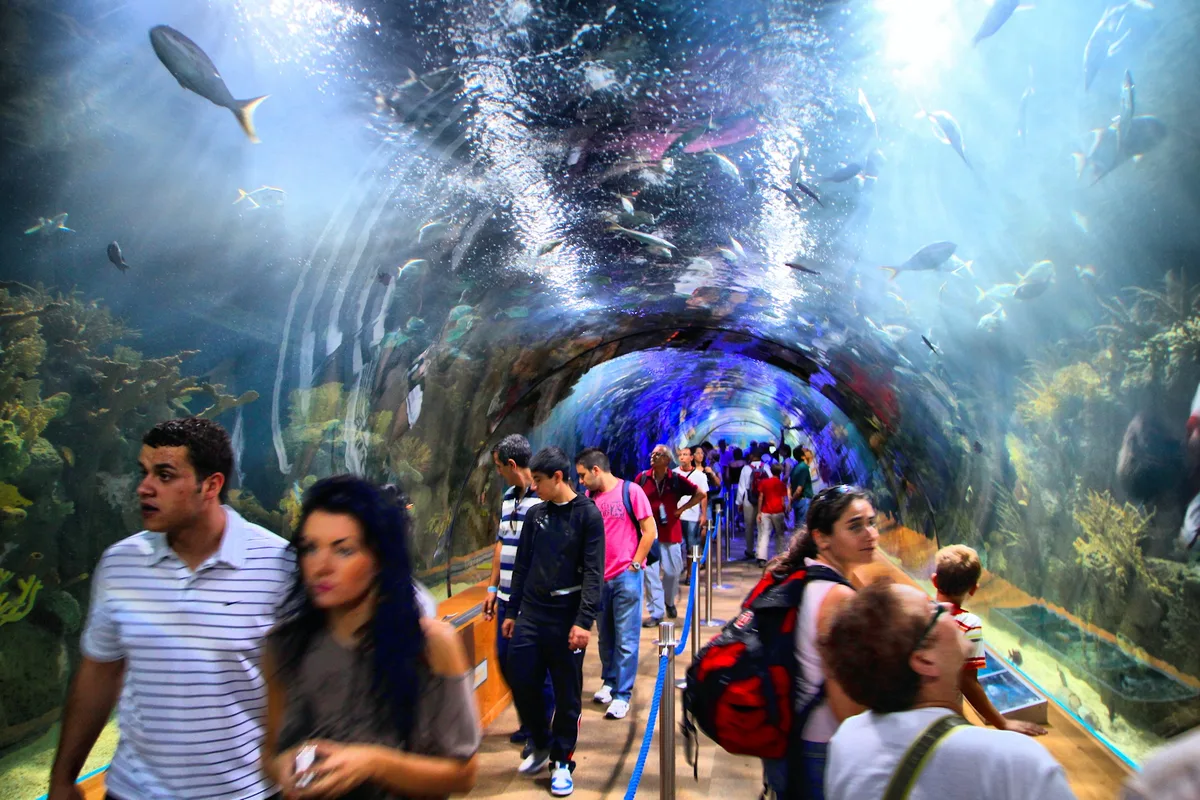
Photo: Marek Slusarczyk, CC BY 3.0
Ticket prices (as of July 2026)
These are Oceanografic's own prices, not ours, and they do change, so treat this as a planning reference and confirm on the official ticketing site before you buy. Standalone Oceanografic entry: 43.05 EUR general, 31.95 EUR for children aged 4 to 12, seniors, or visitors with disabilities. Large-family or single-parent discounted rate: 36.59 EUR general, 27.16 EUR for children, seniors, or visitors with disabilities. Combo tickets add the wider City of Arts and Sciences complex: Oceanografic plus Museu de les Ciencies runs 45.40 EUR general (34.30 EUR reduced), and Oceanografic plus Hemisferic runs 45.00 EUR general (33.90 EUR reduced). A triple combo covering all three is also sold on the official site.
Opening hours and dolphin show times
Oceanografic opens at 10am year round, but closing time swings with the season, anywhere from 6pm to 8pm or later in peak summer. Always check the official site for your specific visit date rather than assume a fixed schedule. Dolphin presentations run several times a day, typically five sessions spaced through opening hours (for reference, one recent July day ran shows at 11:15am, 12:30pm, 1:45pm, 4:30pm, and 6pm), included in your general admission ticket. Exact times shift with attendance, weather, and the animals' needs, so confirm the day's schedule at the information point when you arrive rather than planning around an old timetable.
Planning your visit: timing and crowds
Budget 2 to 3 hours for a normal visit, longer if you catch a show or move slowly through each zone. To dodge crowds, come on a weekday outside July and August and Spanish public holidays, and arrive right at 10am opening if you are visiting in peak season. Mondays tend to run quieter. October and November are the sweet spot for comfortable weather and thinner crowds if your travel dates are flexible.
Getting there from central Valencia
The closest metro stop is Oceanografic on Line 10, about 15 to 20 minutes from the city center. Bus 15 runs from Estacio del Nord, the main train station; bus 95 comes from near the port and stops right outside; bus 99 also serves Metro-Oceanografic. If you are driving, the City of Arts and Sciences complex has underground parking on site, with rates posted on the official website.
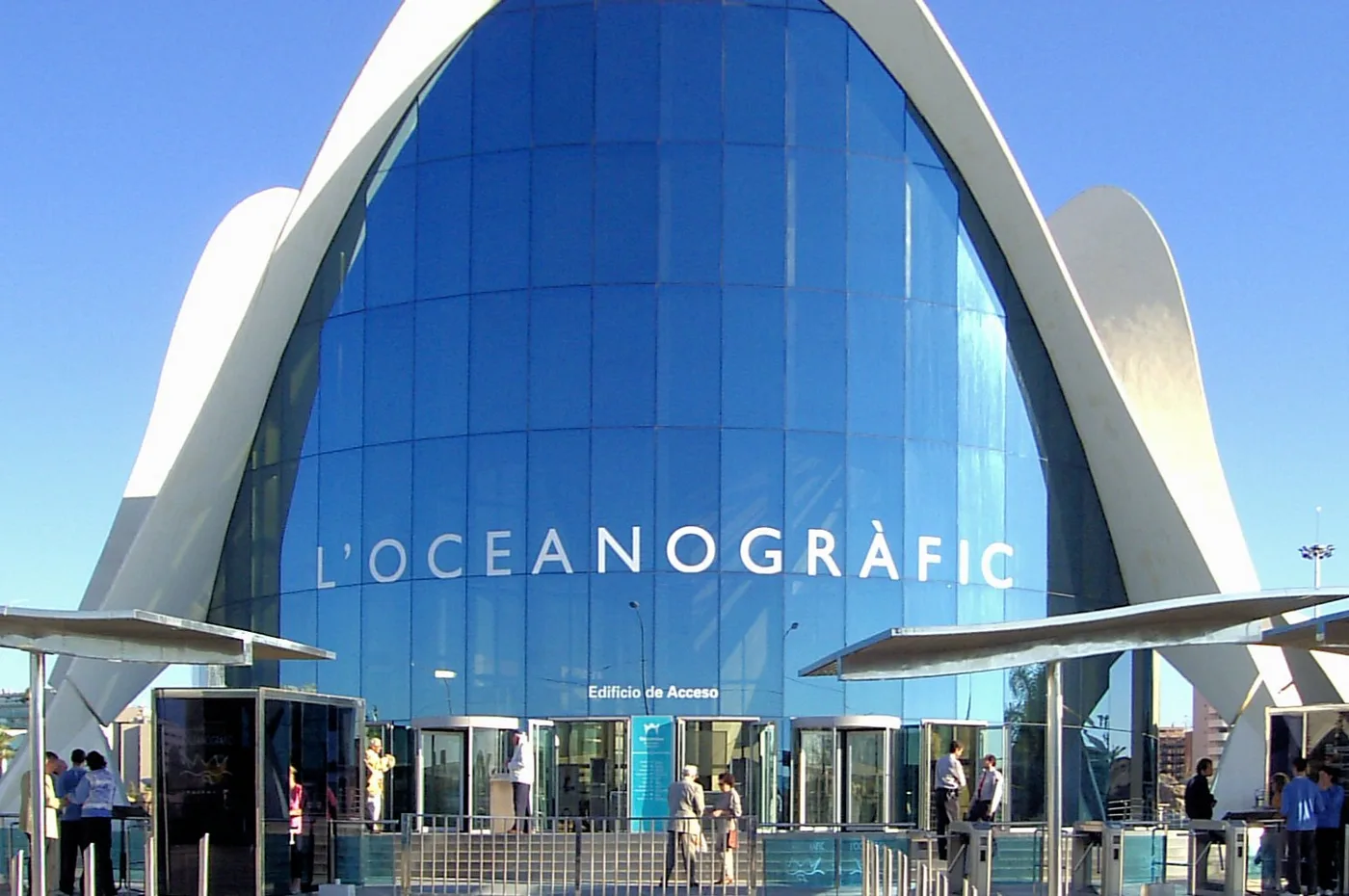
Photo: Rauenstein, CC BY-SA 3.0
Falling for the City of Arts and Sciences?
Oceanografic is one afternoon of a much bigger reason people end up staying in Valencia. If you are thinking about making that permanent, we can help with the visa and the practical side of the move.
Contact usMore Valencia guides
Oceanografic questions
Is Oceanografic really the largest aquarium in Europe?
How long should I plan for a visit?
Are dolphin shows included in the ticket price?
What is the best way to get to Oceanografic from central Valencia?

Resident in Valencia since 2016. Founder of BeTranslated. 25+ years in translation, interpretation and multilingual SEO.
Reviewed 11 July 2026 by Michael Bastin