
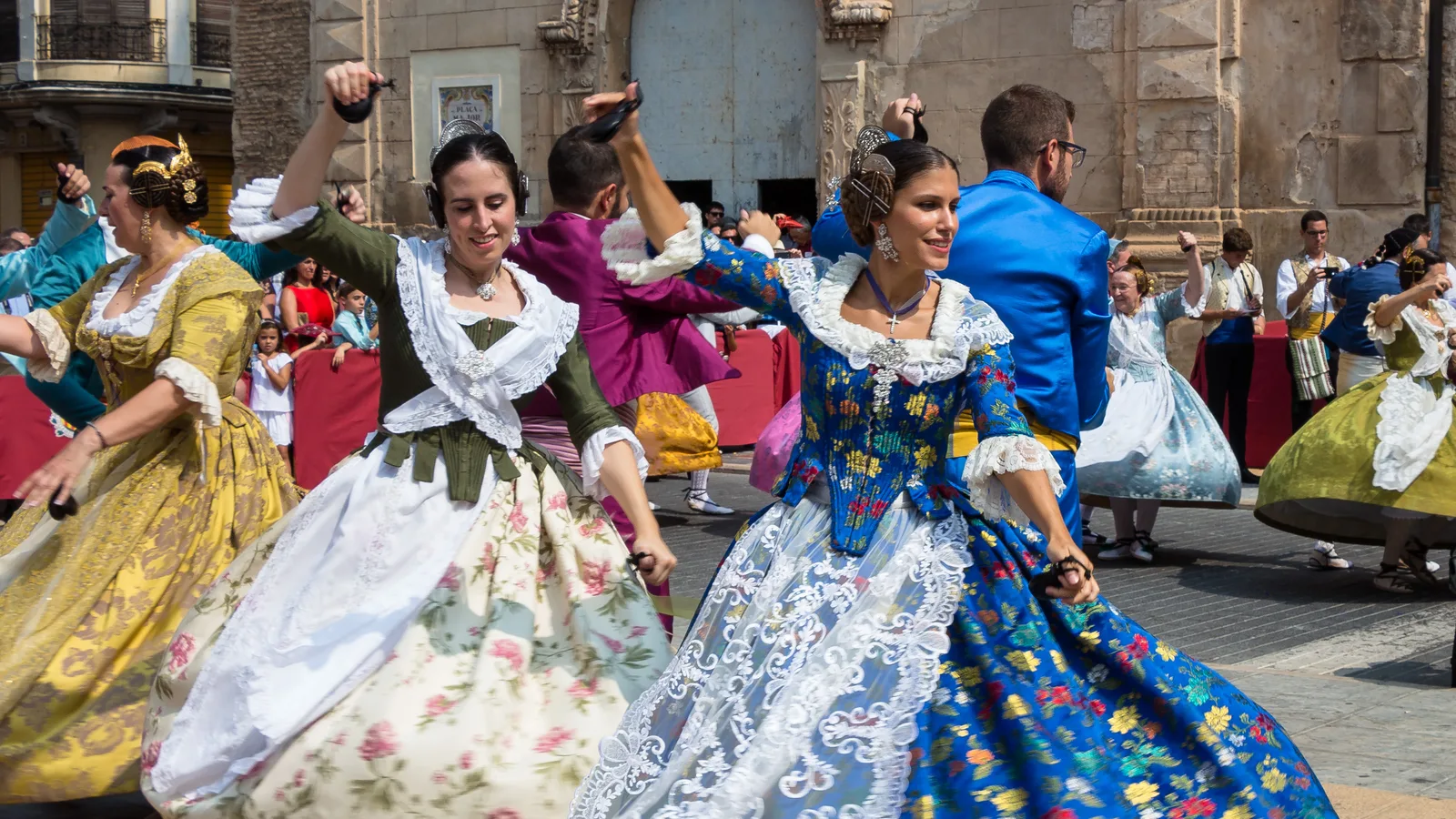
Valencia's festival calendar is dominated by one event, and reasonably so. But there is a second one, thirty kilometres south, that UNESCO put on the Representative List of the Intangible Cultural Heritage of Humanity in 2011, and that most people who live in the city have still never been to.
The Festa de la Mare de Deu de la Salut takes over the town of Algemesi for a fortnight, peaking on 7 and 8 September. Almost 1,400 people take part in the theatre, music and dance, and none of them are professionals. The costumes, ornaments and accessories are handmade, and the dances and musical scores are passed down within families rather than taught in an institution.
It is not staged for visitors. That is precisely why it is worth the half-hour trip, and it is also the thing to keep in mind while you are there.
What it actually is
The festival honours the Mare de Deu de la Salut, the patron of Algemesi, and it is built around a series of processions rather than a single event. Between them sit theatrical pieces, orchestral performances, bell-ringing and representations of biblical figures.
The organisation runs through the town's four historic quarters, each of which contributes to the whole. This is the part that makes it different in kind from a municipal festival programme: the structure is the town's own social geography, and participation is inherited rather than signed up for.
Everything you see has been made by hand within the community. UNESCO's own description makes a point of this, and of the fact that the dances and scores move from one generation to the next by transmission rather than instruction.
Inscribed on the UNESCO Representative List of the Intangible Cultural Heritage of Humanity in 2011. That is the same list Las Fallas joined in 2016, and the recognition covers the festival as a living practice rather than any single building or object.
The 2026 dates
The official programme spans 29 August to 13 September 2026, taking in the religious, cultural and traditional events across the fortnight. If you can only make one trip, though, the two days that matter are 7 and 8 September.
Both days are busy from the morning onwards and run late. The evening of the 8th is the climax.
29 Aug - 13 SepThe full 2026 programme
Religious, cultural and traditional events across the fortnight, building towards the two main days.
7 SeptemberThe eve, and the Processo de les Promeses
The procession of promises, made by those fulfilling a vow to the Mare de Deu. This is the evening most people underestimate.
8 SeptemberThe main day
The Processoneta del Mati in the morning, then the Missa Major, an aerial mascleta, and in the evening the Processo de la Volta General, the largest of the three and the symbol of the whole festival.
The Muixeranga, and the castells question
The human towers are the image that travels furthest, and in Algemesi they are the work of the Muixeranga. Towers are built to traditional figures, accompanied by dolcaina and tabalet rather than by a modern band, and the music is as fixed as the choreography.
Here is where a claim needs handling carefully, because it is repeated everywhere in a stronger form than the evidence supports. The Valencian tradition, historically known as the Ball de Valencians, is generally credited as the ancestor of the Catalan castells. The documentary record for the related moixigangues goes back to the fifteenth century, one widely cited account places the muixeranga itself in the seventeenth, and the practice has been continuous in the Ribera del Xucher towns since the eighteenth.
What is well attested is the direction of travel and the family relationship. What you will also see asserted, often flatly, is a precise line of descent with dates attached. Treat that as tradition rather than settled history, and enjoy the towers regardless.
The Misteris and the other performances
Alongside the towers, the festival carries a repertoire of dances and short performances that fill the streets between the processions. The one UNESCO singles out by name is Els Misteris.
We are naming only what the official record names. Local accounts list a longer roster of dances, and you will hear several of them referred to by name while you are there, but the authoritative source is deliberately general about them and we would rather point you at the town than publish a list we cannot stand behind.
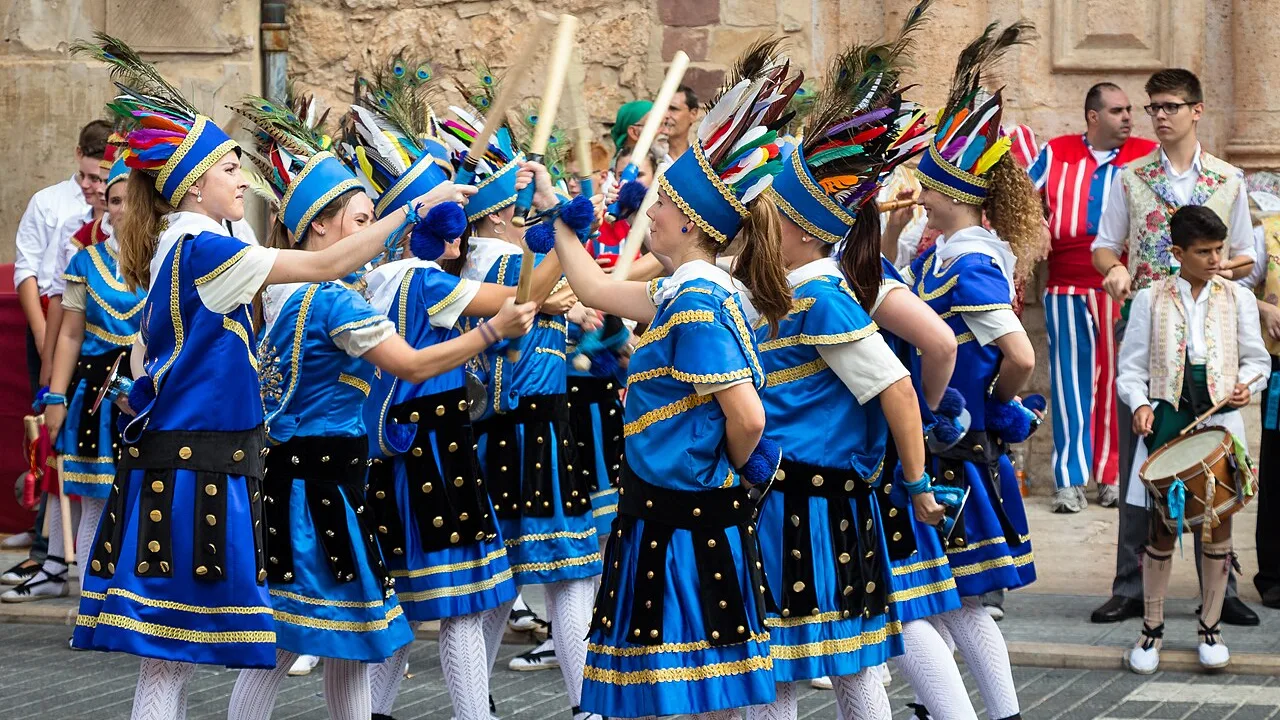
Els Misteris
Short religious theatrical pieces performed by children. UNESCO names these specifically in its description of the festival.
The human towers
Built to traditional figures with live dolcaina and tabalet accompaniment, rather than to music written for the occasion.
The processions
Three across the two main days, each with its own character. The Volta General on the evening of the 8th is the one everything else builds towards.
Getting there from Valencia
Algemesi sits about thirty kilometres south of Valencia in the Ribera Alta, and it is one of the easier day trips out of the city. It has its own Cercanias station on the southern lines towards Xativa and Alzira, which is a genuinely comfortable way to arrive on a festival day when parking in the town is close to impossible.
Check the timetable in both directions before you go, and check the return in particular. The Volta General finishes late, and a festival evening is exactly when you do not want to be discovering that the last train left an hour ago. Our Valencia transport guide covers how the Cercanias network and its ticketing work.
Practical notes
This is a working religious festival in a town of around thirty thousand people, not an event with a visitor infrastructure. Plan accordingly, and behave accordingly.
- Go on 7 September as well as the 8th if you can. The eve is quieter and easier to actually see.
- Arrive early for the evening processions. The good vantage points along the route go long before the start.
- Eat before or late. The town's restaurants are serving a town that is entirely occupied with something else.
- Take the train rather than the car. Parking on the main days is a genuine problem, not a mild one.
- Watch where you stand during the aerial mascleta, and follow what everyone around you is doing.
- Remember that the performers are neighbours, not staff. Ask before photographing people close up.
Valencia's festival year is loud, and the loudest parts are well documented. Algemesi is the opposite: a fortnight of something a town does for itself, that happens to be recognised by UNESCO, thirty minutes down the line.
If you are here in early September, the 8th is the day. If you are building a longer picture of the Valencian year, our things to do in Valencia guide and the Gran Fira write-up cover what sits either side of it.
Sources
Dates, participant numbers and the description of the festival's elements come from UNESCO and from the 2026 programme published locally, consulted in August 2026. Where a claim about the festival's history is contested, we have said so in the text.
- UNESCO, Festivity of 'la Mare de Deu de la Salut' of Algemesi (Representative List, 2011)
- Ajuntament d'Algemesi, La fiesta de la Mare de Deu de la Salut
- Festa Patrimoni Algemesi, official festival site
Building a life here, not just a weekend?
The festivals are the easy part to fall for. We help people work out whether the rest of it fits, and then handle the paperwork when it does.
Contact us
About the author
Michael Bastin
Founder, ValenciaMove - Valencia since 2016
Michael moved to Valencia in 2016 and has helped dozens of families relocate since. He writes every guide on this site personally and verifies every fact against Spanish government sources before publishing.
Buy Michael a coffeeNeed help with your move?
Contact us. We handle visa, admin, and housing so you can focus on the exciting part.