
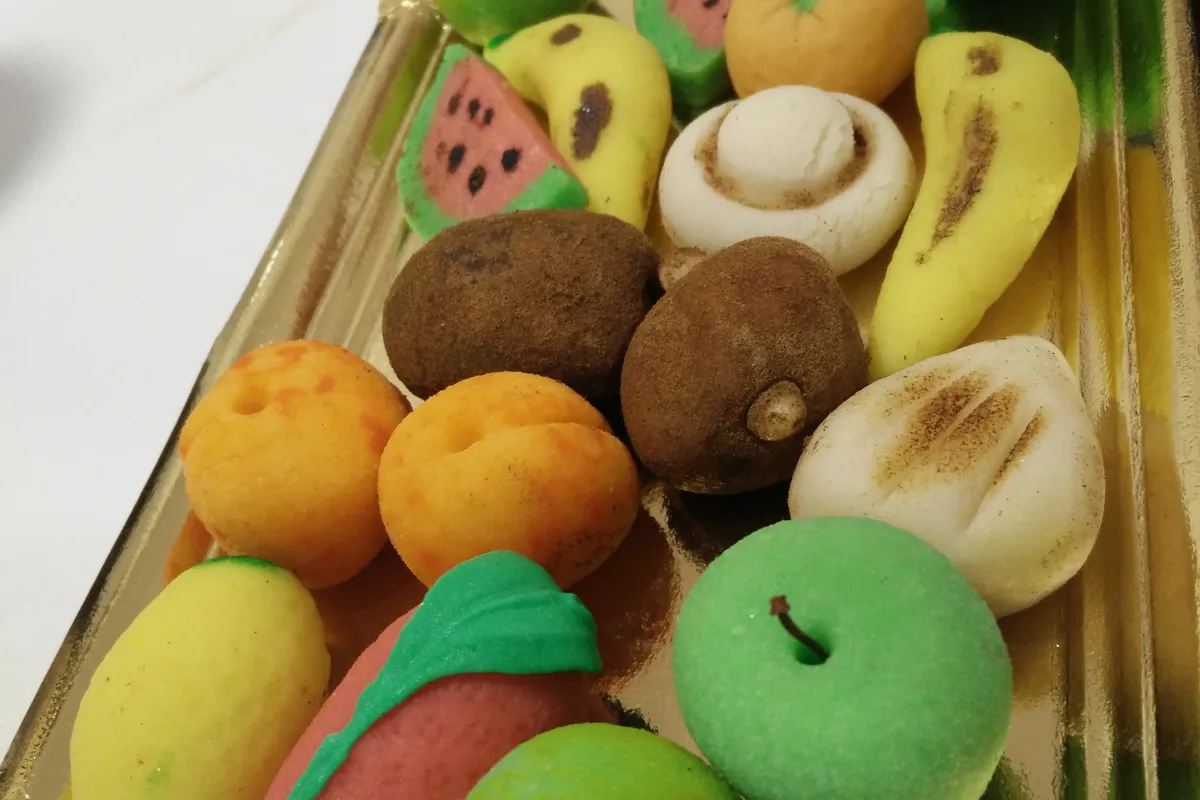
October 9th is Valencia's own flag day, and Valencians mark it in two very different registers at once. In the morning, a formal civic procession moves through the old town. By afternoon, bakery windows across the city are full of marzipan shaped like fruit. Here is what 9 d'Octubre actually commemorates, how a handkerchief of marzipan sweets became attached to it, and what to expect if you are new to the city.
What 9 d'Octubre Actually Commemorates
The date marks 9 October 1238, when King Jaume I, known as El Conqueridor, rode into Valencia and ended more than five centuries of Moorish rule, founding the Kingdom of Valencia in the process. It is the official public holiday of the Valencian Community specifically, not of Spain as a whole, which is why offices and shops close here on a day that is a normal working day everywhere else in the country.
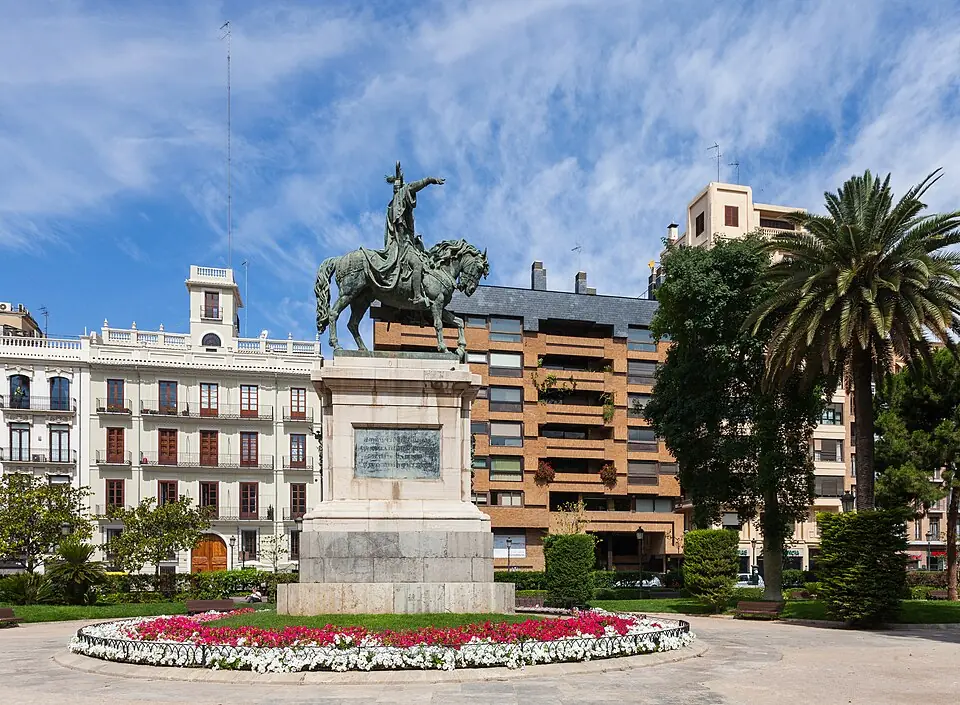
Photo: Diego Delso, CC BY-SA 3.0
The Senyera, the Procession and the Mascleta
Civic celebration of the date is not new. It goes back to the 14th century, introduced under King Pere IV of Aragon, and the modern version still follows a fixed script every year.
At noon, the Real Senyera, known in Valencian as the Reial Senyera, the historic Valencian flag kept inside the Ajuntament, is lowered from the building's main balcony over Plaza del Ayuntamiento. It is then carried in procession along Calle de Sant Vicent and Plaza de la Reina to the Cathedral, where a Te Deum is sung.
From the Cathedral, the procession continues to the Parterre gardens for a floral offering at the monument to Jaume I. A mascleta, the daytime firecracker display more familiar from Las Fallas, follows in Plaza del Ayuntamiento itself.
The build-up starts days earlier. The week before 9 d'Octubre brings Moros y Cristianos parades through the city centre, so the noise and the street closures are already underway before the date itself arrives.
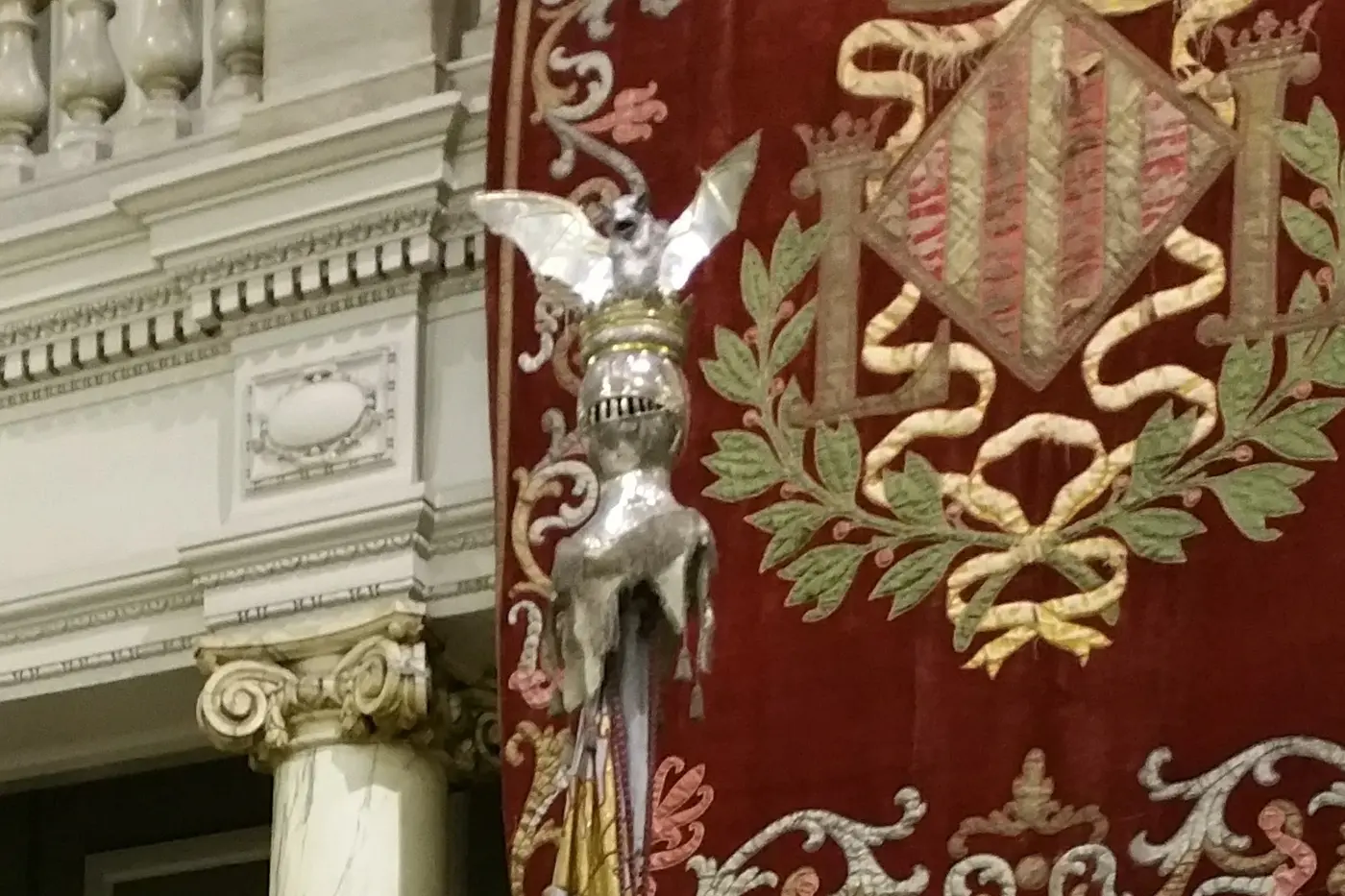
Photo: Hypatia2010, CC BY-SA 4.0
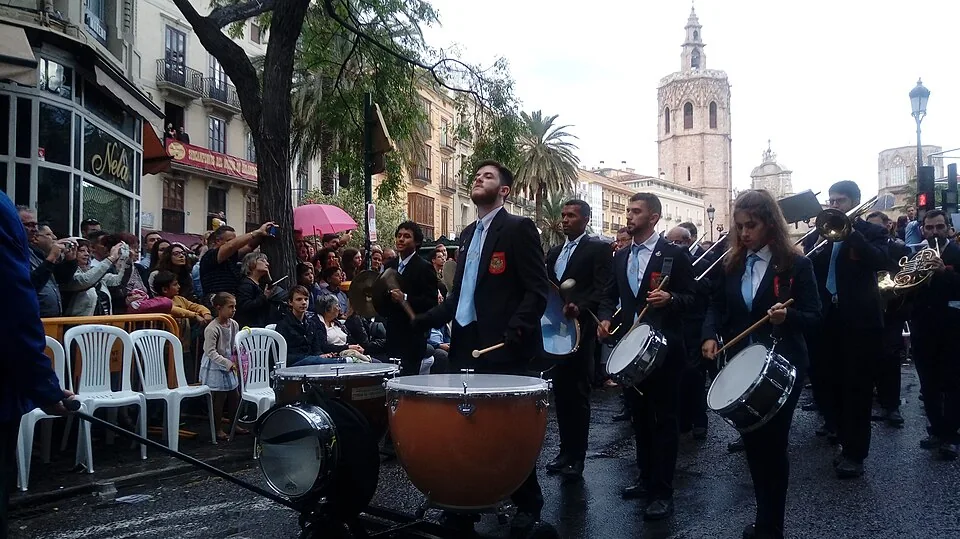
A band in the Moors and Christians parade on 9 October 2018, with the Micalet bell tower behind it.
Photo: Ponscor, CC BY-SA 4.0
This short video captures the atmosphere of the day, from the Senyera procession through the old town to the mascleta in the Plaza del Ayuntamiento.
The Mocadora: Valencia's Own Valentine's Day
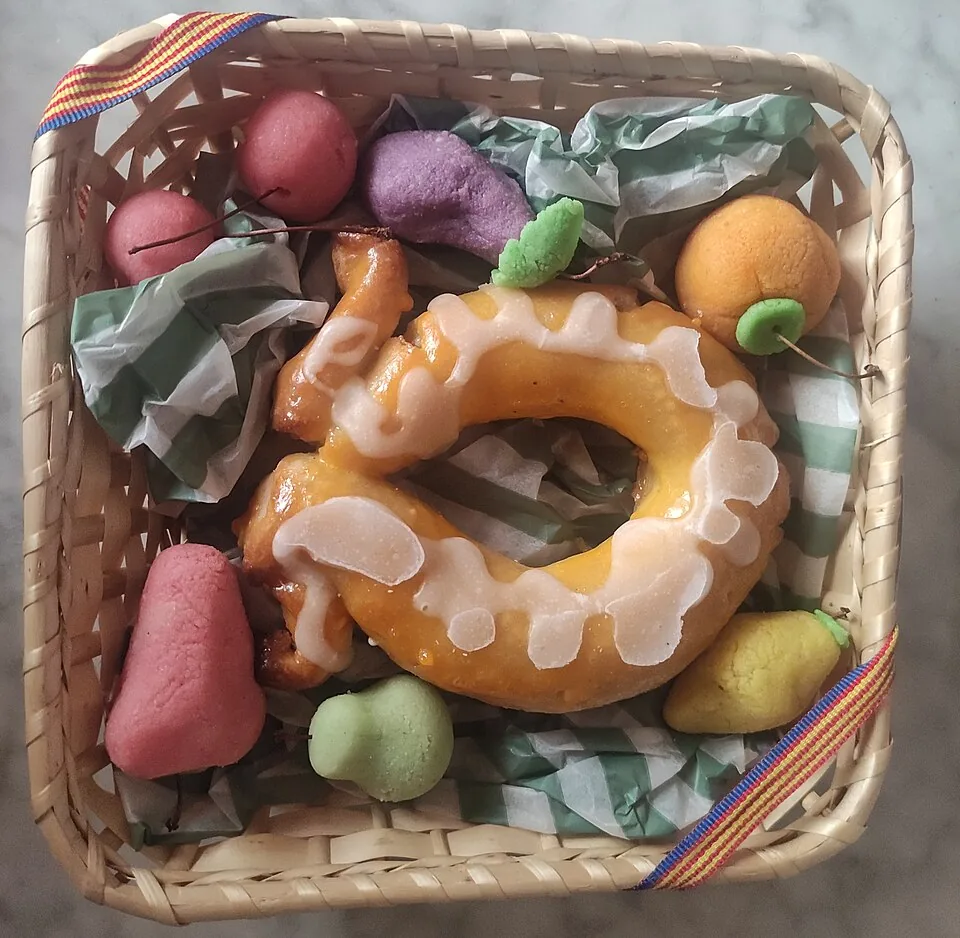
A mocadora basket from a bakery in Benifaió, tied with a ribbon in the colours of the Senyera, photographed on 6 October 2025.
Photo: Francesc Fort, CC BY-SA 4.0
9 d'Octubre also happens to be the feast of Sant Donis, patron saint of Valencian lovers, and the two occasions have merged into one local custom: the mocadora (). Traditionally, men give the women in their lives a mocador, a handkerchief, filled with marzipan sweets made to look like fruit and vegetables.
The shapes come straight from the Valencian huerta: pears, orange slices, watermelon, bananas, figs, mushrooms and apples, all rendered in coloured marzipan detailed enough to fool a glance from across the room.
Mocador is the handkerchief itself. Mocadora, sometimes written mocadorada, is the name for the whole gift and the custom around it. You do not need to be given one to see it: pastelerías and bakeries across the city fill their front windows with trays of it in the days beforehand.
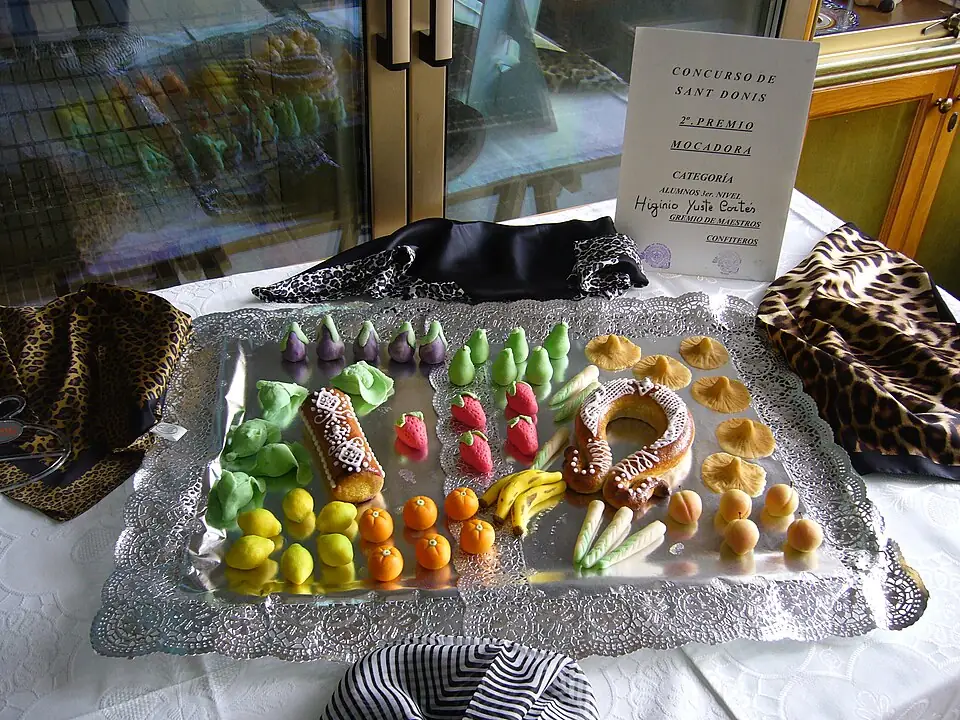
Photo: Pacopac, CC BY-SA 4.0
Why Marzipan Fruit, and Why the 18th Century
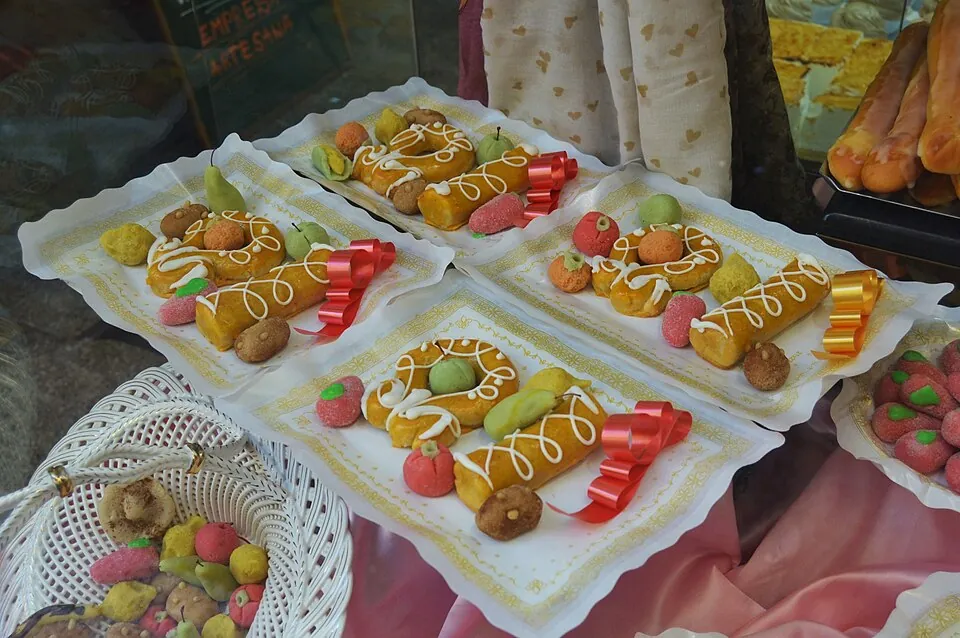
Mocadora marzipan in a pastry-shop window on Carrer de la Capelleria, in the old town of Valencia.
Photo: Joanbanjo, CC BY-SA 4.0
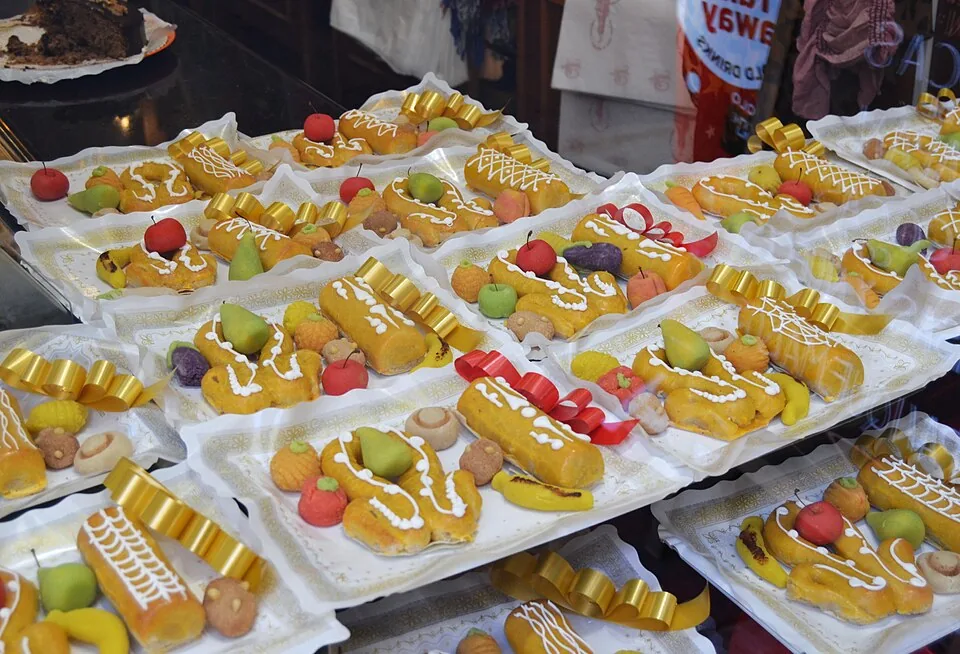
Mocadora sweets in a Valencia pastry-shop window, photographed on 4 October 2015: iced rolls with gold ribbon beside marzipan fruit.
Photo: Joanbanjo, CC BY-SA 4.0
The sweets have a specific, slightly subversive origin. After the War of the Spanish Succession, the Nueva Planta decrees banned public celebration of Jaume I's entry into the city.
Valencian confectioners found a quieter way to keep marking the date anyway: marzipan shaped like firecrackers, known as piulets and tronadors, festive enough to mean something without technically breaking the ban.
The fruit and vegetable shapes came later, chosen to symbolise the fertility of the Valencian huerta, the market-garden belt that still rings the city today. Local tradition also links the fruit shapes to a gift the Moors are said to have once offered Queen Violante of Hungary, Jaume I's wife, though that detail sits closer to folklore than to any documented record.
What This Means If You Live in Valencia
9 d'Octubre is a full public holiday across the Valencian Community, not a national one. If you work for a company based elsewhere in Spain, do not assume the day off. Shops, schools, banks and most offices here close regardless.
If you want to see the mocadora in person rather than just eat one, the days immediately before October 9th are when bakery windows fill with it. The procession itself is easy to watch from Plaza del Ayuntamiento around midday, and it needs no ticket or booking.
Three days later comes 12 October, Spain's national holiday, and the two often join into a long weekend; our guide to 12 October in Spain explains what closes and how the date is marked in Latin America.
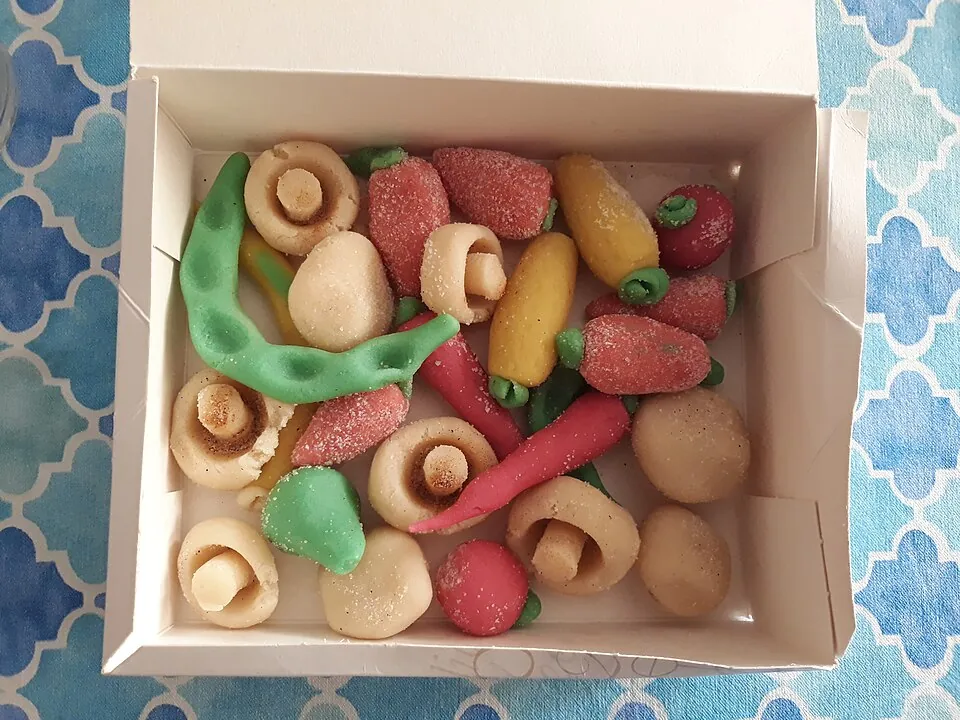
Photo: Pacopac, CC BY-SA 4.0

About the author
Michael Bastin
Founder, ValenciaMove - Valencia since 2016
Michael has lived in Valencia since 2016 and helps people move here.
Buy Michael a coffeeNeed help with your move?
Contact us. We handle visa, admin, and housing so you can focus on the exciting part.