
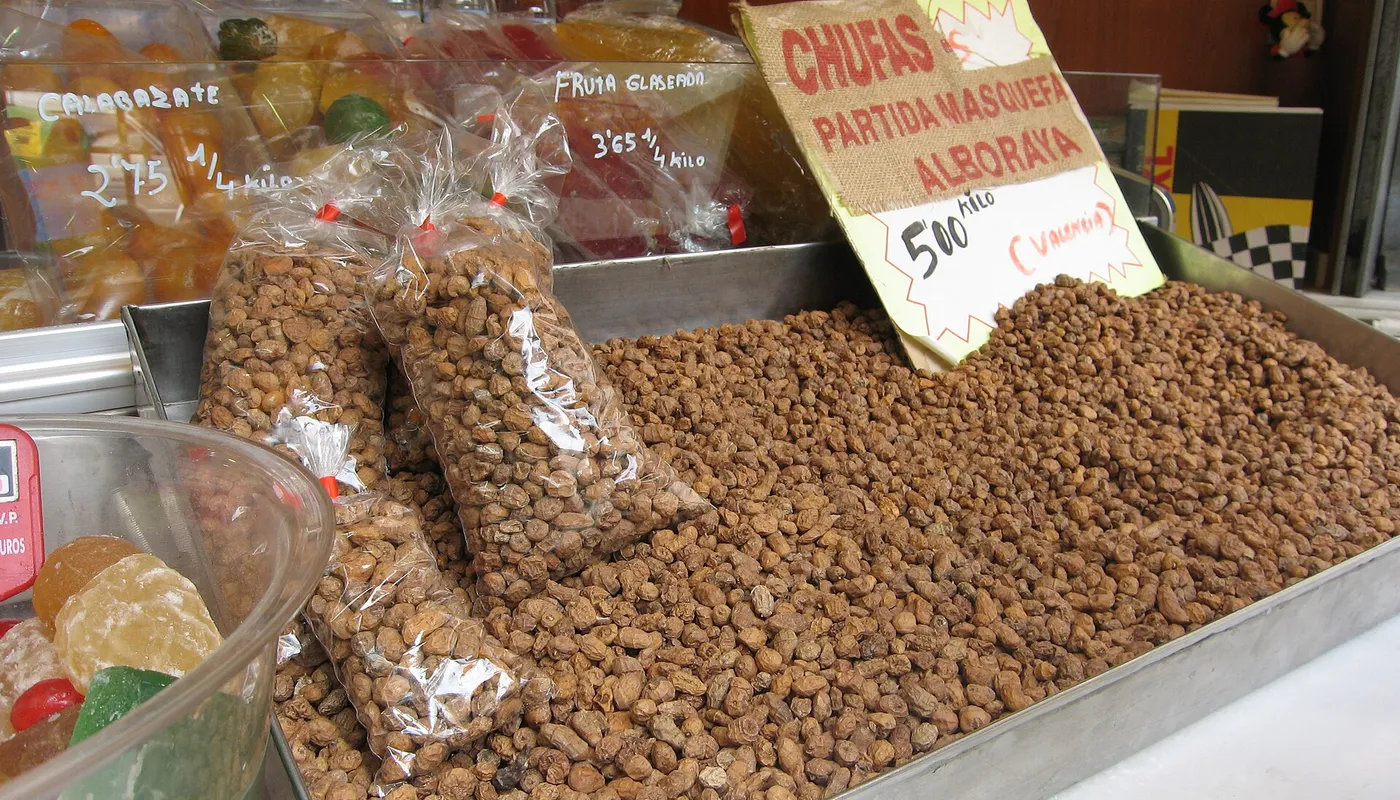
Order a horchata in Mexico City and a horchata in Valencia and you will get two genuinely different drinks that happen to share a name. Valencian orxata de chufa is made from chufas, tiger nuts, the underground tubers of a sedge plant, soaked, ground, and pressed into a milky liquid. It has nothing to do with rice or cinnamon, and Valencians will tell you so.
Horchata Valencia: What Tiger Nuts (Chufa) Actually Are
Chufas are not true nuts, they are the tubers of Cyperus esculentus, a sedge plant grown specifically for this. The production process is straightforward but slow: chufas soak in water for 8 to 24 hours with several water changes, then get washed, ground into a fine paste, pressed and filtered to extract the milky liquid, and finally sweetened and chilled. The result has an earthy, subtly sweet flavor that is genuinely its own thing, not a rice-and-cinnamon substitute.
A protected drink: DO Chufa de Valencia
Chufa de Valencia has held Denominación de Origen Protegida status since September 25, 1995, regulated by a dedicated council that certifies chufas are grown in the L'Horta Nord region north of the city, across 27 municipalities centered on Alboraya, using traditional methods under strict quality controls. This is not marketing, it is a legal designation, and it is why Alboraya calls itself the capital of horchata.
How it is served: horchata and fartons
Valencian horchata is served ice cold, always, and it is traditionally paired with fartons, light, spongy, elongated pastries built specifically for dipping. Fartons are a newer invention than horchata itself, designed as its companion rather than descended from an older tradition, but the pairing is now inseparable: order horchata anywhere serious in Valencia and fartons will be on the table by default.
Where to drink real horchata in the city
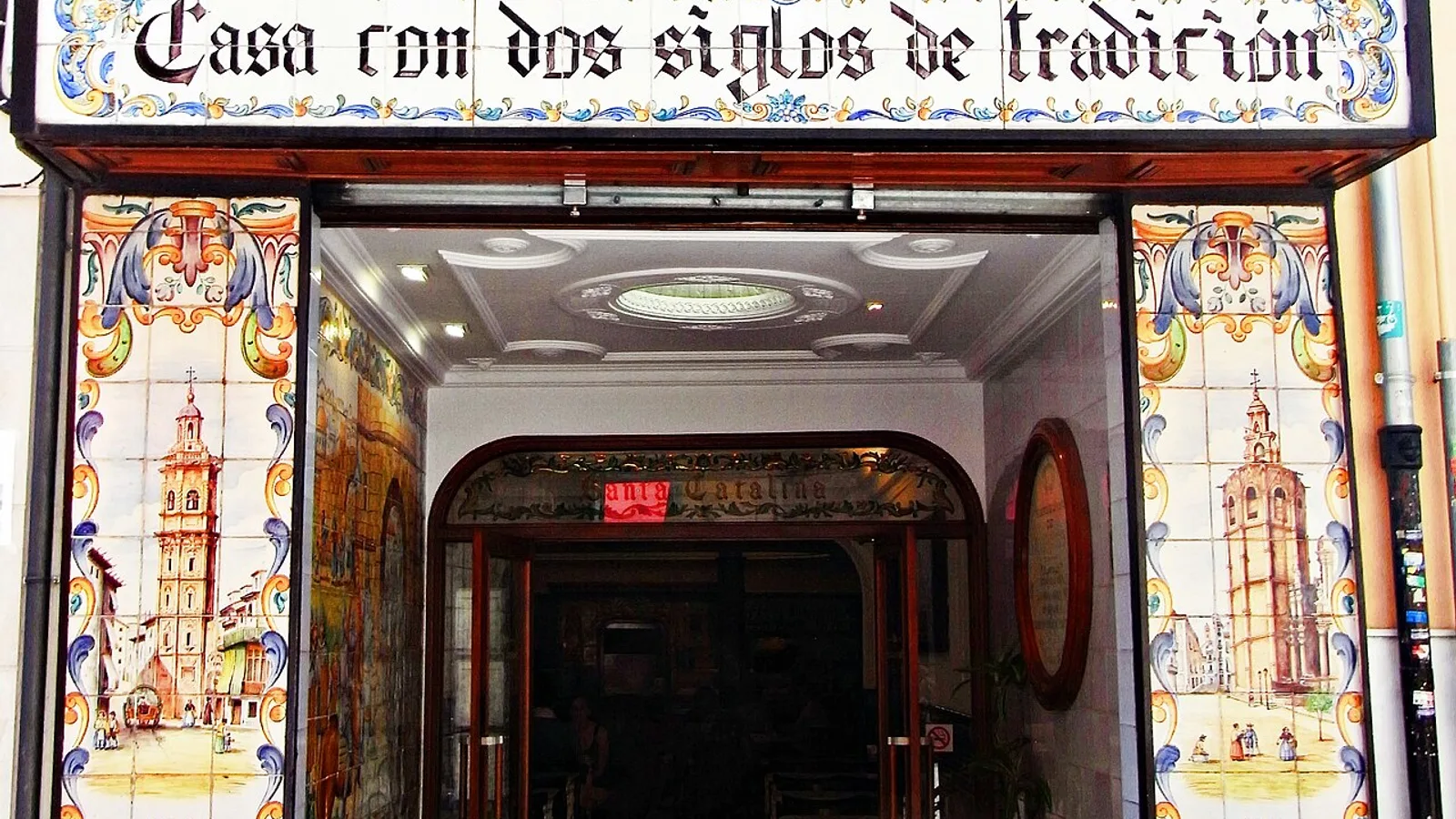
Horchatería Daniel in Alboraya, founded in 1949, is often cited as the most emblematic, known for 100 percent natural, artisanal horchata and its own fartons. Horchatería Santa Catalina, in the heart of Ciutat Vella, dates to 1830, founded by Vicente Gargallo, and is one of the oldest in the city, a genuine local institution with a ceramic-tiled interior worth seeing on its own. Horchatería El Sariers in Benimaclet and Horchatería Panach in Alboraya both come up repeatedly as trusted, traditional spots among locals.
Best Time to Drink Horchata in Valencia
Horchata is traditionally a summer drink, and demand climbs from Las Fallas in mid-March through the hot months, but it is genuinely available year-round now in most horchaterías and supermarkets across the region. Some of the more traditional shops trim their hours or close during the coldest months, while pasteurized and packaged versions stay on shelves regardless of season.
What's Actually in Horchata
Tiger nuts are a real source of dietary fiber, which supports digestion and acts as a prebiotic for gut bacteria, and chufa oil is rich in the same monounsaturated fats found in olive oil, alongside omega-6 and omega-3 fatty acids linked to cardiovascular health. Chufas also carry calcium, phosphorus, magnesium, and potassium, plus antioxidants. Horchata de chufa is naturally lactose-free and gluten-free, which makes it a genuinely useful option if you are managing either intolerance, and natural (unpasteurized) horchata carries more phospholipids, arginine, and biotin than the industrial bottled versions.
One drink, or a whole life in Valencia?
Horchata is a small taste of the local rhythm this city runs on. If you are thinking about experiencing more of it long-term, we can help with the visa and the practical side of the move.
Contact us
About the author
Michael Bastin
Founder, ValenciaMove - Valencia since 2016
Michael moved to Valencia in 2016 and has helped dozens of families relocate since. He writes every guide on this site personally and verifies every fact against Spanish government sources before publishing.
Buy Michael a coffeeNeed help with your move?
Contact us. We handle visa, admin, and housing so you can focus on the exciting part.