
Valencia has more museums than a weekend can absorb, and most lists rank them as though you were a tourist with three days and no budget limit. If you live here the questions are different: which ones reward a second visit, which are worth an hour rather than an afternoon, and which cost nothing if you turn up on the right day.
The free-entry rule worth knowing first
The city's municipal museums are free to everyone on Sundays and public holidays. The ayuntamiento states it plainly on its own museums page: booking a visit does not exempt you from the entry fee "salvo que la misma se desarrolle en domingo o dia festivo, en que la entrada es gratuita".
That single rule changes how you use them. A municipal museum stops being an outing you plan and becomes somewhere you drop into for forty minutes on a Sunday walk, which is how residents actually use them. It also takes the pressure off a big collection: if you only get through two rooms, you can come back next month and finish it for nothing.
The trade-off is that everyone else has worked this out too, so a free Sunday is not the day for a quiet hour alone with a painting. Go early, or leave it until the last hour before closing, and keep the long slow visits for a weekday.
It applies to the municipal network, not to every museum in the city. Valencia's museums are run by four different bodies - the city council, the Generalitat, the provincial Diputacio and the Spanish state - and only the first sets this rule, so check the museum's own page before you cross town for a specific exhibition.
If you want art
The Museu de Belles Arts, in the San Pio V building on the far side of the Turia gardens, is the serious one. The Valencian primitives are the reason to go: room after room of gold-ground altarpiece panels that you will not see assembled like this anywhere else. There is also a Velazquez self-portrait, a Goya, and strong holdings of Ribalta, Ribera and Sorolla.
It is large enough that trying to see all of it in one visit is a mistake, so pick two rooms and give them an hour. Most people head straight for the famous single works and skip the medieval floor, which is the wrong way round. The Viveros gardens are directly behind it, which makes it an easy pairing with a walk rather than a whole afternoon indoors.
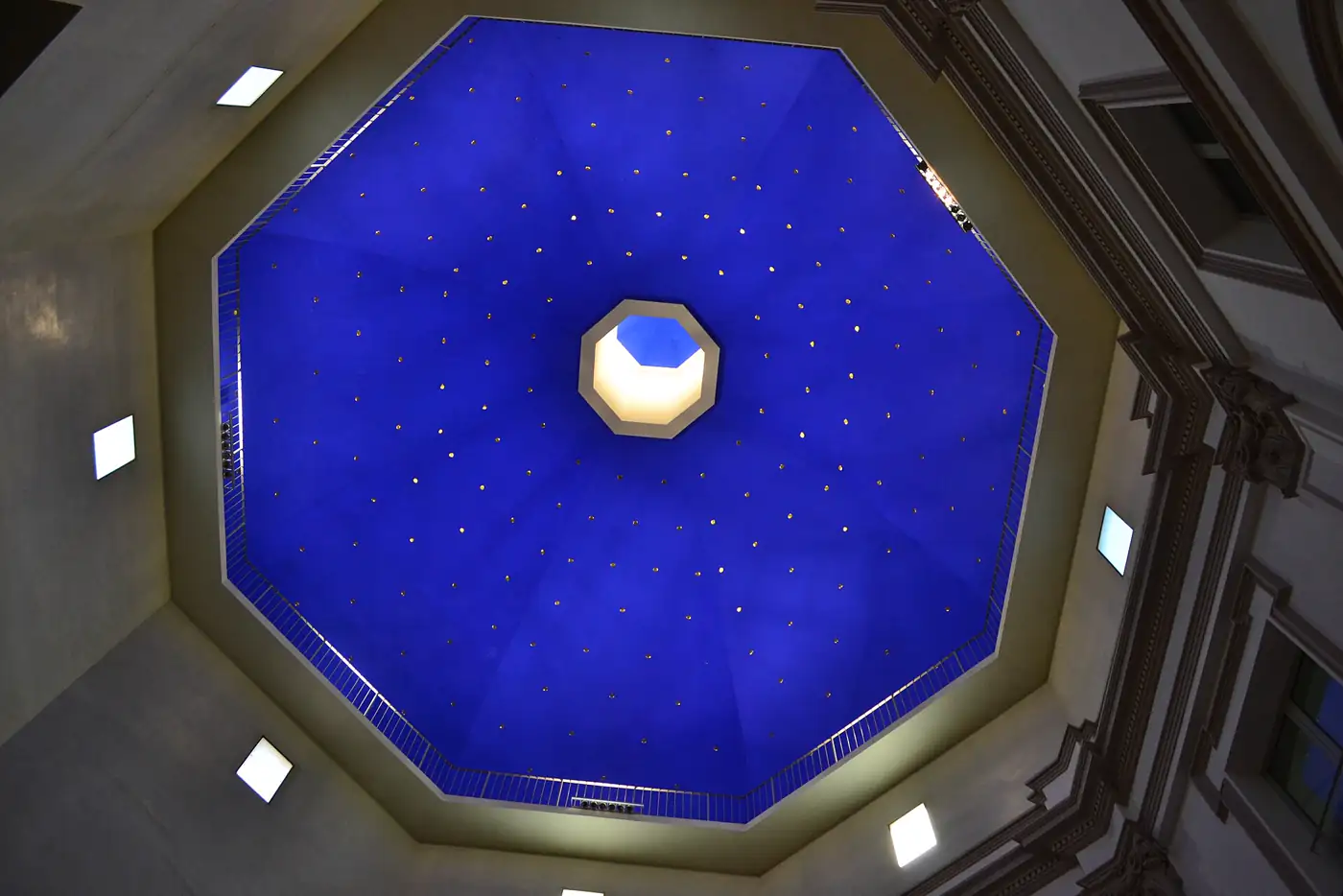
Photo: Dorieo, CC BY-SA 4.0
The IVAM covers twentieth-century and contemporary work and is the counterweight. Julio Gonzalez's sculpture is the permanent anchor, alongside a body of Ignacio Pinazo's work, but the temporary programme is where the museum earns its reputation and the reason residents go back rather than visiting once. It is compact by comparison, so an hour is usually enough unless a big show is on.
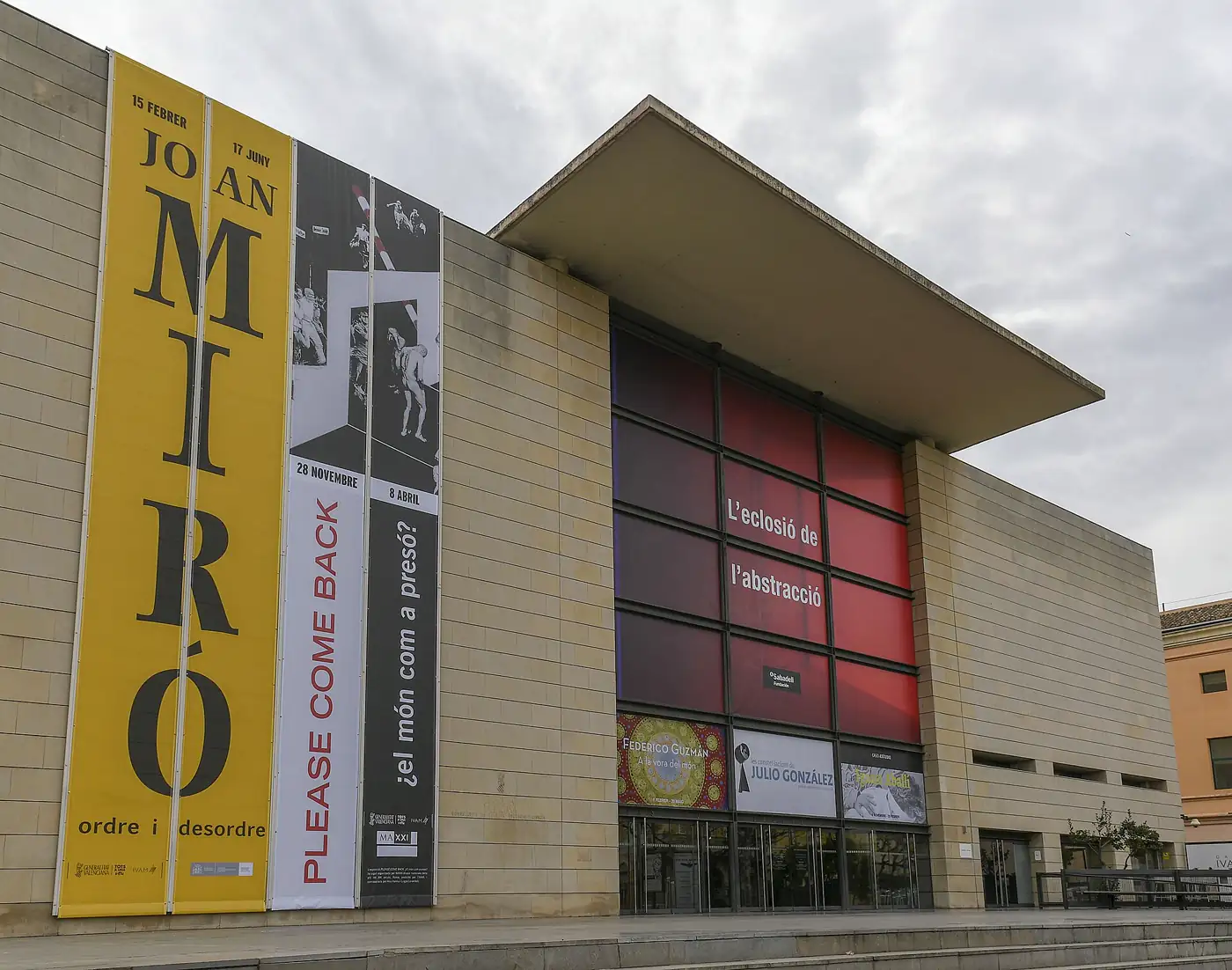
Photo: Juan García, CC BY-SA 4.0
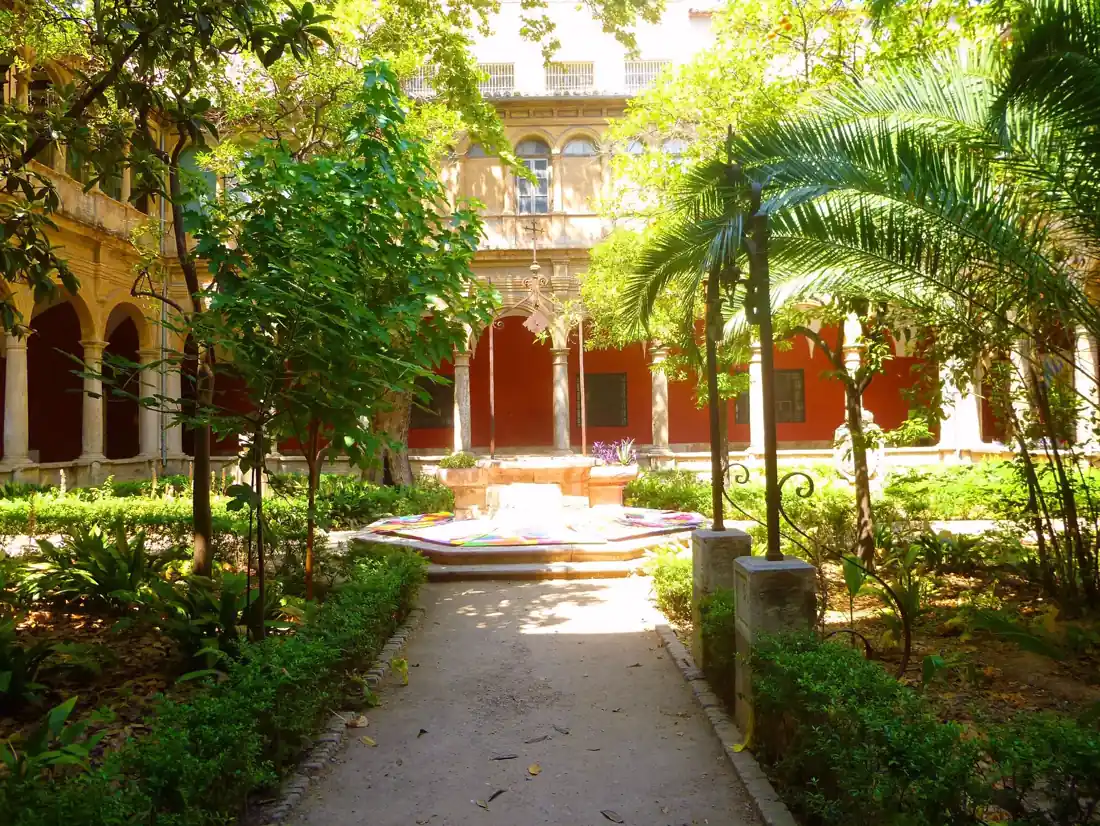
The Centre del Carme Cultura Contemporania, usually just called the Centre del Carme or the CCCC, sits between the two, a few minutes' walk away in a former convent in El Carmen. It shows contemporary work in cloisters that are worth the visit on their own, which is a useful quality on the days when an exhibition does not land.
A 15-minute walk down Guillem de Castro, the MuVIM is the one residents keep missing. Its permanent exhibition runs through the history of ideas, the temporary programme is ambitious, the building is one of the best pieces of contemporary architecture in the city, and entry is EUR 2, free every Saturday, Sunday and public holiday - it is a Diputacio museum, not a city one, and the same ticket gets you into Prehistoria and L'ETNO the same day. IVAM and the CCCC are a few minutes apart; the MuVIM is further, but the three together still make a genuine afternoon rather than a single visit.
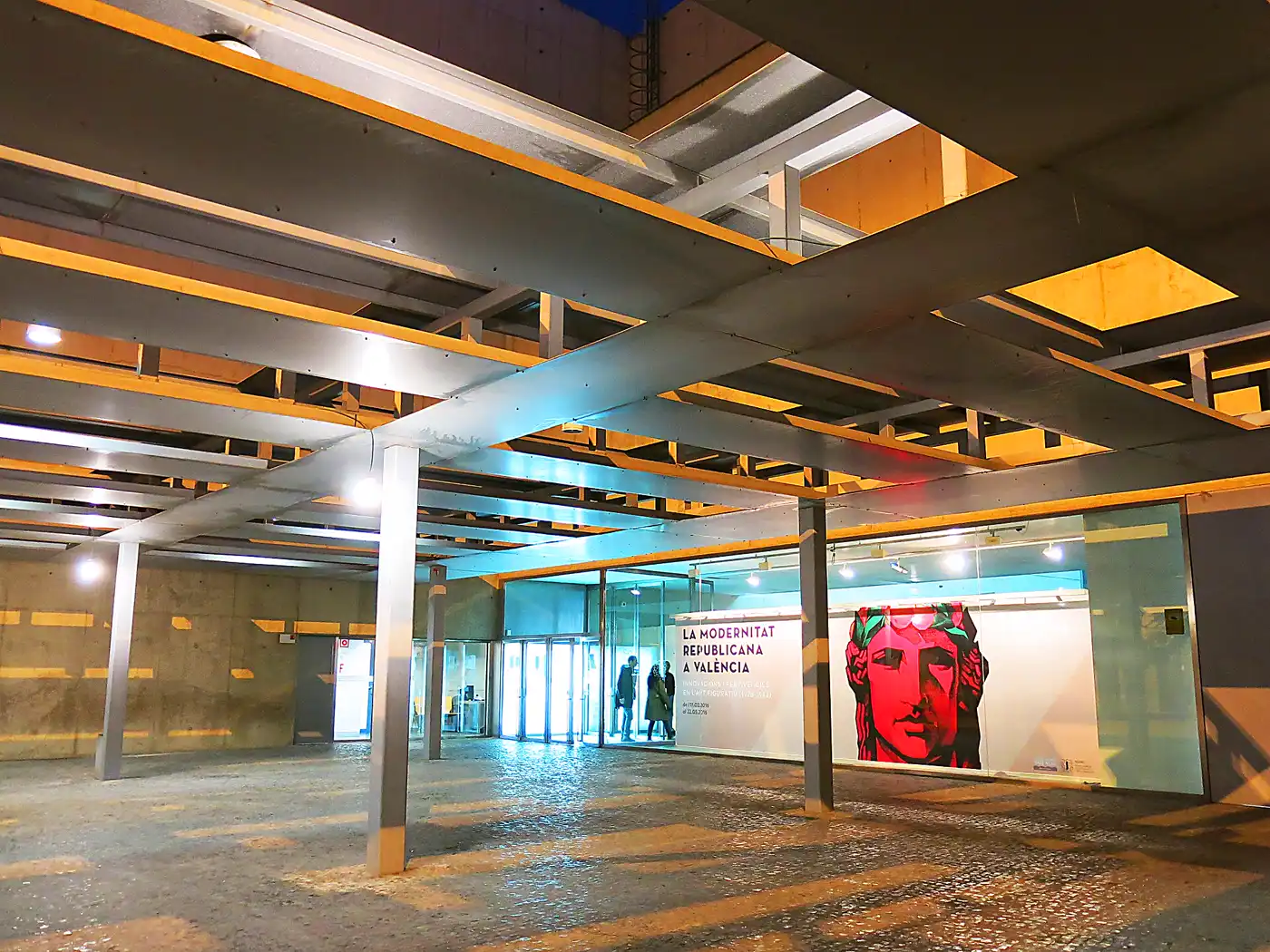
Photo: Enric, CC BY-SA 4.0
If you want the city's own story
Start with the caveat, because it will save you a wasted trip. L'Almoina - the archaeological site under a glass floor beside the cathedral, where Roman, Visigothic and Islamic Valencia sit stacked in layers exactly where they were found - is closed. The ayuntamiento began EUR 1.7 million of waterproofing and climate-control works in the summer of 2026, and the centre stays shut for the duration, with the works themselves due to finish in autumn 2027 - do not count on the centre reopening before late 2027.
You can still see the corner of it from the street, where a shallow sheet of water sits over the roof of the excavation. Put it in the diary for 2027; it is genuinely the best answer to a visitor asking why the old town is shaped the way it is.
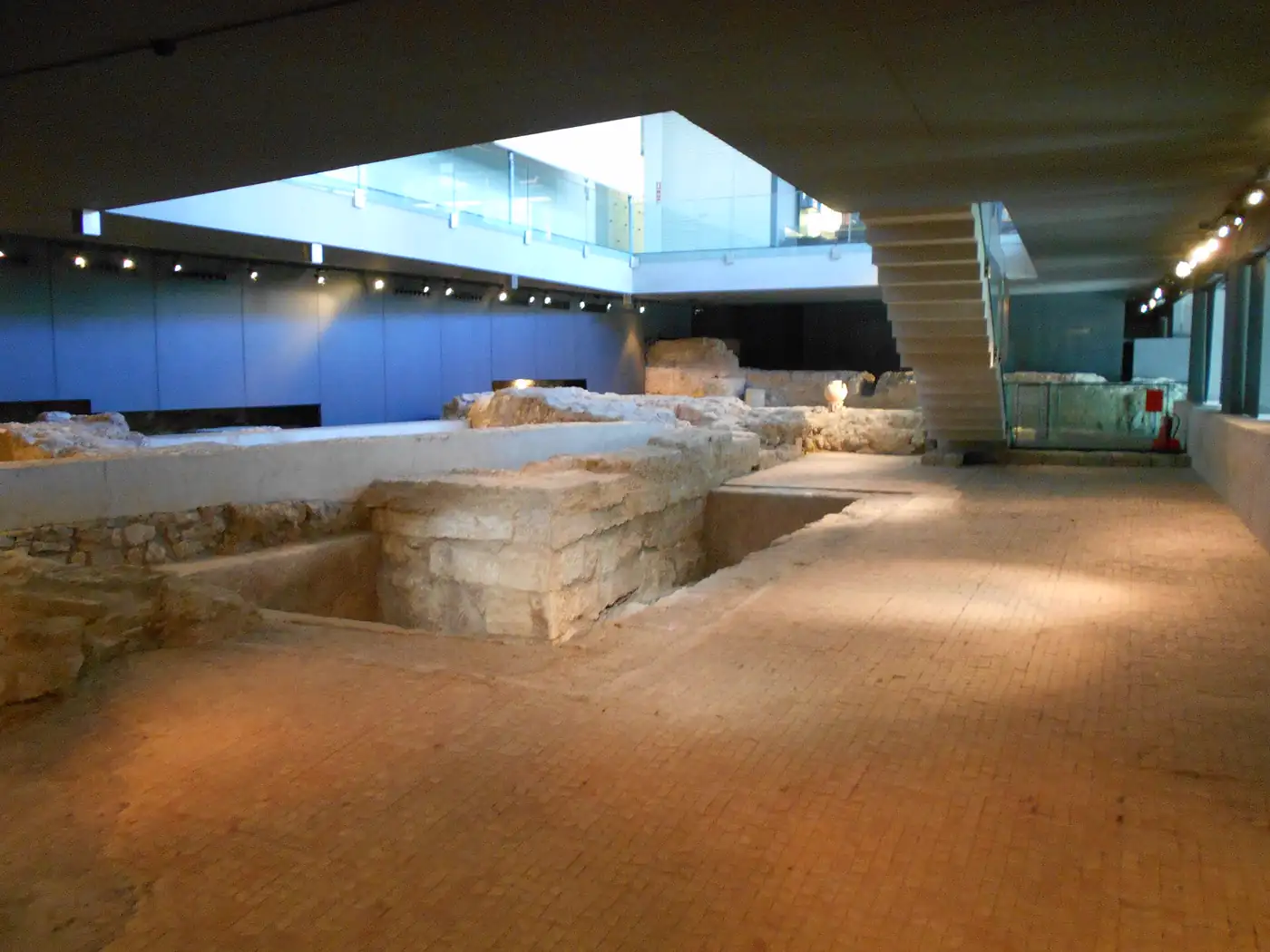
Photo: Simon Burchell, CC BY-SA 4.0
In the meantime the Museu de la Ciutat, in the Palau del Marques de Campo a few streets away on the Placa de l'Arquebisbe, is the closest thing to a replacement. It holds the municipal heritage collections, running from archaeology through the Christian city, inside a palace that is part of the exhibit. It is municipal, so the free-Sunday rule applies to it.
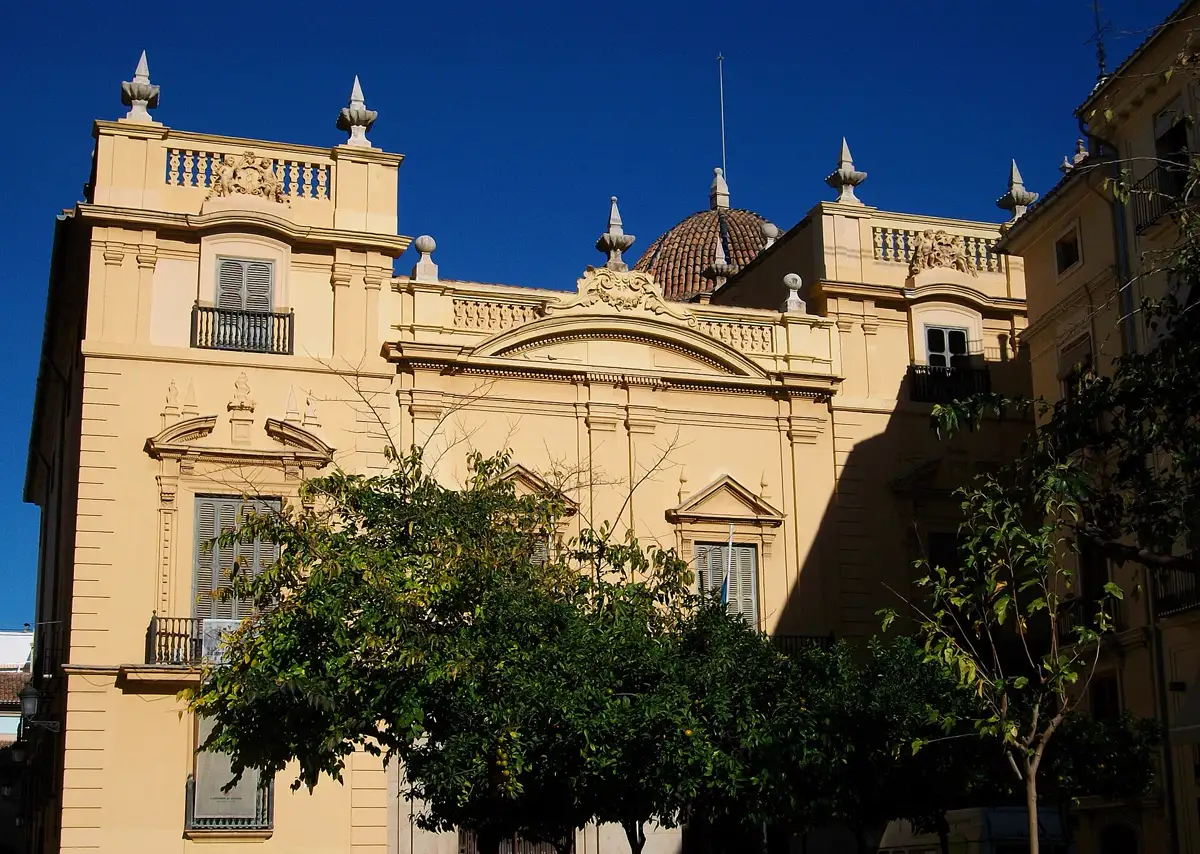
Photo: Joanbanjo, CC BY-SA 3.0
The Museu d'Historia de Valencia picks the story up and carries it forward to the modern city, inside the first potable-water reservoir the city ever built - designed in 1845, built between 1847 and 1850, eleven brick barrel vaults on around 250 pillars. The architecture carries half the visit. It sits on the western edge by the Parc de Capcalera, right on the Mislata boundary - the regional museum register files it under Mislata, the city's own address for it says Valencia - so treat it as its own trip rather than something you fold into an afternoon in the centre.
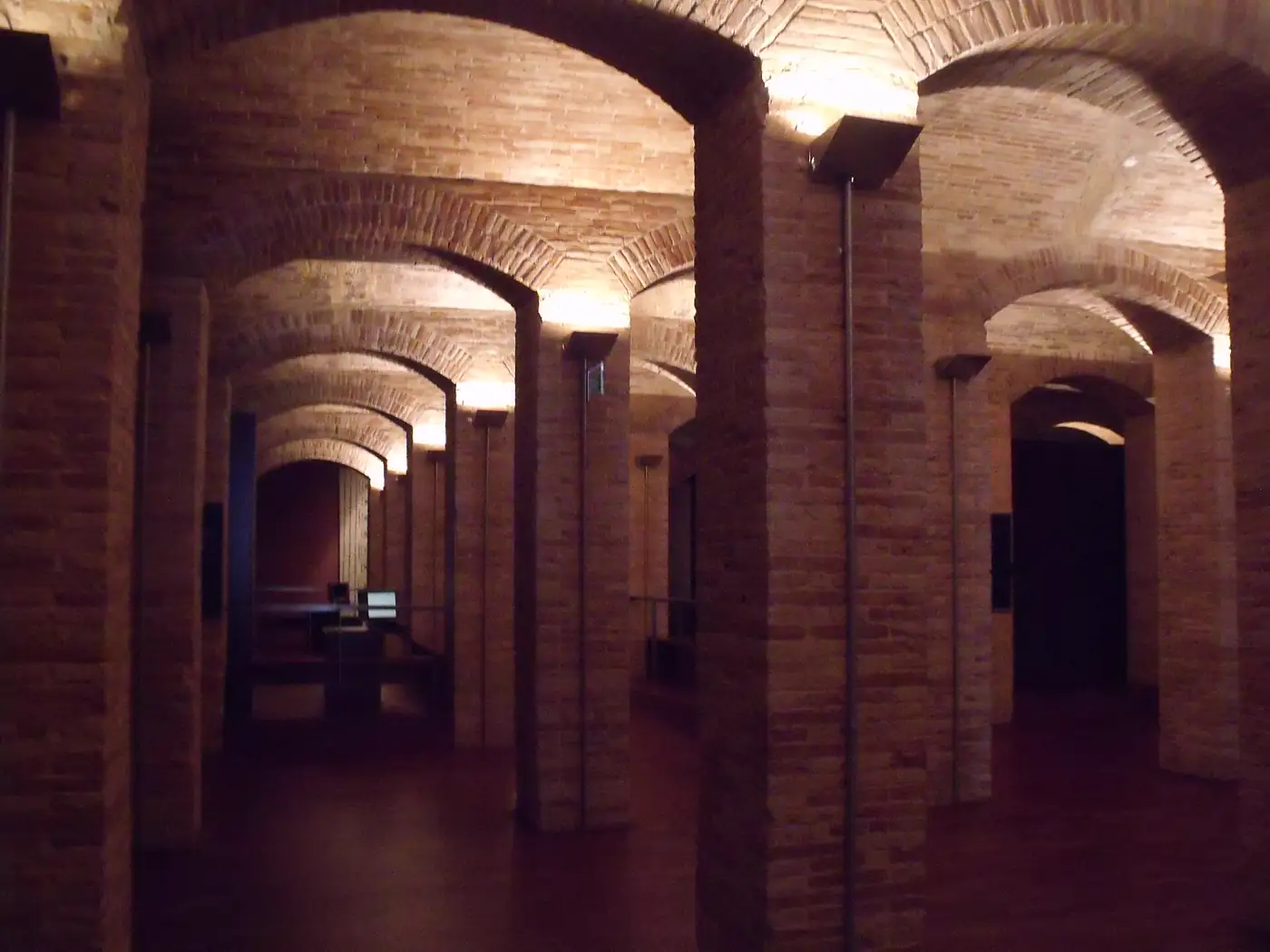
Photo: 19Tarrestnom65, CC BY-SA 4.0
La Lonja de la Seda is not a museum in the strict sense but belongs on any list: a fifteenth-century silk exchange, UNESCO-listed, opposite the Mercat Central. The twisted columns of the main trading hall are the shot everyone comes for, and it earns the reputation, but do not stop there. Go up to the Consulat del Mar for the carved and gilded ceiling, and out into the orange courtyard, both of which most visitors miss entirely. Half an hour covers it, and it is quietest once the market crowd has thinned in the afternoon.
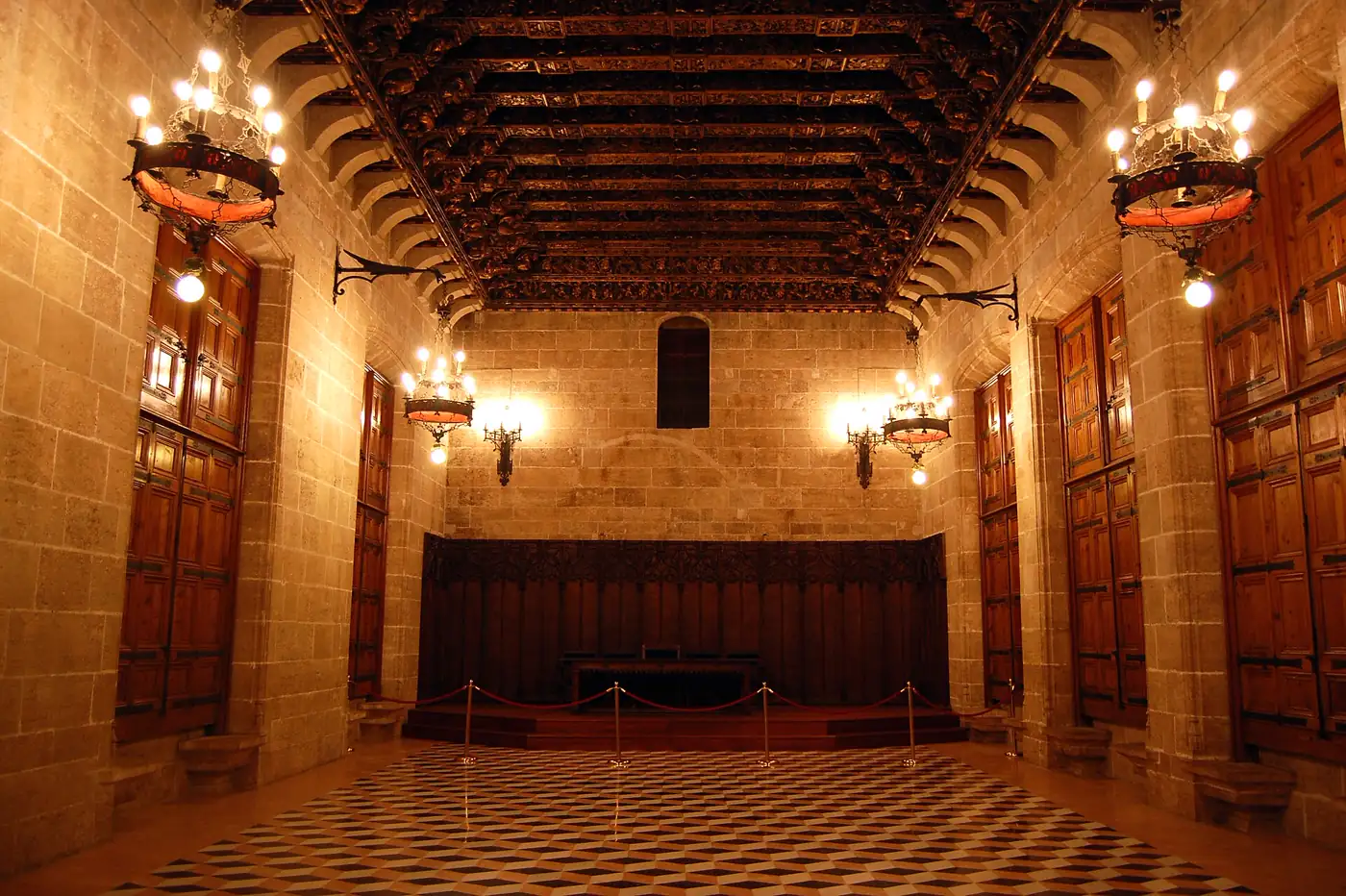
Photo: Valentina.desantis, CC BY-SA 4.0
If you want the things only Valencia has
The Museu Faller holds the ninots indultats (), the figures pardoned from the flames - two a year, one from a falla gran () and one from a falla infantil (), saved by public vote. The adult series runs back to 1934 and the children's to 1963. Seen in a row, they are a social history of the city told through satire: the fashions, the politics and the local grievances of each year, preserved by accident. The official Fallas posters going back to 1929 are displayed alongside them, and are worth as much attention as the figures.
It reads very differently once you have lived through a Fallas, so it is a better second-year visit than a first-week one. It sits south-east of the centre on Montolivet, away from the other museums here, and an hour is plenty.
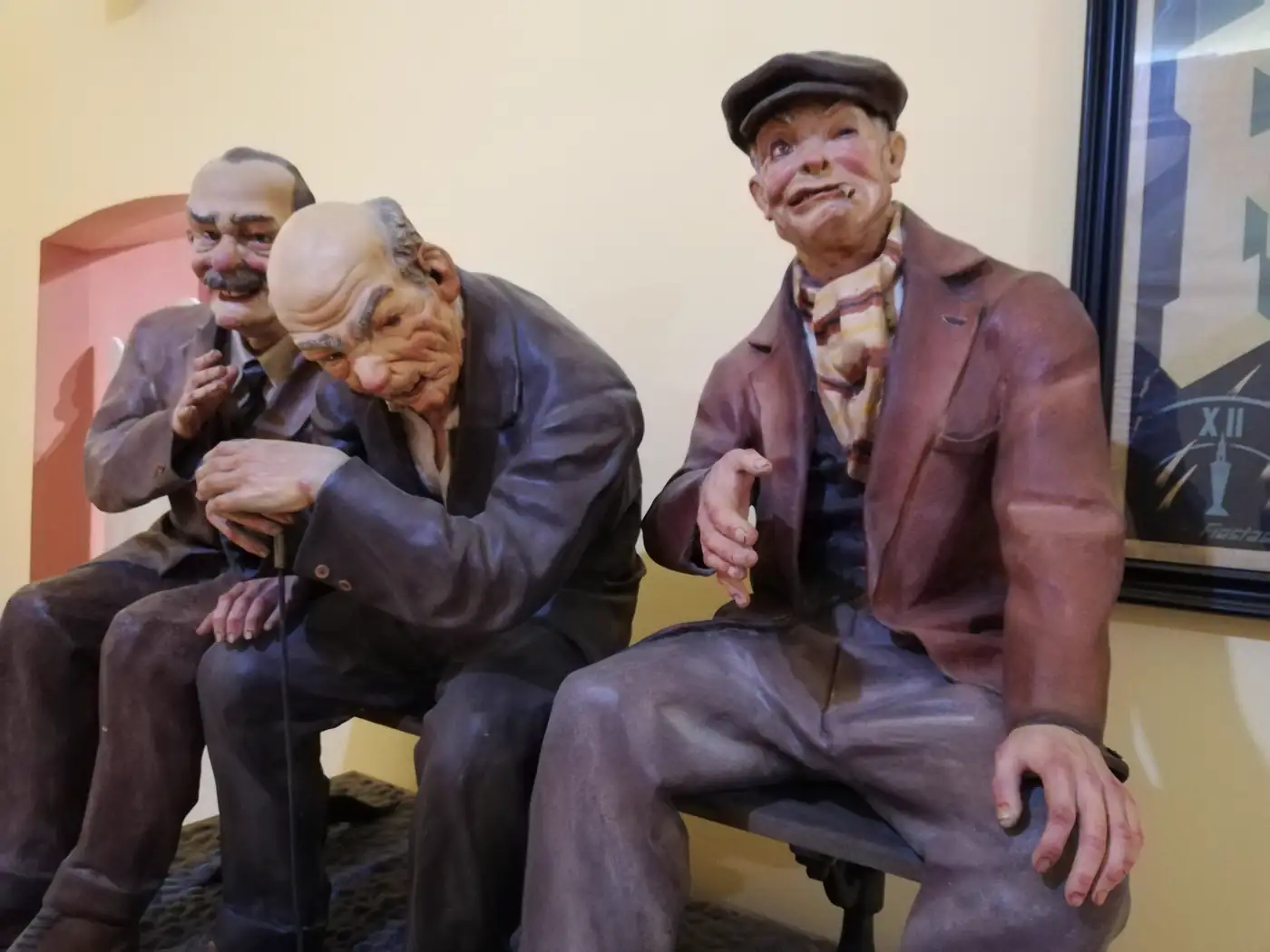
Photo: Javixu, CC BY-SA 4.0
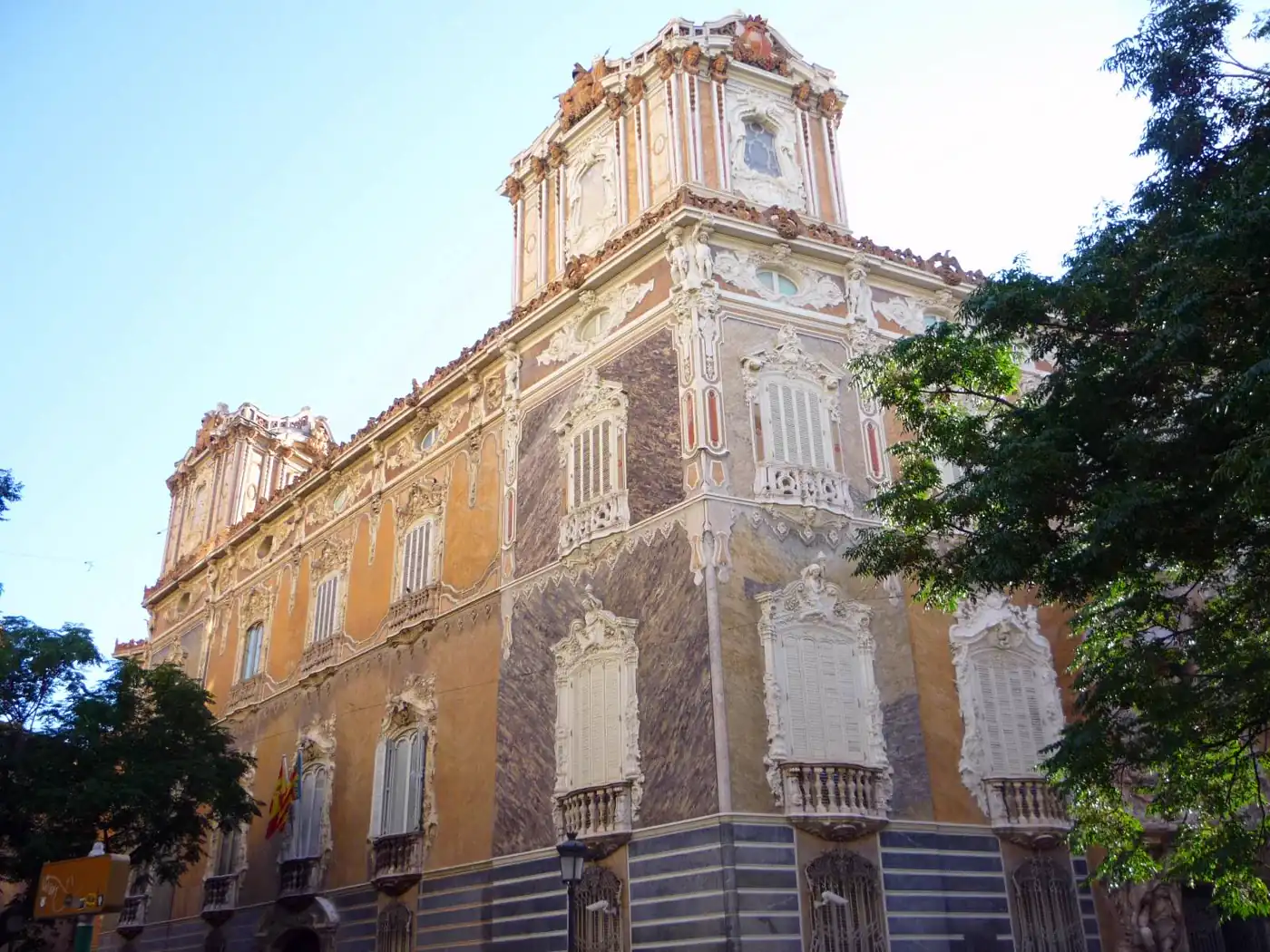
The Museo Nacional de Ceramica y Artes Suntuarias Gonzalez Marti occupies the Palacio del Marques de Dos Aguas, whose carved alabaster doorway is worth a detour even if ceramics leave you cold. Inside, the Valencian workshops of Manises, Paterna and Alcora are the core of the collection, but the rooms themselves are half the visit: a reconstructed traditional Valencian kitchen tiled from floor to ceiling, and a courtyard of eighteenth-century carriages. It is a state museum rather than a city one, so it keeps its own arrangements - but it too is free on Sundays, plus Saturday afternoons from 16:00.
The Museu del Corpus, in the Casa de les Roques () on the street of the same name, is the backstage of a procession you will otherwise only watch from the pavement in June. The building was put up between 1435 and 1447 to garage the roques, the processional carts, and eleven of them are still in there alongside the giants, the cabuts (), the Tarasca and Saint George's dragon. It is municipal and free, and it is two minutes from the Centre del Carme.
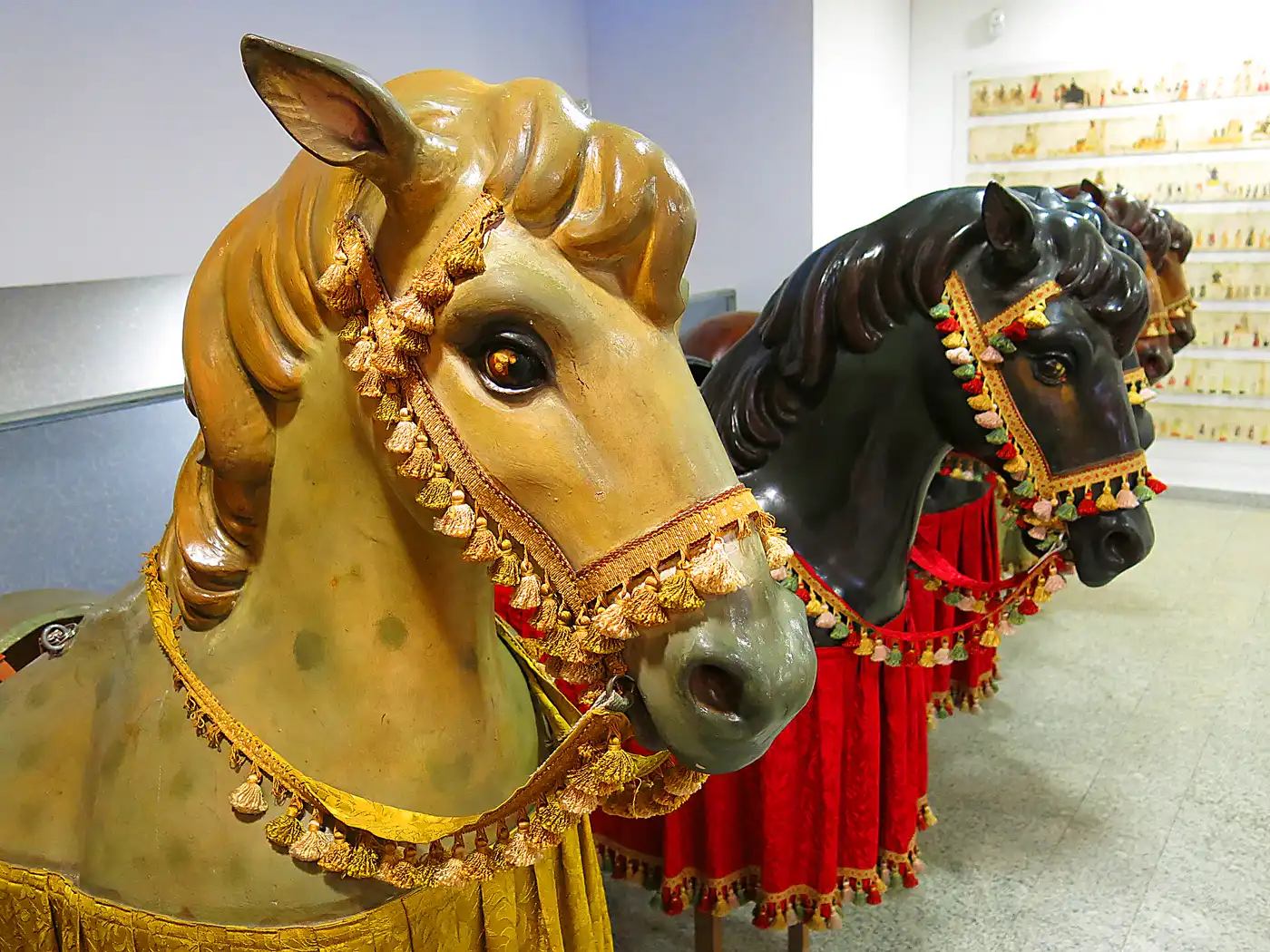
Photo: Enric, CC BY-SA 4.0
The Museu de la Seda, in the guild hall of the Col-legi de l'Art Major de la Seda in Velluters (), has been on the same site since 1494. Restored and opened as a museum in 2016, it holds looms, fabrics and what is reckoned to be the most important silk-guild archive in Europe. It explains both why the barrio is called Velluters and why the Lonja was built at all, which makes it the missing first chapter of the silk exchange rather than a separate subject.
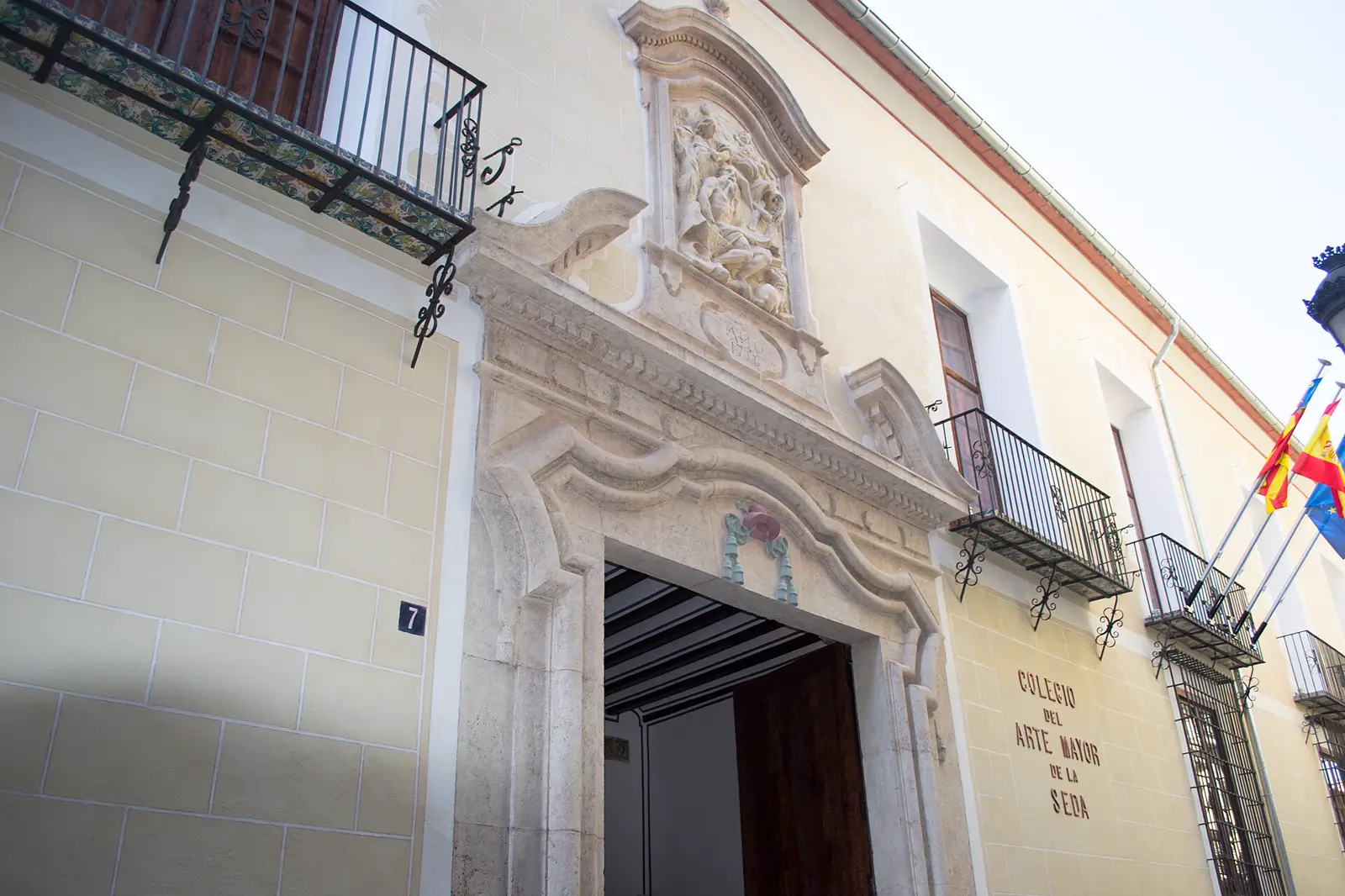
Photo: Dorieo, CC BY-SA 4.0
The rice museum in Cabanyal is small and specific and explains more about the Albufera and what ends up in a paella than any restaurant will. It occupies a former working mill with the machinery still in place, so you follow the grain through the building. Half an hour is enough, and it works best folded into a walk around Cabanyal or on the way to the beach.
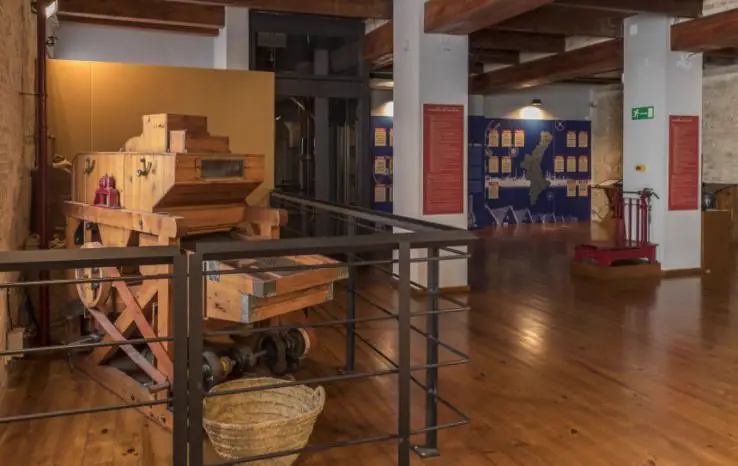
Photo: Museu de l'Arròs de València, Used with permission
If you have children
El Paleontologic, which almost everyone still calls the Museu de Ciencies Naturals, is the quiet win. It reopened in July 2025 after a full refurbishment and took the new name with it, so expect signage and search results to disagree for years yet. The palaeontology is genuinely good: the core is the Rodrigo Botet collection, donated in 1889 and the best European holding of South American Pleistocene fossils - twenty skeletons, more than five thousand bones, a megatherium as its emblem. The animals are the size children want them to be.
It is in the Jardins del Real, the Viveros gardens, with a proper garden immediately outside to run off steam in afterwards and far fewer crowds than the science museum in the Ciutat de les Arts. An hour inside plus the gardens makes a whole morning without much planning. It is a short walk from the Museu de Belles Arts along the same side of the riverbed, if you have one child old enough to sit through paintings and one who is not.
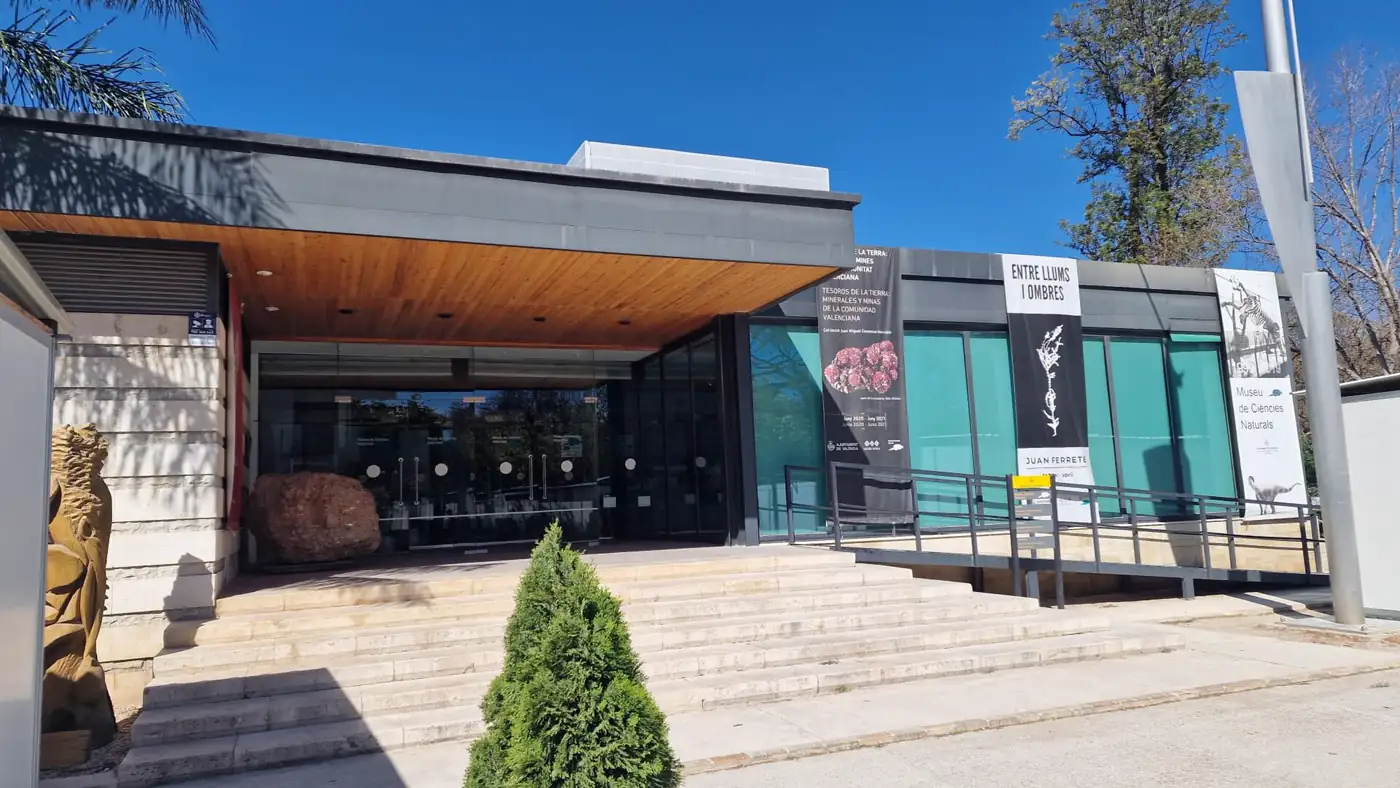
Photo: Carminamaj, CC BY-SA 4.0
The Museu de Prehistoria, in the Beneficencia complex on Carrer Corona, does the same job for older children and adults, running from the Palaeolithic through the Iberian and Roman periods. It shares a courtyard with L'ETNO, the Museu Valencia d'Etnologia, which covers daily life in the huerta () and the old city and was named European Museum of the Year in 2023. You can do both in one stop and let the courtyard absorb the restless ten minutes in between. Both are run by the provincial Diputacio rather than the city, so check their own opening and entry arrangements.
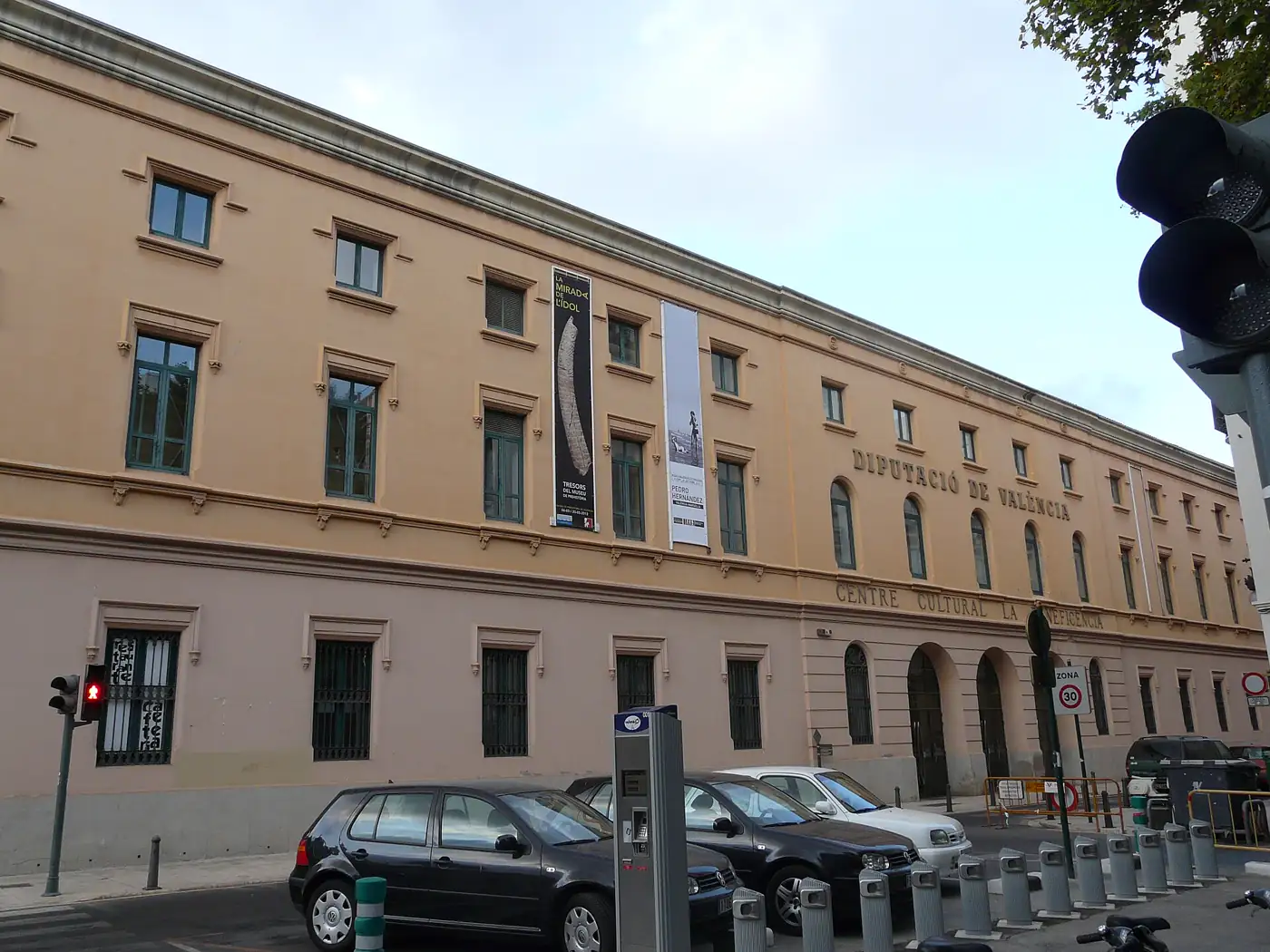
Photo: Pere prlpz, CC BY-SA 3.0
Two that do not work with small children, for the avoidance of a wasted trip: the Belles Arts is too long and too quiet, and La Lonja is over before it starts unless the orange courtyard is enough of an attraction on its own.
Practical notes
Most museums here close on Mondays. Several close for a long lunch, which catches out anyone assuming a ten-to-six day, and Sunday and public holiday hours are often shorter than the rest of the week. That last point matters precisely because Sunday is the free day at the municipal ones.
The geography helps more than it looks. IVAM, the Centre del Carme, the Museu del Corpus and the Beneficencia museums are all within El Carmen and a few minutes apart on foot; the MuVIM is a fifteen-minute walk south of them, in Velluters; La Lonja, the Museu de la Seda and the Museu de la Ciutat are a short walk from each other around the old town; the Belles Arts and El Paleontologic sit on the same side of the Turia gardens. The rice museum in Cabanyal and the history museum out west are the two that need their own journey.
Opening hours and ticket prices change often enough that it is worth checking the museum's own page the morning you go rather than trusting any list, this one included. Look for who runs it while you are there, because that is what tells you which rules apply. The free-Sunday rule for the municipal museums is the stable part.
What this guide does not cover
The Ciutat de les Arts i les Ciencies - the science museum, the Oceanografic and the Hemisferic - has its own full guide, because it is a day out rather than a museum visit. Temporary exhibitions are not listed here either: they change too fast for an evergreen guide, and the what's on calendar is the better place for those.
Settling in beyond the sightseeing
Museums are the easy part of a new city. If you are working through the harder ones - the padron, the NIE, finding somewhere to live - our guides cover the admin in the order you actually hit it.
Read the moving guide
About the author
Michael Bastin
Founder, ValenciaMove - Valencia since 2016
Michael moved to Valencia in 2016 and has helped dozens of families relocate since. He writes every guide on this site personally and verifies every fact against Spanish government sources before publishing.
Buy Michael a coffeeNeed help with your move?
Contact us. We handle visa, admin, and housing so you can focus on the exciting part.