
City of Arts and Sciences Valencia visitor guide
Six buildings strung along two kilometres of drained riverbed, by Santiago Calatrava and Felix Candela. Here is what the Ciutat de les Arts i les Ciències () actually contains, what each ticket buys, and how to spend a day there without overpaying.
Valencia's most photographed landmark is not one attraction. It is six buildings, priced separately, and that is the single most common mistake visitors make here.
People buy one ticket, walk in, and find that the aquarium, the science museum and the planetarium are three different buildings behind three different queues. Deciding which of the six you actually want, before you reach the ticket office, is most of the planning.
The site sits in the drained bed of the River Turia, diverted south of the city after the catastrophic flood of 1957. The old channel became a nine kilometre park; its last stretch before the sea became this. The Generalitat Valenciana set up the company behind it in July 1996, and the first building opened two years later.
The six buildings, and what each one is for
Only three of the six sell an ordinary sightseeing ticket. The others are, in order, a working opera house, a free public promenade, and an exhibition centre run by a bank foundation.
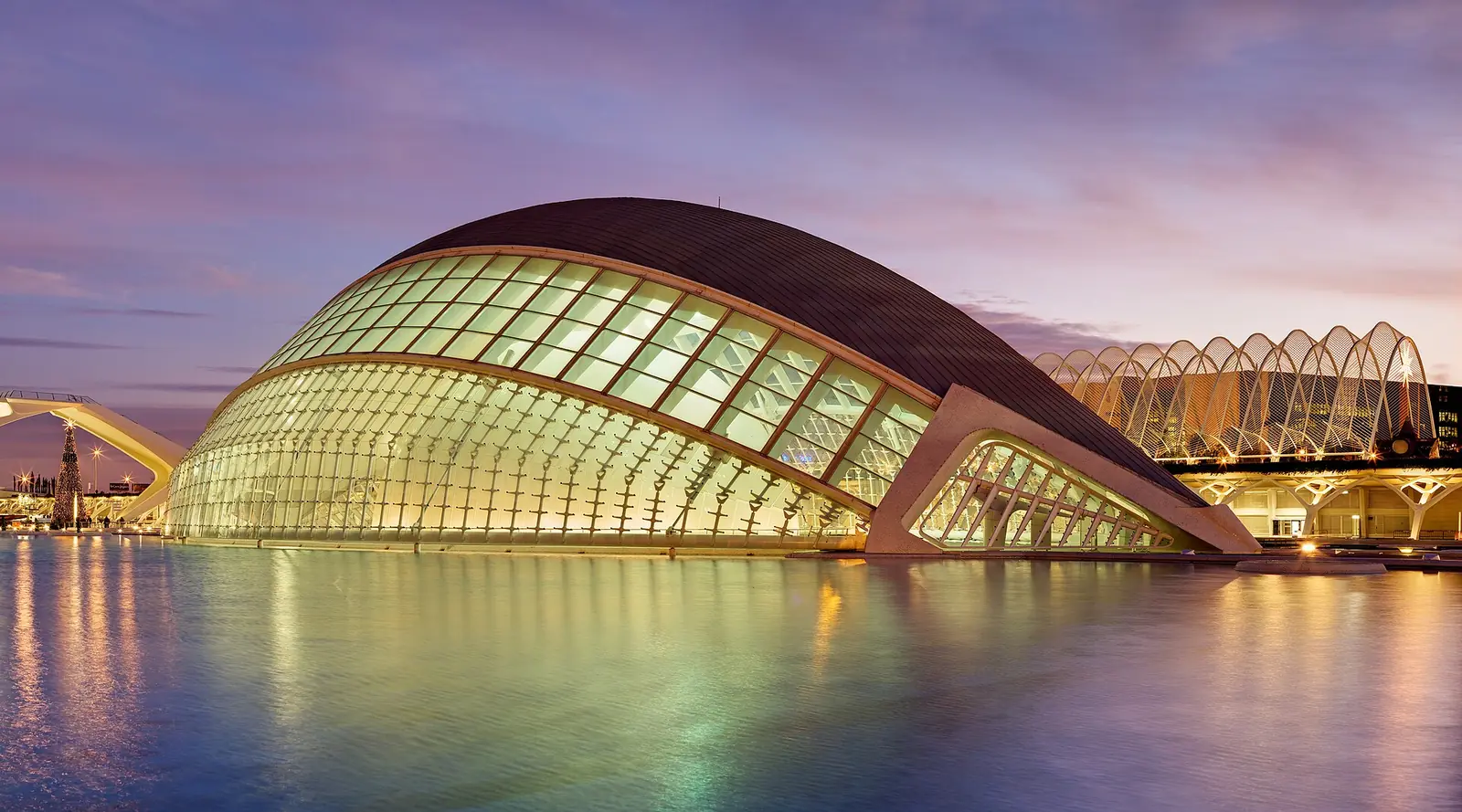
L'Hemisfèric ()
Opened 1998 - planetarium and large-format cinema
The eye. An ovoid roof more than 100 metres (about 328 ft) long encloses a concave screen of 900 square metres, 24 metres (about 79 ft) across, in front of over 300 seats. One ticket buys one screening, so look at what is showing before you pick your time slot rather than after.
Museu de les Ciències ()
Opened 2000 - interactive science museum
More than 26,000 square metres of exhibition space inside Calatrava's whale-skeleton hall, built to be touched rather than read. It rewards a slow visit with children, and it is the building adults most often underestimate.
L'Umbracle ()
Opened 2000 - free promenade and the car park
A viewing gallery 320 metres (about 1,050 ft) long and 60 wide, made of 55 fixed and 54 floating arches standing 18 metres (about 59 ft) high over a garden of 80 palms, 29 bitter orange trees, rosemary and lavender. The Art Promenade underneath is free to walk, and the complex's car park is below it.
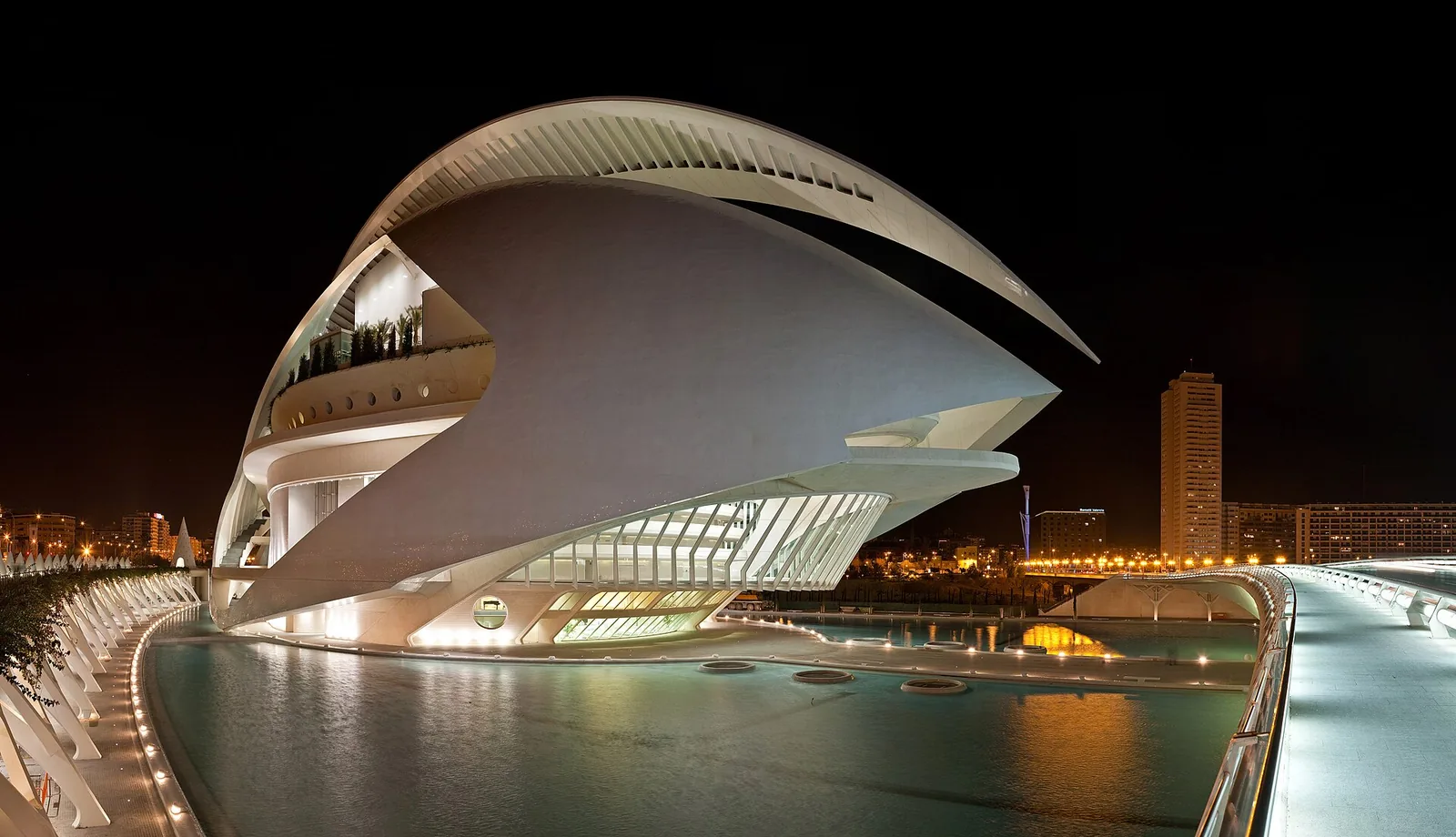
Photo: Diliff, CC BY-SA 3.0
El Palau de les Arts ()
Opened 2005 - opera house and concert halls
Four halls, from the 1,412-seat Sala Principal down to the 378-seat Aula Magistral, plus the Teatre Martín i Soler built below the old riverbed. This is a working opera house rather than a museum, so the way in is to book a performance.
L'Oceanogràfic ()
Opened 2003 - Europe's largest aquarium
110,000 square metres and over 500 species across nine marine environments, under shell roofs by Félix Candela rather than Calatrava. It is the dearest ticket on the site by a wide margin and needs half a day of its own, which is why it has a guide of its own.
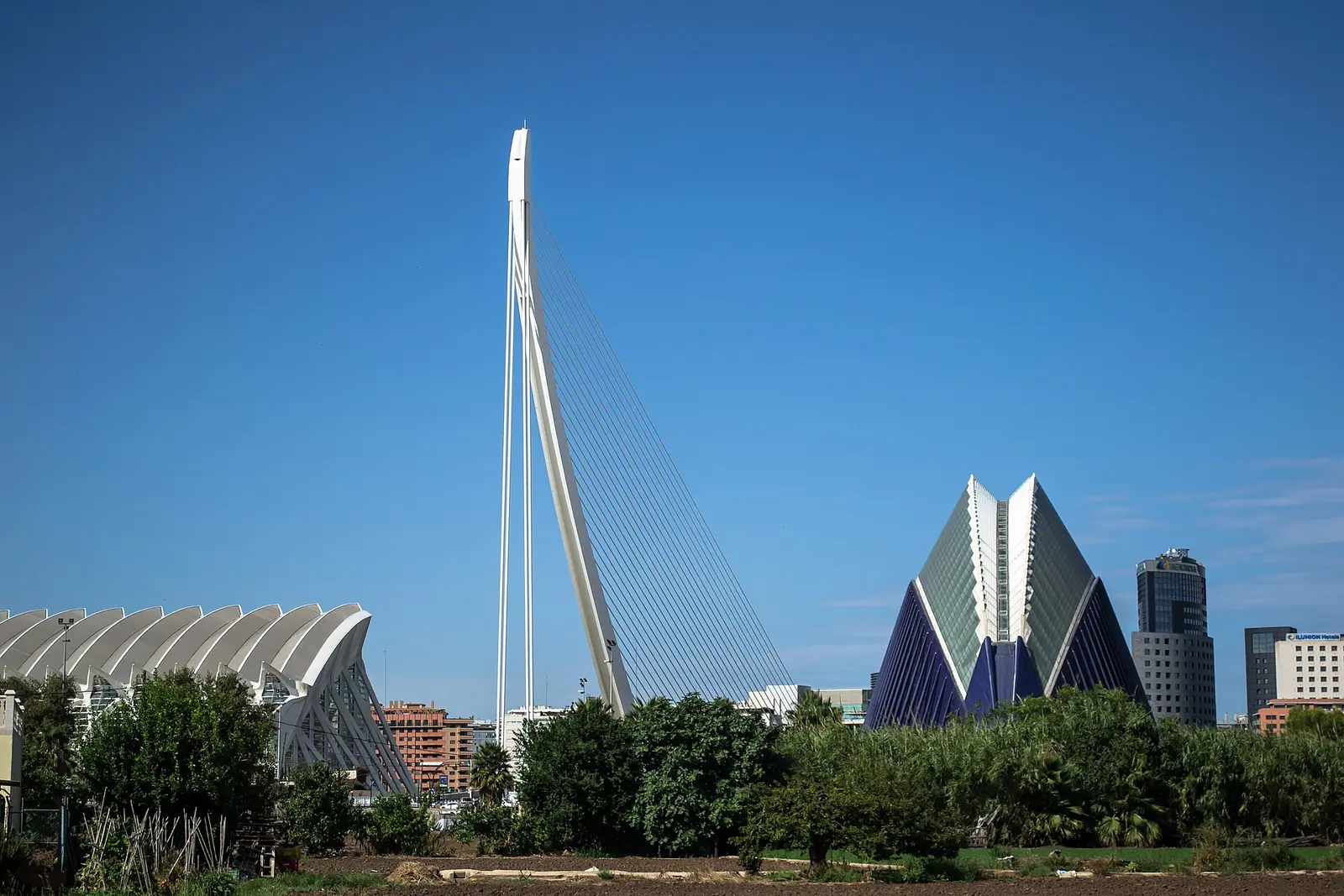
L'Àgora ()
Now home to CaixaForum Valencia
The covered blue square between the Assut de l'Or bridge and the aquarium. Enric Ruiz-Geli converted its interior from 2018 into a 6,500 square metre cultural centre with two exhibition halls on the ground floor. Its tickets are sold by CaixaForum, not by the complex.
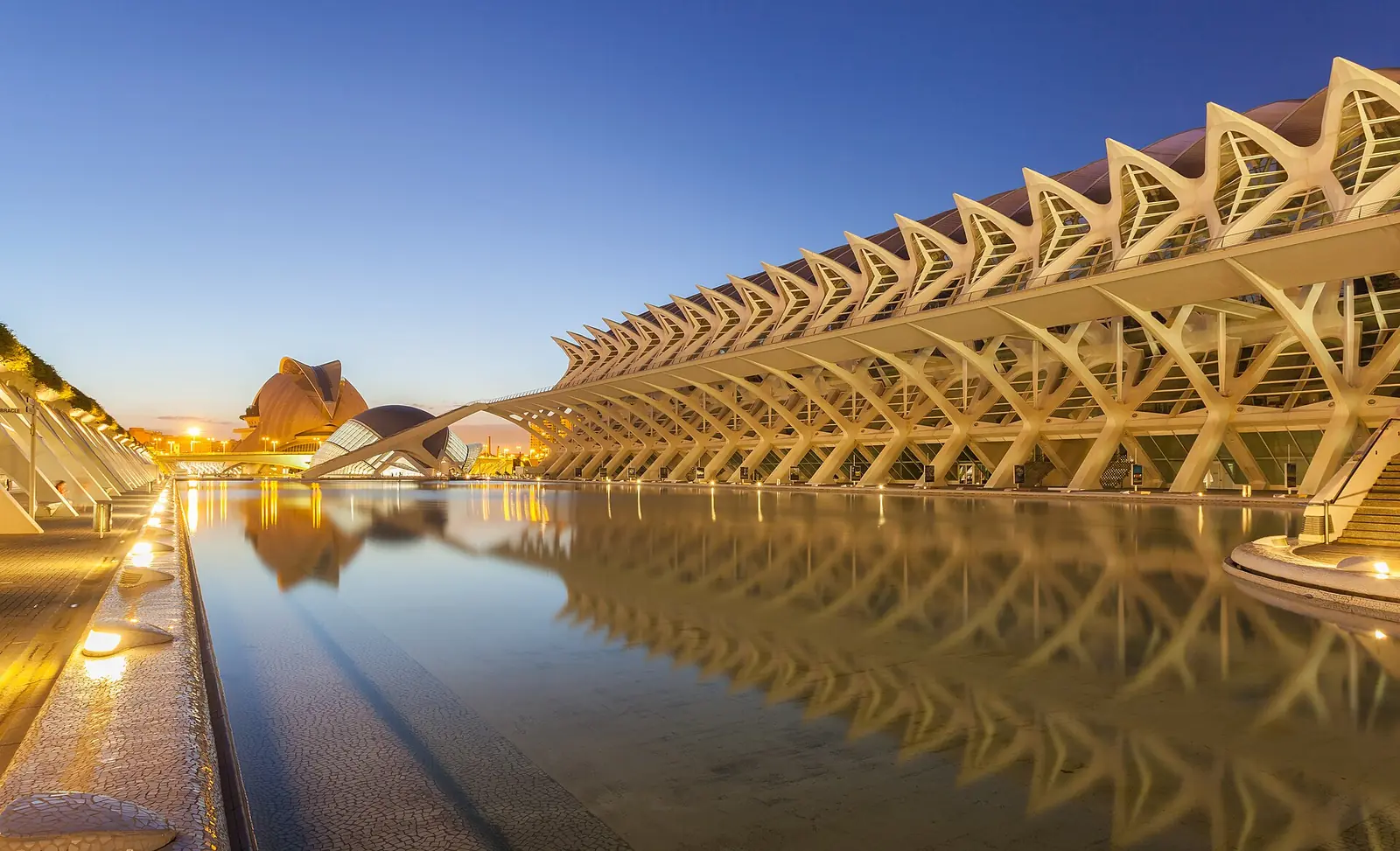
Photo: Diego Delso, CC BY-SA 3.0
What the tickets cost
Three ticket shapes exist, and the price moves with the season. The figures below are the operator's mid-season rates as published on 2 September 2026, so check the day you actually want on the official calendar before buying: the same ticket is cheaper in low season and dearer in high.
La Ciutat ticket
The whole complex across one, two or three consecutive days, with no second visit to the same building. 37.40 EUR at the reduced rate.
Combined ticket
Two venues in a single day, 30.80 EUR reduced. The usual pairing is the aquarium plus either the museum or the planetarium.
Single ticket
One venue, one day, from 6.90 EUR reduced. The museum and the planetarium start around here. The aquarium does not.
Who pays less
The reduced rate covers children aged 4 to 12, visitors of 65 and over, pensioners and people with disabilities. Under-fours go free. A further 15 percent comes off with a Youth Card or a Student Card, for large and single-parent families, and for unemployed residents in Spain, although the youth, student and unemployed discounts are sold at the ticket office only and not online. Bring the document that proves it.
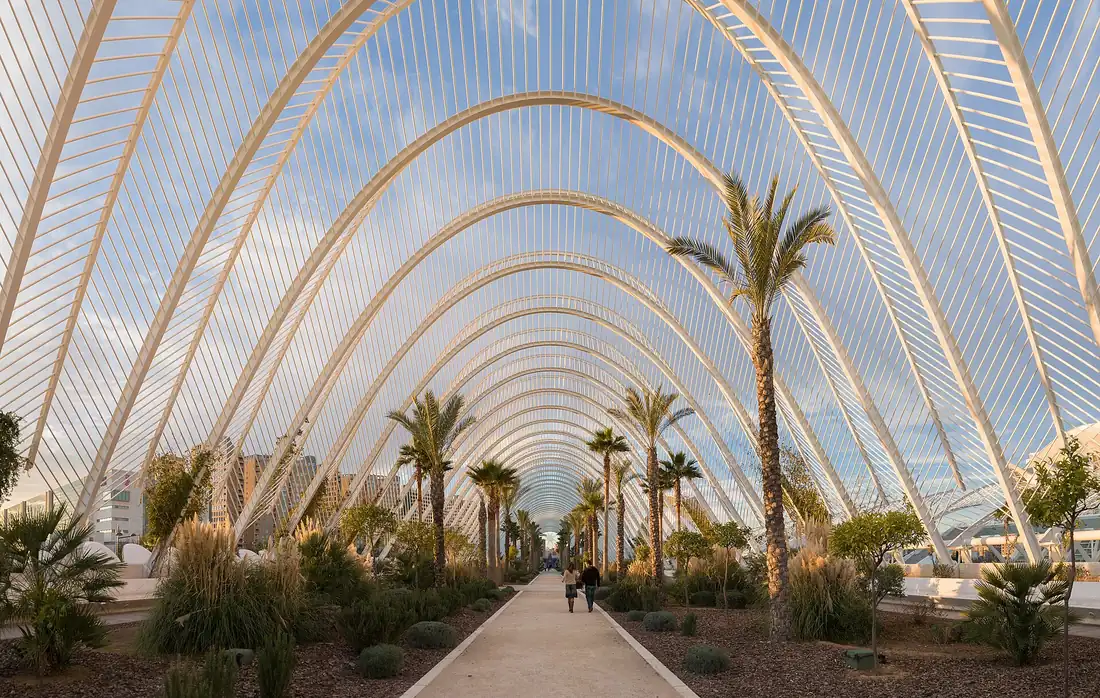
Photo: Diliff, CC BY-SA 3.0
Opening hours
There is no single timetable. Each building publishes its hours date by date on the operator's calendar, and they run from a short winter day to well into the evening in August. The rule that never moves: the ticket offices shut one hour before the Museu closes, which is how people lose an afternoon.
A sensible route
Start at the Umbracle end for the view down the whole axis, walk past the Hemisfèric and the Museu, and leave the aquarium until last if it is on your ticket. Half a day covers the museum and the planetarium comfortably. The aquarium deserves the other half on its own.
Getting there
The address is Avinguda del Professor López Piñero 7, at the seaward end of the Turia gardens. Metrovalencia line 10, the tram-train that opened in May 2022, stops at Ciutat Arts i Ciències-Justícia and again at Oceanogràfic. Walking down the Turia park from the centre takes roughly 40 minutes and is the better arrival. Every other option sits in our Valencia transport guide.
Parking
The complex car park holds 661 cars and 25 coaches on two floors under the Umbracle. It charges 2.30 EUR an hour with a 24 EUR daily cap, but a flat 7 EUR a day applies if you hold admission to any building, valid until closing. Overnight is not included. There are 2 fast and 18 semi-fast electric charging points, at 0.35 and 0.30 EUR per kWh.
Thinking of more than a visit?
Plenty of people come for a long weekend here and start pricing a move within the year. If that is the direction you are heading, we handle the visa and the paperwork side.
Contact usMore Valencia guides
City of Arts and Sciences: common questions
Can you visit the City of Arts and Sciences for free?
How long do you need there?
Which ticket should I buy?
Is it good for young children?
Who designed the City of Arts and Sciences?
Can you get inside the Palau de les Arts without seeing a show?

Resident in Valencia since 2016. Founder of BeTranslated. 25+ years in translation, interpretation and multilingual SEO.
Reviewed 2 September 2026 by Michael Bastin