
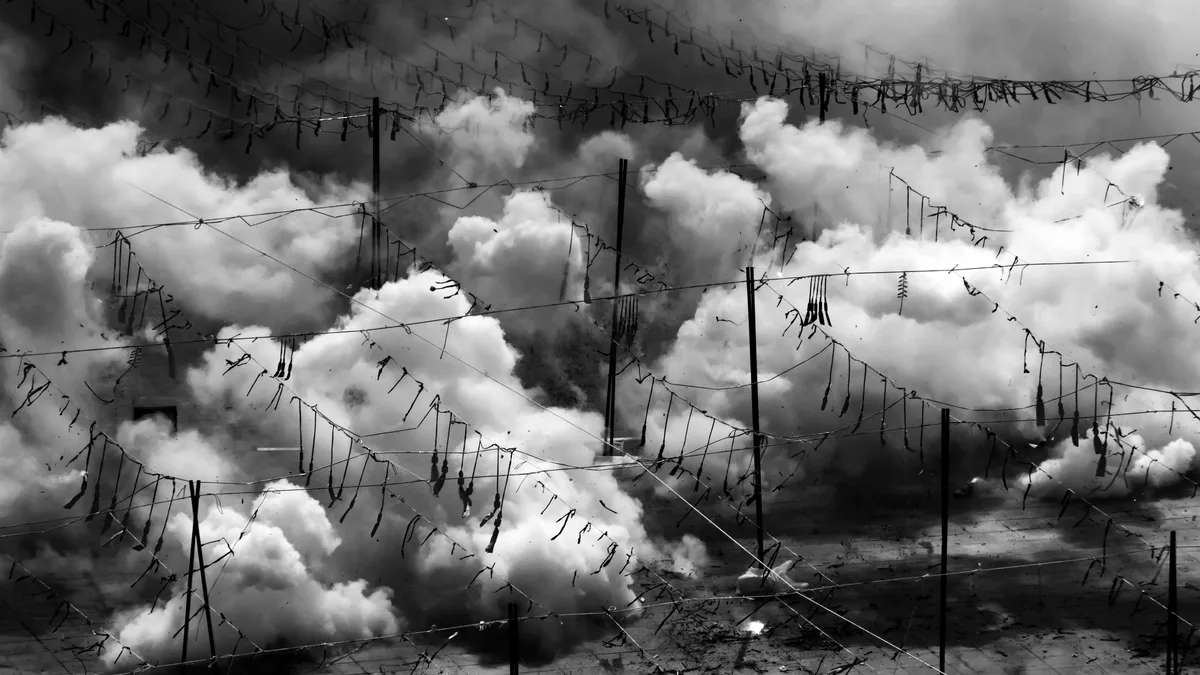
By ten past two the Plaza del Ayuntamiento is a fog of grey smoke, my ears are ringing, and the man beside me is already arguing about who fired today's mascleta and whether last year's was tighter. That argument is the whole point. In Valencia the fireworks are not anonymous.
Each show is signed, the way a canvas is signed, by one of a handful of family firms who have been packing gunpowder for well over a century. Some of them light the sky over Las Fallas in March, then fly to Montreal or Sydney to do the same thing for an Olympic stadium. If you have read our piece on the mascleta and Valencia's firecrackers, this is the other half of the story: the people who actually make the noise.
Valencia's fireworks tradition: why the gunpowder ended up here
Valencia's habit with explosives is old, and it is official. Las Fallas sits on UNESCO's list of Intangible Cultural Heritage, and the daily gunpowder ritual that comes with it has given local firms something no rival market can buy: a demanding home crowd that fires a live show every single day for weeks. The trade takes the city seriously in return. Valencia was picked to host the XX International Symposium on Fireworks in October 2026, the industry's main global gathering, which tells you where the pyrotechnicians themselves think the centre of gravity sits.
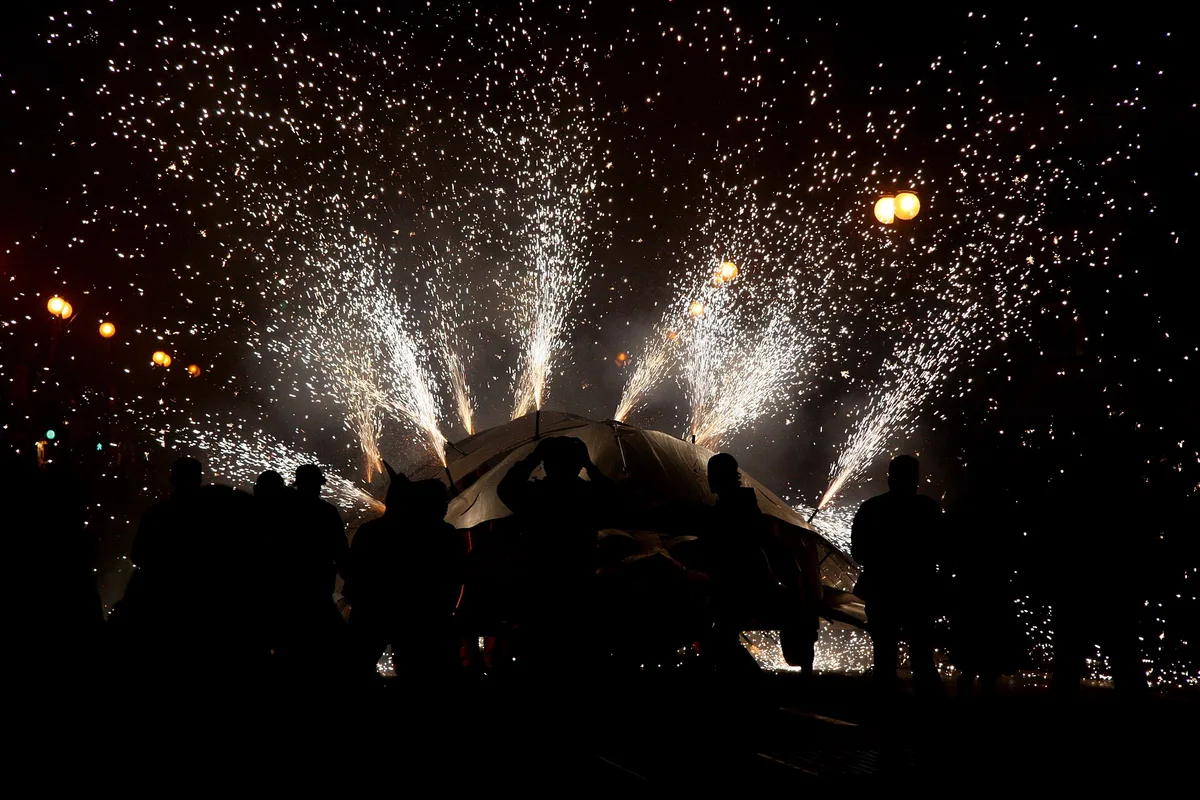
Photo: orvalrochefort, CC BY 2.0
RICASA: the Valencian firm that lit the Sydney Olympics
Start with the big one. Ricardo Caballer S.A., known to everyone as RICASA, was founded in 1881 by Vicente Caballer Calatayud and has stayed in the family ever since, out in Olocau just north of the city. It was the first company in Spain to move to modern computerised firing, back in 1999, and that is roughly when its client list went international. RICASA fired the 2000 Sydney Olympic Games and the 2002 Madeira New Year display that held the record for the largest show on earth at the time, and it has won on the competition circuit in Brno, Yokohama and Montreal, taking the Gold Jupiter at L'International des Feux Loto-Quebec in 2016.
It is also one of the planet's larger fireworks manufacturers, feeding tours, theme parks and stadiums. In 2026 Ricardo Caballer hauled the Valencian mascleta all the way to Nevada and went after a world record for the largest daytime fireworks display at the International Fireworks Championship in Las Vegas. A daytime record, notice, not a nighttime one. That is a very Valencian thing to chase.
Pirotecnia Valenciana: the competition machine
If RICASA is the global brand, Pirotecnia Valenciana is the one that keeps winning the contests. Manuel Crespo Ortells started it in 1965 in Llanera de Ranes; his son José Manuel Crespo Vidal, who became the youngest licensed pyrotechnician in Spain at seventeen, runs it now from an 8,000 square metre site with digital firing throughout. Their trophy shelf borders on comic: first prize, the Concha de Oro at San Sebastian in 2023 and again in 2024, plus repeat wins at Blanes and at Bilbao going back a decade. They also get handed the Nit del Foc, the biggest single night of Fallas, which in Valencia is roughly the equivalent of being trusted with the closing set at a festival everyone in town is watching.
Pirotecnia Turis and the secret blue
Blue is the hardest colour to make in fireworks. The chemistry that produces a clean blue tends to fall apart at the temperatures a shell burns at, so most companies fudge it. Pirotecnia Turis, founded in 1984 in the town of Turis, is known across the trade for a blue formula it keeps to itself, alongside a stubbornly handmade way of building product.
It is a Fallas fixture with a taste for sheer power: during the 2026 festival the firm loaded 126 kilos of powder into a single 9 March mascleta. That same reputation carried it abroad to the International Fireworks Championship in Las Vegas in 2025.
Pirotecnia Marti: the oldest house, run by the woman who broke the pit
The oldest of the bunch sits just up the coast in Burriana, technically in Castellon but pure Valencian Community. Pirotecnia Marti dates to 1868 and is led today by Reyes Marti Miro, the great-great-granddaughter of the founder and the first woman to fire a mascleta in the main squares of Valencia, Alicante and Castellon. That last detail still gets brought up, and it should: the mascleta pit was a closed male world for a very long time. The firm builds its pyromusicals on the FireOne digital system for tight synchronisation, and it has moved to a fully ecological manufacturing process, which is not a phrase you expect next to the word gunpowder but there it is.
Pirotecnia Igual: the Catalan outsider Valencia respects
One name comes up constantly around here and it is not Valencian at all. Pirotecnia Igual, founded in 1880 near Barcelona, competes at Valencian events often enough to count as an honorary local, and it is one of Spain's most decorated firms abroad. It fired the 1992 Barcelona Olympics, worked the 2014 World Cup in Brazil, and won the Gold Jupiter in Montreal three separate times, in 1988, 1996 and 2001. Its more recent engineering leans on lower-smoke shells that leave no falling debris, which is where a lot of the industry is quietly heading.
The five houses at a glance
Five firms, four founded before 1900, all still run by descendants of the people who started them. Here is the quick version:
| Company | Founded | Based | Known for |
|---|---|---|---|
 RICASA (Ricardo Caballer) RICASA (Ricardo Caballer) | 1881 | Olocau, Valencia | Sydney Olympics, Gold Jupiter Montreal, and a huge manufacturing arm that exports worldwide. |
 Pirotecnia Valenciana Pirotecnia Valenciana | 1965 | Llanera de Ranes, Valencia | Serial competition winner: Concha de Oro San Sebastian, plus Blanes and Bilbao. Fully digital firing. |
 Pirotecnia Turis Pirotecnia Turis | 1984 | Turis, Valencia | A closely guarded blue formula and heavy, handmade mascletas. |
 Pirotecnia Marti Pirotecnia Marti | 1868 | Burriana, Castellon | Oldest of the group; first woman to fire a mascleta in the big plazas; ecological manufacturing. |
 Pirotecnia Igual Pirotecnia Igual | 1880 | Canyelles, Barcelona | Catalan firm, honorary local; Barcelona 1992 Olympics and three Montreal Gold Jupiters. |
Spanish fireworks exports: quietly a global superpower
Add all this up and you get a country that punches well above its weight in a strange little industry. Spain sits among the world's top five fireworks exporters, alongside China, the Netherlands, Poland and Germany, and shipped roughly 19.6 million dollars' worth in 2024 while running a trade surplus in the sector. The skill that makes that possible is not really transferable on paper. It is drilled into these firms by the pressure of firing a live mascleta in front of a plaza that will boo a bad one, day after day, every March.
None of this changes how you actually watch a mascleta. You still turn up early, still stand back, still feel it in your teeth. But once you know the names, the daily 2pm show reads differently.
You start clocking whose rhythm you are hearing and arguing like a local about whether Turis or Valenciana had the better week. That is half the fun of March here. If you are planning to be in town for it, our guide to visiting Las Fallas covers where to stand and when to show up, and the companion piece on the mascleta itself explains what you are hearing.
Thinking of making Valencia home?
Fallas is the loud front door to a city that is even better the other fifty weeks of the year. If you are weighing up a move, we can help with the visa, the paperwork and finding a barrio that fits.
Contact us
About the author
Michael Bastin
Founder, ValenciaMove - Valencia since 2016
Michael moved to Valencia in 2016 and has helped dozens of families relocate since. He writes every guide on this site personally and verifies every fact against Spanish government sources before publishing.
Buy Michael a coffeeNeed help with your move?
Contact us. We handle visa, admin, and housing so you can focus on the exciting part.