
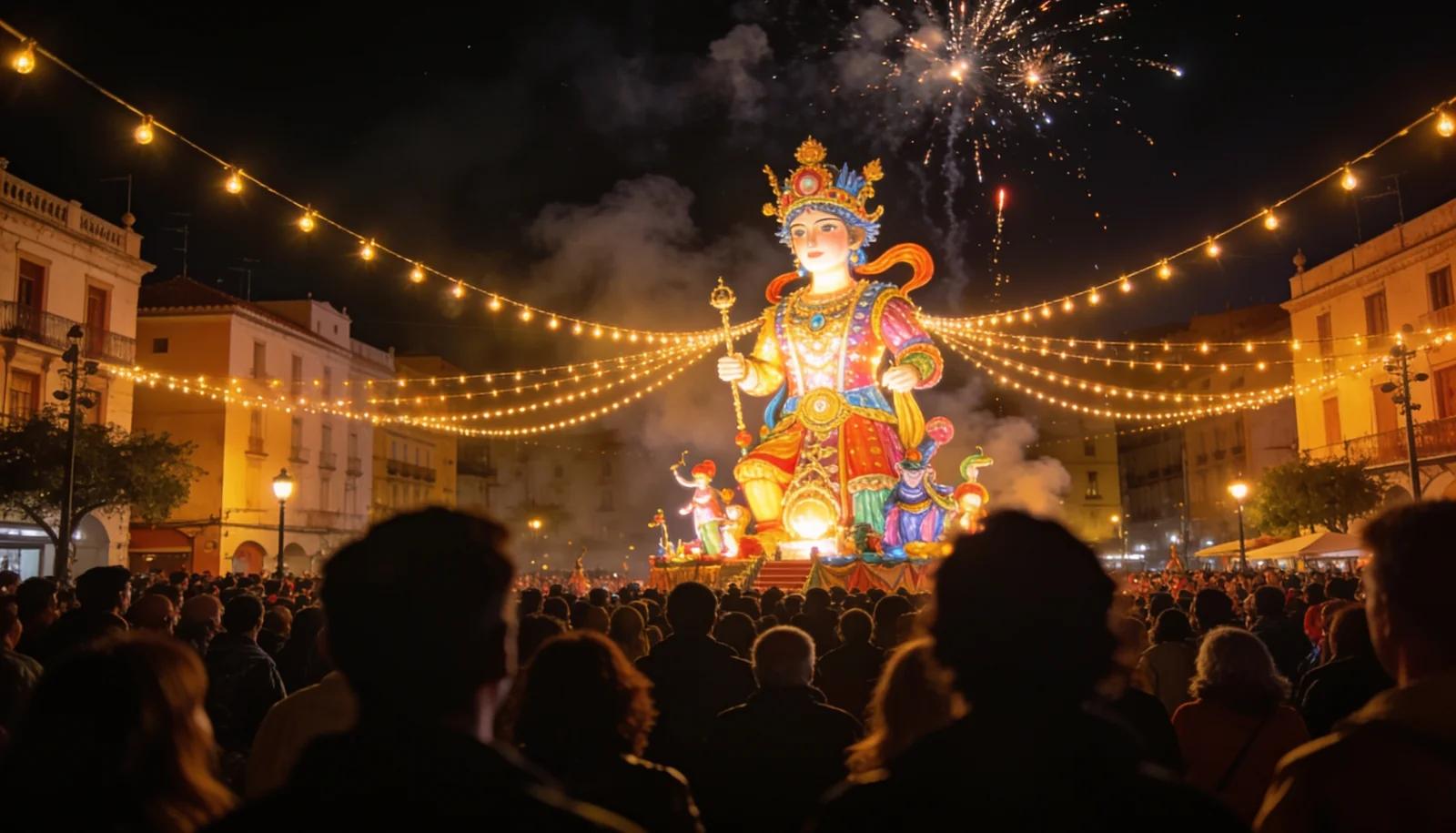
Visiting Valencia for Las Fallas
You have decided to come for the fire, the gunpowder and the giant burning monuments. Good call. This is the trip-planning hub: where to sleep, how to see it well, and the honest logistics no travel blog tells you. We live here and go through Fallas every March.
When is Las Fallas 2027?
The core festival runs March 14 to 19, 2027, with events building from March 1. If you want the full breakdown of what each day means, the mascleta, the Ofrenda, Nit del Foc and La Crema, read our complete Las Fallas festival guide. This hub assumes you already know you are coming and focuses on making the trip work. That starts with the landing: during Fallas large parts of the centre are closed to traffic, which tilts the decision on how to get in from the airport towards metro lines 3 and 5.
Las Fallas dates and what happens each day
The dates do not move. Las Fallas runs to the same calendar every year: the first mascleta is on March 1, the monuments go up in the middle of the month, and everything burns on the night of March 19. The five days from March 15 are the ones worth flying in for.
March 1 to 14
One mascleta a day at 2pm in the Plaza del Ayuntamiento, and not much else. A cheap, quiet way to feel the gunpowder if you cannot make the main week.
March 15, La Planta
The monuments are finished overnight and stand complete in the streets by morning. This is the best day to walk the city and actually see them without a crowd four deep.
March 16
Full festival. Mascleta at 2pm, neighbourhood fallas lit up all evening, street parties running until dawn.
March 17 and 18, the Ofrenda
Two afternoons and evenings of the flower offering: thousands of falleras in traditional dress walking to the Plaza de la Virgen. It runs late on both days, and it is the part most people photograph.
Night of March 18, Nit del Foc
The biggest fireworks of the festival, in the old Turia riverbed, at around 1:30am. Which means the early hours of March 19.
March 19, La Crema
The children's fallas burn first in the evening, then the neighbourhood monuments around 10pm, then the municipal falla in the Plaza del Ayuntamiento last, after midnight.
That is the shape of the week. For what each tradition means, who builds the monuments and why anyone burns a year of work in one night, read our full Las Fallas festival guide.
The mascleta and the Nit del Foc: where to actually stand
The mascleta happens at 2pm sharp, every day from March 1 to 19, in the Plaza del Ayuntamiento. It is not a fireworks show. It is five to seven minutes of coordinated ground explosions built to be felt in your chest, and the square fills long before it starts. If you want to know where the mascleta came from and how Valencians judge one by ear, that is a story in itself.
If you want to be inside the barrier on the main days, be in the square by around 12:30. If you would rather not fight for it, stand on Calle Barcas or at the top of Calle San Vicente instead. You lose the visual, you keep the whole shockwave, and you can walk away afterwards instead of shuffling out with forty thousand people. Keep your mouth open during it, the way locals do, so the pressure does not sit on your eardrums.
The Nit del Foc is the opposite problem. It goes off in the old Turia riverbed near the Palau de la Música at around 1:30am on the night of March 18. Fireworks that size are visible from a long way back, so the smart move is to be in the Turia park itself well before midnight, anywhere on the stretch between the Palau and the Pont de les Flors. Arrive an hour early, sit down, and let the crowd form around you.
Getting around Valencia during Las Fallas
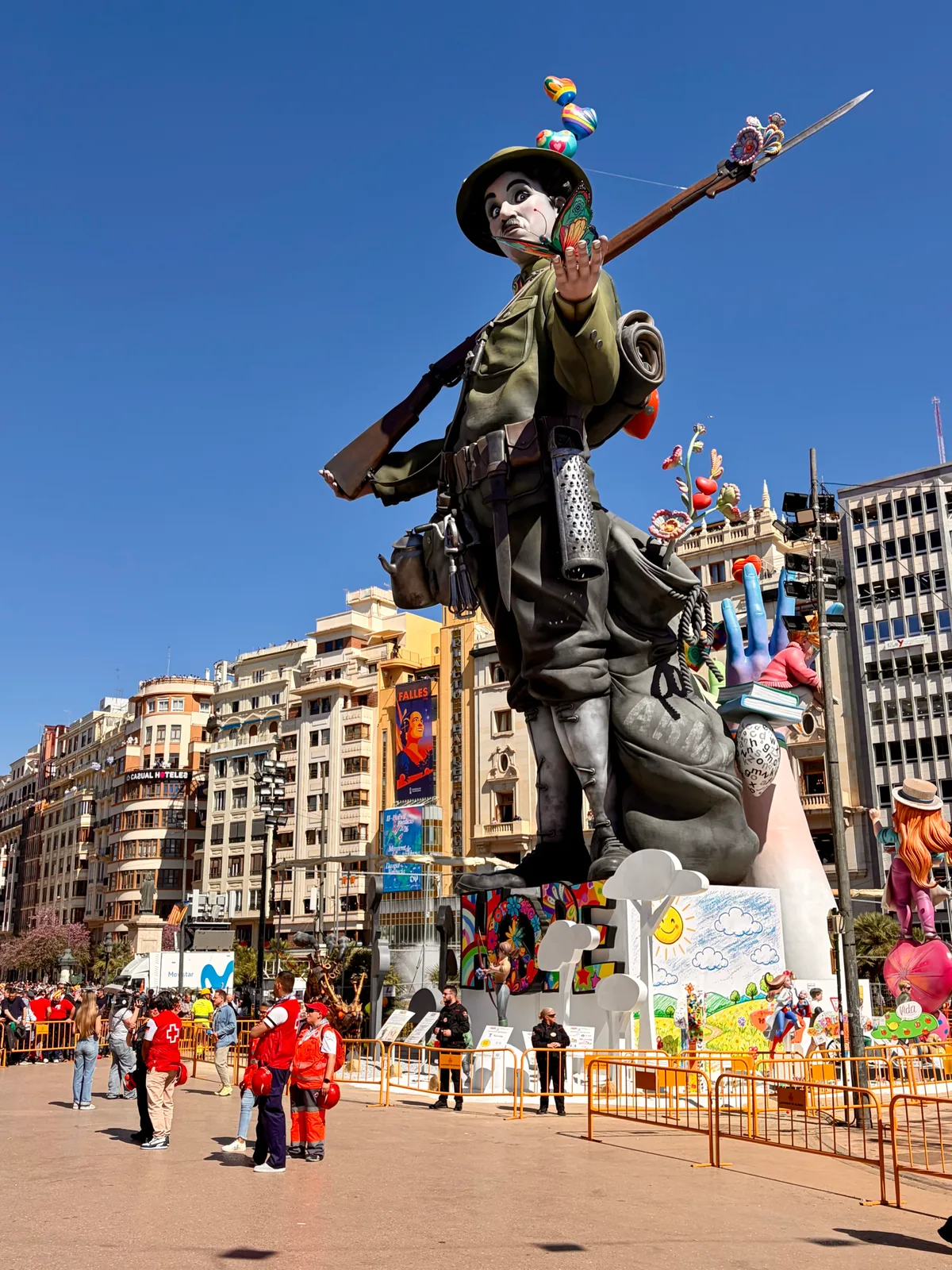
Assume you are walking. Most of the centre inside the old riverbed is closed to traffic through the main week, and even where roads are open the monuments themselves sit in the middle of junctions. Taxis will not get you where you think they will, and a ride that takes twelve minutes in February can take fifty in March.
Metrovalencia extends its hours over the main nights and is the only dependable way in and out of the centre after dark. Lines 3 and 5 through Xativa and Colón do the heavy lifting, and both are packed either side of the mascleta and after La Crema. Buses get rerouted heavily and the EMT changes are published day by day rather than for the whole week, so check on the morning rather than in advance.
The plan that works: sleep one metro stop outside the centre, come in on the metro, and walk everything once you are inside. Arriving by train helps, because Estacio del Nord drops you at Xativa on the edge of the closed zone, which is exactly where you want to be. Do not rent a car for this trip.
What Las Fallas costs a visitor
The festival itself is free. Everything around it is not, and accommodation is where the whole budget goes.
| What | Cost | Worth knowing |
|---|---|---|
| Monuments, mascletaes, Ofrenda, La Crema | Free | All of it happens in the street. You never buy a ticket to see the festival itself. |
| Accommodation | Roughly double to triple normal March rates | The single biggest line in your budget, and the one that punishes late booking. Aim to book by January. |
| Grandstand seats for the mascleta or Ofrenda | Paid, sold in advance | Entirely optional. The overwhelming majority of people watch standing, for nothing. |
| Food and drink | Buñuelos and hot chocolate at a street stall, a few euros | Restaurants in the centre need booking weeks ahead for the main days. |
| Getting around | A single Metrovalencia ticket, a couple of euros | You will mostly walk, so transport ends up a rounding error. |
Sort the two things that make or break the trip
Fallas is free to attend, but accommodation and seeing it well are where travellers get it wrong. Start with these two.
Where to stay for Las Fallas
Central and loud versus quiet and rested, plus why you should book by January before hotels fill and prices spike.
Read the guideLas Fallas guided tours
Monuments, ninots and La Planta with a guide, plus the best mascleta and La Crema viewing and family-friendly options.
Read the guideCame for Fallas, thinking about staying?
Half the expats we work with first visited Valencia during a festival and could not stop thinking about it. If Fallas has you wondering what living here would actually be like, that is a conversation we have every week. No pressure, just honest answers.

Resident in Valencia since 2016. Founder of BeTranslated. 25+ years in translation, interpretation and multilingual SEO.
Reviewed 7 July 2026 by Michael Bastin