
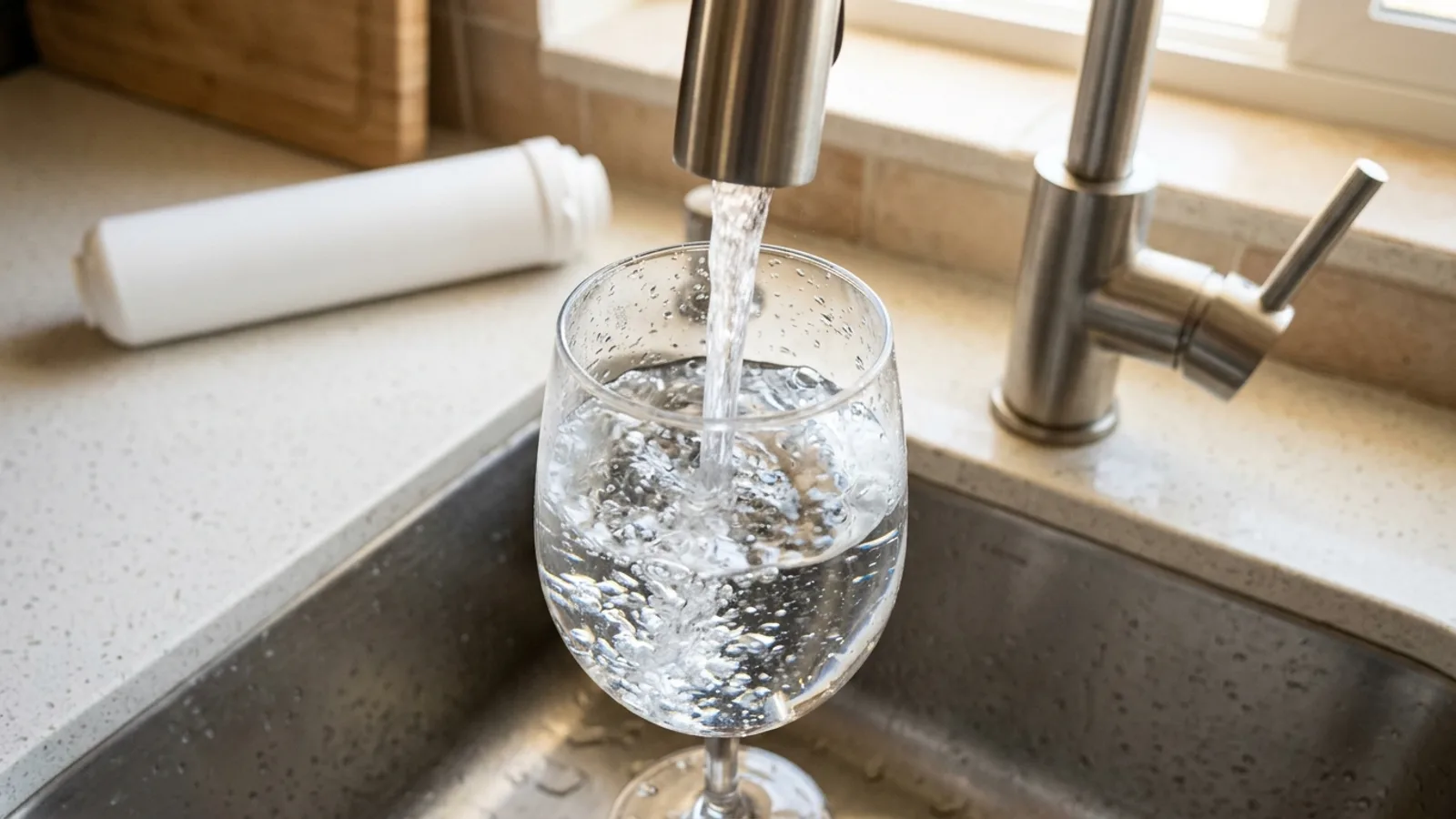
Almost everyone who moves to Valencia has the same first-month experience. You fill the kettle, boil it a few times, and within a fortnight there is a pale crust around the element. You pour a glass straight from the tap and it tastes flat, faintly chalky, sometimes a little metallic.
Then you ask a neighbour and get one of two answers, delivered with equal confidence: "of course you can drink it" or "nobody drinks it". Both people are, in their own way, right.
This guide separates the two questions that constantly get tangled together. Is Valencia tap water safe? And why does almost nobody drink it neat anyway? At the end there is a directory of real local companies that solve it, whether you want a filter under the sink or bottles at the door.
Who supplies Valencia's water
Valencia city's drinking water is supplied and treated by EMIVASA, the Empresa Mixta Valenciana de Aguas, S.A. It is a mixed public-private company: 80 percent owned by Global Omnium and 20 percent by Valencia City Council. That structure matters mostly because it means the network is run commercially but answers to the city.
The scale is bigger than most newcomers assume. EMIVASA runs more than 1,200 km of network and serves over 400,000 customers, which is a lot of pipe for a city this compact.
Raw water is treated at two plants. La Presa, in Manises, draws from the Turia river, the Júcar-Turia canal and its own wells. El Realon, in Picassent, is fed exclusively by the Júcar-Turia canal.
The two plants are being physically joined by a 100 million euro interconnection. It is commissioned by EMSHI, the metropolitan water body, and built by Emimet, with EMIVASA on technical direction. Twin 1,100mm mains run under the Turia riverbed, threaded through steel casings of roughly 1.5m and crossing more than 25 metres below the channel. The last section, at Xirivella, is due in November 2026.
When it is done, either plant can back up the other. That redundancy is not theoretical - the 2024 DANA flood ruptured the Júcar-Turia canal, which is exactly the kind of single point of failure the interconnection removes.
Why the water is so hard
The answer is geology, not treatment. Both the Turia and the Júcar drain limestone and calcareous terrain, which is the typical make-up of the Valencian interior.
Water sitting in and moving through that rock dissolves calcium and magnesium carbonates on the way down. By the time it reaches an intake, it is already mineral-rich. Nothing has gone wrong; that is simply what water from this catchment is.
Treatment then does what treatment is designed to do. It potabilises the water: removes pathogens, adjusts chlorination, brings it into line with drinking water standards.
What treatment does not do is remove the minerals that cause hardness. That is standard for municipal systems generally, not a Valencian shortcut. Softening an entire city supply is expensive and largely pointless when hardness is an aesthetic and appliance problem rather than a health one. So the calcium and magnesium go straight through the plant and out to your tap.
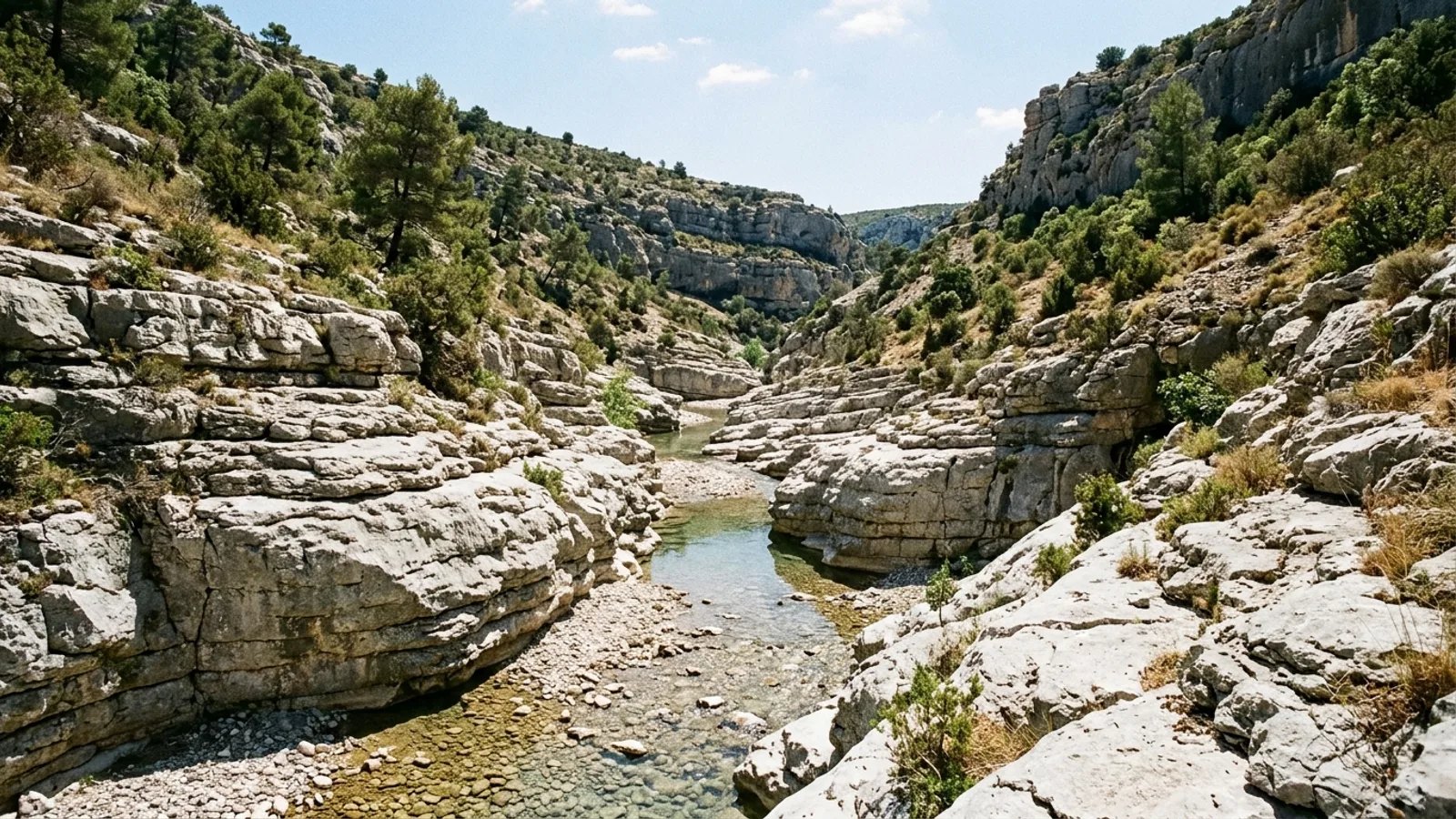
Photo: Diego Delso, CC BY-SA 4.0
How hard, in numbers
The OCU, Spain's Organizacion de Consumidores y Usuarios, puts Valencia among the country's hardest supplies, above 40 French degrees, alongside Zaragoza, Teruel and Almería. On their scale, soft is under 12 degrees, moderately hard is 12 to 30, hard is 30 to 40, and very hard is anything above 40.
If you have lived in any of those cities, the kettle situation will feel familiar.
Put a single number on it and you will be wrong, because the published figures genuinely disagree. EMIVASA's own analytical bulletins have been cited at around 276 mg/L of calcium carbonate, which is roughly 28 French degrees and lands in the hard band rather than the very hard one.
Descaler and filter vendors tend to quote closer to 450 mg/L, about 45 degrees, and they have an obvious commercial interest in the higher end. Hardness also moves with the season and with which part of the network you sit on.
So the honest answer is a range: Valencia runs from the top of hard into very hard depending on whose measurement you take and when. We would rather say that than quote one figure with false precision. The practical conclusion does not move either way - this is hard water, and your appliances will know it.
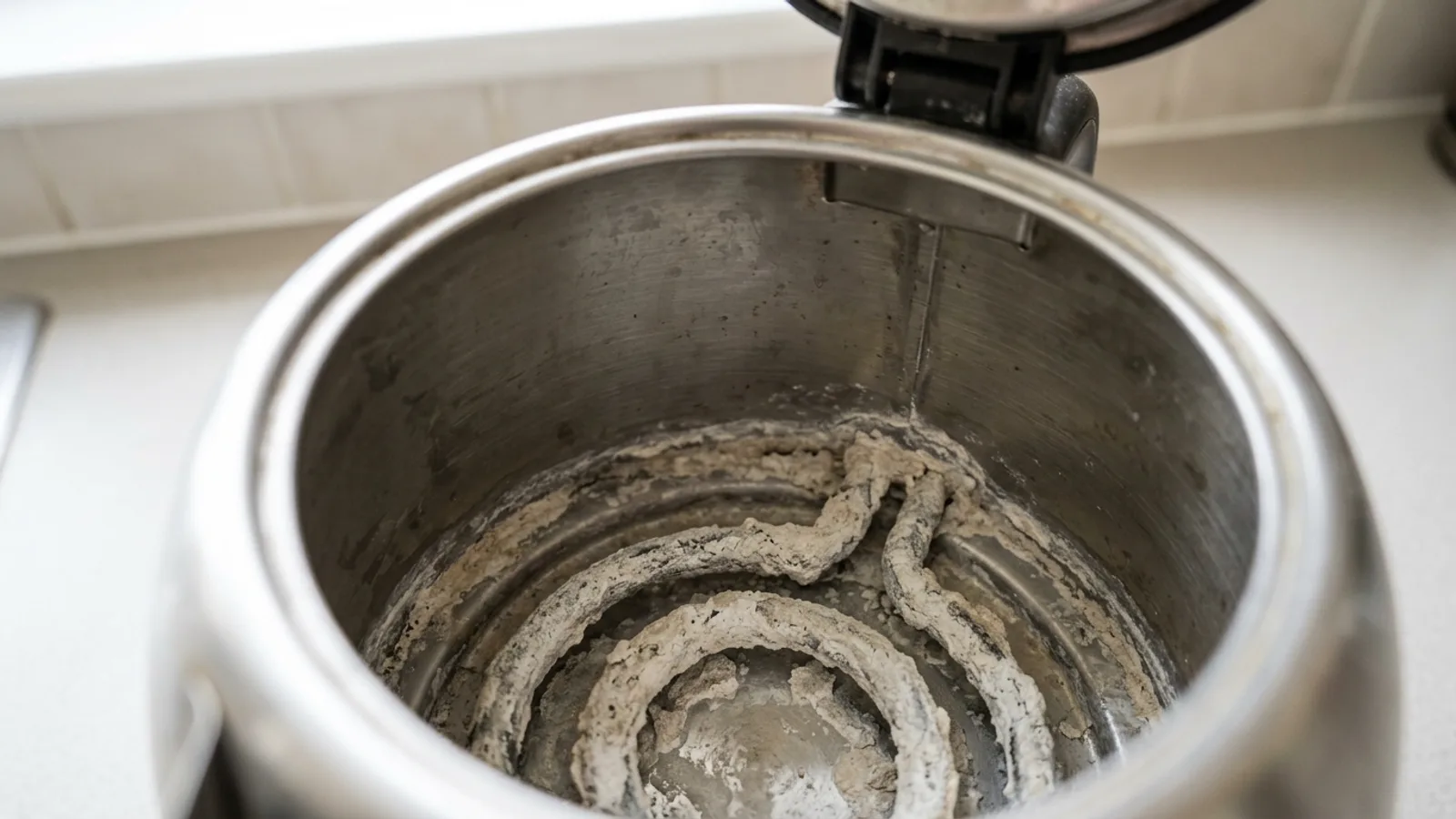
Photo: Henna, CC BY-SA 1.0

Prefer not to deal with this yourself? AQUANYUM installs and services reverse osmosis and softening systems across Valencia.
Visit aquanyum.esIs it actually safe to drink?
Yes. Valencia tap water is potable, legally and microbiologically, and there is no serious argument otherwise.
EMIVASA and Global Omnium, along with Spanish health authorities, test microbiological and chemical parameters continuously against EU Drinking Water Directive standards. The city supply goes through more than 8,000 quality controls a year. Water leaving the treatment plants and travelling the municipal network is drinking water by law.
So if you are looking for a scare story, this is not one. You can drink from the tap, cook with it, make coffee with it, and give it to your children without a second thought.
The interesting question is a different one: given that it is safe, why do so many residents still not drink it neat?
Why residents still filter or buy bottles
There are three real reasons, and none of them is "the water is unsafe". They are worth separating because they have different fixes.
Taste and limescale from the hardness
High mineral content gives the water a noticeably harder mouthfeel, often described as chalky or slightly metallic. It is not unpleasant to everyone, but it is distinctive, and it changes the taste of tea and coffee more than most people expect. The same minerals coat kettle elements, shower screens, washing machine drums and dishwasher parts, which is the part that costs you money over time.
Chlorination
Municipal water is chlorinated, and chlorine has a smell and a taste. This is not a Valencian quirk. It is common across most Spanish and European municipal systems and is the direct price of the water being microbiologically safe when it arrives. Letting a jug stand in the fridge for a few hours reduces it noticeably, and any decent filter removes it.
Your building's own pipework
This is the one people miss. EMIVASA is responsible for water up to the point it enters your building. After that it travels through the block's internal plumbing, and in older Valencia housing stock that can mean lead or galvanised steel. Old internal pipes can affect taste and quality at the actual tap even when the municipal supply arriving at the door is perfect. It is a building-level issue, not a failure of the city supply, which is why two flats on the same street can taste different.
The two things residents actually do
Once you have decided you want better-tasting water at home, there are only two realistic routes in Valencia, and the choice between them is mostly about your kitchen and your habits.
The first is filtration: a reverse osmosis unit under the sink, or a countertop or freestanding purifier. You pay once for the hardware and then a small ongoing cost for filters and servicing. It solves taste, chlorine and most of the hardness at the drinking tap, and there is nothing to carry.
The second is bottled water delivery: 20-litre garrafas brought to your door on a schedule, usually with a dispenser provided. It requires no plumbing and no landlord permission, which makes it the default for renters and for anyone in a flat where drilling a hole under the sink is not on the table.
A jug filter is the third option people start with, and it is fine for chlorine taste, but it barely touches hardness and you will still be descaling the kettle. Treat it as a stopgap rather than a solution.
Reverse osmosis and filtration installers in Valencia
These are companies operating in Valencia city and province that sell and install domestic filtration. Details below are what each company publishes about its own offer.
Our pick
AQUANYUM
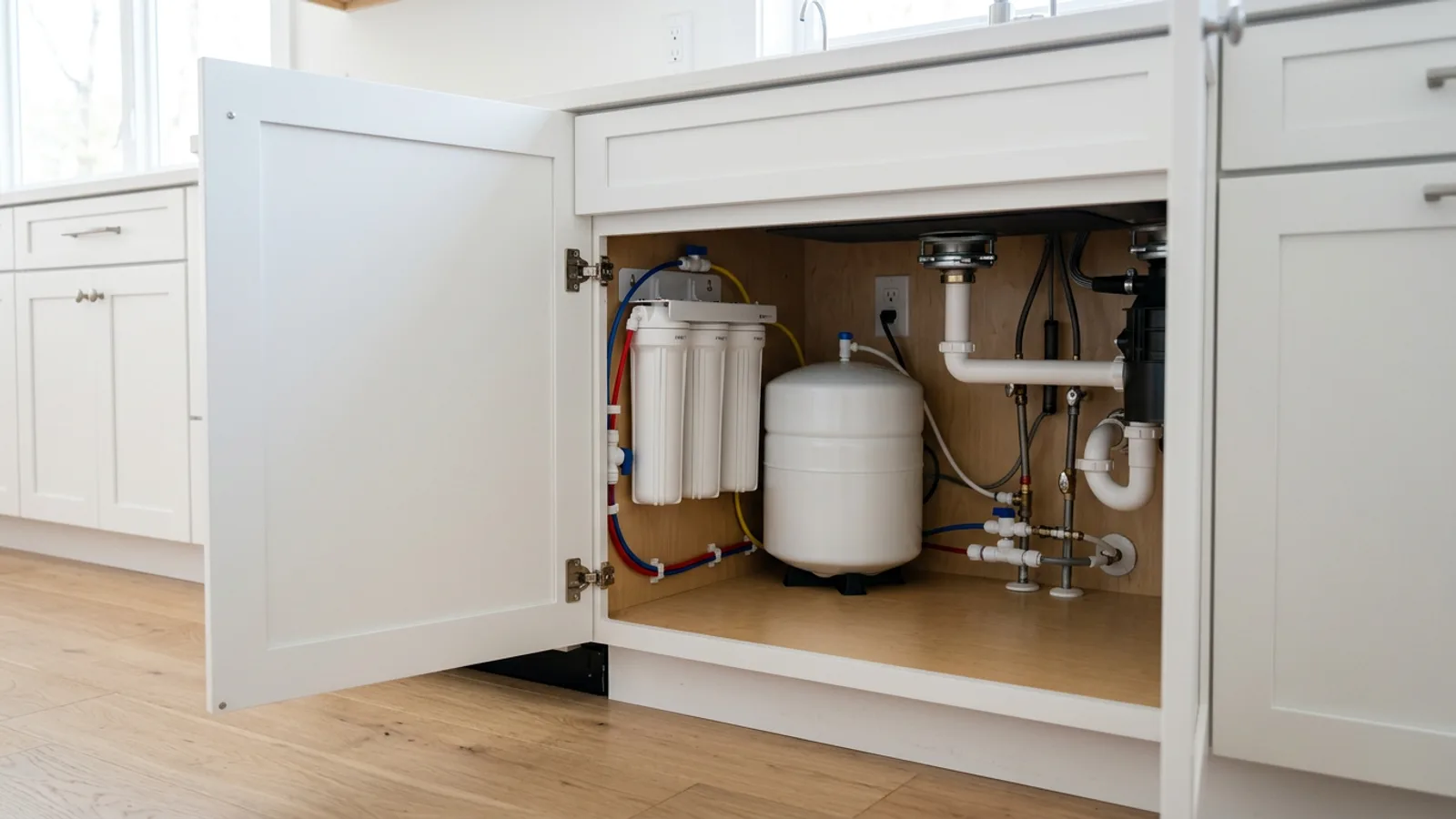
AQUANYUM is a Valencia water treatment company installing five-stage reverse osmosis systems for both homes and offices, including direct flow reverse osmosis and compact reverse osmosis units for kitchens with tight under-sink space. Systems can be bought outright or taken on a rental plan, with installation, technical support and an annual maintenance visit included.
Beyond drinking-water filtration, AQUANYUM installs water dispensers for the home and office water dispensers and office water coolers for workplaces, descalcificadores (Spain's term for water softeners) as a limescale treatment system against Valencia's very hard supply, and ozone generators for water disinfection. Both residential water treatment and commercial water filtration contracts are available.
Every recommendation starts with a free water quality analysis, so the equipment matches what is actually coming out of your own tap rather than a generic city average. That analysis is also what decides whether a straightforward reverse osmosis unit is enough or whether the water softeners route makes more sense for your building's pipework.
Visit aquanyum.esAiguaBlava
Direct-flow osmosis units, countertop and freestanding fountains, ultrafiltration and demineralisation systems, and UV sterilisation.
Free in-home assessment and no-obligation quotes, with installation typically taking one to four hours. Standard warranty is two years, extendable to seven with a maintenance plan. Based at Carrer d'en Borras 11, 46003 Valencia, serving the city plus more than 19 municipalities across Valencia province.
Aquaidam
Reverse osmosis purification marketed specifically around eliminating microplastics.
Range covers compact countertop purifiers and water fountains of roughly 1.5m with digital displays and temperature control, plus customisable mineralisation if you want some minerals put back after the membrane. Headquartered in Manises, in Valencia province.
Fergosol Renovables
A plumbing and gas company operating since 2000 that also sells and installs water treatment.
Supplies under-sink reverse osmosis units and whole-home depurators. Published pricing starts at 199 euros for entry-level equipment and runs past 1,000 euros for premium systems. Useful if you would rather deal with a general plumbing firm that can handle the rest of your installation too.
Aquainstala
Five-stage reverse osmosis in several shapes: the Artik for tight under-sink space, the CUBE and iWater Pro for heavier households, plus the Ultrapure and Nuba Infinity countertop and floor-standing dispensers.
Starts with a free water quality analysis, professional installation with no structural work, annual maintenance included and a warranty of at least seven years. Rental and financing run roughly EUR0.90 to 1 a day. Covers Valencia city including Ruzafa, Patraix, Benimaclet and Campanar, extending to Mislata, Paterna and Xirivella.
Types of home and office water treatment in Valencia
Every installer in this guide sells some version of the same handful of technologies. Knowing the categories before you get a quote is worth more than comparing brand names.
Reverse osmosis is the baseline for real drinking water purifiers here, and it comes in two shapes. A tankless reverse osmosis unit, also sold as direct flow reverse osmosis, filters on demand with no storage tank, which suits a small kitchen; a tank-based system stores a reserve of filtered water and tends to deliver it faster at the tap. AiguaBlava's own range below is sold specifically as direct-flow.
Under sink water filters are the standard home water filtration setup and the one most renters ask for, since the unit sits inside the existing cabinet with no visible hardware. For an office, a plumbed-in water dispenser or a countertop bottleless water cooler skips the delivered-bottle model entirely, drawing straight off the mains through its own filter.
Water softeners split into salt based (ion exchange, the traditional descalcificador) and salt free electronic or TAC descalers that condition rather than remove the minerals. Ask which type an installer is quoting, since the running cost and maintenance differ.
Some premium dispensers add an alkaline or antioxidant water purifier stage - a remineralisation filter that raises pH after the reverse osmosis membrane strips minerals out. It is a real, common add-on, but treat the health marketing around "antioxidant water" with the same scepticism you would apply anywhere else: it improves taste and mineral content, not something a peer-reviewed study has shown to prevent illness.
If plumbing work is not an option, water cooler rental is the middle ground between installing a fixed system and a full bottled-delivery contract further down this page: a plumbed or bottled dispenser on a monthly fee, with maintenance included and no purchase commitment.
Prefer not to deal with this yourself? AQUANYUM installs and services reverse osmosis and softening systems across Valencia.
Visit aquanyum.esBottled water home delivery in Valencia
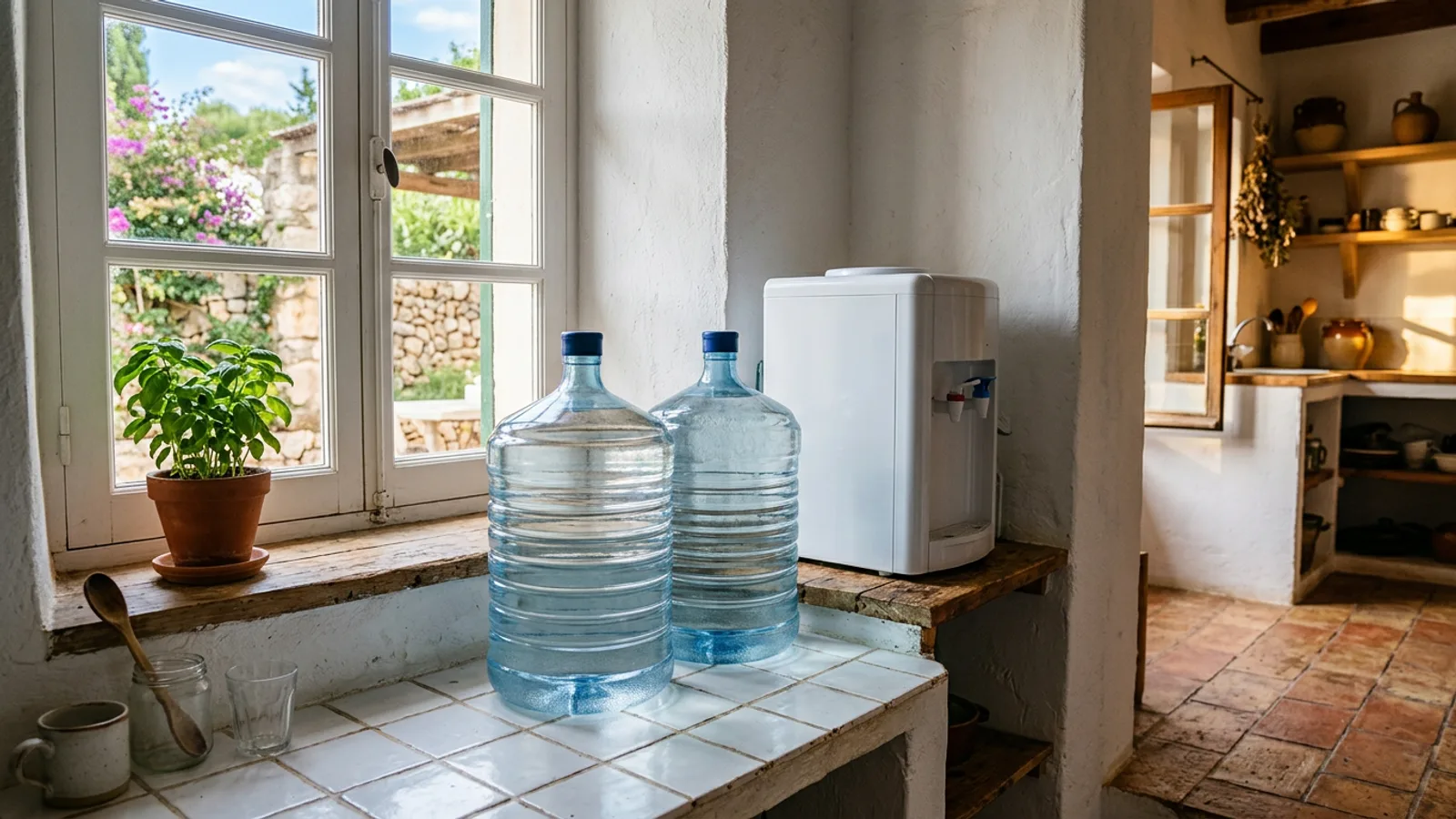
If plumbing work is off the table, delivery is the practical answer. All three of these operate in Valencia and work on the same basic model: large garrafas dropped off on a schedule, empties collected, dispenser included. Details below are what each company publishes about its own offer.
Aquaservice
20-litre garrafas of natural spring water, low in sodium and weakly mineralised.
Water is sourced from four natural springs, one of them at Camporrobles in Valencia province. Deliveries run every 28 days, the dispenser is provided free with dual taps and an adjustable thermostat, and empty bottles are collected for recycling. The whole thing is managed through a mobile app and there is no minimum order. Headquarters and logistics are in Paterna.
AquaExpress
20L garrafas of natural mineral water from selected springs.
Free delivery, free dispenser, and bottle pickup and replacement as part of the service. Coverage extends beyond Valencia to Castellon and Alicante, which is worth knowing if you are moving between provinces.
Aguas Vilar
A wider format range than most: 20L and 13L garrafas, 10L crystal garrafas, and 500ml bottles of Bejís brand water.
Door-to-door delivery with flexible scheduling. Serving Valencia and Castellon. The 13L and 10L options are genuinely useful if a full 20L garrafa is more than you can comfortably lift onto a dispenser.
How to choose between them
If you own your flat, or you rent long-term with a relaxed landlord, an under-sink reverse osmosis unit is usually the better long-run answer. The running cost per litre is very low, there is nothing to carry up the stairs, and it deals with hardness rather than just chlorine.
If you are renting short-term, moving again within a year or two, or living in a building where you would rather not ask permission for anything, delivery wins on sheer lack of friction. A dispenser and a monthly drop-off require no decisions and no tools.
One thing worth doing whichever route you take: take up the free water analysis that several of these companies offer. Hardness varies by zone and by season, and your building's own pipework has a say in it too, so the number at your tap is more useful than the city average.
And regardless of what you drink, descale the kettle and the coffee machine on a schedule. In water this hard it is maintenance, not a chore you have failed to avoid.
The short version
Valencia tap water is safe. It is tested continuously against EU standards and it is legally drinking water when it leaves the network.
It is also very hard, chlorinated, and delivered through building plumbing that may be older than you are. Those are the reasons people filter or buy bottles, and they are aesthetic and practical reasons rather than health ones.
Sorting it out is one of the cheaper and faster jobs on a new arrival's list. Compared with working out your electricity contract or getting fibre installed, water is a single decision and a single appointment.
For the rest of the setup, our guide to utilities and internet in Valencia walks through electricity, water, gas and fibre contracts in order, and if you are still house-hunting, renting in Valencia covers what to check before you sign, including the mistakes that catch newcomers out.
Setting up a home in Valencia?
Water is one item on a long list. Get in touch and we will walk you through utilities, contracts and the admin that comes with a new address.
Contact us
About the author
Michael Bastin
Founder, ValenciaMove - Valencia since 2016
Michael moved to Valencia in 2016 and has helped dozens of families relocate since. He writes every guide on this site personally and verifies every fact against Spanish government sources before publishing.
Buy Michael a coffeeNeed help with your move?
Contact us. We handle visa, admin, and housing so you can focus on the exciting part.