
Ask a newcomer why their electricity bill is high and they will talk about usage. They will mention the air conditioning, the tumble dryer, the kids leaving lights on.
Usage matters. But in Spain a large part of the bill is decided before you consume a single kilowatt hour, by three settings on your contract: how much power you have contracted, which market you buy on, and what time of day you run things.
Most tenants inherit all three from whoever lived in the flat before them, and never revisit any of them. This guide shows you where to find each one on your bill and what you can actually do about it.
Your bill has two halves, and only one of them moves
A Spanish electricity bill splits into a power term (término de potencia) and an energy term (término de energía), with taxes layered on top.
The energy term is the part everyone expects: kilowatt hours consumed, multiplied by a price. The power term is different. It charges a fixed amount per contracted kilowatt per day, every day of the billing period, whether you are at home or on the other side of the world.
That is why a flat left empty for a month still produces a bill. It is also why the single most effective saving available to many households has nothing to do with switching anything off.
Potencia contratada: the setting nobody checks
Potencia contratada is the maximum power you can draw at once, measured in kilowatts. Set it too low and the meter trips when the oven, the kettle and the air conditioning run together. Set it too high and you pay a daily charge for headroom you never touch.
It appears on your bill next to the power term, usually printed as a figure such as 3.45 kW or 5.75 kW. Those two are the values you will meet most often in Valencian flats, and the difference between them is billed to you every single day of the year.
A flat that once housed a family of five, or that had an electric water heater since replaced by gas, very often still carries the higher figure. Nobody lowers it, because nobody looks at it.
Under the 2.0TD tariff that covers almost every home you can hold two different contracted powers, a higher one for the punta and llano hours and a lower one for valle. Some bills also print the potencia máxima demandada, the highest power you actually drew during the period, which is the most honest guide to what you genuinely need.
Before you lower it, know the twelve month rule
You have the right to at least one change of contracted power every twelve months. In practice a reduction locks you in for a year, so leave yourself real headroom rather than shaving it to the last watt. The request goes through your retailer, who passes it to the distributor, and it normally shows up on the following bill.
PVPC or mercado libre: an honest comparison
Spain runs two parallel retail markets. The regulated tariff, the PVPC, is sold by a handful of designated reference retailers and its price moves with the wholesale market. The free market, the mercado libre, is where commercial offers live: a fixed rate per kilowatt hour, agreed for a period, with the retailer's margin built into it.
On the PVPC the price of electricity changes every hour of every day. Red Eléctrica publishes the following day's hourly prices at 20:15 each evening. Since January 2024 the calculation also blends in longer-term forward market references, which softens the swings without removing them.
To be on the PVPC you must be an individual or a microenterprise, connected at no more than 1 kV, with contracted power of 10 kW or less in every period. Almost every Valencian flat qualifies comfortably.
So which is cheaper? Nobody can tell you honestly in advance, because one is a bet on the wholesale market and the other is insurance against it. The PVPC rewards households that can move consumption into cheap hours and absorb one expensive month without stress. A fixed rate buys predictability, and the margin you pay is the price of that predictability. Neither one is a trick.
If you are on a fixed rate, find the end date. An introductory rate quietly rolling onto a standard tariff is the most common reason a bill jumps with no change in behaviour at all.
Punta, llano and valle: the hours that change behaviour
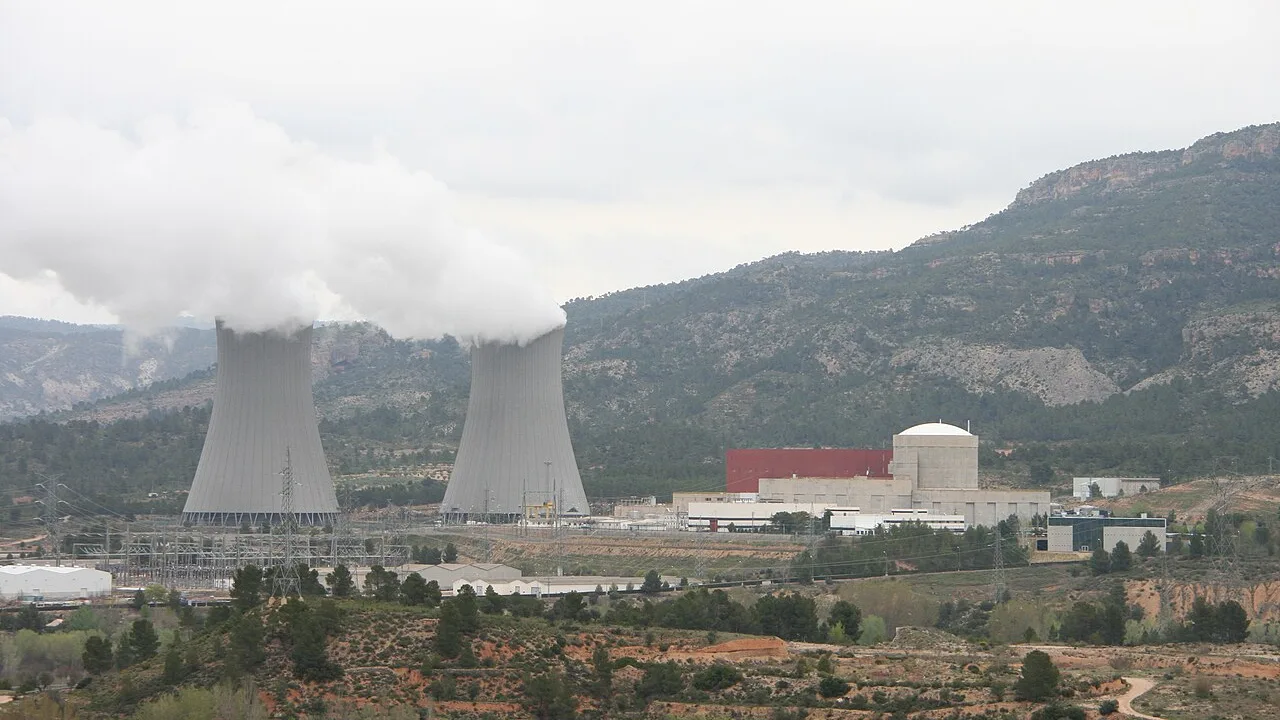
The 2.0TD tariff splits the weekday into three price bands. They apply to the energy term, and on the regulated tariff they stack on top of the hourly market price.
These are the hours for mainland Spain, Valencia included.
The power term runs on the same clock but with only two periods, merging punta and llano into one block from 08:00 to midnight. That is why a 2.0TD contract lets you hold two different contracted powers rather than three.
| Band | Hours | What it means for you |
|---|---|---|
| Punta | 10:00-14:00 and 18:00-22:00 | The most expensive hours. Avoid starting the washing machine, dishwasher or dryer here if you have any choice. |
| Llano | 08:00-10:00, 14:00-18:00 and 22:00-00:00 | The middle band. Fine for cooking and normal living, and the late evening slot is an easy win for a delayed wash cycle. |
| Valle | 00:00-08:00 on weekdays, plus all day Saturday and Sunday and the fixed national holidays | The cheapest hours. Anything that runs on a timer belongs here. |
- Punta
Hours
10:00-14:00 and 18:00-22:00
The most expensive hours. Avoid starting the washing machine, dishwasher or dryer here if you have any choice.
- Llano
Hours
08:00-10:00, 14:00-18:00 and 22:00-00:00
The middle band. Fine for cooking and normal living, and the late evening slot is an easy win for a delayed wash cycle.
- Valle
Hours
00:00-08:00 on weekdays, plus all day Saturday and Sunday and the fixed national holidays
The cheapest hours. Anything that runs on a timer belongs here.
The weekend rule is the one most people miss. From midnight on Friday to midnight on Sunday, every single hour is valle. So is 6 January, and so is every fixed national public holiday.
The trap is what does not count. Regional and local holidays are ordinary tariff days, so in Valencia 19 March and 9 October are billed exactly like any other weekday, punta hours included, however shut the city is.
If your washing machine and dishwasher have a delay timer, that one feature is worth more than most of the energy saving advice you will ever read. Set them to run overnight or at the weekend and you have shifted a meaningful share of your consumption into the cheapest band without changing how you live.
One caveat. These bands govern the regulated tariff charges. On the PVPC the underlying market price moves independently and does not always agree with them, though in practice the cheap hours tend to overlap.
Why Valencia bills behave backwards
If you have moved from northern Europe, your instinct says winter is the expensive season. In Valencia that instinct is wrong.
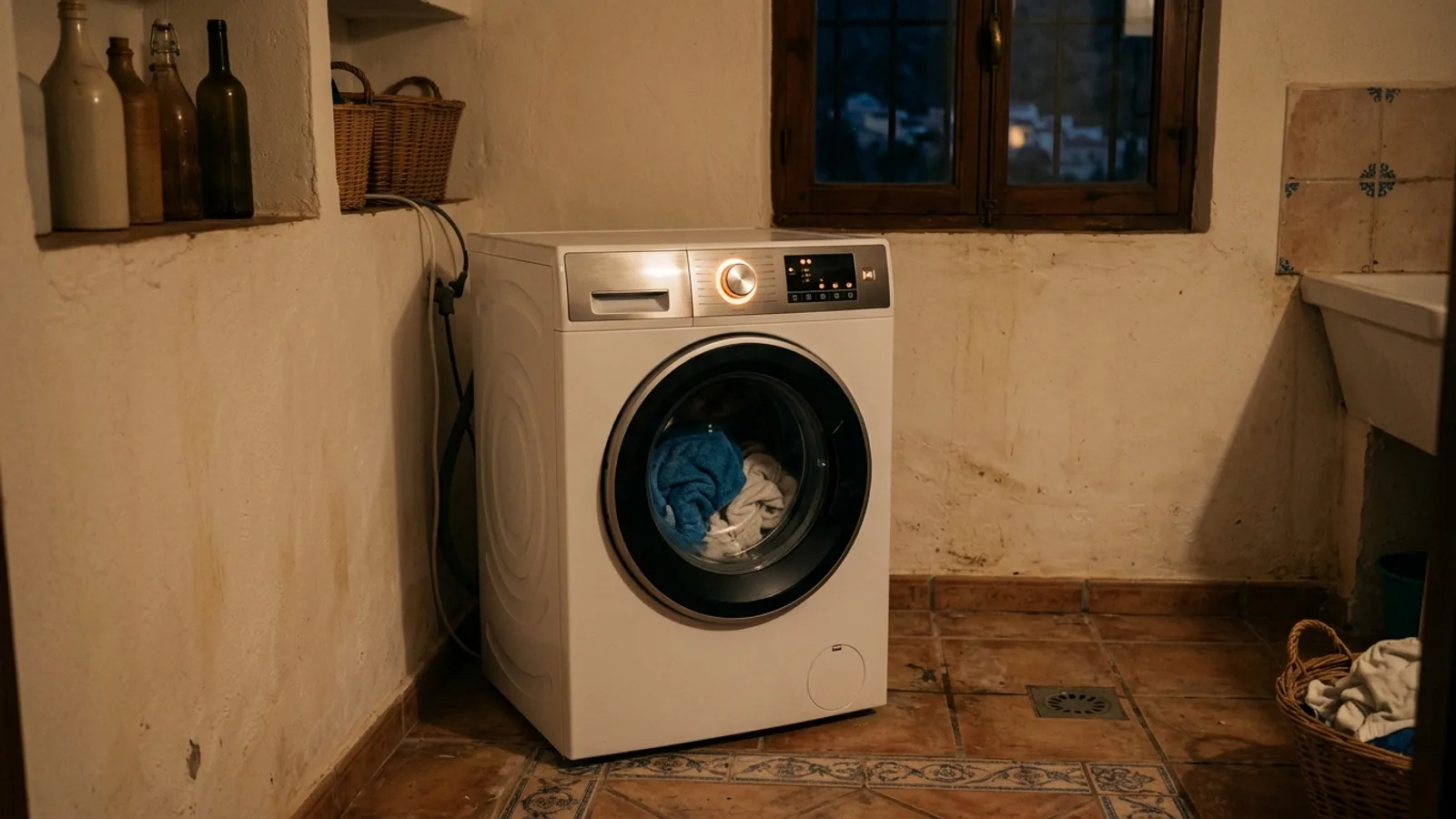
The Mediterranean coast inverts the curve. The heavy months are July and August, when air conditioning runs for hours a day and often through the night as well. A spring or autumn month with the windows open and nothing running but a fridge, a laptop and the occasional load of washing can be a fraction of an August bill.
This matters for how you read your own numbers. Judging your consumption from a single summer bill will convince you something is broken. Judging it from an April bill will leave you unprepared for August. Look at a full year before you conclude anything.
It also changes which advice is worth acting on. Draught proofing and heating efficiency, the standard northern European playbook, move very little here. Shading, shutters and when you run the air conditioning move a great deal. Keeping the flat cool without running the AC flat out is the highest value habit you can build.
Most Valencian flats have no heating system at all
This surprises people. A large share of flats in Valencia city were built without central heating, because for most of the year they simply do not need it. No boiler, no radiator circuit, no gas heating contract.
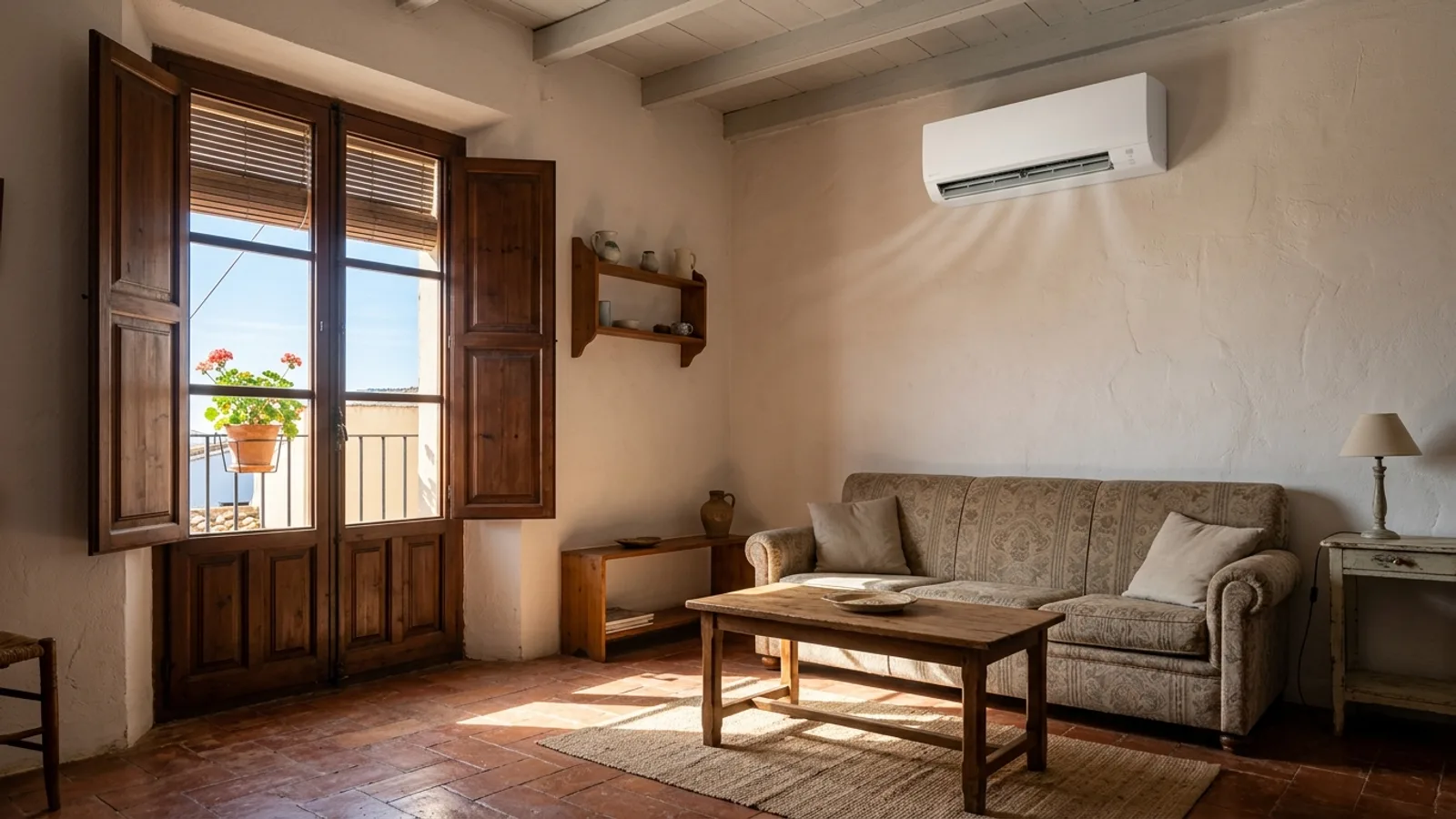
What you get instead is a cold snap of a few weeks, typically from late December into February, handled with whatever is portable: an electric radiator, or the reversible air conditioning unit already sitting on the wall.
That reversible unit is usually the cheapest heat you own, and it is the one newcomers ignore because they think of it purely as a cooling machine. A heat pump moves heat rather than generating it, so it delivers considerably more warmth per kilowatt hour than a resistive electric radiator does.
Hot water is the other split worth checking. Some flats heat water with gas, which means a separate supply, a separate standing charge and a separate bill. Others use an electric water heater, a termo, which quietly becomes one of the largest items on the electricity bill. Find out which you have before you sign, because it changes your monthly running cost more than the rent difference between two otherwise similar flats. Getting the utilities connected in the first place is a separate job with its own pitfalls.
What the taxes add
Two taxes sit on top of a Spanish electricity bill. The impuesto especial sobre la electricidad applies to the energy and power terms, and then IVA is applied to the whole thing.
The rate of IVA on electricity has moved repeatedly in recent years as governments responded to price spikes. It was cut to 10 percent from 22 March 2026 and returned to the general rate of 21 percent on 1 June 2026, where it stands as this guide is published in July 2026. The tax agency has signalled that reductions can be reintroduced if prices climb again.
The practical point is not the number itself, which will move again. It is that a real chunk of any headline price you are quoted is tax, and that comparing two offers only works if both are quoted on the same basis, either both before tax or both after it.
Meter rental appears as a small separate monthly line. It is regulated, it is the same whoever you buy your electricity from, and it is not worth switching supplier over.
The bono social, if you qualify
The bono social is a state discount on the electricity bill for households meeting defined vulnerability criteria. It applies only on the PVPC, so claiming it means moving onto the regulated tariff if you are not already there.
During 2026 the discounts are set at 42.5 percent for vulnerable consumers and 57.5 percent for severely vulnerable consumers, raised from the 35 and 50 percent originally planned.
You must be an individual, the supply must be your habitual residence, and contracted power must be 10 kW or less. Income is the main test. For a single person household the threshold is 1.5 times the IPREM on a fourteen payment basis, which works out at 12,600 euros a year, rising by 2,520 euros for each additional adult and 4,200 euros for each minor in the household. Large families, some pensioners and recipients of the Ingreso Mínimo Vital qualify through separate routes.
Applications go to one of the designated reference retailers rather than to a commercial supplier. It is worth checking even if you assume you earn too much, because the thresholds rise quickly with household size.
Solar panels if you rent: usually not
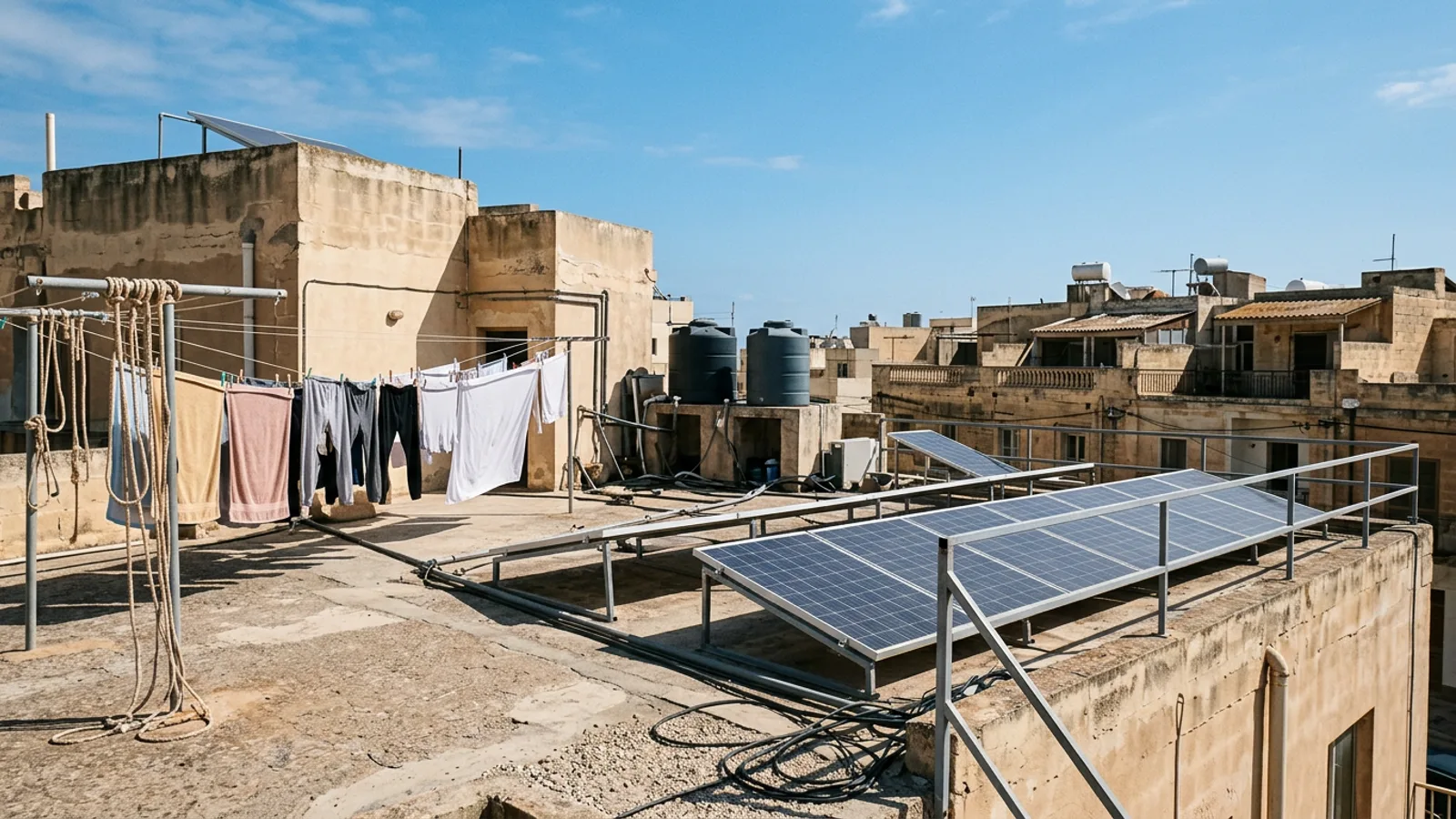
Self consumption solar has genuinely improved in Spain, and Valencia has the sunlight to make it work. If you rent, though, the answer is almost always no, and it is better to hear that plainly than to spend three months discovering it.
The installation is a permanent modification to the building, so it needs the owner's authorisation, and in a block of flats it needs the comunidad de propietarios too. The law is unusually helpful here: renewable energy installations can be approved by one third of owners representing one third of participation quotas, a far lower bar than most community decisions require.
Even so, the payback period runs to years and a rental contract does not. Unless you own the flat, or hold a very long lease with a cooperative landlord, the numbers do not close.
What does work for renters is everything upstream of the panels: the right contracted power, the right market, and the right hours. Those cost nothing to change and they follow you to your next flat.
A twenty minute audit of your own bill
Find your most recent bill, ideally a summer one and a spring one side by side, and work through this list.
- Find the contracted power in kW. If it reads 5.75 and you live alone in a one bedroom flat with gas hot water, you are probably paying for headroom you never touch.
- Find the potencia máxima demandada if your retailer prints it, and compare it against what you are contracted for.
- Work out whether you are on the PVPC or a free market fixed rate. If it is fixed, find the contract end date.
- Check whether hot water is gas or an electric termo, and whether you are paying a standing charge on a gas supply you barely use.
- Look at whether your washing machine and dishwasher have a delay timer. If they do, set them for the valle band tonight.
- Compare your summer and spring bills. If the gap is not mostly air conditioning, something else is running that you have not accounted for.
None of this requires you to live uncomfortably or to sit in the dark. The three settings that drive a Spanish electricity bill are administrative rather than behavioural, and two of them you change once and never think about again.
The third, the hours, is a habit worth building in your first month rather than your third year. Electricity sits inside a wider monthly budget, and it is one of the few lines on that budget that responds this quickly to a little attention.
Sources
Moving to Valencia and want the admin handled?
Setting up utilities, understanding your first bills and getting contracts into your own name is one of the fiddlier parts of arriving. We can take it off your plate.
Contact us
About the author
Michael Bastin
Founder, ValenciaMove - Valencia since 2016
Michael has lived in Valencia since 2016 and helps people move here.
Buy Michael a coffeeNeed help with your move?
Contact us. We handle visa, admin, and housing so you can focus on the exciting part.