
If you have seen headlines about paying an extra 10 cents for every bottle and can, and getting it back at the shop, you can stop waiting for November. The scheme is real and it is coming, but the date has moved again.
Meanwhile the recycling that actually affects your week is the ordinary kind: five coloured containers on your street, an ecoparque for everything that does not fit in them, and from this year a bill that changes depending on how well your municipality separates.
This is what a resident actually needs to know, starting with the part that changed in August.
The bottle deposit has been pushed to 2029
The scheme is called the SDDR, the sistema de depósito, devolución y retorno. You pay a small deposit on a drinks container at the till and get it back when you return the empty one to a shop.
It exists because Spain missed a target. Royal Decree 1055/2022 set a threshold of 70 percent separate collection for single-use plastic drinks bottles; the country reached 41.3 percent in 2023, and missing it obliged Spain to set up a deposit scheme within two years.
That clock ran to 22 November 2026, which is where the November headlines came from. In August 2026 the sector made clear the date was not survivable, and implementation is now pointing at January 2029 instead, the limit the European Union sets.
The target behind all of this has not moved: 90 percent separate collection of plastic bottles and drink cans by 2029.
What it will look like when it does arrive
None of the following is live yet, so nothing changes at your supermarket today. It is worth knowing because it will change how you handle drinks packaging when it lands.
- The deposit: A minimum of 10 cents per container under the decree. Figures between 7 and 40 cents by container type have been discussed by the sector, so treat 10 as a floor rather than a settled price.
- What is covered: Single-use plastic bottles, drink cans and beverage cartons, up to three litres. Spain including cartons is unusual; most European deposit systems leave them out.
- Which drinks: Water, soft drinks, juices, nectars, isotonic and energy drinks, and alcoholic drinks.
- Where you get it back: At shops, which is the part the retail and hospitality sectors have to build for. The logistics of that, not the idea, is what pushed the date.
- Who runs it: A new system separate from Ecoembes, the non-profit that manages the yellow container today.
One practical consequence for now: nothing you do with bottles and cans today earns a refund, so the yellow container remains the right answer.
The five containers, and what actually goes in them
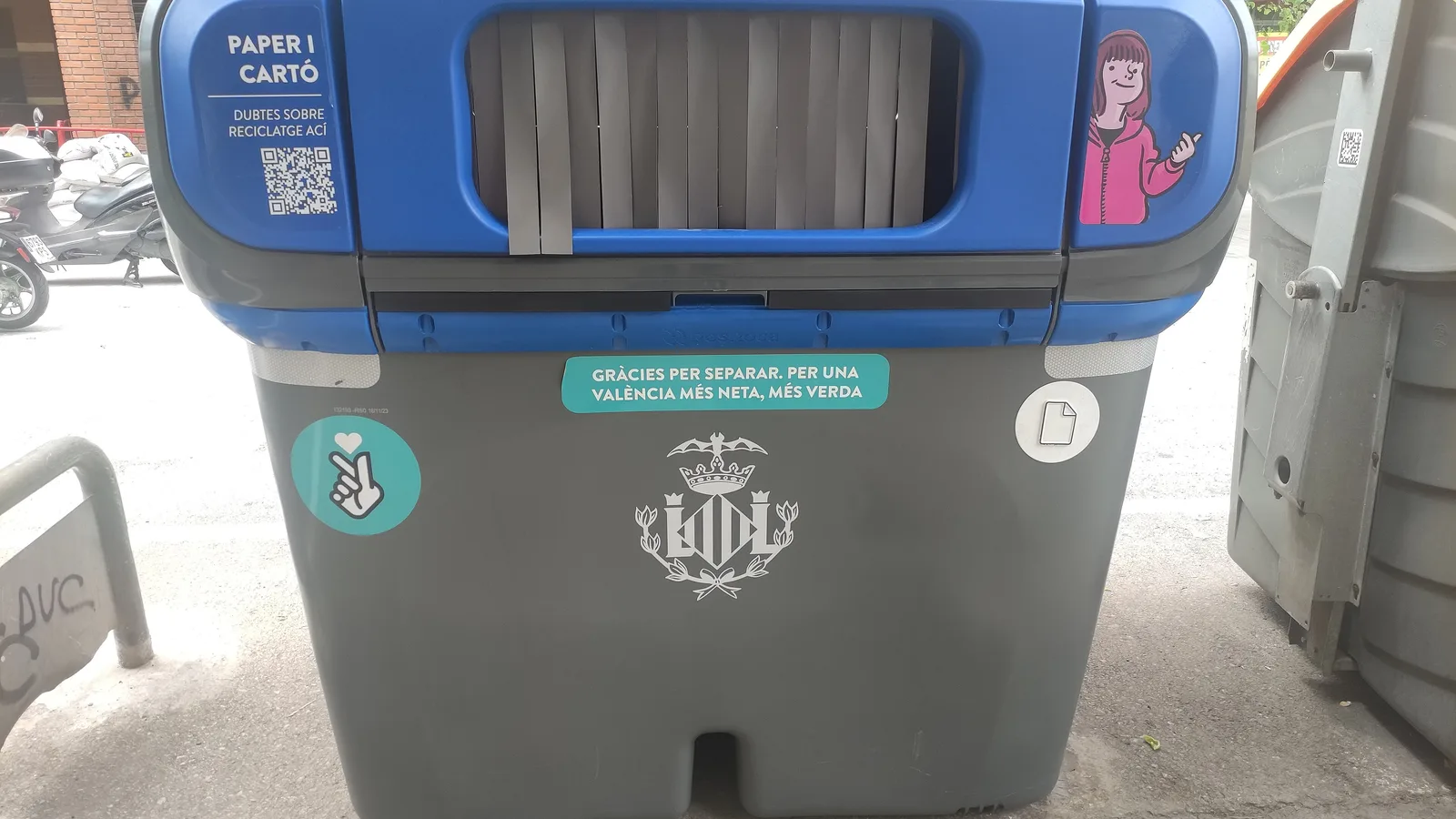
Valencia uses the standard Spanish colour scheme. The two that trip up newcomers are the grey one, which is not a general bin so much as a last resort, and the brown one, which is newer than the rest.
| Yellow | Plastic packaging, cans, tetrabriks and plastic film. Packaging only, not plastic objects. | A plastic toy or a coat hanger is not packaging; it goes to the ecoparque or the grey bin. |
|---|---|---|
| Blue | Paper and cardboard. Flatten boxes. | Greasy pizza boxes and used napkins belong in the brown or grey bin, not here. |
| Green | Glass bottles and jars, without lids. | Drinking glasses, window glass, mirrors and ceramics are a different material and ruin the batch. |
| Brown | Organic waste: food scraps, peelings, coffee grounds, small plant trimmings. | This is the one that now affects your bill. See below. |
| Grey | Everything genuinely left over after the other four. | If you are filling it fast, something is going in the wrong container. |
The brown bin is the one that changes your bill
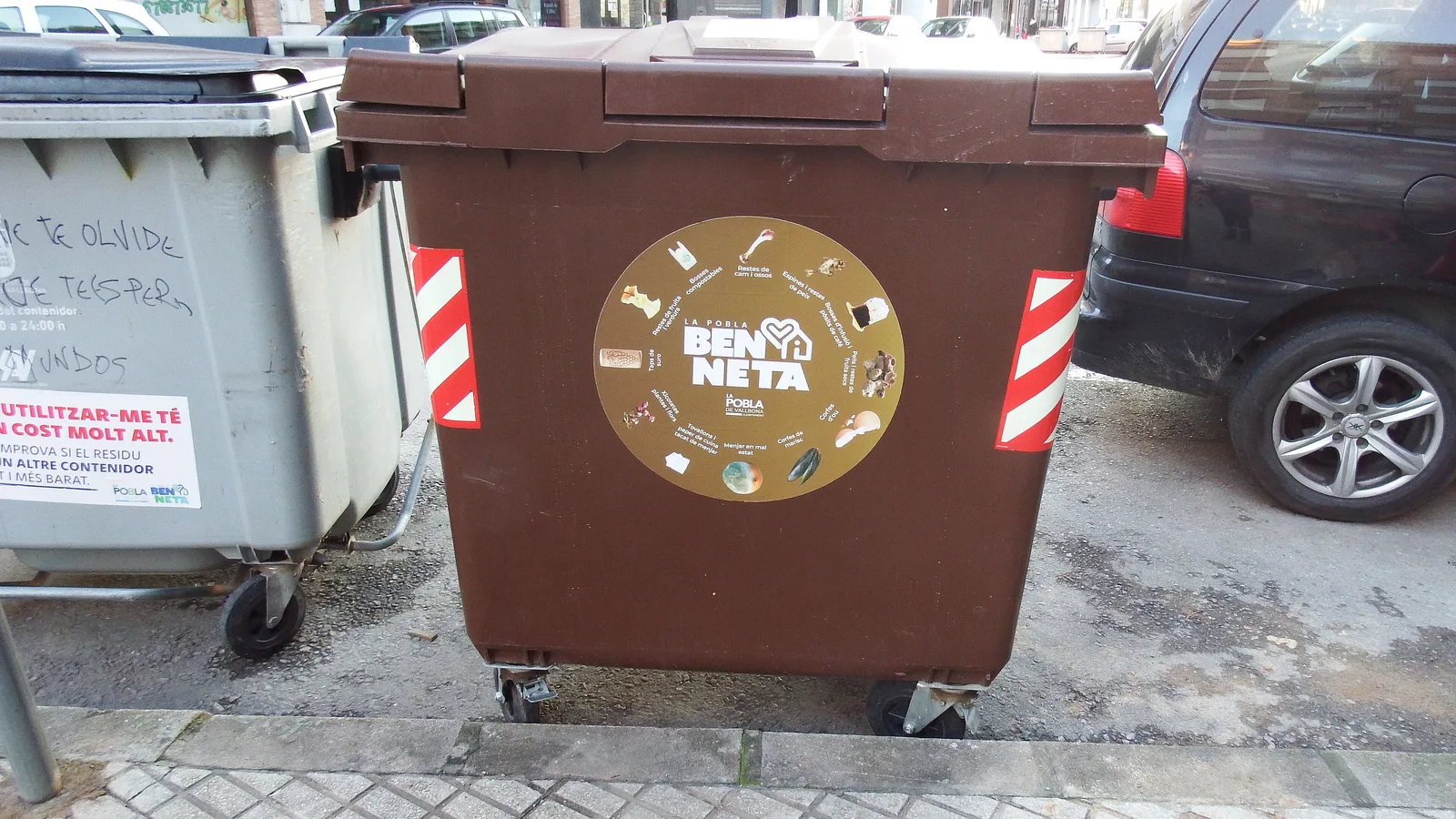
Photo: 19Tarrestnom65, CC BY-SA 4.0
Separate organic collection is not optional for Spanish municipalities: Law 7/2022 on the circular economy makes it an obligation. What is new is that it now has a price attached for residents.
EMTRE, the metropolitan body that treats waste for 45 municipalities around Valencia, is applying a bonus on the TAMER waste-treatment charge for 2026. For the first time the charge is not the same for everyone: a ratio is applied per municipality based on how much organic waste it separates.
So the brown container stopped being the virtuous option and became the one with money on it, decided collectively by where you live rather than individually by what you do.
Ecoparques: for everything the five containers refuse
An ecoparque is a municipal drop-off point for the awkward things: batteries, cooking oil, paint, small appliances, electronics, furniture, fluorescent tubes, scrap metal.
Valencia has a fixed one at Cami de l'Alqueria de la Morera, next to the Vara de Quart industrial estate, open Monday to Saturday from 9am to 9pm and Sunday from 9am to 2pm.
There is also a mobile ecoparque that tours the barrios on a published weekly calendar, which is the realistic option if you do not have a car. It parks in a square for a few hours and takes the same small items.
Used cooking oil deserves a specific mention, because pouring it down the sink is both the most common mistake and one of the more expensive ones for the drainage network. Bottle it and take it to an ecoparque.
There are hours for putting the rubbish out, and fines for ignoring them
This is the rule newcomers break first, usually within a week of arriving. Valencia's street containers are not open all day: the municipal cleaning ordinance sets a collection window, and putting a bag out outside it is an offence rather than a habit the neighbours merely disapprove of.
The city tightened that ordinance in January 2026 and the numbers are not symbolic. Depositing household waste in the wrong container or outside the established system runs to 3,000 euros. Abandoning waste or dirtying public space is 1,500 to 3,000. Leaving bulky items, a mattress or a chair beside a full container, is 750 to 3,000.
Businesses are called out separately: premises that put waste out outside the collection conditions and hours face up to 3,000 euros.
The exact window is set by the ordinance and can change, so check the current one on the Ajuntament's waste pages rather than copying a time from a blog post, this one included. What does not change is that a window exists and that it is enforced.
For furniture and appliances there is a legitimate route that costs nothing: the ecoparque, or the municipal bulky-waste collection you book in advance. Leaving them on the pavement is the version with a fine attached.
What waste actually costs you here
Two charges, easily confused. TAMER is the metropolitan treatment charge set by EMTRE; the municipal rubbish charge is separate and Valencia city began billing its new version in April.
| What the metropolitan area produces | Around 598,000 tonnes of waste in 2026. |
|---|---|
| What treating it costs | Over 97 million euros, financed through TAMER. |
| What that averages per person | About 60 euros a year, for someone generating 370 kilos of waste annually. |
| Ecoparque bonus | Valencia city gives a 10 euro reduction to residents who use an ecoparque at least once in the year. |
| Business bonus | 50 euros for businesses using the municipal door-to-door paper and cardboard collection. |
The ecoparque bonus is worth knowing about precisely because it is small and easy to miss: one trip with an old toaster covers it.
What newcomers get wrong
- Treating the yellow container as a plastics bin. It is a packaging bin. Plastic that was never packaging does not belong in it.
- Leaving lids on glass bottles. Metal and plastic lids contaminate the glass stream; they go in the yellow container.
- Using the grey container as the default. It is the residual bin, and in a household separating properly it fills slowly.
- Pouring cooking oil down the sink rather than bottling it for an ecoparque.
- Waiting for the deposit scheme before bothering with bottles. It is three years away; the yellow container is what exists.
- Putting bags out in the morning on the way to work. There is a collection window, and missing it is a fine rather than an inconvenience.
Recycling here is not complicated, but it is specific, and the two things worth acting on are both quiet ones. Put food waste in the brown container, because from this year it is priced. Find your mobile ecoparque's calendar, because that is where the batteries and the old kettle actually go.
The deposit scheme will arrive eventually, and when it does the practical change is small: you will keep your empties instead of dropping them in the yellow bin. Until then, nothing about your week changes.
Setting up a home in Valencia?
Bins, utilities, the padrón, the waste charge: the small administrative layer of moving here is where most of the friction hides. We can take it off your hands.
Contact us
About the author
Michael Bastin
Founder, ValenciaMove - Valencia since 2016
Michael moved to Valencia in 2016 and has helped dozens of families relocate since. He writes every guide on this site personally and verifies every fact against Spanish government sources before publishing.
Buy Michael a coffeeNeed help with your move?
Contact us. We handle visa, admin, and housing so you can focus on the exciting part.