

Photo: Diego Delso, CC BY-SA 3.0
University Life in Valencia for UK and US Students
What classes, campus culture and daily routines actually feel like once you arrive: UV vs UPV, neighbourhoods, language, social life and what to sort out in your first week. This page is orientation, not admissions, tuition, visa or housing-search advice - each of those has its own page.
How is university in Spain different from the UK or US?
University life in Valencia can feel more city-based than a typical US residential-campus model. Your faculty location matters, because both UV and UPV are spread across several campuses, and daily routines are shaped by transport, neighbourhoods and the city around campus as much as by the university itself. Academic practices vary by faculty and course, so treat this page as orientation rather than a fixed rulebook.
Key differences at a glance
A one-line comparison for each topic. None of these are universal rules - they are the practical starting points worth knowing before you arrive.
| Topic | Valencia / Spain | UK / US comparison |
|---|---|---|
| Grading | Spain uses a 0 to 10 scale; 5 is a pass and 9 to 10 is Sobresaliente. | UK and US institutions use their own classification or GPA systems. Follow your home university's study-abroad guidance for formal grade conversion. |
| Class format | Lecture and seminar formats vary by faculty and course. | Format also varies by institution, so this is not a single national contrast. |
| Campus culture | UV is spread across three campuses (Blasco Ibanez, Tarongers, Burjassot-Paterna); UPV has a large Valencia campus plus Gandia and Alcoy. | US campuses can be more residential; the UK experience varies by institution. |
| Daily rhythm | Meal times run later: lunch is typically 13:30 to 15:30, dinner 21:00 to 23:30. | Earlier meal times may feel more familiar - expect an adjustment, not a rulebook. |
| City as campus | Transport, neighbourhoods, public spaces, food culture and festivals sit alongside university life as much as lectures do. | The balance between campus and city varies by institution back home. |
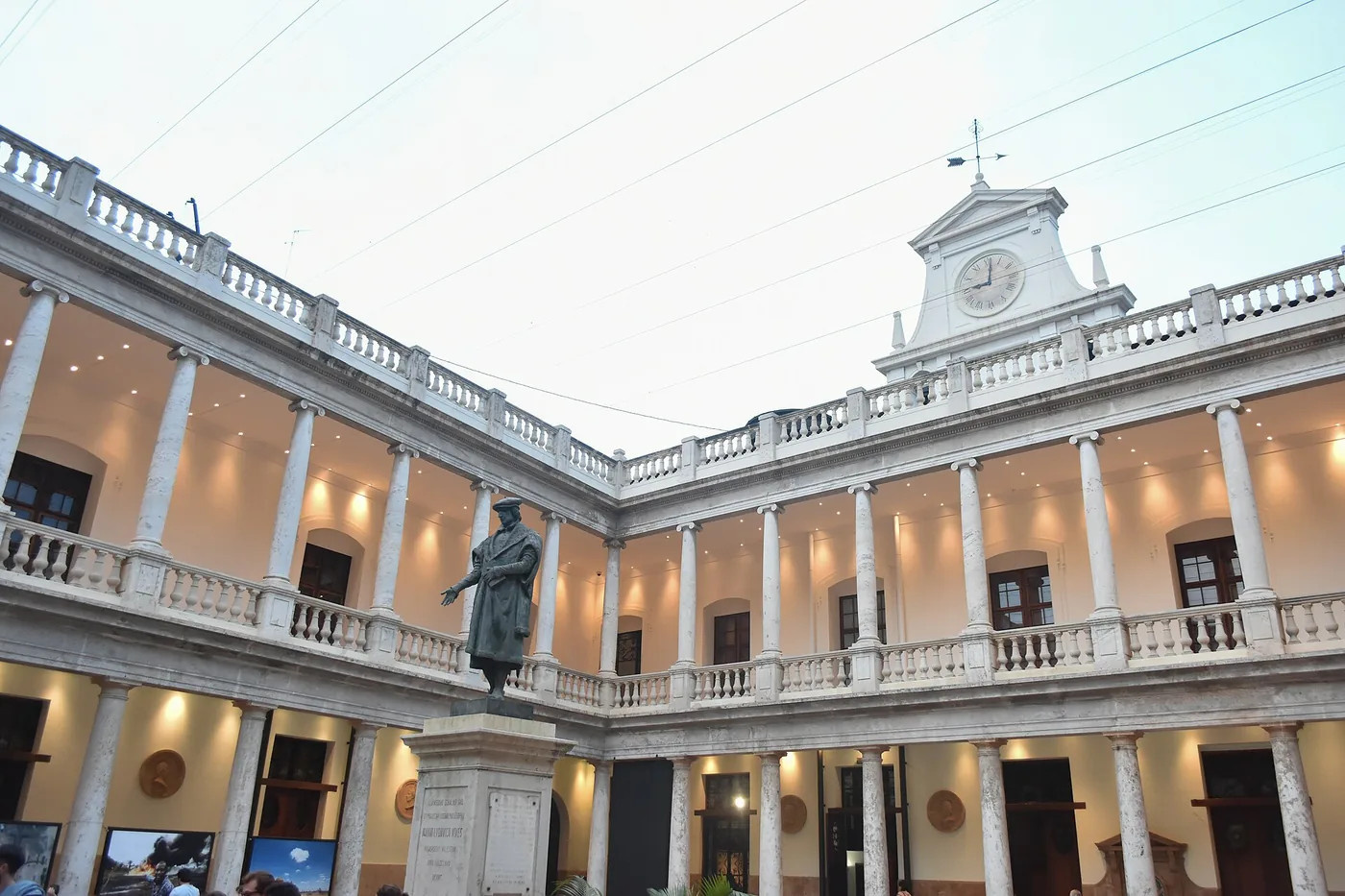
Photo: Dorieo, CC BY-SA 4.0
UV vs UPV: where will your faculty actually be?
This section answers one question - where your classes and campus services will be - not which university is better. Neither ranking, teaching quality nor tuition is compared here.
Universitat de Valencia (UV)
UV is spread across three campuses: the Blasco Ibanez campus, the Tarongers campus and the Burjassot-Paterna campus, each hosting different faculties.
Check your host faculty's campus before choosing housing or planning your daily route.
Universitat Politecnica de Valencia (UPV)
UPV has 15 schools and faculties across four campuses: the main Valencia campus, which hosts most of them, plus Alcoy, Gandia and Hangzhou (China).
Confirm your specific school on UPV's own faculty page before locating classes and services.
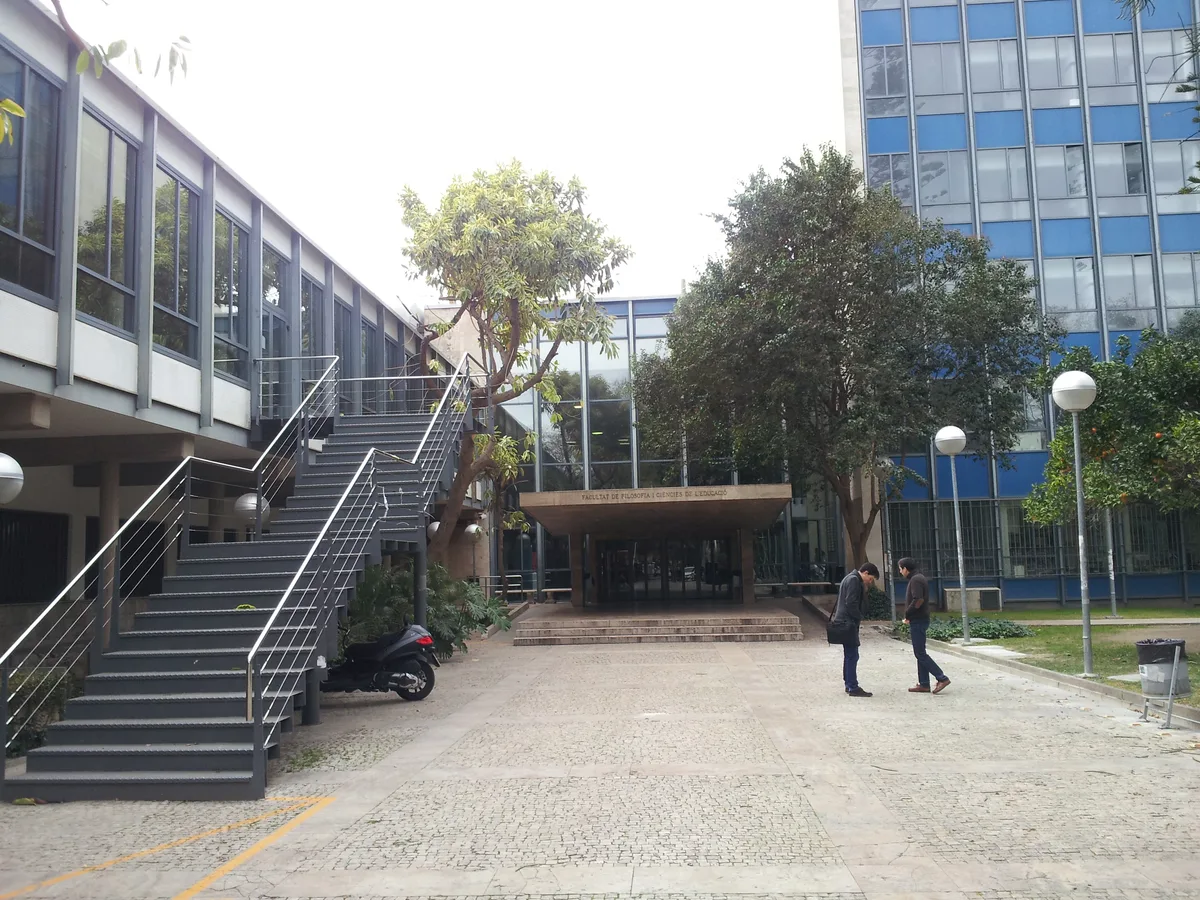
Photo: Coentor, CC BY-SA 3.0
Neighbourhoods: an orientation layer, not a housing decision
Where you live changes how your university day feels. These three areas, Blasco Ibanez, Benimaclet and Russafa, are commonly identified as student areas - for rent ranges and availability, see student housing in Valencia.
Blasco Ibanez
A university-area reference point around UV's Blasco Ibanez campus - useful if your faculty is based there.
Benimaclet
A multicultural, alternative neighbourhood close to several universities, popular with students for that proximity.
Russafa (Ruzafa)
A lively, multicultural area close to the historic centre, known for its food, culture and nightlife.

Photo: V0ctor, CC BY-SA 4.0
Daily life: transport, food and schedules
Public transport and cycling are a realistic part of daily student life in Valencia - see our first-month checklist for the SIM card, transport pass and bank account you will want to set up early. Fares change, so this page deliberately does not quote them - see our metro ticket explainer for the current options.
Meal times run later than in the UK or US: Visit Valencia's own guidance describes lunch around 13:30 to 15:30 and dinner around 21:00 to 23:30. Treat this as typical local timing rather than a rule every restaurant or household follows.
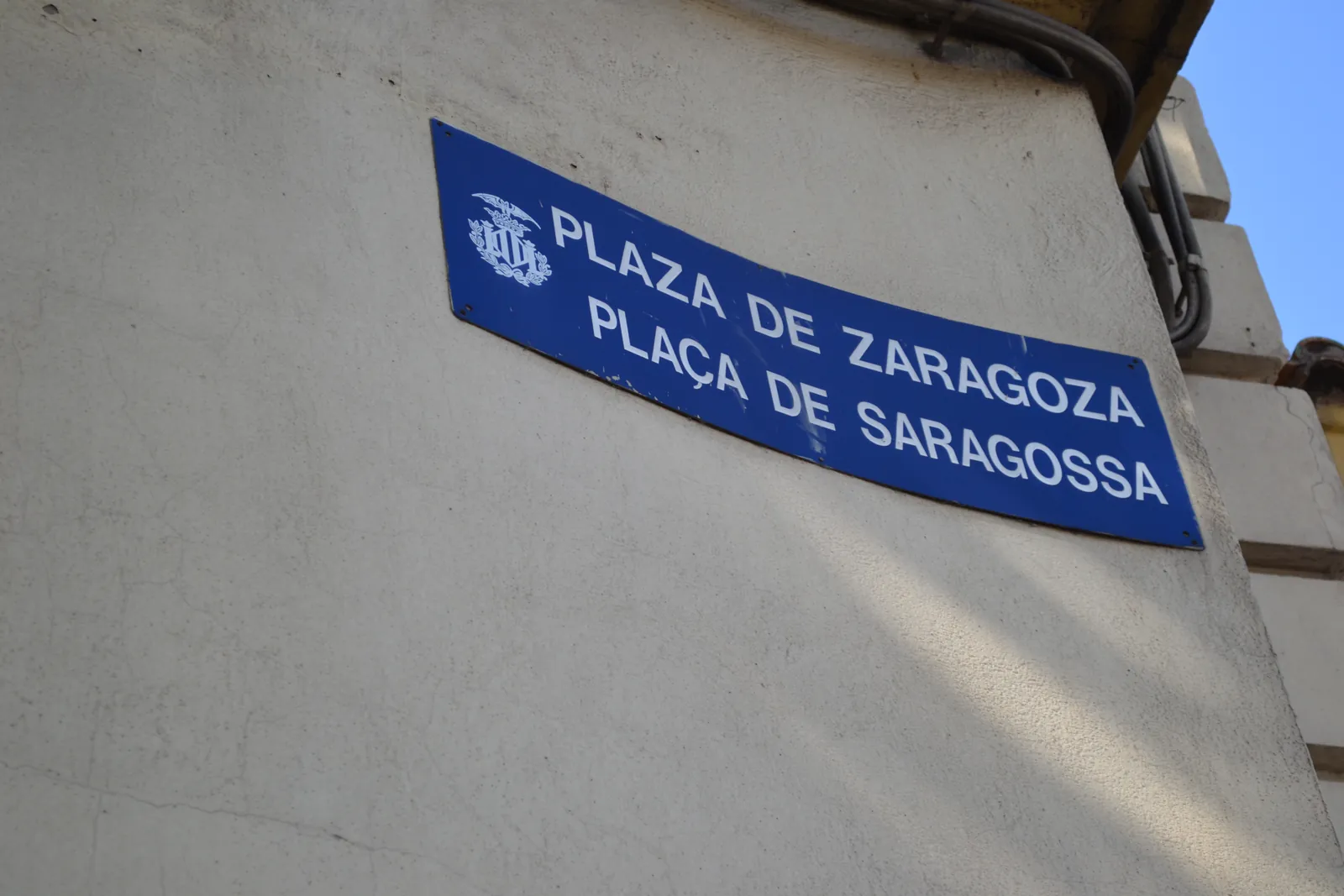
Photo: Dorieo, CC BY-SA 3.0
Language: Spanish and Valencian
At the Universitat de Valencia, Spanish and Catalan (locally called Valencian, or valencia) are both official languages, used in academic, administrative and daily contexts. English is also used by the university, but check the language listed for each of your specific subjects rather than assuming every class runs in English.
Learning a few everyday Spanish and Valencian expressions makes social interaction easier day to day, while your university's own language services provide more structured support if you want to go further. This page is orientation, not a language course. For schools, apps and intercambios, see our tips for learning Spanish in Valencia.
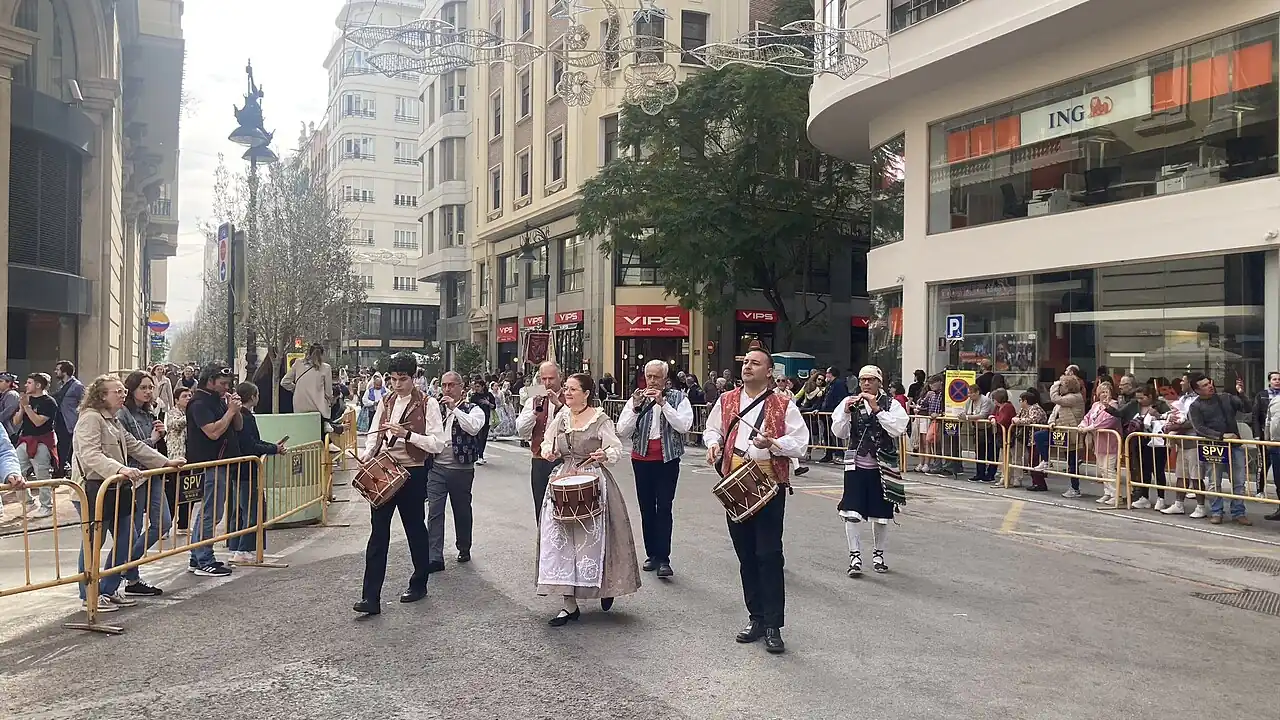
Photo: Bgasco, CC BY-SA 4.0
Social life
Four starting points, not an exhaustive list of what there is to do. For the day-to-day adjustment behind all of this - meal times, greetings, the Erasmus bubble - see how Valencia feels different day to day.
ESN and exchange networks
ESN (Erasmus Student Network) runs social and orientation activities for incoming exchange students in Valencia, referenced in UPV's own exchange information. Treat it as one starting point rather than the only route to a social circle.
Student associations
Your host university's own student services and associations run orientation activities beyond ESN - check your faculty's welcome information for what is available.
Festivals
Las Fallas in March is the strongest Valencia-specific example of how the city's calendar reshapes daily life for a few weeks - see our Las Fallas explainer for the practical detail.
City life
Public spaces, food culture, beaches and neighbourhoods sit alongside university social life rather than apart from it - there is no single stereotype of what a typical week looks like.

Photo: Carlesmari, CC BY 3.0
First week: what to sort out first
Signposting only - the visa, NIE/TIE and empadronamiento steps below are covered in depth elsewhere and not repeated here.
- Find your faculty, campus, timetable and first teaching location using your host university's current information.
- Attend official welcome or orientation activities - check your university's own exchange information for dates and locations.
- Sort your visa, if you need one, using our Spain student visa walkthrough.
- Once in Valencia, register your address (empadronamiento) - see your first 30 days in Valencia for the full sequence.
- Work out your normal campus-to-home route using public transport or cycling.
- Pick one low-pressure social entry point in week one: orientation, ESN, a student association or a language exchange.
Sources
Every claim above traces back to one of the official sources below.
- [1]Universitat de Valencia - University campuses
- [2]UPV - Schools and faculties
- [3]Universitat de Valencia - Incoming student languages
- [4]Visit Valencia - Student housing and neighbourhoods in Valencia
- [5]Visit Valencia - Ruzafa neighbourhood
- [6]Visit Valencia - Fallas de Valencia
- [7]EMT Valencia - Official city transport
Frequently asked questions
Is university life in Valencia very different from the UK or US?
What is the grading system in Spain?
What is the difference between UV and UPV?
Which neighbourhoods are popular with students?
Do I need Spanish or Valencian to study in Valencia?
Want a hand mapping your semester in Valencia?
Write to our team through the form, no sales pitch. We help you sequence the visa, housing and paperwork so nothing gets left to the last week.
Contact us
Resident in Valencia since 2016. Founder of BeTranslated. 25+ years in translation, interpretation and multilingual SEO.
Reviewed 25 September 2026 by Michael Bastin