

Photo: Diego Delso, CC BY-SA 3.0
Will Valencia Feel Different? A Guide for Erasmus Students
Yes, but mostly in the everyday details. Meals happen later, evenings stretch longer, and you will see two official languages across signs and campus life. The trick is not to become Valencian overnight - it is to notice the rhythm, try the local way, and give yourself time to settle in.
What actually feels different day to day?
Valencia can feel later, more social and more outward-facing than home, with public spaces often playing a bigger role in everyday socialising than it might where you are used to studying. Daily rhythms follow their own logic rather than a UK or US timetable.
None of this is a rulebook. Individual habits, faculties and neighbourhoods vary, so treat the sections below as things you may notice rather than fixed facts about every student's experience.
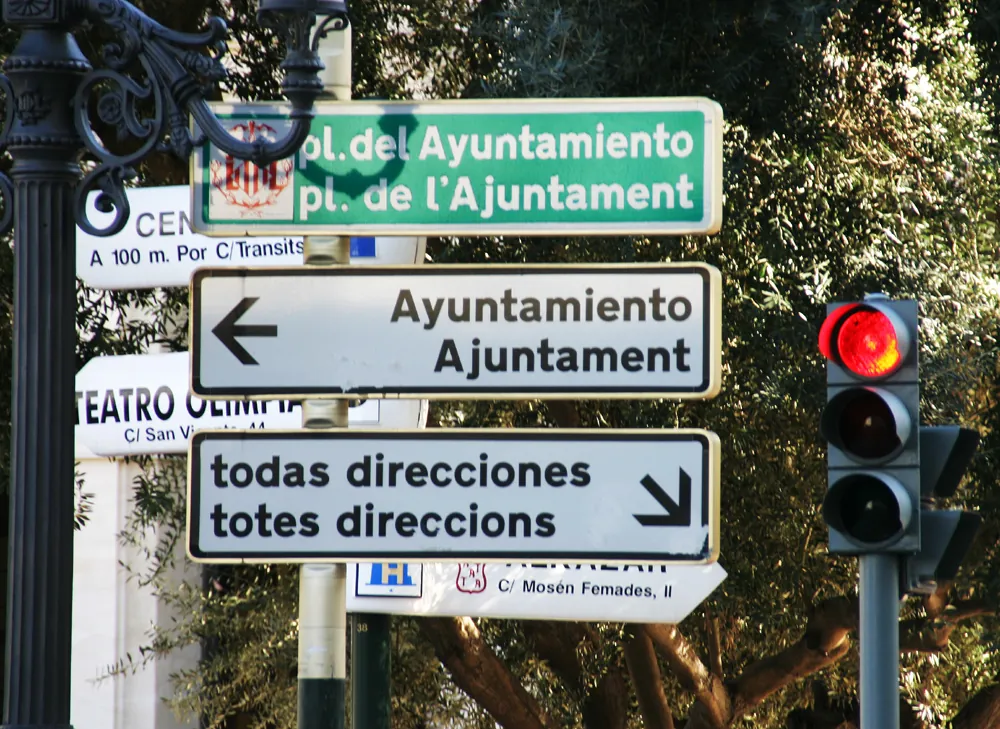
Photo: Elke Wetzig (Elya), CC BY-SA 3.0
Six things Erasmus students notice first
Practical, everyday differences most likely to affect your routine in the first few weeks.
Later meals
Lunch in Valencia typically runs from 13:30 to 15:30, with dinner from around 21:00 onwards - later than a typical UK or US timetable, and worth planning around rather than resisting.
Two official languages
Spanish and Valencian are both official in the Valencian Community. You will see Valencian on signs, documents and around campus - learning it is not required for an Erasmus stay, but a few words are appreciated.
Social life happens outdoors
Terraces, plazas and street life make public space part of everyday socialising, not just something for special occasions.
Greetings can be more familiar
A two-cheek greeting is common in informal social contexts in Spain. Follow the other person's lead rather than assuming one fixed rule - a handshake or a verbal greeting is also completely normal.
University life can feel more conversational
Seminar discussion and classroom debate can feel livelier and more informal than you are used to. This varies by faculty and course, not a single national style.
The Erasmus bubble forms fast
International students often find friends quickly inside Erasmus and exchange networks. It is a comfortable starting point, not the end of the story - see the section below on widening your circle.
Photo: Joanbanjo, CC BY-SA 3.0
Coming from the UK or the US: what may feel different
A different starting point, the same goal: understanding the local rhythm rather than comparing which is better.
| Topic | Coming from the UK | Coming from the US |
|---|---|---|
| Meal and evening timing | Later dinners and a later start to nightlife are often among the biggest adjustments. | The whole daily rhythm can feel slower and more social, with later meal and service expectations throughout. |
| Classroom style | Seminar discussion may feel more overtly conversational than you are used to. | Class format and grading conventions differ from a US GPA system - check your study-abroad guidance for conversion. |
| Language presence | Spanish is workable day to day, though not guaranteed with landlords, doctors or bureaucracy. | Spanish and Valencian may be more noticeable in daily life than you expect from a short visit or a language class. |
| Campus vs city | University life sits inside a working city rather than a self-contained campus. | The balance between campus and city is different from a residential US campus model. |

Photo: Maria19731008, CC BY-SA 4.0
What would you do in this situation?
Five common moments and the practical read on each one.
A friend invites you to lunch at 14:30.
This is a normal lunch window in Valencia, not an unusually late one - plan your morning around it rather than assuming it is a delay.
Someone greets you with two cheek kisses.
Follow their lead. A handshake or a verbal greeting works fine too, especially in a more formal setting.
You see Valencian on signs or hear it around campus.
It is co-official alongside Spanish. Whether you need Valencian academically depends on your university, degree and individual subjects; a few Valencian phrases are a nice-to-have, not a requirement.
A loud noise erupts at 14:00 between 1 and 19 March.
That is very likely the mascletà, part of Las Fallas - a pyrotechnic spectacle held every day at 14:00 from 1 to 19 March, not an emergency.
A seminar gets more argumentative than you expected.
Some seminars may feel more conversational or discussion-based than you are used to, but this varies by course and lecturer. Treat one lively seminar as one data point, not a national rule.
The Erasmus bubble

A weekly run, match or walk in the Turia gardens is an easy routine to build outside the Erasmus circuit.
Photo: Kent Wang, CC BY-SA 2.0
The Erasmus bubble is not a problem to solve - it is a comfortable, fast-forming starting point. The real opportunity is widening the circle before the semester settles into a routine.
- Join a language exchange or welcome activity in week one, before social circles settle.
- Build one recurring local connection: a sports group, classmate, café, society or neighbourhood routine.
- Keep at least one weekly activity outside the central Erasmus circuit.
Not everyone has the same experience. Some students love the social side of exchange life; some students find the language barrier, university bureaucracy or distance from home difficult at times. Both are normal, and neither means you are doing it wrong.
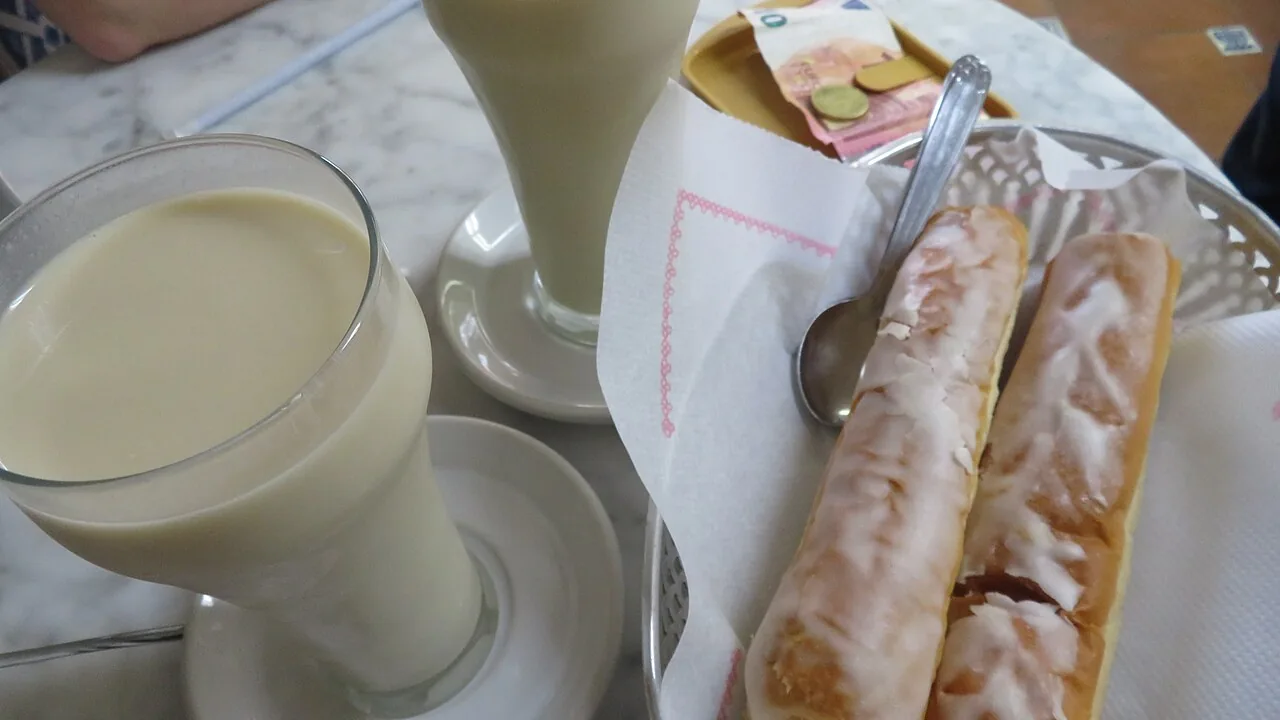
Photo: Juan Emilio Prades Bel, CC BY 4.0
Valencian culture worth actually experiencing
Four starting points beyond the obvious tourist list.
Food
Valencian paella is a regional tradition closely associated with Valencia's rice-growing landscape - see our Valencian paella recipe. Horchata de chufa, usually served with fartons, is a distinctly Valencian drink - see all about horchata.
Fallas
Fallas runs from 1 to 19 March, with a mascletà every day at 14:00, and peaks from 14 to 19 March before the Cremà on the night of 19 March. La Crida, the official call that opens the festival, comes first, at the end of February. It is recognised as UNESCO Intangible Cultural Heritage - see our Las Fallas explainer for what it actually involves.
Language
Spanish and Valencian are co-official in the Valencian Community. Whether you need Valencian for your studies depends on your university, degree and subjects, but a few local phrases can make interactions warmer - see how to learn Spanish in Valencia.
Neighbourhood life
Russafa is lively and multicultural, Benimaclet is close to several universities and has a strong neighbourhood feel, and El Cabanyal is a historic former fishermen's district - three different urban rhythms, not a ranking of best to worst.
First 30 days in Valencia
A week-by-week shape for settling in, not a rigid schedule. For the paperwork side of the same month, see our first-month checklist; for the academic side, university life in Valencia; and for the flat hunt, student housing in Valencia.

Days 1 to 3
Set up the essentials, learn your route to campus, walk your immediate neighbourhood and learn five useful Spanish phrases.
Week 1
Attend orientation, one Erasmus event and one activity that is not Erasmus-specific.
Week 2
Try a local meal out, start a language exchange or class, and establish one repeat routine outside campus.
Week 3
Choose one cultural experience: a market, a neighbourhood event, a local sports activity, or a Fallas-related activity if the timing lines up.
Week 4
Settle your routines: study, food shopping, exercise, friendships, language practice and one recurring local activity.
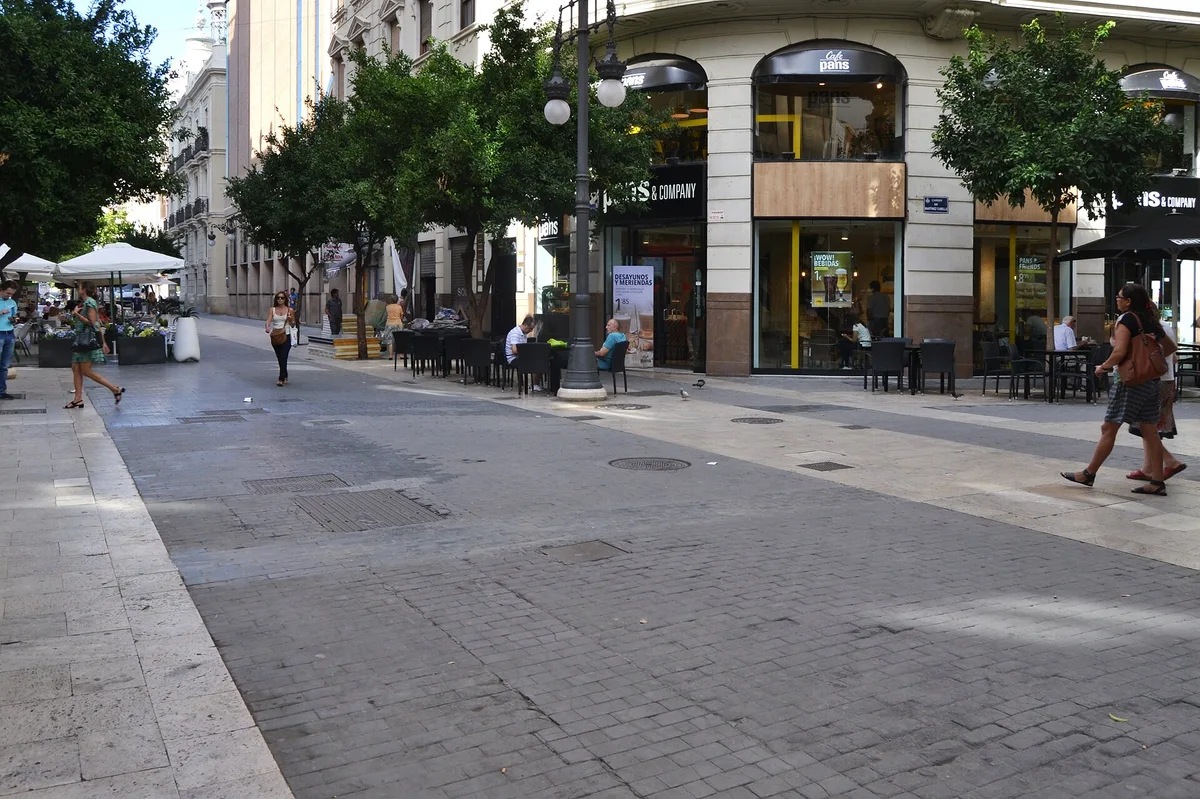
Photo: Joanbanjo, CC BY-SA 4.0
Cultural do's and don'ts
| Topic | Do | Don't |
|---|---|---|
| Greetings | Use simple greetings and follow the other person's lead on physical greetings. | Don't assume everyone speaks English, or that one greeting style fits every setting. |
| Mealtimes | Be open to later mealtimes and leave room for conversation over food. | Don't expect every restaurant or household to run on a UK or US timetable. |
| Language | Try some Spanish, even a little - it can make everyday interactions easier. | Don't treat Valencian as "just Spanish with an accent" - it is a distinct co-official language. |
| Nightlife | Explore at your own pace and find activities beyond the Erasmus circuit. | Don't assume one nightlife pattern fits everyone, or that skipping it means missing out on exchange life. |
| Attitude | Stay curious and treat differences as interesting rather than inconvenient. | Don't frame cultural differences as "better" or "worse" than home. |
Sources
Cultural and factual claims above trace back to the official sources below.
Frequently asked questions
Do I need to speak Spanish or Valencian?
What time do people eat in Valencia?
Will I need Valencian at university?
How do I meet local students?
What is Fallas like?
What if I do not like partying?
Will Valencia feel like Spain from the UK or US?
Ready to make Valencia your next study destination?
You do not need to know everything before you arrive. We can help you understand the study options, prepare for day-to-day life and work out what your Valencia experience could look like.

Resident in Valencia since 2016. Founder of BeTranslated. 25+ years in translation, interpretation and multilingual SEO.
Reviewed 25 September 2026 by Michael Bastin