Spain orders coffee differently than Italy or France, and Valencia adds three drinks you will not find anywhere else: cremaet, café bombón, café del tiempo. Here is the full menu, with prices and how to order without sounding like a tourist.
21
essential coffees to know
1,10 - 5,00 EUR
what each one costs in 2026
11h
almuerzo and cremaet prime time
+30 C
cafe del tiempo season
Small cups, fast at the bar, slow at the table
Valencia coffee is small, strong, fast at the bar but slow at the table. Cup sizes are smaller than northern Europe; nobody orders a 'large coffee' because it does not exist. There are two prices on every menu: about 1 EUR cheaper standing at the bar, around 1 EUR more on the terrace. Tip culture stays light - round up, no percentage logic. The almuerzo ritual at 11h is when locals queue at neighbourhood bars for esmorzaret plus cremaet. Filter coffee is rare; the espresso machine is the default. Specialty third-wave is a recent arrival, covered in its own section below.
21 coffees you need to know
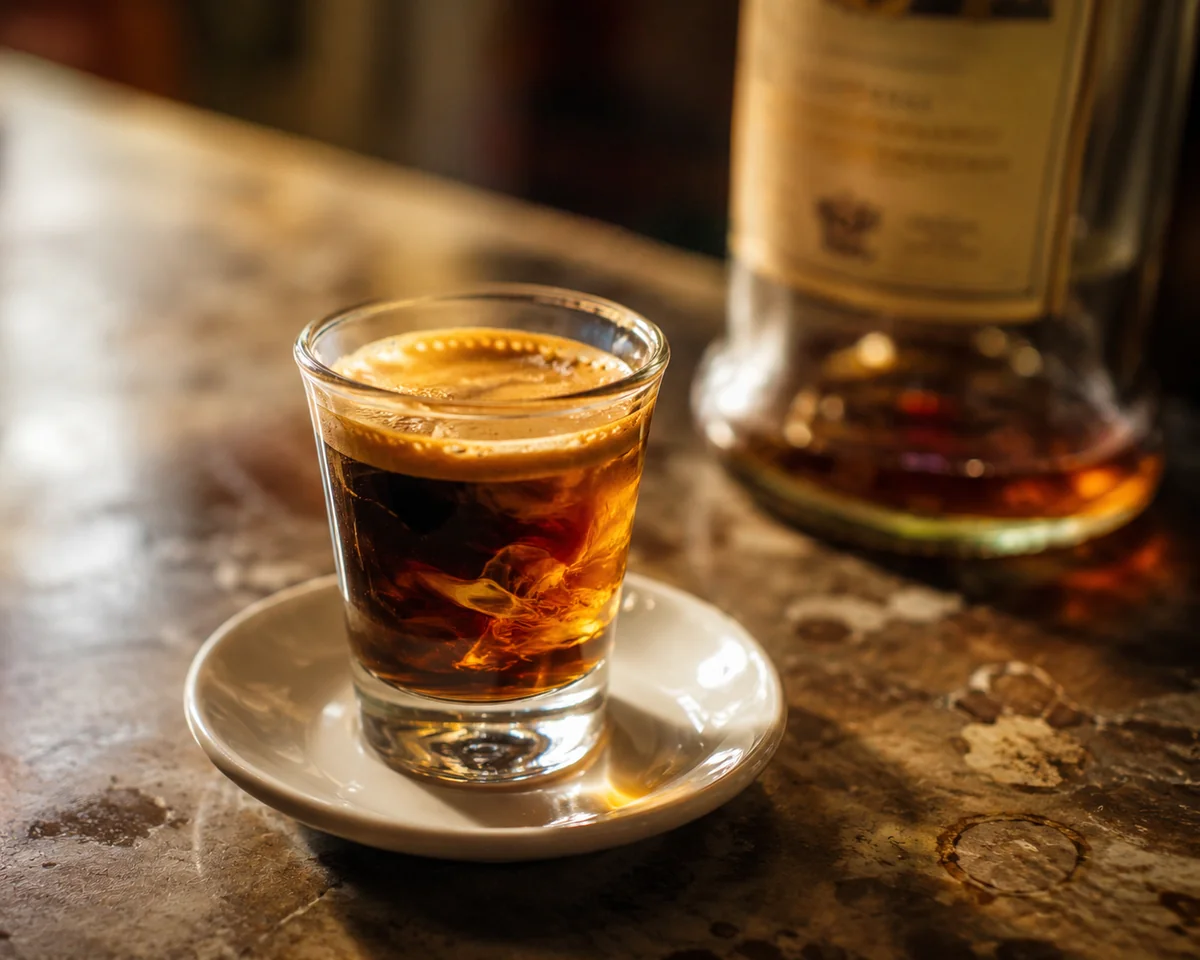
Cremaet - Valencia's flamed signature
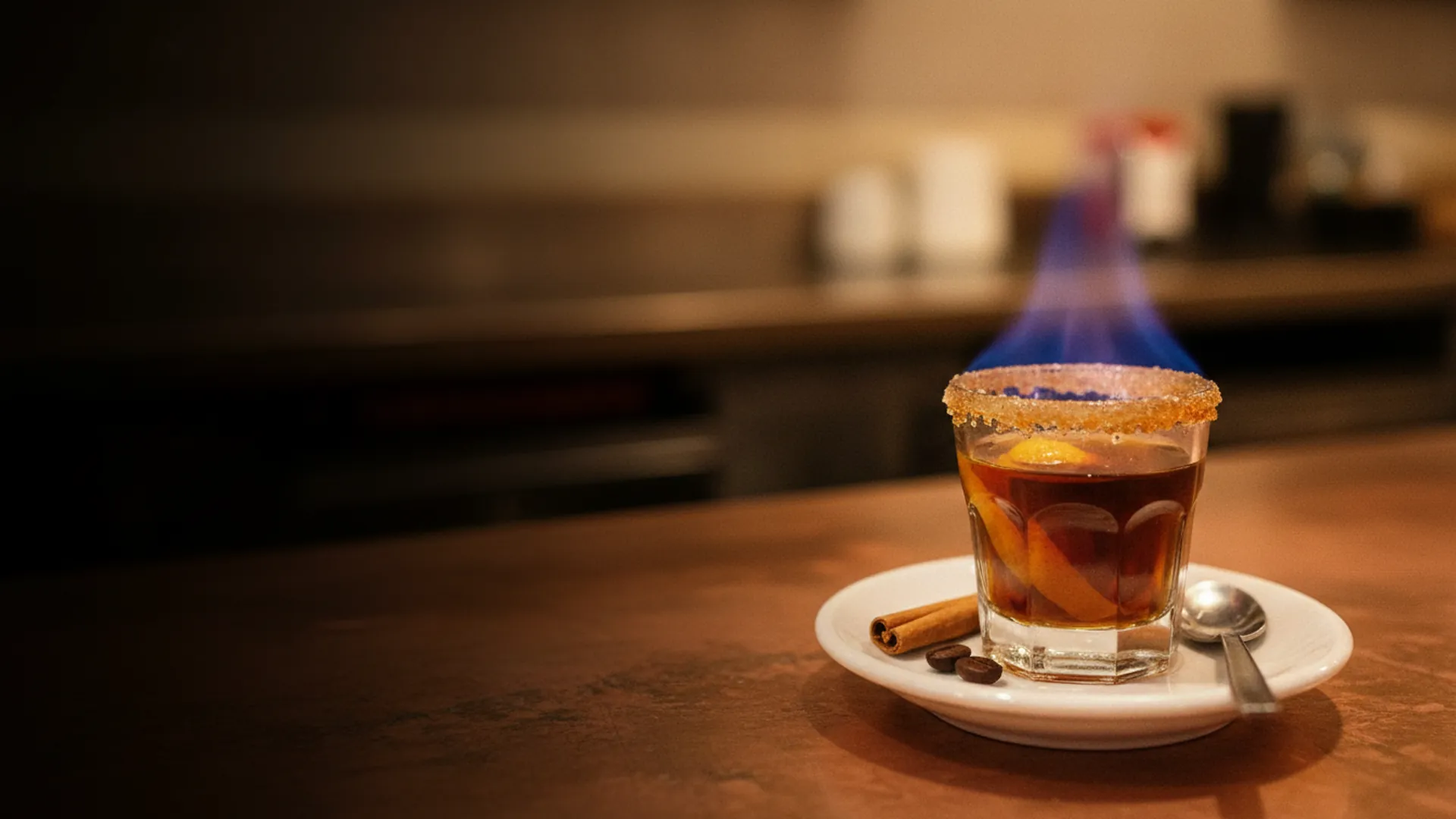
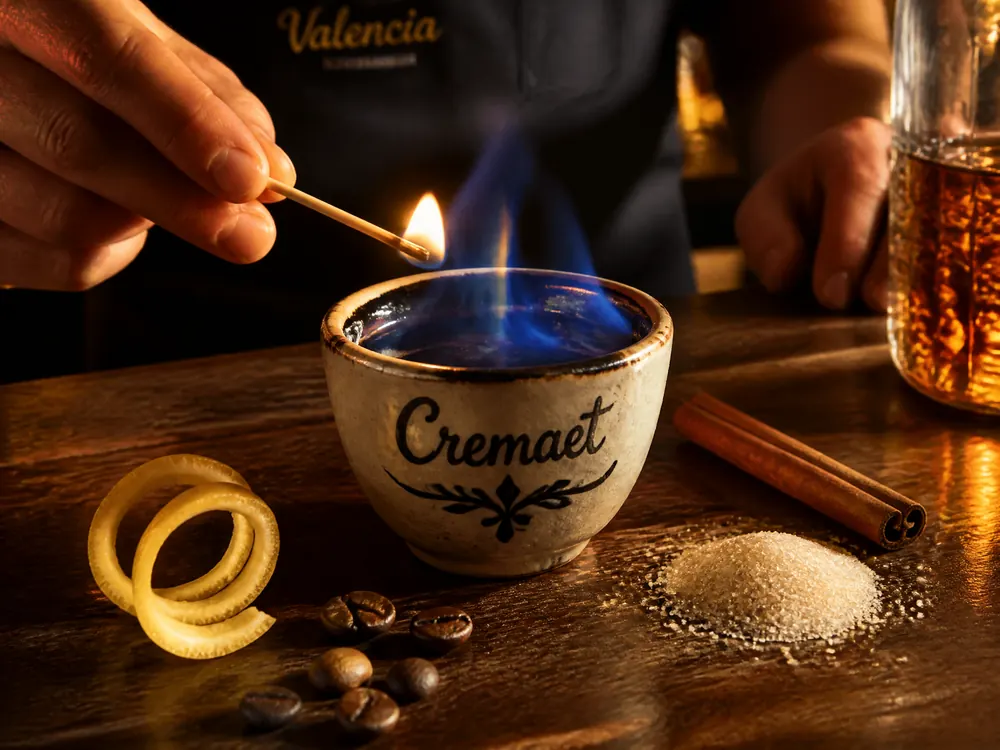
An espresso poured over a flaming mix of rum (or brandy), sugar, lemon zest, cinnamon stick and a few coffee beans. The bartender lights it tableside; the flame burns off some alcohol and caramelises the rim. Sometimes called the dessert of the almuerzo, served around 11h after a workers' second breakfast. Traditionally a Friday-morning ritual.
Order: Un cremaet, por favor.
euroPrice: 1,80 - 3,00 EUR in 2026
placeBar Almudin, old town - the queue tells you it is the right address
placeBar Pilar, Mercado Central area - esmorzaret plus cremaet classic
placeCasa Guillermo, El Cabanyal - anchovies, cremaet, locals only
Café bombón - espresso layered over condensed milk
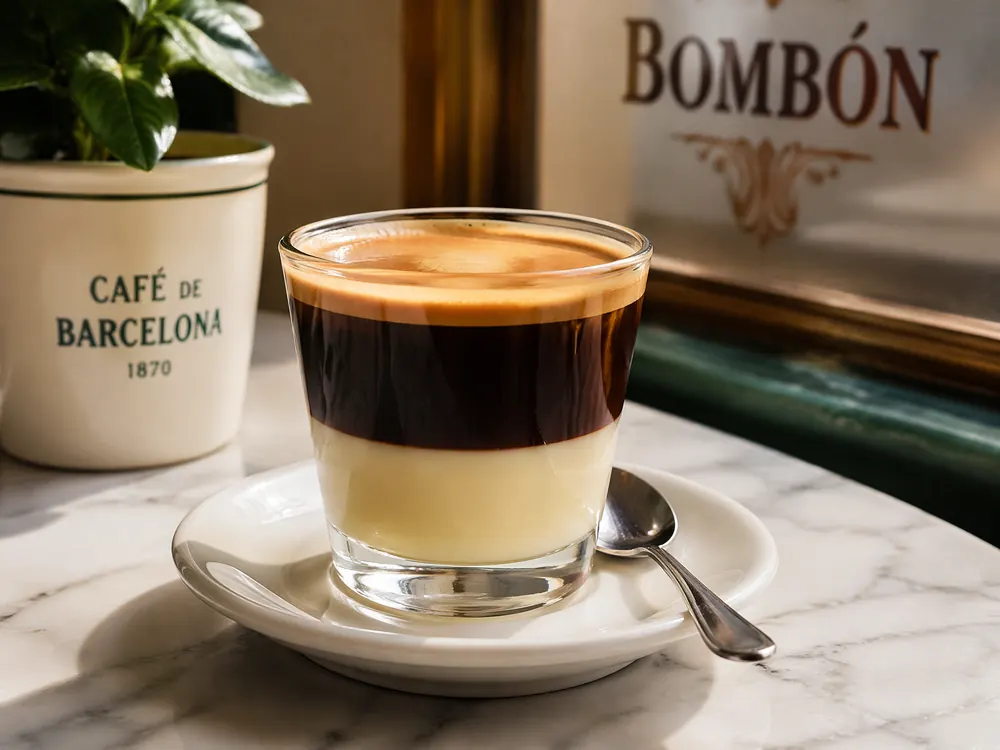
A small clear glass: half sweetened condensed milk on the bottom, espresso poured slowly over the back of a teaspoon so it floats above. Three layers visible: thick white milk, dark coffee, fine crema. You stir before drinking. More popular in Valencia and Murcia than the rest of Spain. Sweet enough that you skip dessert.
Order: Un bombón, por favor.
euroPrice: 1,30 - 1,80 EUR in 2026
Café del tiempo - Valencia's iced coffee
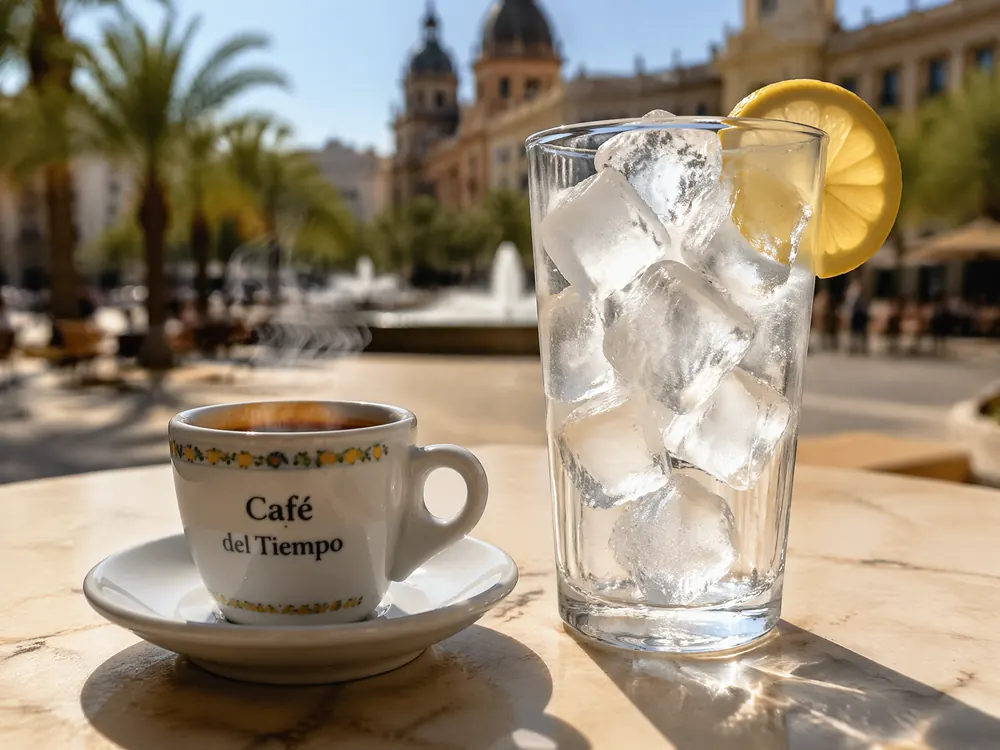
An espresso served alongside a separate glass of ice (often with a small lemon slice). You sweeten the hot espresso first, then pour it over the ice yourself. It is summer-only at most bars. The DIY pouring is part of the ritual; do not let the bartender pour it for you, that is considered cheating.
Order: Un café del tiempo, por favor.
euroPrice: 1,40 - 2,20 EUR in 2026
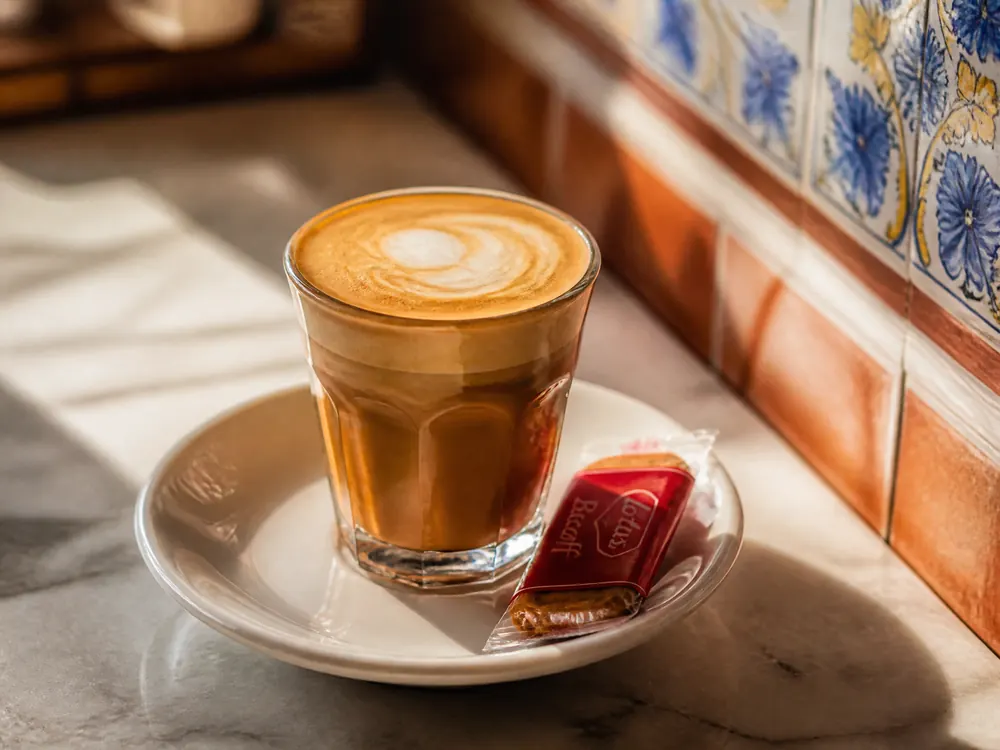
Cortado / Tallat - espresso 'cut' with milk
Espresso in a small glass or ceramic cup, topped with a splash of steamed milk that fills the cup to the rim. The Catalan and Valencian name 'tallat' means 'cut' - same drink as cortado, just the local language. The default mid-morning order for everyone who finds straight espresso too sharp. Served with a small biscuit on the saucer at most bars.
Order: Un cortado / Un tallat, por favor.
euroPrice: 1,30 - 1,80 EUR in 2026
Café manchado / Leche manchada - milk 'stained' with coffee
A glass of hot milk with two or three drops of espresso, just enough to tint it brown. Almost no caffeine. The afternoon coffee for kids, late-evening orders, and anyone past 18h who still wants the ritual without the sleep cost. 'Manchada' literally means stained.
Order: Una leche manchada, por favor.
euroPrice: 1,20 - 1,60 EUR in 2026
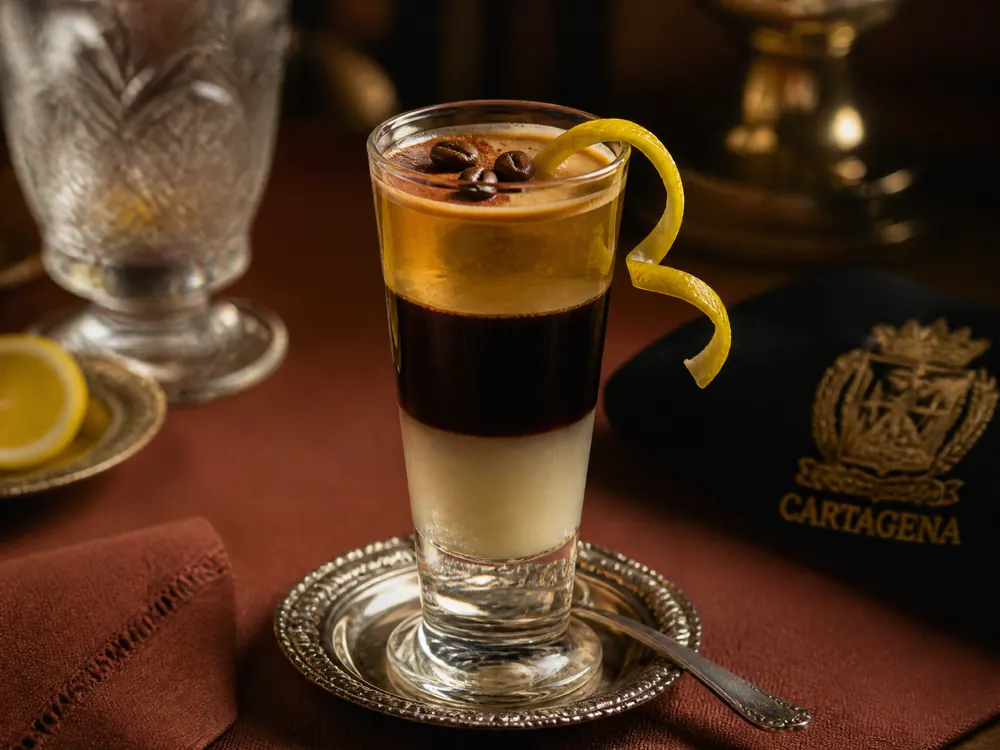
Café asiático - the strong-spirit coffee
Originally from Cartagena and adopted in Valencia: espresso layered over condensed milk, with a shot of brandy and Licor 43 (vanilla liqueur), topped with cinnamon, three coffee beans and a strip of lemon peel. Served in a special tall glass. Strong, sweet, end-of-meal. Not a daily coffee - order it once after a long lunch.
Order: Un café asiático, por favor.
euroPrice: 3,50 - 5,00 EUR in 2026
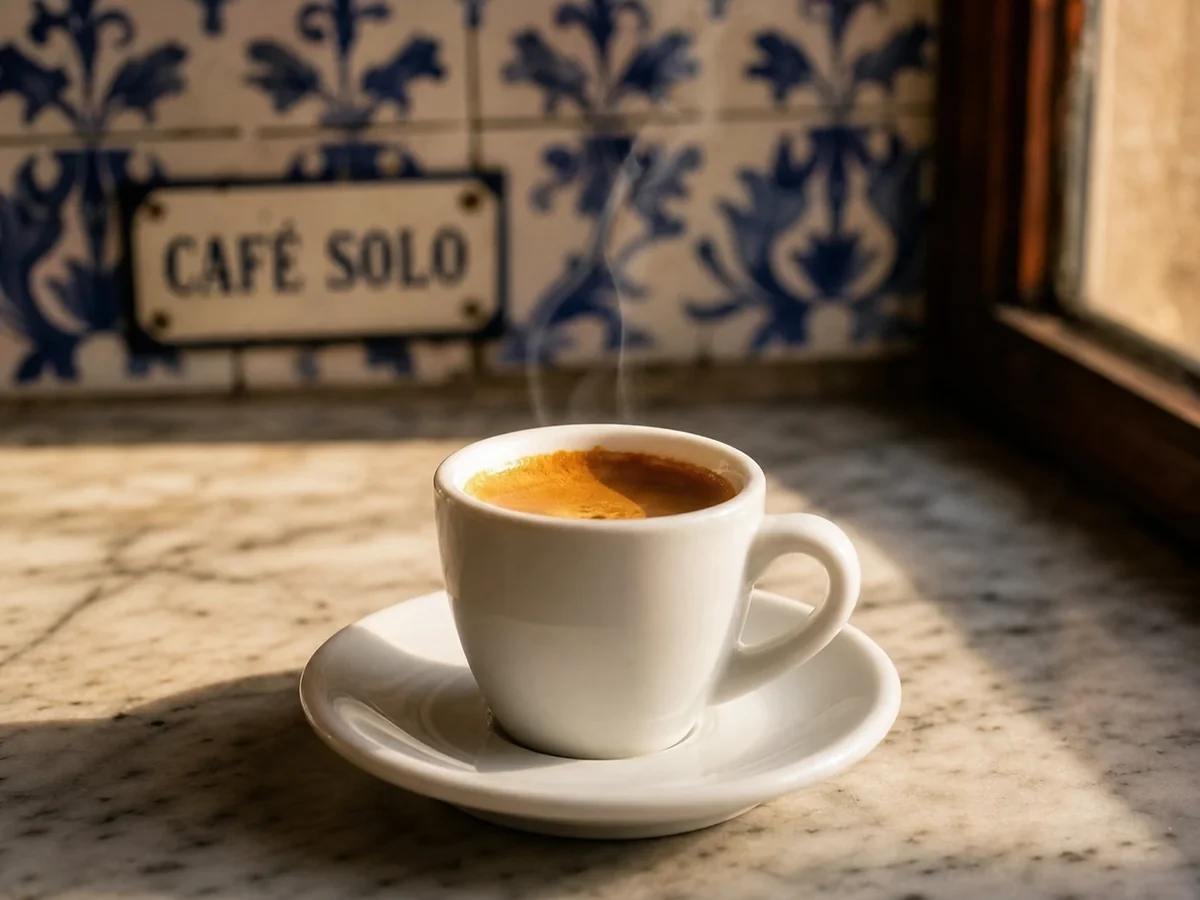
Café solo - the Spanish espresso
A small cup of strong, black espresso, the standard form of black coffee in Spain. It is pulled quickly through finely ground beans without a filter, giving a robust, often slightly bitter flavor, especially if the bar uses torrefacto beans (roasted with sugar). Served in a small cup or clear glass.
Order: Un café solo, por favor.
euroPrice: 1,10 - 1,80 EUR in 2026
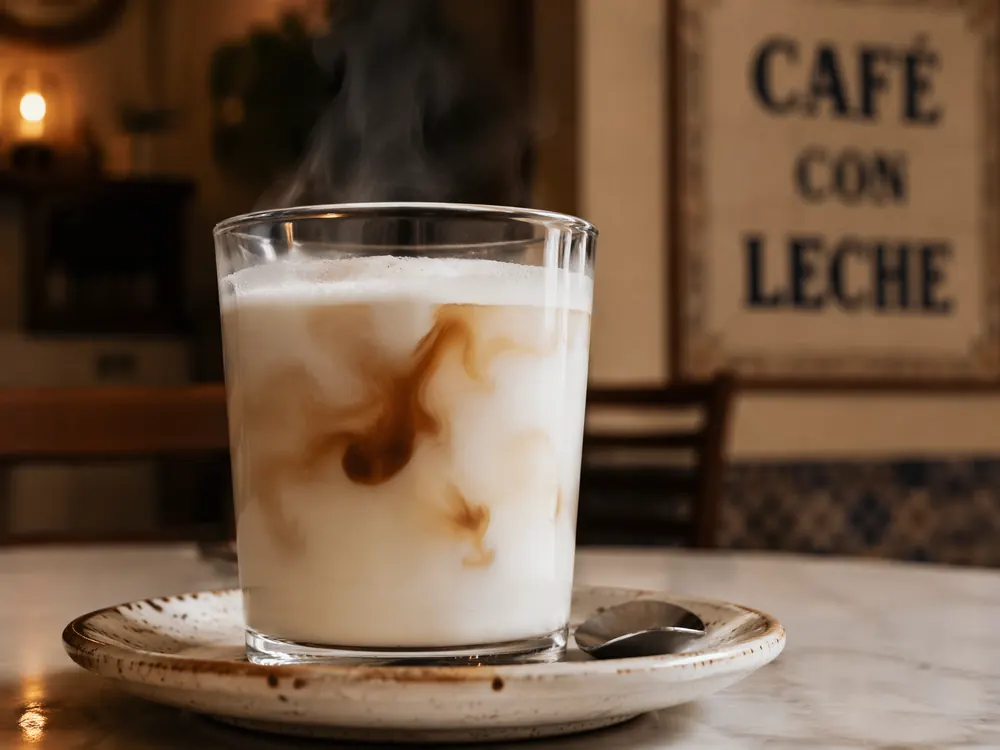
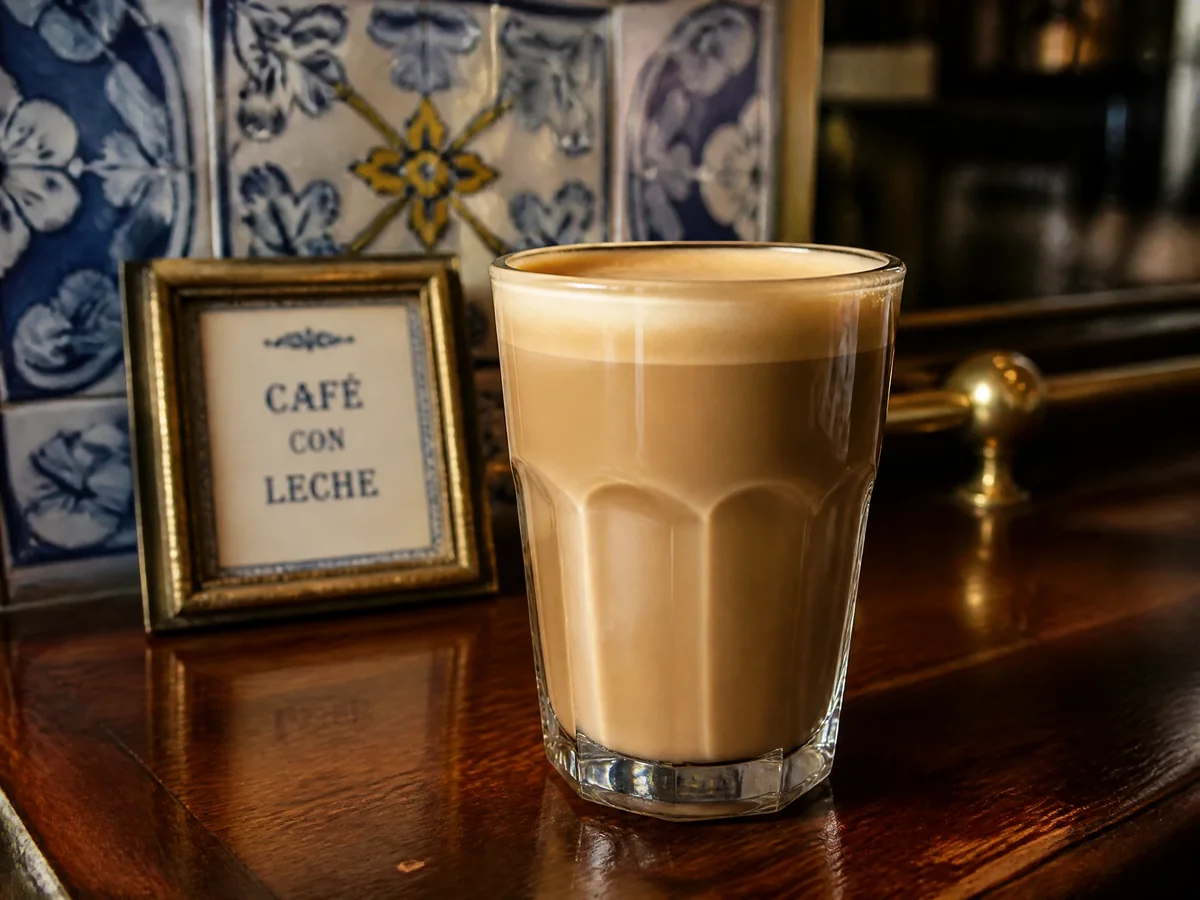
Café con leche - the morning classic
An espresso with milk, typically equal parts coffee and steamed milk. It is the most popular coffee order in Spain, especially at breakfast. Specify how you want the milk: hot (caliente), cold (fria) or lukewarm (templada). Served in a larger cup or glass than a solo or cortado.
Order: Un café con leche, por favor.
euroPrice: 1,40 - 2,20 EUR in 2026
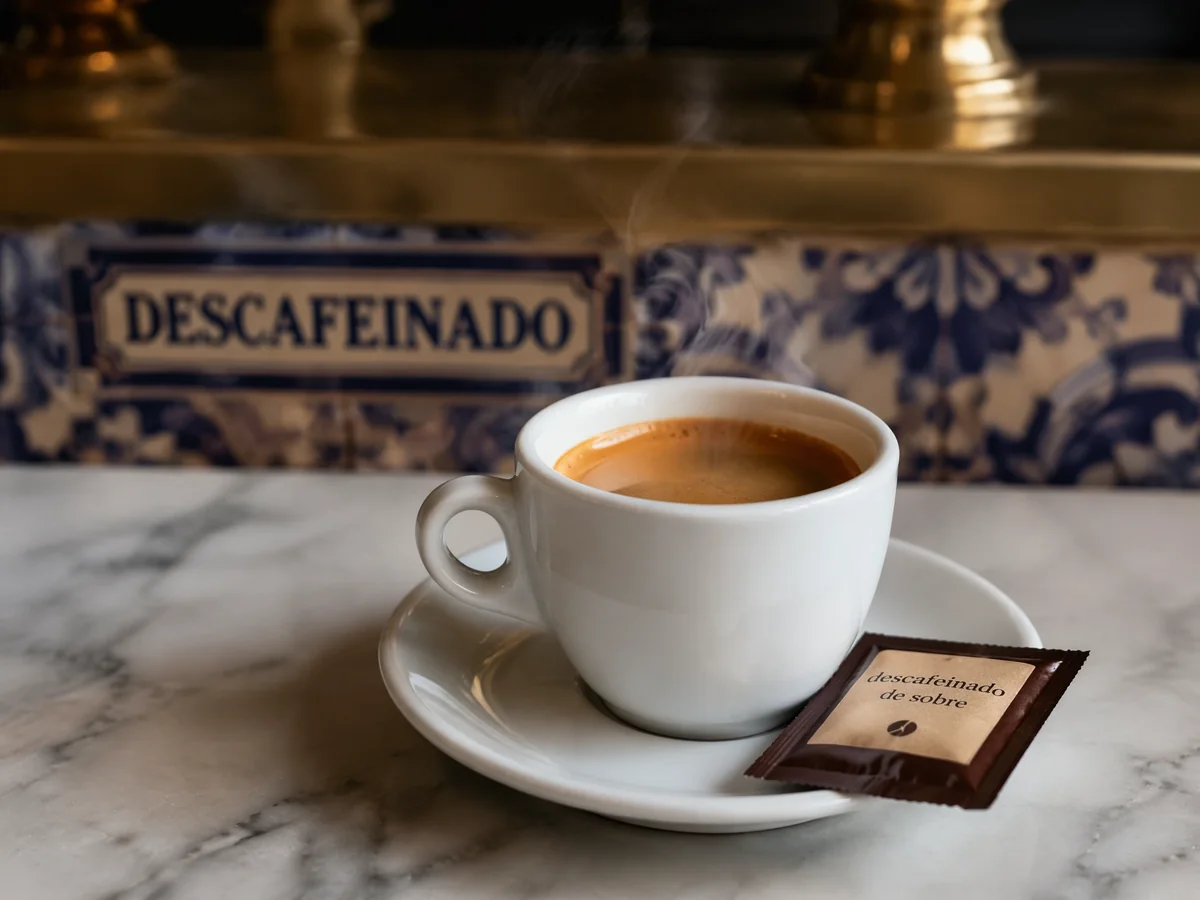
Café descafeinado - the caffeine-free option
A decaffeinated coffee, and in Spain you need to specify how you want it made. 'Descafeinado de maquina' is brewed through the espresso machine with decaf beans. 'Descafeinado de sobre' means hot water or milk arrives with a sachet of instant decaf coffee to mix yourself.
Order: Un descafeinado de máquina, por favor.
euroPrice: 1,30 - 1,80 EUR in 2026
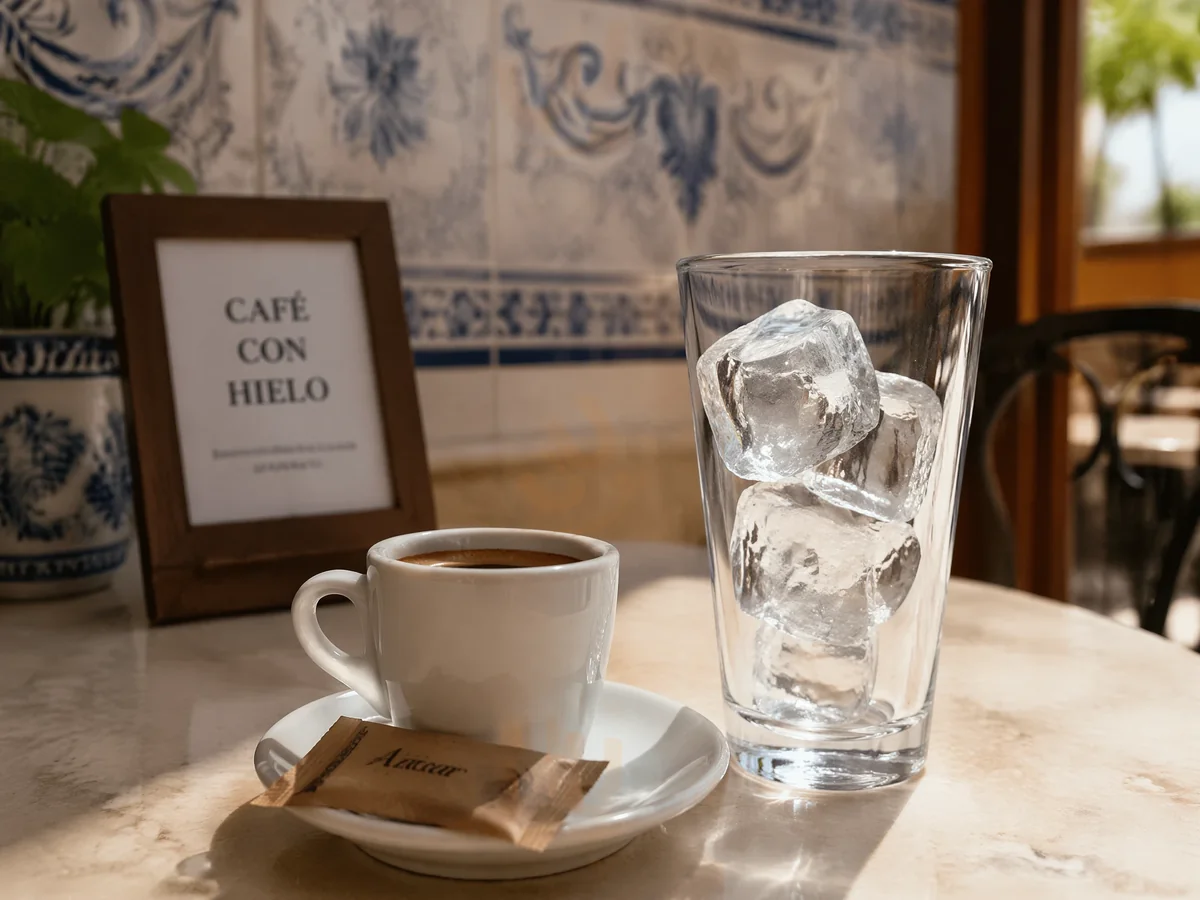
Café con hielo - the name used outside Valencia
The name used across most of Spain for exactly the drink Valencians call cafe del tiempo: an espresso served with a separate glass of ice, sweetened first and poured over the ice yourself. Valencia's lemon slice is the local touch; elsewhere it is usually skipped. Letting the bartender pour it for you is still considered poor form.
Order: Un café con hielo, por favor.
euroPrice: 1,40 - 2,20 EUR in 2026
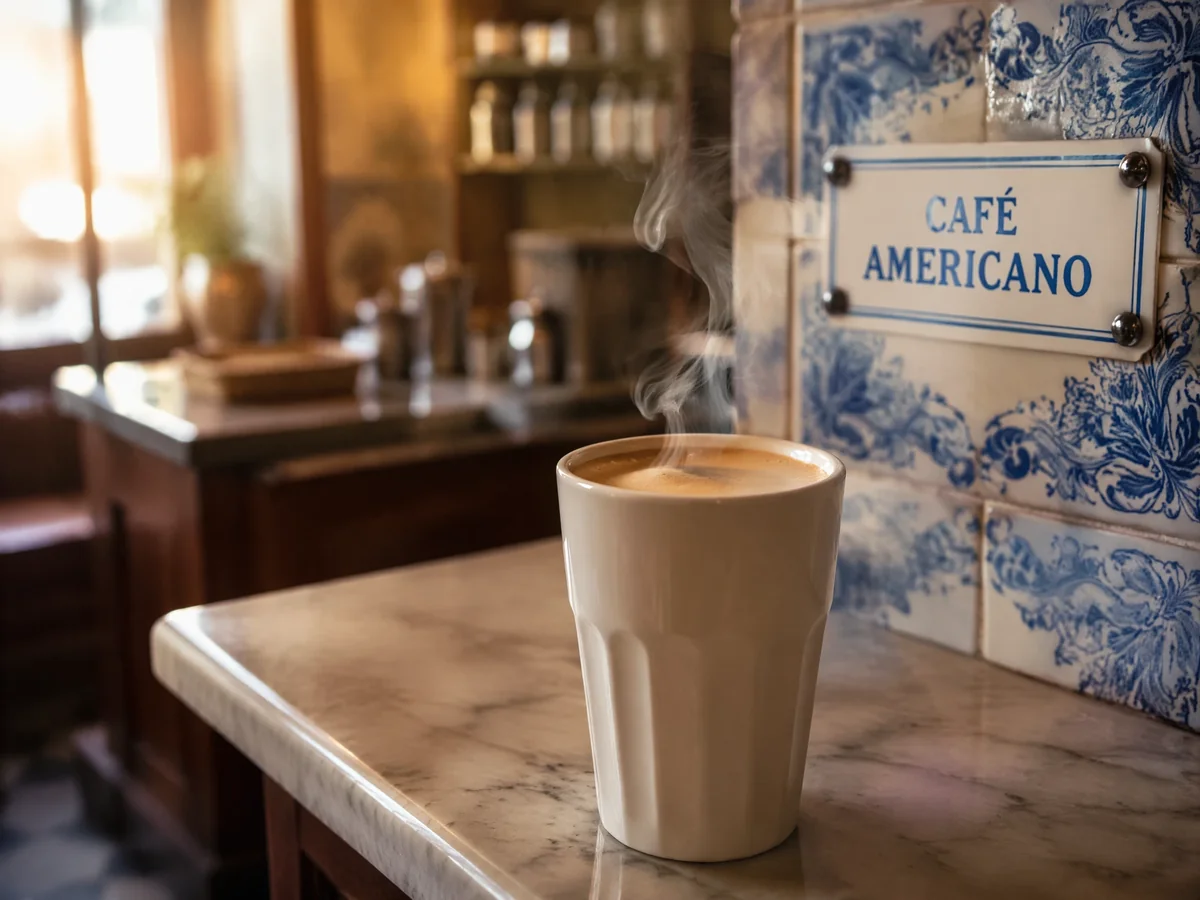
Café americano - the longer black coffee
An espresso lengthened with hot water. If a café solo feels too strong, an americano keeps the same caffeine hit with a milder flavor and a bigger glass of liquid. It is the closest thing Spanish bars offer to a standard filter coffee.
Order: Un café americano, por favor.
euroPrice: 1,20 - 1,80 EUR in 2026
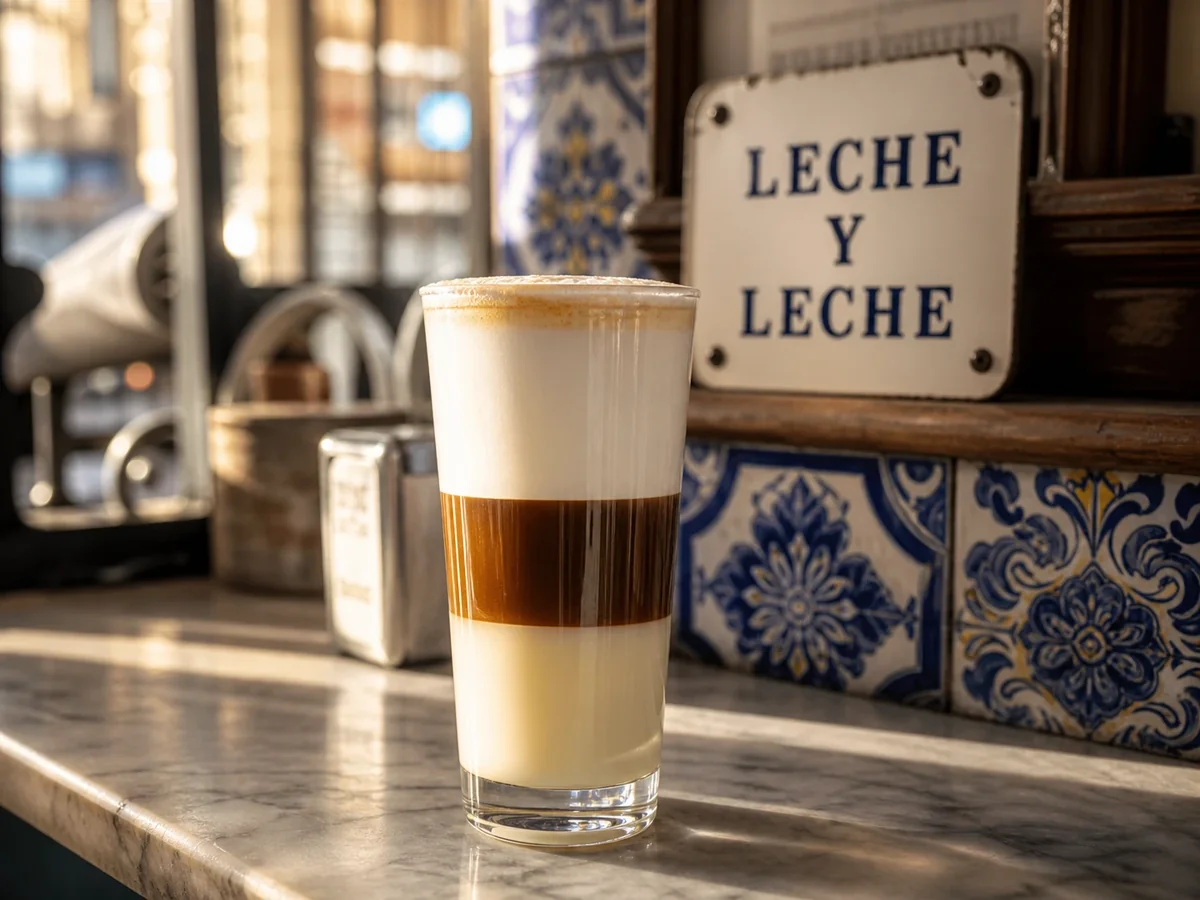
Leche y leche - the Canarian sweet treat
A specialty from the Canary Islands: an espresso with both regular steamed milk and sweetened condensed milk, hence 'milk and milk'. Condensed milk sits at the bottom, topped by espresso, then finished with hot milk and foam. Very sweet, often ordered as a dessert coffee.
Order: Un leche y leche, por favor.
euroPrice: 1,50 - 2,50 EUR in 2026
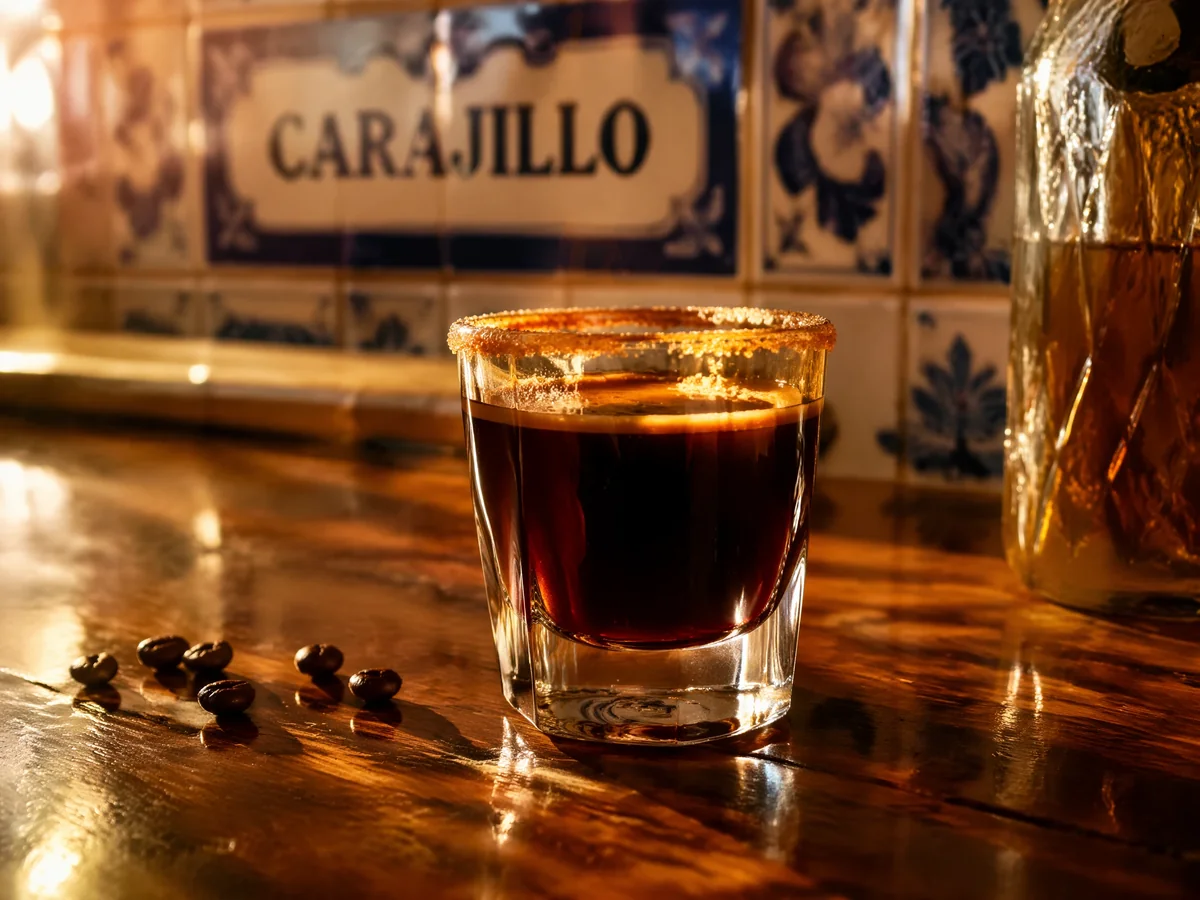
Carajillo - the classic spiked coffee
An espresso spiked with alcohol, typically brandy, rum, or sometimes anise or whisky. It originated in Barcelona but is popular across Spain. In traditional bars, the alcohol is often flambeed with sugar and coffee beans before the espresso goes in, similar to the Valencian cremaet but usually simpler.
Order: Un carajillo de ron o coñac, por favor.
euroPrice: 1,80 - 3,00 EUR in 2026
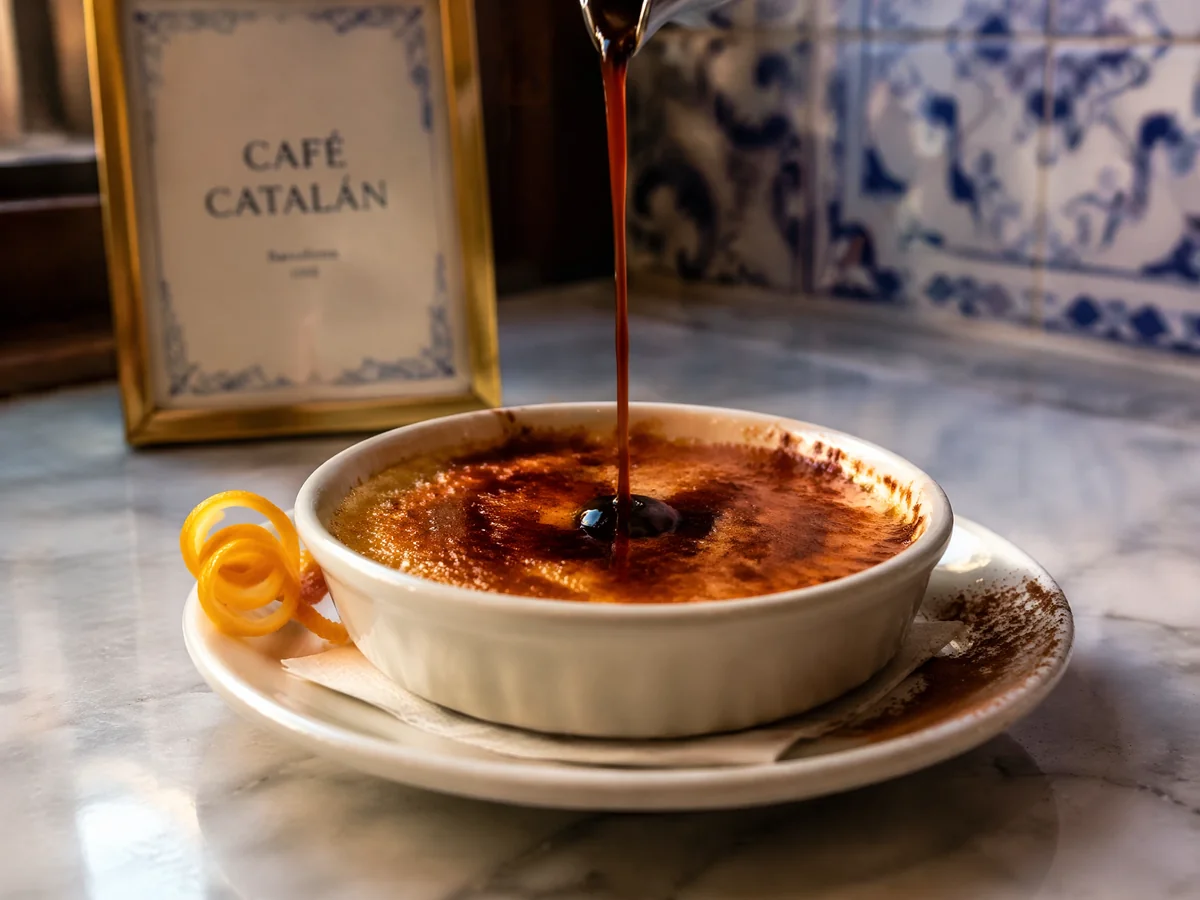
Café catalán - dessert in a cup
Originating in Barcelona, this decadent treat combines an espresso with crema catalana, the traditional Catalan custard dessert similar to creme brulee. It blends the bitterness of coffee with the sweet, creamy, citrus-cinnamon notes of the custard.
Order: Un café catalán, por favor.
euroPrice: 2,50 - 4,00 EUR in 2026
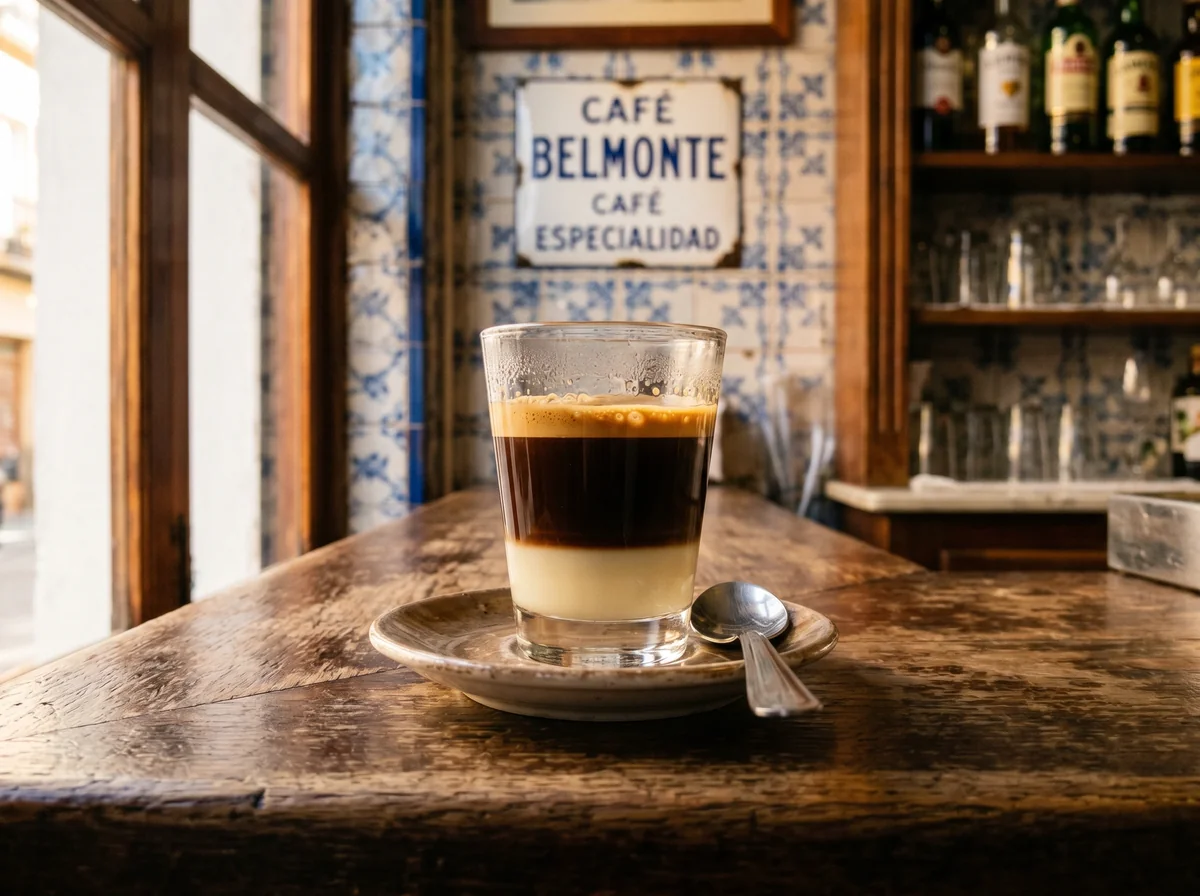
Belmonte - Murcia's brandy bombon
From the Murcia and Almería regions, the belmonte is essentially a cafe bombon, espresso and condensed milk, with a splash of brandy added. Layers of white condensed milk, dark coffee and alcohol make for a strong, sweet, warming drink. In Madrid, a similar order goes by 'carajillo bombon'.
Order: Un belmonte, por favor.
euroPrice: 1,80 - 2,80 EUR in 2026
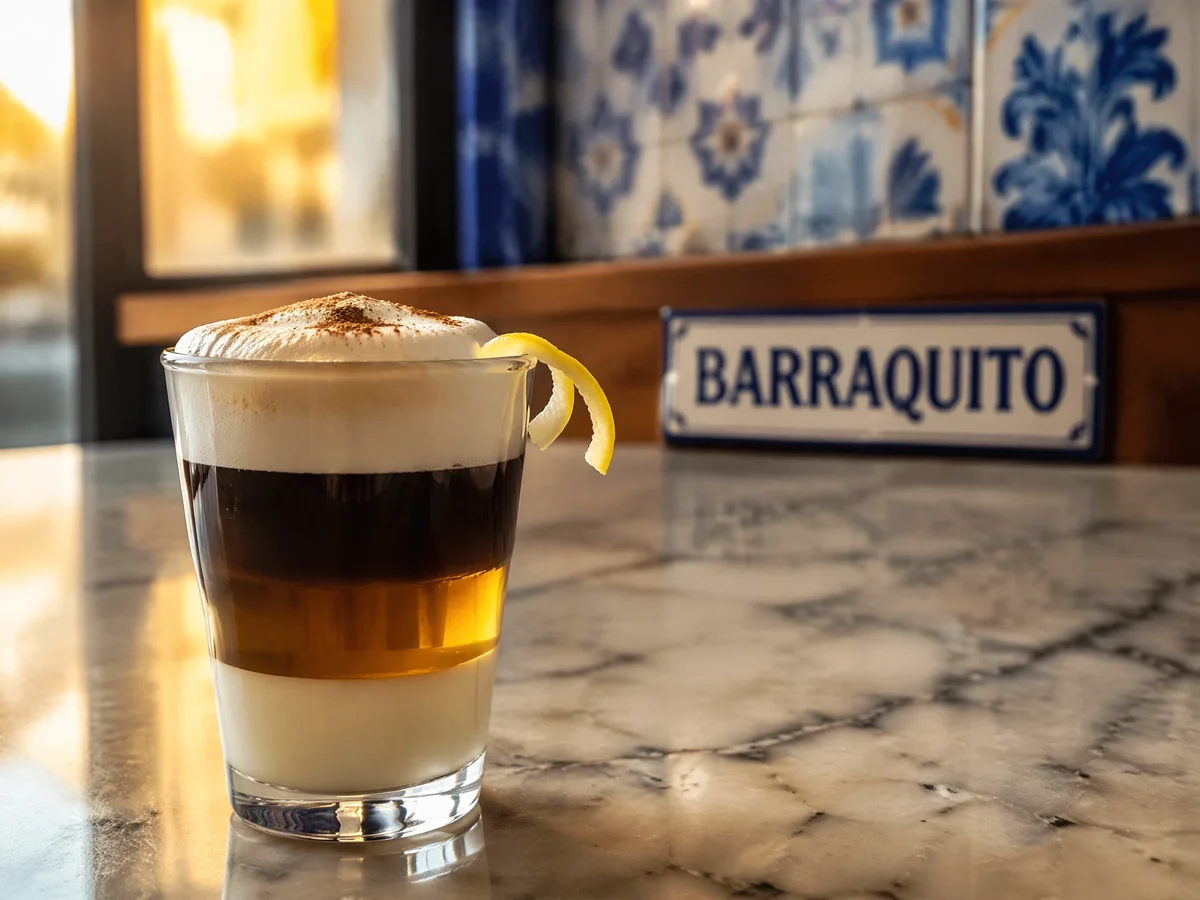
Barraquito - Tenerife's layered masterpiece
A highly visual, complex coffee from the Canary Islands. Served in a tall glass with distinct layers: sweetened condensed milk, Licor 43 (a vanilla liqueur), espresso and frothed whole milk, garnished with cinnamon powder and a twist of lemon zest. Often ordered instead of dessert.
Order: Un barraquito, por favor.
euroPrice: 2,50 - 4,50 EUR in 2026
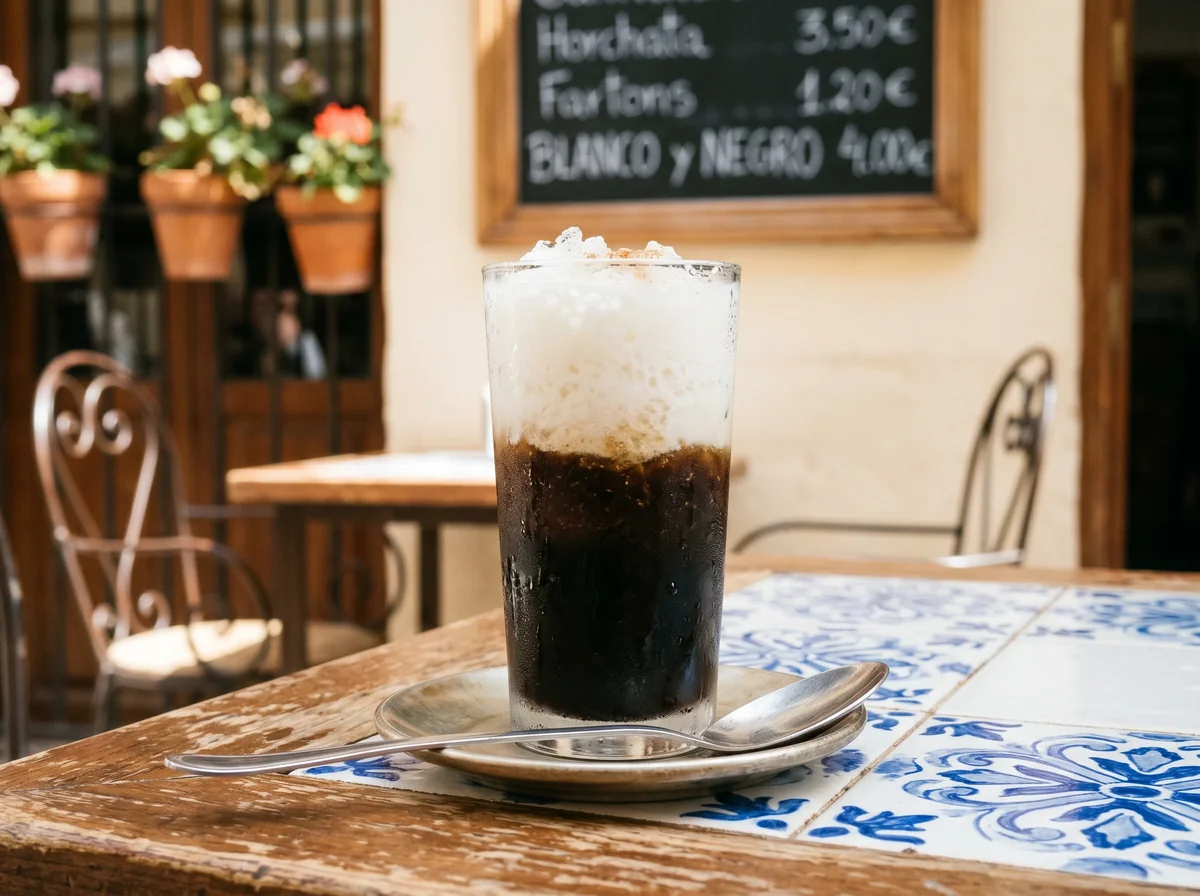
Blanco y negro - the Valencian summer contrast
A hugely popular summer drink native to the Valencian Community: coffee slush (granizado de cafe) topped with leche merengada, a sweet, half-frozen milk infused with lemon peel and cinnamon. The name, 'black and white', refers to the striking contrast between the dark coffee and the white milk.
Order: Un blanco y negro, por favor.
euroPrice: 2,50 - 4,00 EUR in 2026
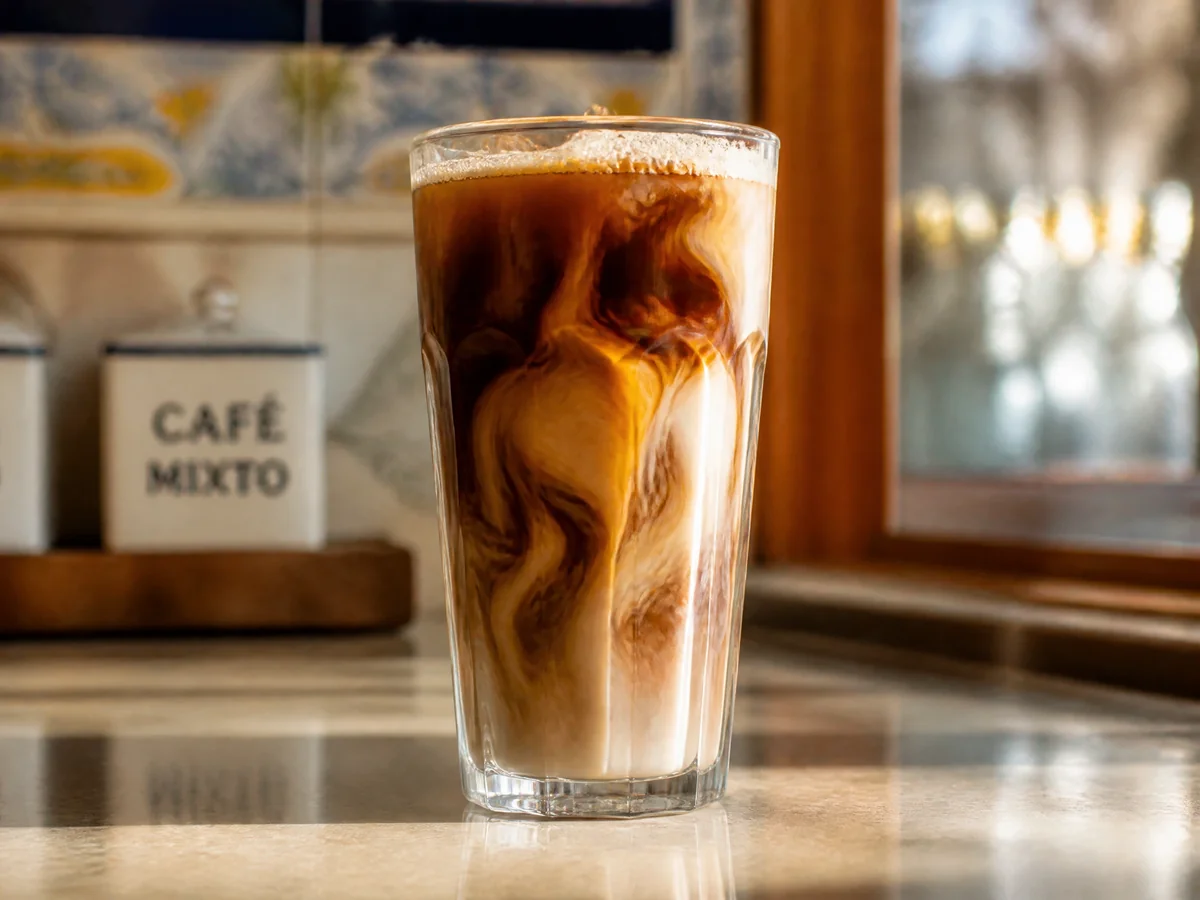
Mixto - the horchata coffee blend
Another refreshing Valencian creation: a mix of cold coffee and horchata, the local tiger-nut drink. Depending on the horchateria, it might be liquid coffee mixed with liquid horchata, or a combination of coffee slush and horchata slush, sometimes even topped with strawberry ice cream.
Order: Un mixto, por favor.
euroPrice: 3,00 - 4,50 EUR in 2026
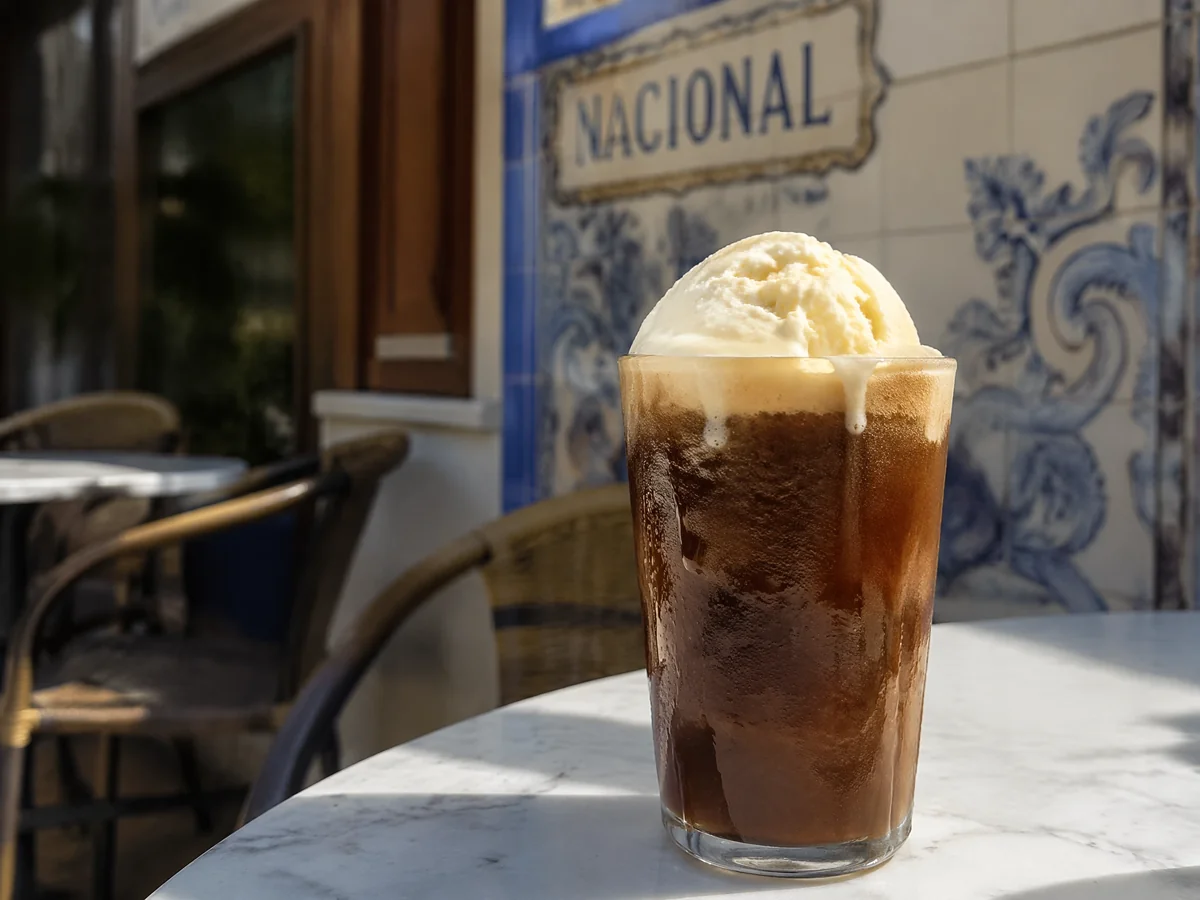
Nacional / Ruso - the vanilla coffee float
Originating in the Valencian Community and Alicante, this summer treat is essentially a coffee float: a base of coffee slush (granizado de cafe) topped with a generous scoop of vanilla ice cream. Perfect for surviving the intense August heat.
Order: Un nacional, por favor.
euroPrice: 2,50 - 4,00 EUR in 2026
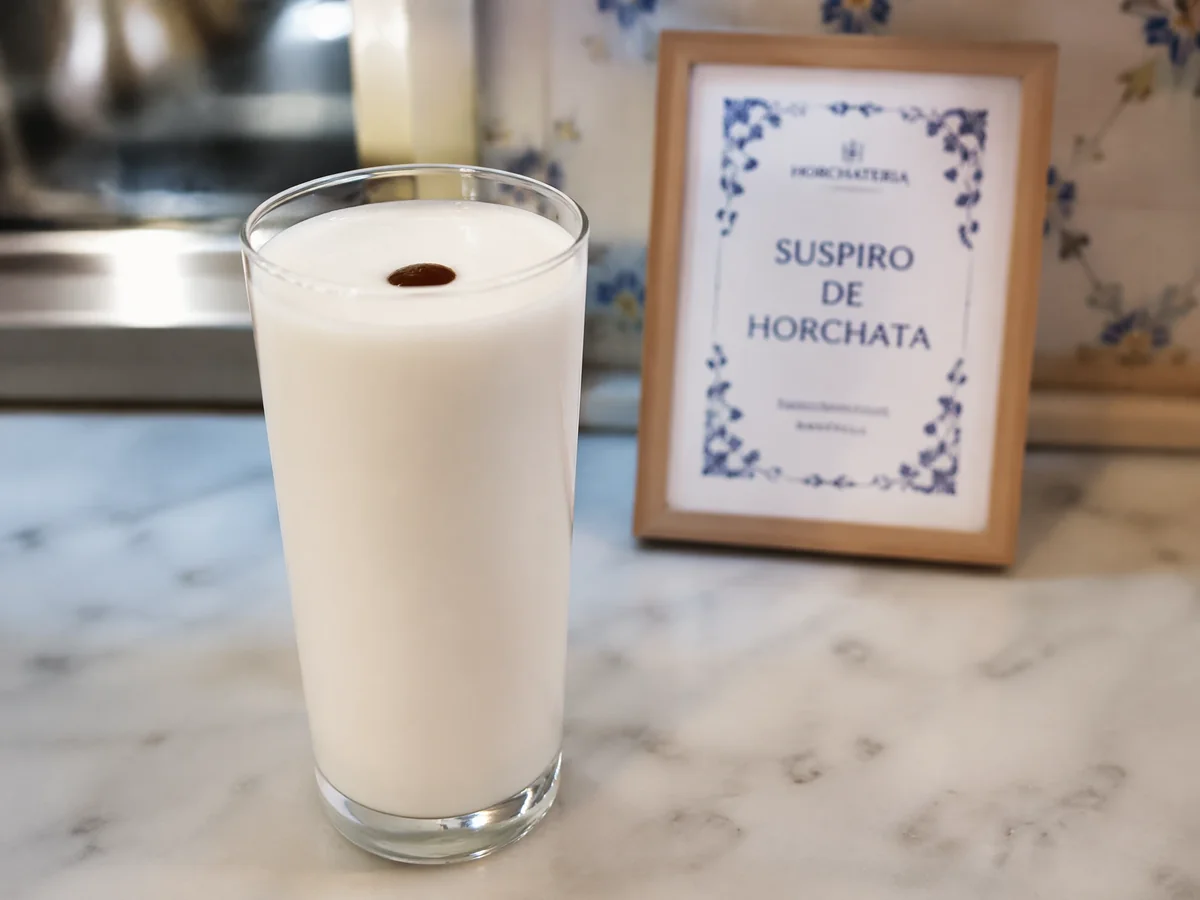
Suspiro de horchata - a breath of coffee
A subtle variation found in Valencian horchaterias: a full glass of cold horchata 'stained' with just a drop, or a sigh (suspiro), of coffee. Ideal for anyone who wants the sweet, earthy taste of horchata with only a faint hint of roasted-coffee bitterness.
Order: Un suspiro de horchata, por favor.
euroPrice: 2,50 - 4,00 EUR in 2026
Tocaet valenciano - the local spike
The Valencian take on the spiked coffee. Similar to the carajillo or the belmonte, it is an espresso 'touched' (tocado) with alcohol, usually brandy or local spirits. A simpler, everyday alternative to the more elaborate cremaet, often ordered quickly at the bar counter.
Order: Un café tocaet, por favor.
euroPrice: 1,50 - 2,50 EUR in 2026
The almuerzo plus cremaet ritual
From 9h to 11h every weekday, Valencian working-class bars fill up for esmorzaret: a half-baguette bocadillo of blanquet (white sausage), peppers, sometimes anchovies, served with olives, salted peanuts, a glass of beer or wine, and a cremaet to close. Total bill rarely above 8 EUR. Friday is the official esmorzaret day. If you want to see Valencia's actual rhythm, this is when.