
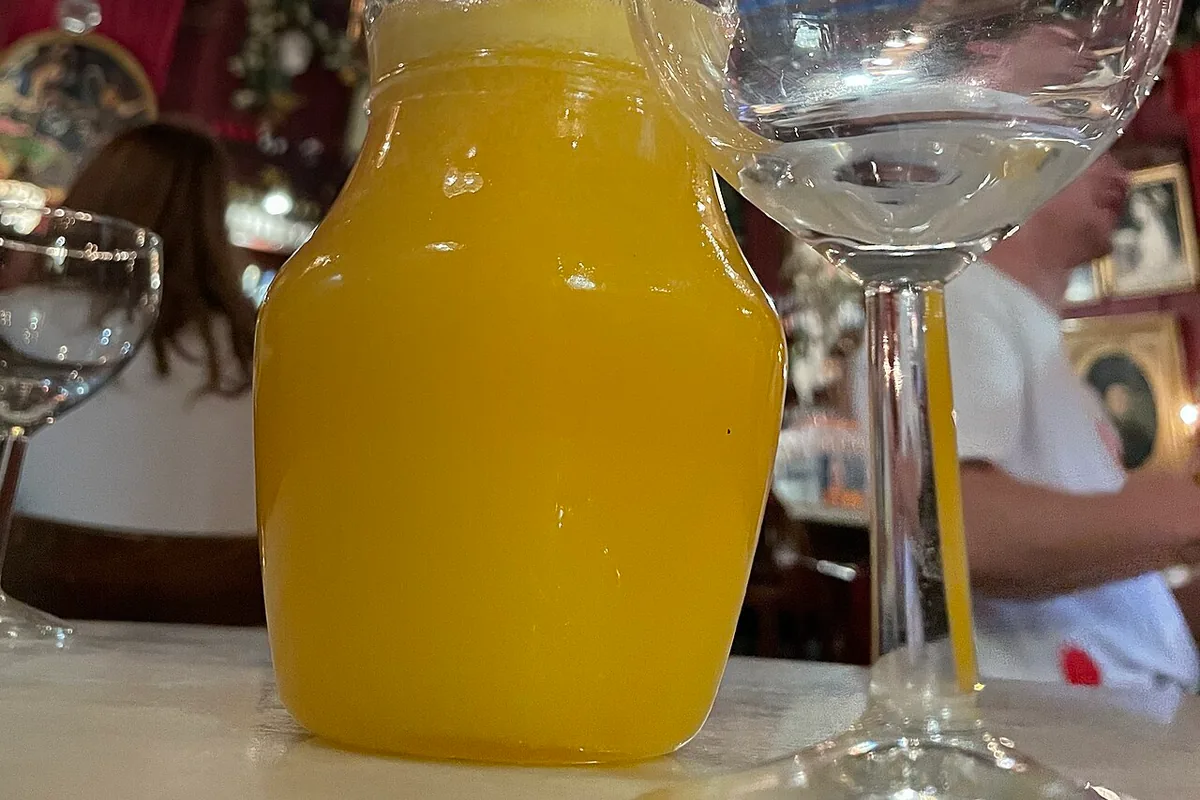
Agua de Valencia is a cava and orange-juice cocktail that tastes like breakfast and drinks like a nightcap. It arrives in a jug, it is shared, and it is stronger than the citrus lets on. Here is where it came from, how it is actually made, and how to order it.
Who Invented Agua de Valencia
The drink is credited to Constante Gil, a Galician painter who ran the Cervecería Madrid in central Valencia and first mixed it there in 1959. That original bar is not somewhere you can go for one today: it closed around 2000. Later venues have traded on the Café Madrid name, but the room where the cocktail was invented is gone.
The name has a story attached, and it is worth telling as a story rather than as history. A group of Basque regulars, so it goes, used to order the house sparkling wine as agua de Bilbao, and eventually asked Gil for something they had not had before. What he handed back, he called Agua de Valencia. The tale traces to Maria Angeles Arazo's 1978 book Valencia Noche rather than to any contemporary record, so treat it as the accepted local legend it is.
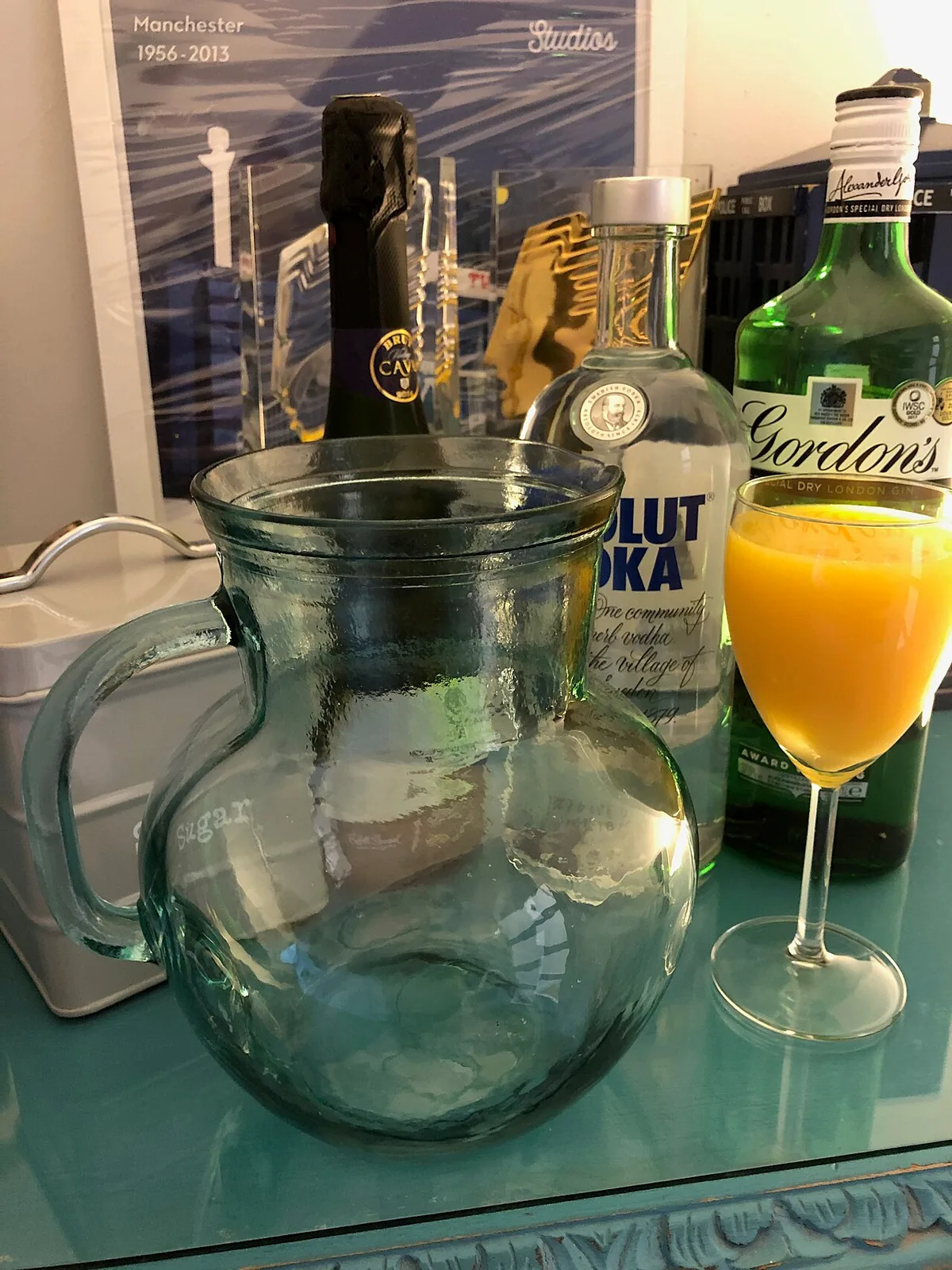
Photo: James West, CC BY-SA 2.0
The Classic Agua de Valencia Recipe
There is no protected designation and no official recipe, which is why no two bars pour the same drink. The version below is the one most Valencian bartenders would recognise, built on four ingredients and a jug.
- Squeeze the oranges fresh. Valencian oranges in season are the point of the drink, and bottled juice is the single change that most obviously ruins it.
- Pour roughly equal parts cava and orange juice into a chilled jug. Brut or brut nature keeps it from turning sweet.
- Add a shot each of gin and vodka per jug, adjusting to taste. Some bars use only gin, some only vodka, and both are defensible.
- Sweeten lightly with sugar or syrup if the oranges are sharp, stir gently to keep the bubbles, and serve over ice.
Proportions are where the argument lives. Bars that want you to order a second jug go heavier on the juice; bars that want you to remember the evening go heavier on the cava. Neither is wrong, because there is no standard to be wrong against.
What You Will Actually Be Handed
Because there is no fixed recipe, quality is all over the place. A good bar squeezes the oranges to order and uses a real cava, brut or brut nature, so the drink is sharp rather than sweet. A bad one pours from a jug that has been sitting pre-mixed on the bar, made with industrial juice, cheap sparkling wine and enough sugar to hide both. That second version is flat, cloying and the one most tourist places serve.
There is no standard strength either. Depending on how heavy the pour is, a glass runs somewhere between 10 and 15 percent alcohol, which is wine territory, and it is exactly the number the orange juice hides. Cocktail bars now do de autor versions with better spirits and a lighter hand on the sugar; a handful even do an alcohol-free one, though you will not find that on an ordinary menu.
How to Order It in Valencia
A few things save you from the tourist version, which is usually the one poured from a pre-mixed bottle in a bar with photographs on the menu.
- Order a jug, not a glass. Una jarra () is the unit, meant to be shared by two or more; a single glass is possible but it is not how the drink is served.
- Ask whether the juice is freshly squeezed, zumo natural (). If the answer is vague, order something else.
- Skip the places on the main tourist squares that advertise it on a pavement board. The good versions are in ordinary bars in Ruzafa, El Carmen and Cabanyal.
- Oranges are at their best from late autumn through spring, which is also when the drink is at its best.
When Valencians Actually Drink It
Timing matters more than tourists realise. Valencians treat this as a drink for el tardeo (), the long slide from late afternoon into evening, or as a celebratory starter - not something to have with dinner, because it is too sweet and too strong for that. It comes into its own in terrace season and during Fallas, when jugs appear on tables across the city.
It also suits the sobremesa (), the Spanish habit of staying at the table long after the food is gone, because a shared jug is built for exactly that unhurried pace. Order it early, drink it slowly, and let it start the evening rather than be the whole of it.
A Word on the Strength
This is the part visitors get wrong. Agua de Valencia is sparkling wine plus two spirits, and it tastes overwhelmingly of orange juice, so it goes down much faster than its alcohol content deserves. A jug shared between two people is a genuinely heavy night. Treat it as the wine-plus-spirits drink it is rather than as juice with a twist.

Not that kind of water
Confusingly, agua de valencia the drink has nothing to do with the water that comes out of your Valencia tap. If reading about a cocktail called "water" has you actually wondering about your own tap water, our partner AQUANYUM installs reverse osmosis, filtration and descaling systems across the city.
Get a water filtration quote
About the author
Michael Bastin
Founder, ValenciaMove - Valencia since 2016
Michael moved to Valencia in 2016 and has helped dozens of families relocate since. He writes every guide on this site personally and verifies every fact against Spanish government sources before publishing.
Buy Michael a coffeeNeed help with your move?
Contact us. We handle visa, admin, and housing so you can focus on the exciting part.