
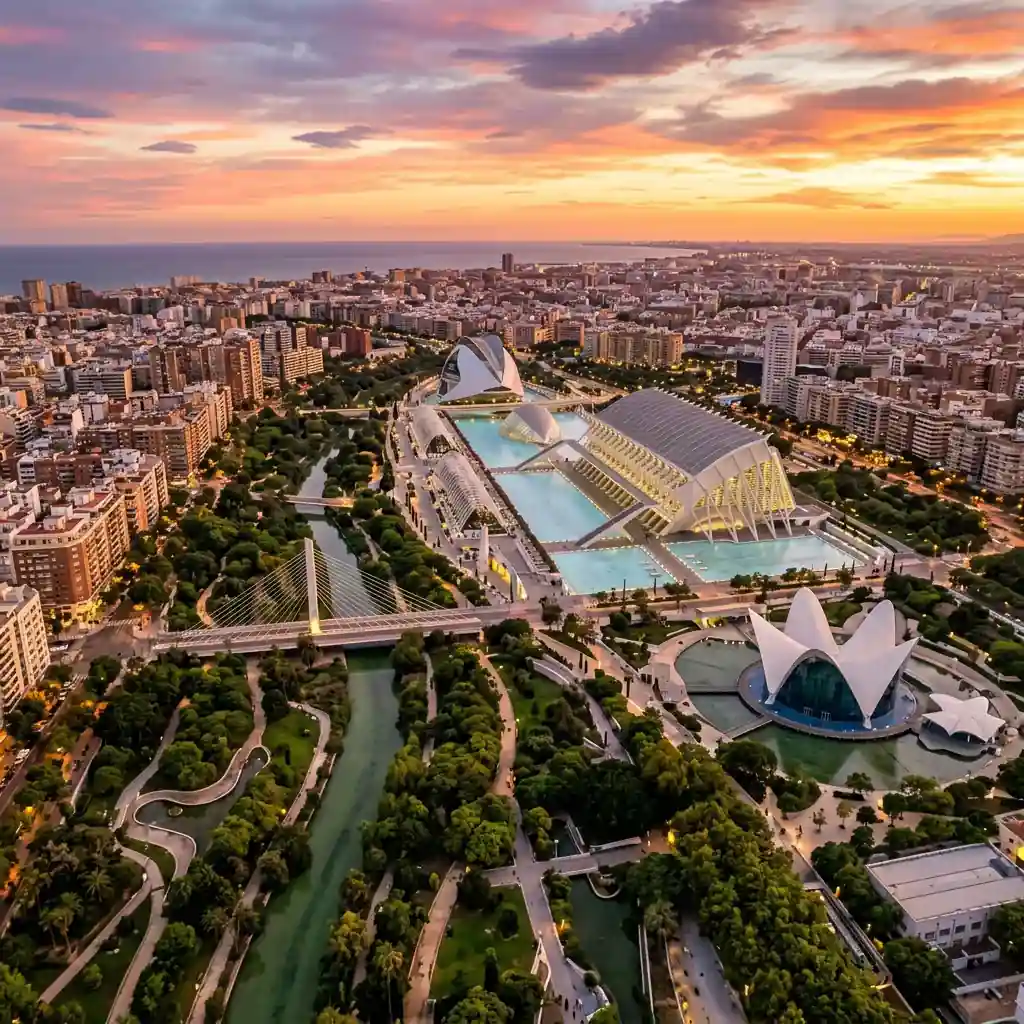
Photo: Diego Delso, CC BY-SA 3.0
Building permits in Valencia: Obra Menor vs Obra Mayor
The category your work falls into decides whether you can start tomorrow or wait months. Here is where the line sits, what you file, and what the city charges.
Almost every ordinary reforma in Valencia now begins with a form you file yourself, not a permit you queue for.
Spanish planning law splits building work into two families. Obra menor is work that leaves the structure, the facade, the exterior appearance and the legal use of the property alone. Obra mayor is everything that does not, and it needs a technical project signed by a competent technician before the town hall will even open the file.
What has changed in Valencia is the procedure rather than the split. Most obra menor is no longer a licence granted in advance. It is filed as a declaración responsable through the Ayuntamiento's sede electronica: you declare that the work complies, you pay the fees, and you can start immediately, subject to inspection afterwards.
That is faster and riskier at once. Filing the wrong category does not merely risk a fine, it can force you to undo finished work, and the declaration carries your name rather than your builder's. Choosing the category and choosing the builder are really one decision.
Which route does your work take?
Work down this list until you hit the first item that describes your project. That is your category, and the whole job takes it, not just the offending part.
Painting, tiling, replacing fittings
Cosmetic work that changes nothing structural, nothing visible from outside and no service routing sits in the lightest regime. Filed online, startable straight away, checked afterwards if at all.
New kitchen or bathroom, same layout
Stripping out and replacing a kitchen or bathroom without moving walls is textbook obra menor. New wiring and pipework inside your own flat stays in this bracket as long as the layout of the dwelling is unchanged.
Moving non-load-bearing partitions
Redistributing rooms by removing tabiques that carry no load is usually still obra menor, but it is the boundary. If one of those walls turns out to be load-bearing, the entire job reclassifies mid-build.
Touching a load-bearing wall, beam or slab
Any intervention in the structure is obra mayor. A project has to be drawn and signed by an architect or technical architect, and the licence is granted before work starts rather than checked after.
Anything visible from the street
Facade work, window changes that alter the opening or the appearance, enclosing a balcony and roof interventions all touch the building's exterior configuration. They are major works, and they usually need the comunidad too.
Changing what the property legally is
Converting a local comercial into a dwelling, splitting one flat into two, or merging two into one changes use or configuration. That is obra mayor, and in a divided building it also needs a community vote.
Obra menor and the declaración responsable
A declaración responsable inverts the old order. Instead of asking permission and waiting, you state on the record that the work you intend to do complies with the rules, that you hold the documentation to prove it, and that you will keep holding it. You pay, you file, and the clock on the work starts the same day.
The filing is done through the Ayuntamiento de Valencia's sede electronica. In practice it wants a description of the works, a budget for them, the address and cadastral reference, and, depending on scope, a simple technical memoria. Some categories also want the builder identified.
The control does not disappear, it just moves. The city can inspect afterwards, and if the works turn out to exceed what was declared, the consequence is not a polite request to file again. It can be a suspension order, a fine, and an obligation to restore the property to its previous state at your cost.
This is why the honest description matters more than the fast one. If your builder tells you a wall is not load-bearing, that opinion should be on paper from somebody qualified to give it, before the declaration goes in.
Obra mayor: the project, the technician and the wait
Obra mayor is not a bigger version of the same form. It requires a proyecto tecnico, drawn and signed by a competent technician and stamped by their professional college, describing exactly what is being built and demonstrating that it complies with the building code and the local planning rules.
That technician is not an optional extra you can economise on. They carry professional liability for what they sign, they direct the works on site, and for structural interventions their certificate is what closes the file at the end. Budget for their fees as a real line item, not a rounding error.
Then the town hall reviews the file. Reported processing for a licencia de obra mayor in Valencia typically runs from around one month for a straightforward case to six months where the file needs corrections, sits in a protected area, or touches a listed building. Ciutat Vella and the protected parts of El Carmen are noticeably slower for exactly that reason.
Nothing starts until it is granted. Beginning structural work on the assumption that the licence will arrive is the single most expensive mistake in this whole area, because the remedy the city has is to stop the site.
What the permit itself costs
Two separate charges land on a reform. The first is the ICIO, the Impuesto sobre Construcciones, Instalaciones y Obras, a municipal tax on the real cost of the works. Valencia sets it at four percent of the declared budget, which is the maximum any Spanish municipality is allowed to charge under the state law that governs local finance.
The second is the tasa urbanistica, the fee for processing the file itself. It is self-assessed and paid when you submit the declaration or the licence application, and it varies by procedure rather than being a flat number, so check the current fiscal ordinance on the city's own site rather than relying on a figure from a forum.
Both are calculated off the budget you declare, which creates an obvious temptation and an obvious trap. Under-declaring the budget to shave the ICIO is the kind of thing that surfaces later, when the final cost is documented on invoices you needed for something else entirely.
Worth knowing
The four percent ICIO is charged on the works budget, not on the property value, and it is separate from the IVA your builder charges you. Two different taxes, two different bases, both real.
How long each route really takes
A declaración responsable is effectively immediate. You file, you pay, and you can start. The practical delay is assembling the documentation rather than waiting on the administration.
Where a classic licencia de obra menor is still required rather than a declaration, the reported turnaround sits in the range of a few weeks to around a month and a half. Obra mayor is the slow one, and the range published by people who file them routinely runs from about one month to six.
Add to that the time your comunidad needs if the work touches shared elements, which is its own process on its own calendar. Communities meet on a schedule, and an ordinary junta that has just happened may not meet again for a long time.
The planning lesson is simple. Start the permit and the community conversation at the same time as you start collecting quotes, not after you have chosen a builder and promised them a start date.
The four ways this goes wrong
Trusting a verbal opinion on a load-bearing wall
A builder saying a wall can come out is not a structural assessment. If the wall is carrying load, the works are obra mayor, your declaration was false, and both the fine and the remedial cost are yours.
Letting the builder file in their own name
The declaration is a statement by the property owner. If somebody else files it loosely on your behalf, you still carry the consequences and you may not even hold a copy of what was declared.
Splitting one job into several small filings
Breaking a gut renovation into a series of minor declarations to avoid a project is a well-known pattern and the administration knows it too. Assessed together, it is one obra mayor filed dishonestly.
Forgetting the building is protected
Large parts of Ciutat Vella carry heritage protection that reaches inside the flat, not just the facade. Ceilings, tiling and original beams can all be protected elements, and the rules there are not the general rules.
What to do, in order
- 1
Get the structure assessed in writing
Before anything else, have a technician confirm which walls are load-bearing and what condition the installations are in. Everything downstream depends on that answer.
- 2
Fix the scope and price it
The declared budget drives the ICIO and the fee, so the scope has to be settled before you file. A moving scope means a filing that no longer describes the work.
- 3
File through the sede electronica
Submit the declaración responsable or the licence application through the Ayuntamiento's electronic office, pay the self-assessed fee and the ICIO, and keep the receipt with the file.
- 4
Keep the paperwork for the sale
The filing, the technician's certificates and the final invoices are what prove the work was legal when you eventually sell. A buyer's lawyer will ask, and an undocumented reform is a price negotiation you will lose.
Where these rules come from
The obra menor and obra mayor split is a matter of Spanish and Valencian planning law, and the shift toward declaración responsable for minor works is part of a wider administrative simplification that has been running across Spanish municipalities for years.
The ICIO is a state-authorised municipal tax. The law on local finances caps it at four percent, and Valencia charges the cap, having raised it from three percent in a recent fiscal ordinance.
Procedures, forms and fees are published by the Ayuntamiento de Valencia on its own electronic office. Because ordinances are revised, the figures here are a planning reference and the city's published version at the time you file is the one that binds you.
Official sources

Resident in Valencia since 2016. Founder of BeTranslated. 25+ years in translation, interpretation and multilingual SEO.
Reviewed 6 August 2026 by Michael Bastin