
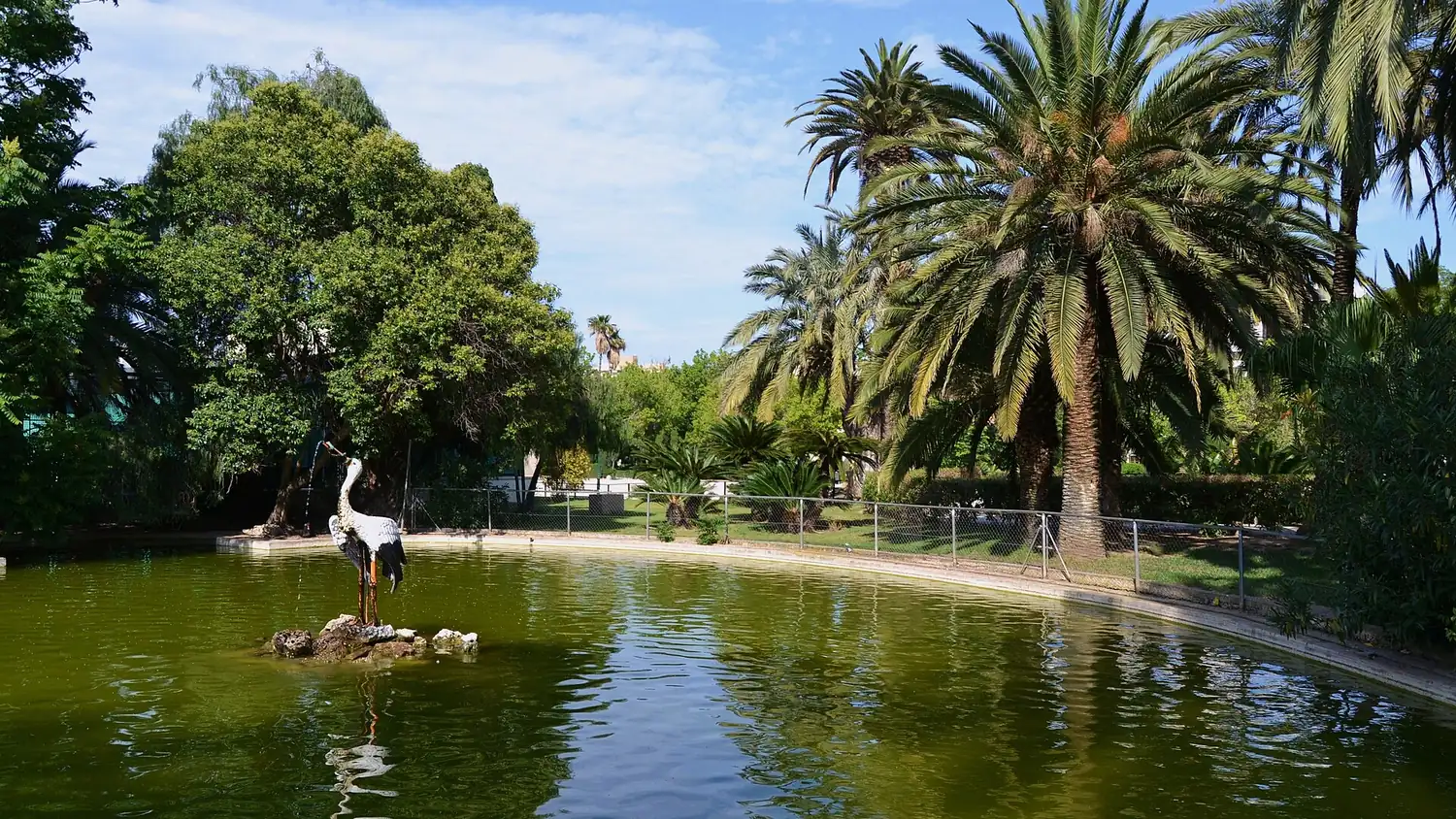
Valencia is an easy city to be outdoors in, and not only because of the weather. The green space here is spread out rather than piled into one showpiece park, so ask three residents where they go to sit down and you will get three different answers depending on which barrio they live in.
This is the map of all of it. Seven places, what each one is actually for, what it costs, when the gates open, and which one you can walk to from where you live.
The riverbed: the spine everything else hangs off
Start with the obvious one. The Jardí del Túria () runs about nine kilometres through the middle of the city, from Parque de Cabecera in the west to the City of Arts and Sciences in the east.
It matters to this guide mostly as geography: because the old river curls around the historic centre, half the gardens below sit within a few minutes of it, and the riverbed is how you get between them without touching traffic. For the 1957 flood, Gulliver, the eighteen bridges and how to ride the full nine kilometres, read the Turia Gardens guide. Everything from here on is what the riverbed does not cover.
Jardines del Real, or Viveros: the grand free one
The Jardines del Real (), which nobody in Valencia actually calls that, sit just north of the riverbed on Carrer de Sant Pius V. Everyone says Viveros. They cover around 170,000 square metres and hold 2,769 trees across 167 botanical species, which makes them the biggest and by some distance the most varied of the city's enclosed gardens.
Entry is free. The gates open at 7:30 and close at 20:30 from November to March, 21:30 from April to October, so a summer evening here runs long. Viveros is also the city's outdoor concert venue: the stage at the north end carries a chunk of the Gran Fira de València programme every July. If you live in Pla del Real or Exposició, this is simply your park.
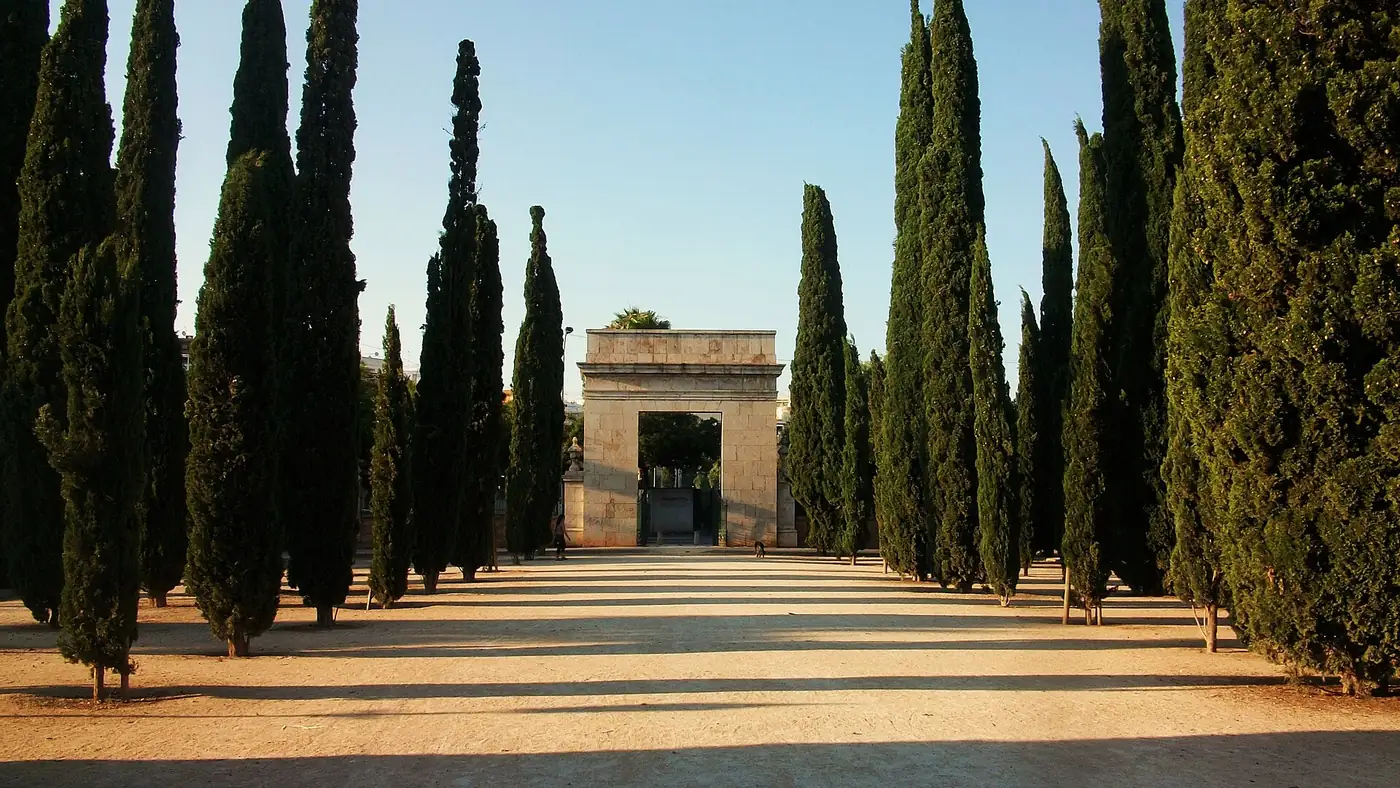
Photo: Joanbanjo, CC BY-SA 3.0
Jardines de Monforte: the walled one people get married in
Monforte is small, about 12,600 square metres, and it is the most photographed garden in the city for a reason. Clipped box parterres, 33 marble statues, a lily pond, notable magnolia and ginkgo specimens, and 1970s tower blocks looming over the wall behind all of it.
It was laid out in the 1850s around a palacete finished in 1859, declared a National Artistic Garden in 1941, and is the last surviving 19th-century historic garden in Valencia. Entry is free. It opens at 10:00 and closes at 20:00 from March to October, 18:00 from November to February. The palacete is licensed for civil ceremonies, so on a Saturday you may find part of it roped off for a wedding.
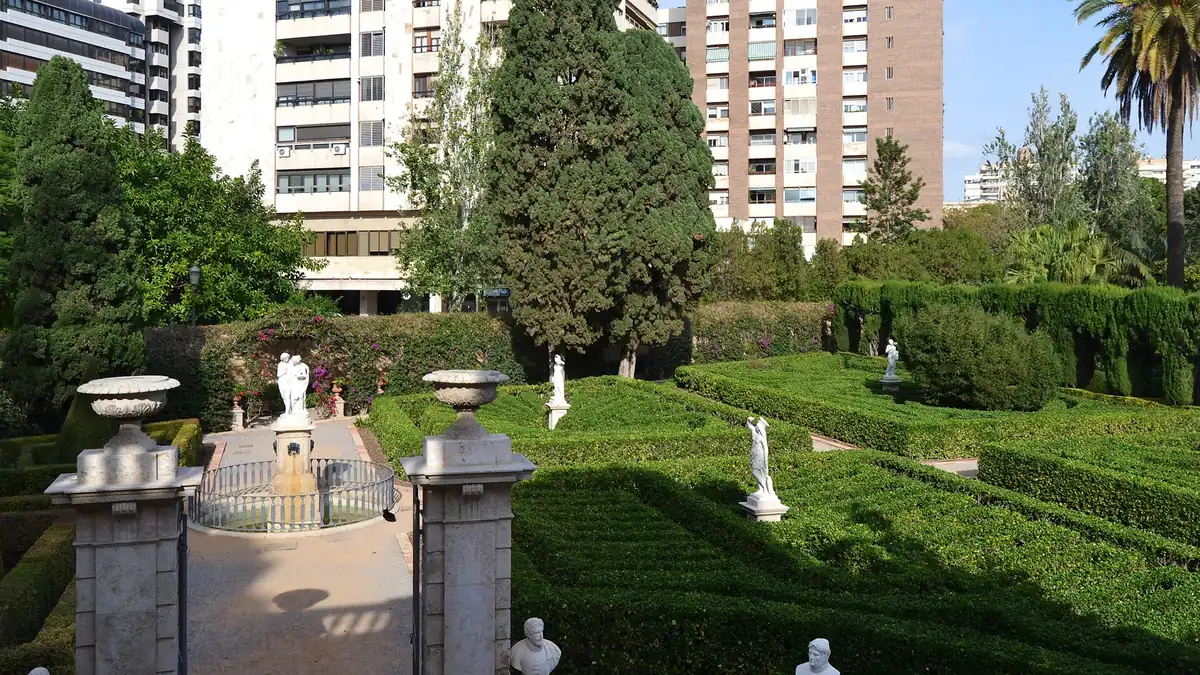
Photo: Joanbanjo, CC BY-SA 4.0
Jardí Botànic de la Universitat: the one with a ticket
The university's botanical garden on Carrer de Quart is the only garden on this list you pay to enter, and the only one that is a working scientific collection rather than a public park. The university moved it to this site, the old Hort de Tramoieres outside the city walls, in 1802.
General admission is 4 euros and the reduced rate is 1.70 euros. It opens at 10:00 every day and closes with the light: 18:00 in January, February, November and December, out to 21:00 from May to August. It shuts on 25 December and 1 January, and it also closes on genuinely windy or rainy days, which is a falling-branch precaution in a garden full of very old trees rather than an excuse. The centrepiece is the umbracle (), an iron shade house designed by Arturo Mélida in 1897 and opened in 1900. It sits in El Botànic, the barrio named after it.
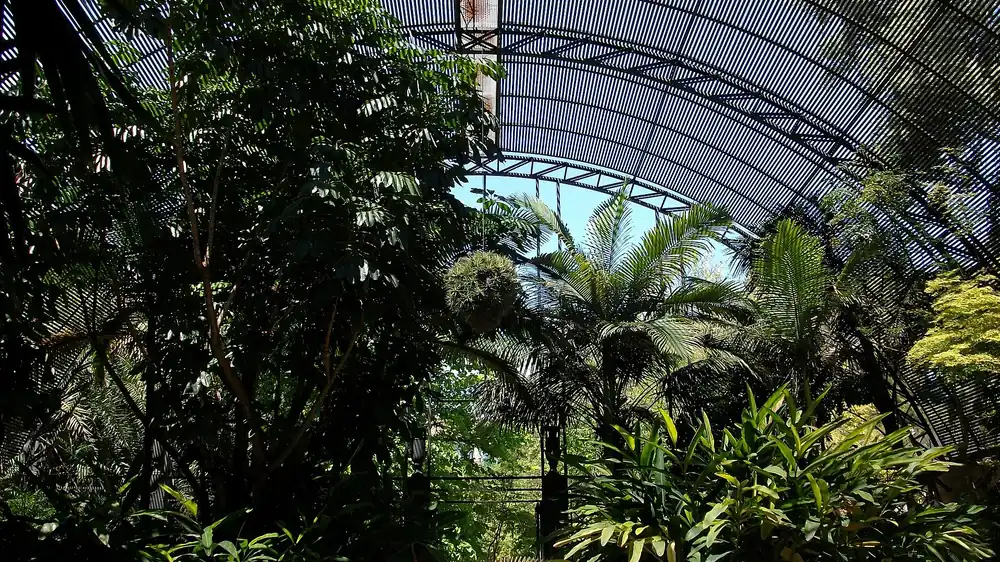
Photo: Joanbanjo, Public domain
Parc de Capçalera: the one with the lake and the boats
At the western end of the old riverbed, the Parc de Capçalera () is the closest thing Valencia has to a landscape park rather than a garden. Nearly 168,000 square metres of it, opened in July 2004, built to recreate the riverbank the Turia used to have before the city grew over it.
There is an artificial lake with pedal boats, a 15-metre viewing hill, an open-air auditorium, two children's play areas, and a walkway straight across to Bioparc. It is free and it never closes: unlike the enclosed gardens, there are no gates to lock. The lakeside cafe sets the boat hire hours, so that is the thing to check rather than any published park timetable. Walk in from Campanar.
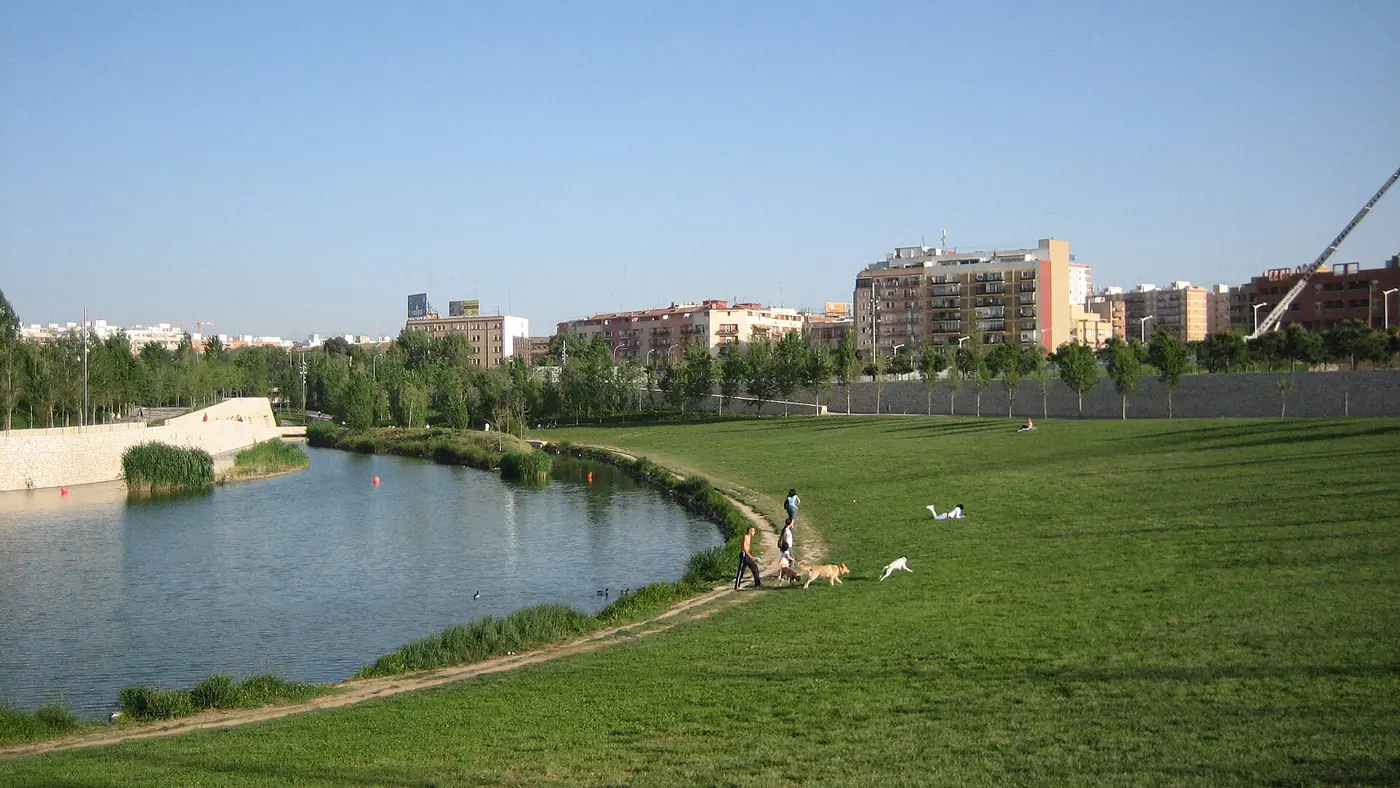
Photo: Sento (Visentico), CC BY-SA 2.0
Parc Central: the newest one, built over the railway
Parc Central opened on 17 December 2018 on land the railway used to occupy between Russafa and Malilla. The first phase is 110,000 square metres; the finished project is planned at 230,000. It was designed by the landscape architect Kathryn Gustafson after an international competition, and it does not look like anything else in the city.
There are about a thousand trees and close to 100,000 shrubs and flowering plants, nearly 6,000 square metres of water including the Panderola pond and its 135 lit jets, a children's zone with a climbing wall, table tennis, a fenced dog area, and the old railway workshops restored into cultural and sports buildings. Free, open 7:30 to 21:30 from March to October and 7:30 to 20:30 from November to February. It is the local park for Ruzafa and Malilla, and the reason both barrios feel different than they did ten years ago.
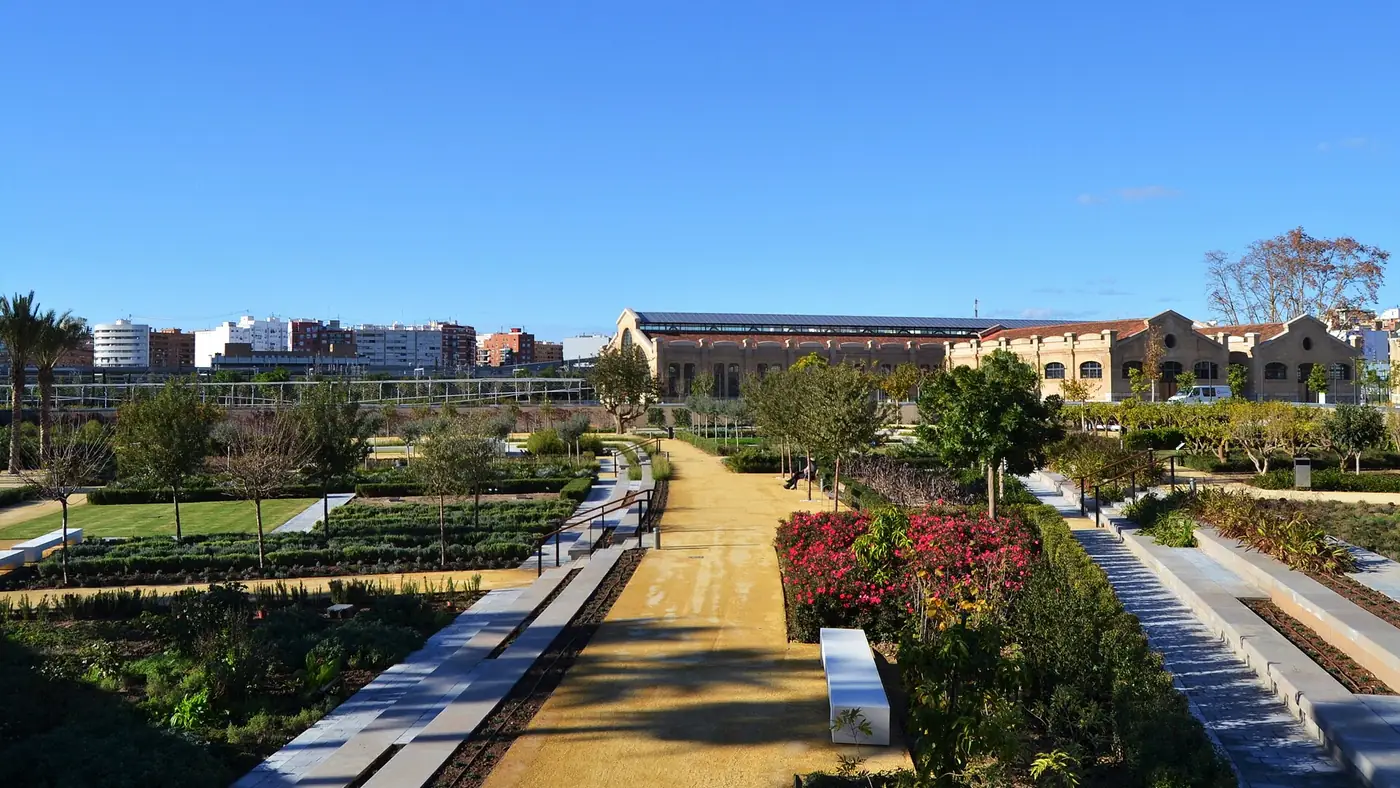
Photo: Joanbanjo, CC BY-SA 4.0
Jardín de Ayora: the one almost nobody mentions
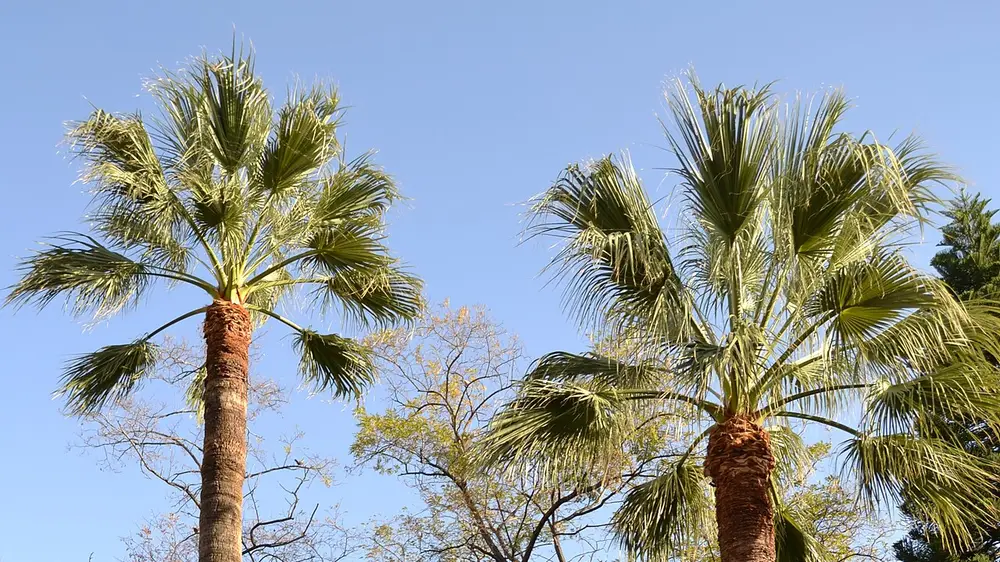
The palm crowns that give Ayora its shade. The garden sits behind a wall in Camins al Grau, which is most of why so few visitors ever find it.
Photo: Joanbanjo, CC BY-SA 3.0
A walled municipal garden in Camins al Grau, around a modernist house, with palms, a cactus collection and enough shade to be usable in August. It is genuinely quiet on a weekday, which is not a claim you can make about anywhere else on this list. We wrote it up in the hidden gems guide with photographs.
The Albufera: not a garden, and worth the trip anyway
Ten kilometres south of the city, the Albufera is a freshwater lagoon and rice-paddy wetland inside a protected natural park. It is not a city garden and should not be planned like one: you go for the sunset over the water, the birdlife, and lunch in El Palmar, and you need a bus or a car rather than a pair of shoes. Treat it as a day out, not as an afternoon.
Which ones work with children
Shade is the real filter, not equipment. From June to September a playground in full sun is unusable between about noon and six, and this is the single most common mistake new arrivals make with young children here.
On that test: Parc de Capçalera has two play areas plus the lake and the boats, Parc Central has a children's zone with a climbing wall and enough young planting that the shade is still thin, Viveros has the deepest mature tree cover of the lot, and the riverbed has Gulliver. Monforte and the Botanic are gardens to walk a child through, not gardens to let one loose in.
Which ones work with a dog
Parc Central has a fenced dog recreation area, which is the one on this list the city itself lists as such. Capçalera's open lawns are where dog walkers actually congregate, because there is space to throw a ball without hitting anyone. Everywhere else, keep the lead on outside marked areas: the enclosed historic gardens in particular, Monforte and the Botanic, are not places to let a dog off. The dog-friendly Valencia guide lists every fenced zone by district, plus the dog beach and the transport rules.
The opening-hours pattern, once you see it
Three groups. The municipal enclosed gardens, Viveros and Parc Central, open at 7:30 and close at dusk, which means 20:30 in winter and 21:30 in summer. The two visitor gardens, Monforte and the Botanic, open later at 10:00 and close earlier. And Capçalera and the riverbed have no gates at all.
Practically, that means an early run or a dog walk goes to Viveros, Parc Central or the riverbed, and a garden visit is an afternoon thing. For the rest of what to do outdoors here, the things to do in Valencia guide covers the wider list.
Working out which barrio to live in?
Which park you end up using every week is decided the day you sign a lease, and almost nobody thinks about it beforehand. If you are choosing a neighbourhood, we can talk through the trade-offs alongside the visa and the paperwork.
Contact us
About the author
Michael Bastin
Founder, ValenciaMove - Valencia since 2016
Michael has lived in Valencia since 2016 and helps people move here.
Buy Michael a coffeeNeed help with your move?
Contact us. We handle visa, admin, and housing so you can focus on the exciting part.