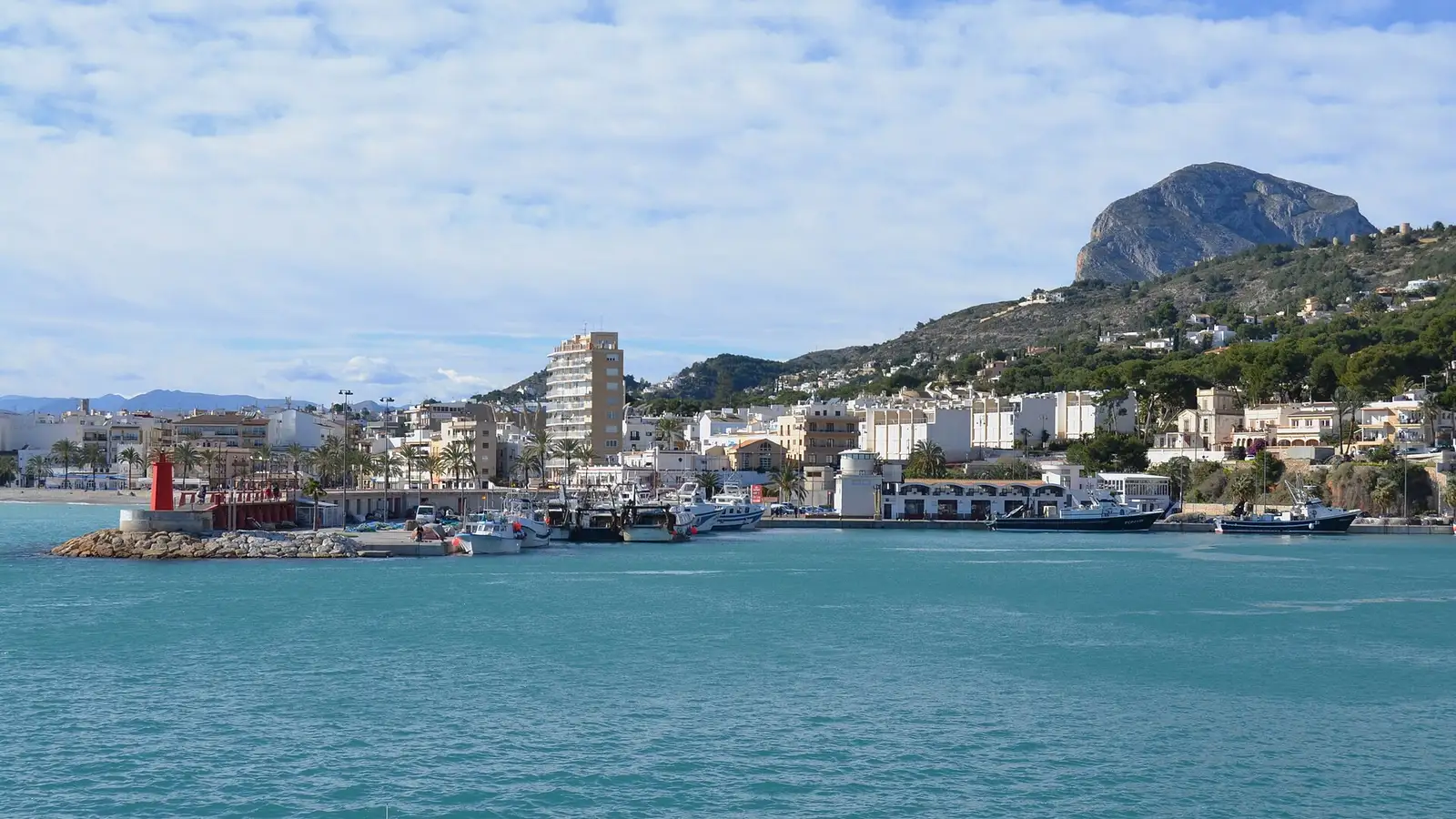
Photo: Joanbanjo, CC BY-SA 3.0
Jávea weather: the seasons and where to get the forecast
What the year is like in Jávea (Xàbia), from dry summers to autumn storms, and where to read AEMET's official forecast, sea temperature and warnings for the town.
Jávea weather quick facts
- Long-term averages
- None published for Jávea: in Alicante province AEMET gives standard climate values only for Alicante city and Alicante-Elche airport
- Live forecast
- AEMET's 7-day forecast for Jávea/Xàbia
- Town council figure
- An average of 18 degrees a year, with no station or years named
- Sea temperature
- AEMET's beach forecast gives the forecast water temperature for the beaches it covers
- Weather warnings
- AEMET's warnings map, in yellow, orange and red
Facts last checked against their sources: 21 November 2026
What the weather in Jávea is like through the year
AEMET publishes no long-term averages for Jávea itself. The nearest station that has them is Alicante city, which is another place, so read its figures as the pattern of this coast rather than as Jávea's own. AEMET's 1981-2010 values for Alicante city show that pattern: hot, sunny and almost rainless summers, an autumn that brings the wettest months, and mild winters that still get plenty of sun.
The council's tourism portal says the Montgó shelters Jávea from cold winter fronts coming from inland, and that sea winds and westerly breezes take the edge off the summer heat. It gives an annual average of 18 degrees and a figure for each month, but names no station or years, so we do not treat them as climate records. The same page calls Xàbia's climate the world's second best microclimate without saying who ranked it.
Jávea weather in summer: heat, sun and long beach days
July and August are the hottest and driest months on this stretch of coast, and the Alicante city station records its most sunshine in high summer. Expect warm nights as well as hot afternoons, and plan walks and outings for the morning or the evening.
AEMET's beach forecast gives, for each beach it covers, the expected water temperature and the maximum UV index for a clear sky, which is the figure to check before a long day on the sand.
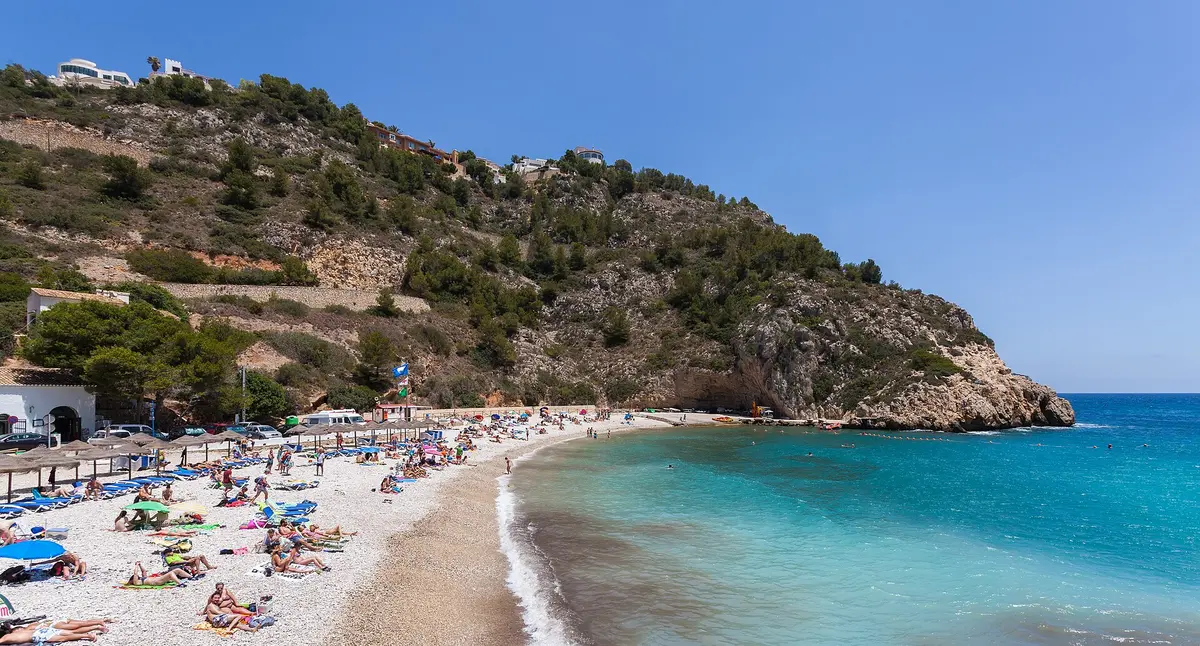
Photo: Diego Delso, CC BY-SA 4.0
Autumn rain and storm warnings in Jávea
Autumn is the rainy season here: at Alicante city, September and October are the wettest months of the year. The rain tends to come in a few heavy days rather than as steady drizzle, and a single storm can bring a large share of a year's total.
When heavy rain, wind or rough seas are expected, AEMET issues warnings by area, up to 72 hours ahead, at three levels: yellow, when the danger is low, orange, when it is significant, and red, when it is extraordinary. Check the Marina Alta coast on the warnings map before driving, hiking or heading to a cove.
Jávea weather in winter and spring
Winter is mild by northern European standards: at Alicante city, January is the coolest month, yet it still averages more than 180 hours of sunshine. Days are often bright enough for a walk on the seafront, while evenings and nights are cool enough for a jacket.
Spring warms steadily from March to May, with more sunshine each month and only modest rain.
Where to check the Jávea weather forecast, sea temperature and warnings
For the next few days, use AEMET's 7-day forecast for Jávea/Xàbia, the State Meteorological Agency's page for the municipality, with temperature, rain, wind and sky by day.
For the sea, AEMET's beach forecast lists beaches by province, with water temperature and UV index. For storms and heat, the warnings map shows any yellow, orange or red warning in force.
Best time to visit Jávea for the weather, and what to pack
For warm days without the peak heat, late spring and the start of autumn are the easiest times: June and September sit either side of the hottest weeks. July and August suit a beach holiday if you plan around the midday sun; the winter months suit walking, cycling and a quiet town.
Pack light clothes and strong sun protection from May to October, a warm layer for winter evenings, and a waterproof for autumn. Water shoes help on Jávea's gravel and pebble coves.
Related guides
- Jávea town guideThe old town, the port, the Arenal and the coves.
- Alicante weather by monthAEMET's averages for Alicante city and the airport.
- Dénia weatherThe seasons next door, with the town's own rainfall figure.
- Costa BlancaThe towns of the Alicante coast compared.
- BenitachellThe Cala del Moraig, between Jávea and Moraira.
- DéniaPort town at the foot of the Montgó.