
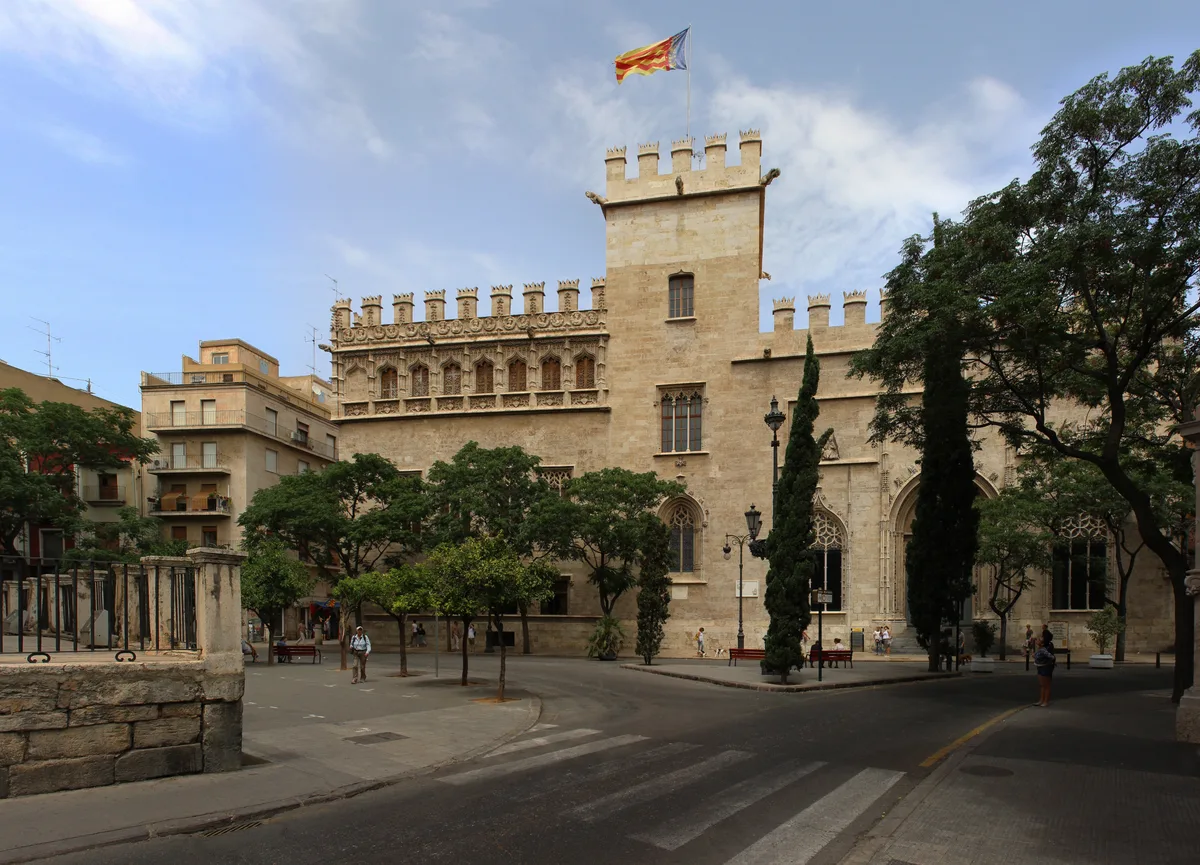
Photo: Juan Mayordomo, CC BY-SA 4.0
Living in Ciutat Vella: a Valencia neighborhood guide
The historic core of Valencia beyond El Carmen
Living in Ciutat Vella
Ciutat Vella () encompasses the entire historic centre of Valencia, including El Carmen, La Seu, La Xerea, El Pilar, El Mercat and Sant Francesc, the district's six barrios. While El Carmen gets most of the attention, the broader Ciutat Vella district offers diverse sub-neighborhoods each with their own personality.
Ciutat Vella is the Valencian name and means the old city; in Castilian it is sometimes called Ciudad Vieja. The district follows the line of the 14th-century Christian wall, now the ring of Colón, Xàtiva and Guillem de Castro streets and the old Turia riverbed. According to the Ajuntament's municipal register, its six barrios had 30,510 residents on 1 January 2025.
La Seu area surrounds the Cathedral and is quieter and more refined than El Carmen. La Xerea, stretching toward the Turia gardens, offers some of the most beautiful residential streets in the old town. San Francesc, around the Town Hall square, is the commercial heart with a mix of offices and apartments.
Living in Ciutat Vella means everything is at your doorstep. The Central Market, the Cathedral, the Silk Exchange, museums, and hundreds of restaurants are all within a 10-minute walk. For first-time expats in Valencia, this central location makes the transition effortless - you can explore the city on foot from day one.
The reality check: tourist density is high in parts of Ciutat Vella, especially around the Cathedral and Plaza de la Reina. Apartments vary wildly in quality, from stunning renovations to neglected old buildings. Noise from bars and restaurants can carry late, and summer brings peak crowds. Choose your specific street carefully. This is also the district that puts you right inside Las Fallas, for better and worse, so if you are coming for the festival see our guide to where to stay for Las Fallas.
What rent costs in Ciutat Vella (September 2026)
Ciutat Vella asks 21 EUR per m² a month on Fotocasa's rent index for September 2026, above the 18 EUR the city of Valencia averages. At that rate a 70 m² (about 753 sq ft) two-bedroom lists at around 1,470 EUR a month, before you negotiate. These are asking prices on new listings, not what sitting tenants pay.
Asking prices here are 4.7% above a year earlier, against 16.2% for the city as a whole.
One figure covers the whole Ciutat Vella district here, which also takes in La Seu, La Xerea, El Carmen, El Pilar, El Mercat and Sant Francesc. The barrios inside it price differently street by street, so read it as the district average rather than a quote for any one of them. Idealista's district index put Ciutat Vella at 19.7 EUR per m² in August 2026. The two portals sample different listings, so a gap of a euro or two between them is normal.
Ciutat Vella's figure hides the widest spread of any district in the city. El Pilar and La Seu price at the top, on tiny heritage flats that reach the market rarely; Sant Francesc and La Xerea sit a step below on larger restored stock; El Carmen and El Mercat carry a nightlife and short-let discount on the noisy streets. Tourist flats compete for the same buildings, which is why long-term listings here are scarce and go fast.
Our renting guide explains what landlords ask for and what the fianza and agency fee add on signing day, and the upfront cost calculator runs the maths for any rent.
Living in the Ciutat Vella district
Getting around
No metro station sits inside the old town itself. Angel Guimera, Xativa and Colón ring it, and almost every address inside is a 10 to 15 minute walk from one of them.
Buses run the Guillem de Castro ring rather than the interior. Most of the core is pedestrianised or heavily restricted to traffic, so a car here is a liability rather than an asset.
What sets it apart
This is the only district where the medieval street plan survives intact, inside the line of the demolished city walls. Heritage protection caps what a landlord can change, which is why so many flats keep original tiling and beams and so few have lifts.
There is effectively no new build. What comes on the market is renovated old stock, and the renovation quality varies enormously between two flats on the same street.
Who it suits
People who want to live without a car and inside the historic core, and who accept tourist footfall, terrace noise and small floor plans as the price of it.
It suits short and medium stays better than families. If you need a lift, parking or a quiet weekend, look at Extramurs or El Pla del Real instead.
Barrios in Ciutat Vella
Every barrio inside this district has its own guide. Rent, transport and character vary a lot from one street grid to the next, so start with the one closest to where you actually want to live.
La Seu
Cathedral and Plaza de la Virgen heartland, oldest stones in the city
Explore La SeuLa Xerea
Residential pocket near Plaza de la Reina along the quiet Carrer Avellanes axis
Explore La XereaEl Carmen
Medieval charm meets bohemian nightlife
Explore El CarmenEl Pilar
Quietest centre barrio in the old Velluters silk quarter with intimate medieval streets
Explore El PilarEl Mercat
Central Market and Lonja heartland, dense, touristy by day and quiet by night
Explore El MercatSant Francesc
Plaza del Ayuntamiento and government district with premium offices
Explore Sant FrancescNeighbouring districts
These districts share a boundary with this one. Worth a look if you are still deciding where to live, or want to compare with the area next door.
Public and concertado schools
Active public and concertado schools in this district, per the Conselleria d'Educació register.
The Conselleria's school guide doesn't allow direct links to an individual school's page, so each card below gives you the school's official code instead. Open the guide, paste the code into the search box and the school's page comes up. Like many Spanish public administration websites, it takes a little patience.
CEIP Santa Teresa
Carrer de l'Hort d'En Cendra 3
IES Barri del Carme
Carrer Beneficencia 20
IES Luis Vives
Carrer San Pablo 4
Centre Privat Escolanía Ntra. Sra. desamparados
Carrer Gobernador Viejo 23
Centre Privat Escuelas Pías
Carrer Carniceros 6
Centre Privat Gran Asociación
Carrer Padre Huérfanos 3
Centre Privat Sagrado Corazón de Jesús -Carmelitas-
Carrer Muro Santa Ana 5
Public health centres (centros de salud) near this neighbourhood
Public primary-care centres of the Valencian health service. Distances are straight-line to the edge of the neighbourhood, not walking routes.
Centro de Salud Nápoles y Sicilia
Pl. Napoles y Sicilia 4, 46003 Valencia
Health department: Hospital General
Centro de Salud Guillem de Castro
Guillem de Castro 149, 46008 Valencia
Health department: Hospital General
Which centre you are assigned to depends on your home address, so check it with the Generalitat's centre search before you register.
Generalitat health centre searchSource: Generalitat Valenciana open data (CC BY).
Where Ciutat Vella Sits in Valencia
What Living in Ciutat Vella Is Really Like
Pros: What Residents Love
- Maximum walkability - everything within reach
- Rich cultural life with museums, markets, and events
- Beautiful historic architecture and plazas
- Easy transition for newcomers to Valencia
- Excellent restaurant and cafe scene
Cons: What to Know First
- High tourist foot traffic in popular areas
- Variable apartment quality in old buildings
- Noise from bars and restaurants on busy streets
- Higher rents for renovated or well-located apartments
Typical Properties in Ciutat Vella
Local Amenities
Culture
Cathedral, Central Market, La Lonja, dozens of museums
Parks
Turia Gardens along the northern edge
Transport
Multiple metro stations, central bus hub, walkable
Dining
Everything from Michelin-starred to hole-in-the-wall tapas
Population
30,510 residents in its six barrios (padrón, 1 January 2025)
Thinking about moving to Ciutat Vella?
Get in touch with our Valencia relocation team. We will help you find the right apartment, navigate the paperwork, and get settled faster.

Resident in Valencia since 2016. Founder of BeTranslated. 25+ years in translation, interpretation and multilingual SEO.
Reviewed 5 September 2026 by Michael Bastin