

Photo: Greatmats, CC BY-SA 4.0
Yoga in Valencia: classes, prices and English-speaking studios
What a class actually costs, how bonos and monthly passes work, and where to practise in English.
Book one class before you buy anything.
Valencia has no shortage of yoga. The problem for anyone new here is not finding a studio, it is working out what you are being sold: a drop-in, a bono, a monthly cuota, or a contract with a minimum term attached. The words matter more than the price, and most of them are written only in Spanish.
This guide covers what a class costs, which barrios have studios, where the outdoor classes happen, and how to find teaching in English. For the studio-by-studio list with addresses and websites, see our yoga and Pilates directory.
Before you pay for anything
The six things to check at the reception desk, in the order they usually catch people out.
Is this class in English?
A studio that advertises English often runs only one or two English slots a week. Ask which ones, by name.
When does the bono expire?
A prepaid pack of classes has a deadline. Six months is common, three months is not unusual, and nobody volunteers it.
Is there a matrícula?
A one-off joining fee on top of the first month. Small, but it changes which option is actually cheapest.
Is there a permanencia?
A minimum commitment period on a monthly plan. Leaving early can mean paying out the remaining months.
Can you pay by card?
A monthly cuota by direct debit needs a Spanish IBAN, which needs your NIE. Newcomers start with a bono paid by card.
What happens in August?
Timetables thin out and some studios close for two or three weeks. A bono bought in July can lose a month to it.
How yoga classes are sold in Valencia
Three things are on offer and they are not interchangeable. A drop-in buys you one class and nothing else. A bono is a prepaid pack of classes, cheaper per class, with an expiry date. A cuota is a monthly subscription, usually taken by direct debit, and it is the only one that can carry a minimum term.
The per-class price falls steeply as you commit. A single class is the most expensive way to practise, a ten-class bono typically brings it down by a quarter to a third, and an unlimited month only beats a bono if you genuinely go three times a week.
The trap is the expiry date. A ten-class bono valid for six months is a reasonable bet. The same pack valid for three months, bought in June, loses most of August to reduced timetables. Ask for the validity in writing before you pay, not after.
What a yoga class in Valencia costs
The prices below are the range you will meet across the city, anchored on two studios that publish a full list. The Yoga Room in Benimaclet charges 18 EUR for one class, 120 EUR for ten valid six months, 89 EUR for an unlimited month, and 39 EUR for a two-week unlimited trial open to new members only.
Yoga Flow VLC sits at the other end: 20 EUR for a drop-in, 60 EUR for four classes, 100 EUR for eight, and 120 EUR for an unlimited month. Both lists were read in November 2026, and studios change them without announcing it, so treat these as the shape of the market rather than a quote.
Single class, drop-in
- Typical price
- 15 EUR to 20 EUR
- What to check first
- Whether that particular class is taught in English
Pack of 5 classes
- Typical price
- 65 EUR to 80 EUR
- What to check first
- The expiry date, often six months
Pack of 10 classes
- Typical price
- 100 EUR to 130 EUR
- What to check first
- Whether the pack can be shared with a partner
4 classes a month
- Typical price
- 40 EUR to 60 EUR
- What to check first
- Unused classes almost never roll over
8 classes a month
- Typical price
- 69 EUR to 100 EUR
- What to check first
- Whether it is a bono or a direct debit
Unlimited month
- Typical price
- 89 EUR to 120 EUR
- What to check first
- Any permanencia, the minimum commitment
New-member trial
- Typical price
- Around 39 EUR for two weeks unlimited
- What to check first
- Usually available once per person, ever
Outdoor class in the Turia
- Typical price
- 5 EUR to 10 EUR
- What to check first
- Cash on the day, and bring your own mat
Which barrios have yoga studios in Valencia
The studios cluster rather than spread. Russafa and the Eixample carry the densest group, which is also where most of the English-language teaching sits. Benimaclet holds the community-run and donation-based end of the scene, and the student population keeps prices there lower than in the centre.
El Cabanyal has become the home of reformer Pilates near the beach, with yoga alongside it. El Carme and Ciutat Vella have fewer dedicated studios than their visibility suggests, because the ground-floor space a studio needs is scarce and expensive inside the old town.
Further out, in Patraix, Campanar or Benicalap, you usually find one studio serving its own neighbourhood rather than a real choice. That is not a downgrade: a single local studio is often where the classes stay small, and you can walk home afterwards. The barrio guides help if you are still deciding where to live.
Outdoor yoga in the Turia Gardens and on the beach
From roughly April to October the river bed does a lot of the work. Independent teachers run regular morning and midday classes in the Turia Gardens, most often in the stretches near the Palau de la Música and the Pont de les Flors, and most of them take cash at the end with no booking.
Expect 5 EUR to 10 EUR, a mat you bring yourself, and a class taught in whatever mixture of Spanish and English the group needs that morning. It is the cheapest honest way to try several teachers before committing to a bono, and nobody minds if you turn up once and never again.
Beach sessions on the Malvarrosa and the Patacona run in the same months, usually early, because the sand is unusable by midday in July and August. Check the teacher's own Instagram the night before rather than a listings site: outdoor classes move for wind and rain, and the listings sites do not keep up.
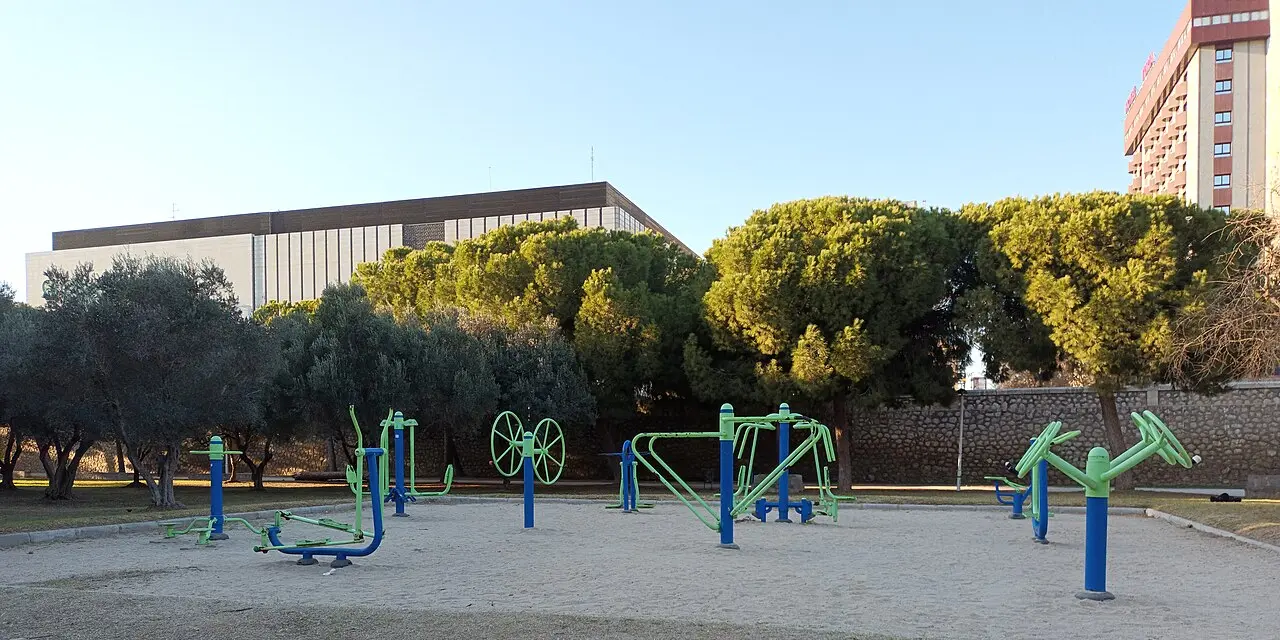
Photo: Acediscovery, CC BY 4.0
Yoga classes taught in English in Valencia
Two kinds of studio advertise English and they are very different. One teaches the whole timetable in English, usually because the founder is not Spanish. The other teaches in Spanish and has an instructor who will switch for you if you ask, which works well in a class of six and not at all in a class of twenty.
Ask the specific question: which classes on this week's timetable are taught in English, and what happens if a Spanish speaker joins? A studio that answers with a day and a time is telling you the truth. A studio that answers that all its teachers speak English is telling you something else.
Yoga is also one of the easier ways into the city socially, because the format gives you a fixed weekly group without needing much language. If that is part of why you are looking, the expat community guide covers the other regular meeting points.
Which yoga style to book for your first class
Spanish timetables label the level as well as the style: iniciación for beginners, nivel medio for intermediate, abierta or todos los niveles for mixed. Reading the level matters more than reading the style, because a vinyasa class marked iniciación is gentler than a hatha class marked nivel medio.
If you have no idea, book a hatha or an iniciación class rather than a vinyasa one. The worst possible first class is a fast flow where you spend the hour copying the person in front of you, and the second worst is a hot room on an empty stomach.
Vinyasa flow
- What the class includes
- Continuous movement linked to the breath, warm pace
- Book it if
- You want a workout and already move regularly
Hatha
- What the class includes
- Slower, poses held longer, more instruction per pose
- Book it if
- It is your first yoga class in years
Yin and restorative
- What the class includes
- Floor poses held three to five minutes, props everywhere
- Book it if
- You sit at a desk all day and your hips know it
Ashtanga
- What the class includes
- One fixed sequence, repeated, led or self-practice
- Book it if
- You like structure and do not mind early starts
Hot yoga and Bikram
- What the class includes
- Heated room, high humidity, a fixed series
- Book it if
- You tolerate heat well and hydrate beforehand
Kundalini
- What the class includes
- Breathwork, repetition and chanting, less posture work
- Book it if
- You are after the mental side more than the physical
Prenatal
- What the class includes
- Adapted poses and props, no deep twists or inversions
- Book it if
- You are pregnant and want a class built for that
How to book your first yoga class in Valencia
- Most studios take bookings through an app rather than their own website, and the app is usually in Spanish only. The sequence that works: message the studio on WhatsApp or Instagram first, ask which class to come to and whether to pay at the desk, then turn up ten minutes early with cash as a backup.
- Turning up ten minutes early is not politeness, it is practical. It is when you sign the health form, find out whether mats are included or cost a couple of euros, and get told that the class you booked has moved rooms. A first class booked online and arrived at on the hour tends to start badly.
- Pay for one class the first time even when the trial offer looks better value. A two-week unlimited trial is only a bargain if you like the place, and you cannot know that from the photographs on the website.
- A private teacher is quoted per session rather than per person, and the rate depends on whether they travel to you. Ask for the price of a block of five before agreeing to a single trial session, because the single session is almost always the worst value on the list.
Prenatal, beginner and back-care yoga classes in Valencia
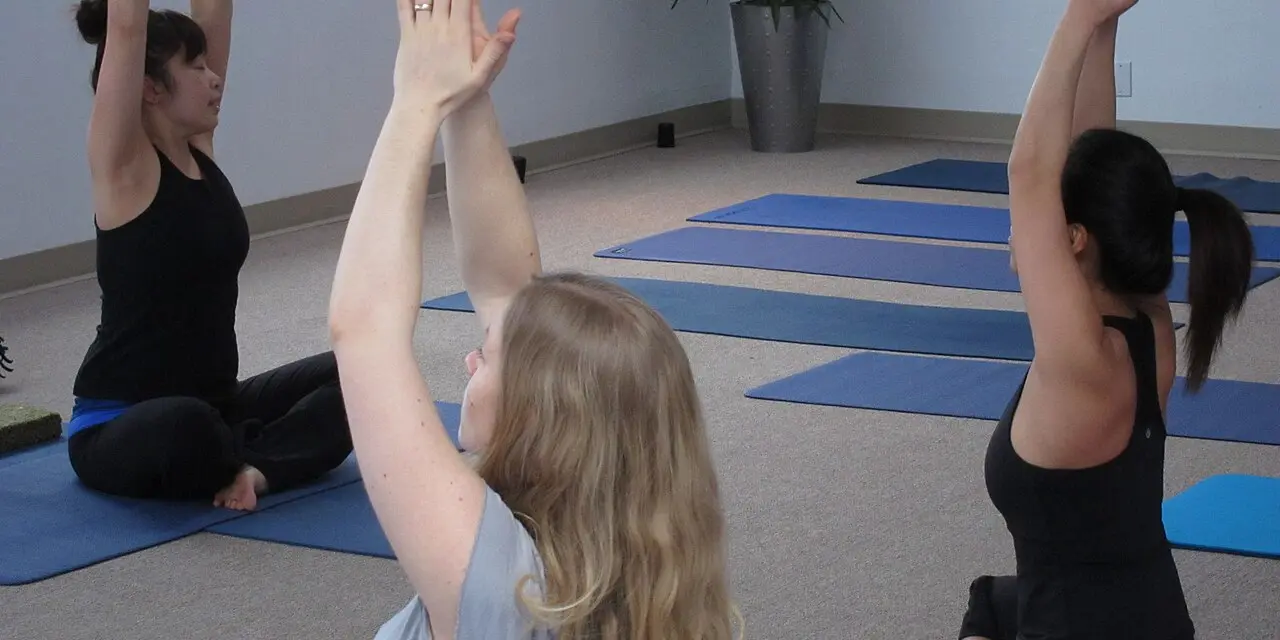
Prenatal classes exist across the city but rarely run more than twice a week in any one studio, so the timetable, not the studio, usually decides where you go. Ask whether the teacher holds a specific prenatal qualification rather than adapting a general class, and say which trimester you are in when you message.
For back pain, the useful search term in Spanish is yoga terapéutico or yoga para la espalda rather than any style name. These classes are smaller, slower and more hands-on, and they are often taught by a physiotherapist who also teaches yoga rather than the other way round. If a back problem has a diagnosis attached, say so before the class, not during it.
Beginner courses that run as a fixed block of six or eight weeks, with the same group each week, are worth more than a drop-in to anyone starting from zero. They are advertised as a curso de iniciación and tend to open in September and January.
Yoga retreats and teacher training near Valencia
Weekend retreats in the Valencian Community run mostly inland, in the Serra Calderona, around Chulilla and up towards Morella, rather than on the coast. They are sold as a package: accommodation, meals, two or three practices a day. Compare them on what is included rather than on the headline price, because transport from Valencia frequently is not.
Teacher training is where the money and the risk both sit. A 200-hour course is a real financial commitment, and listings on booking aggregators disagree with each other and with the schools themselves, sometimes by several hundred euros for the same course. Do not treat an aggregator listing as a price.
Check the school against the Yoga Alliance directory before paying a deposit, ask who actually teaches the contact hours, and ask what the certificate lets you do in Spain. A certification registered abroad does not by itself let you work here legally, which is a question for the autónomo rules rather than for the school.
Mistakes newcomers make
Buying a ten-class bono on day one
You have not met the teacher yet. A single class costs a few euros more and tells you everything the pack cannot.
Reading the style and skipping the level
Iniciación, nivel medio and abierta decide how the hour goes far more than the word vinyasa does.
Signing a monthly plan without asking about permanencia
A minimum term is normal here and perfectly legal. It is only a problem when you find out about it as you try to leave.
Buying a summer bono in June
August timetables shrink and some studios close outright. The pack keeps counting down regardless.
Why the Valencian timetable looks odd at first
Class times follow the Spanish day rather than the northern European one. There is an early slot before work, a long empty stretch through the middle of the day, and then a dense block from about 19:00 to 21:30 that holds most of the week's classes. A 20:30 class is normal here and is not a late one.
That shape has a practical consequence: the evening classes fill, and the quietest, most personal classes are the mid-morning ones. If you work remotely, an 11:00 class with four other people in the room is a very different experience from the same teacher's 20:00 class with twenty.

Resident in Valencia since 2016. Founder of BeTranslated. 25+ years in translation, interpretation and multilingual SEO.
Reviewed 5 November 2026 by Michael Bastin