
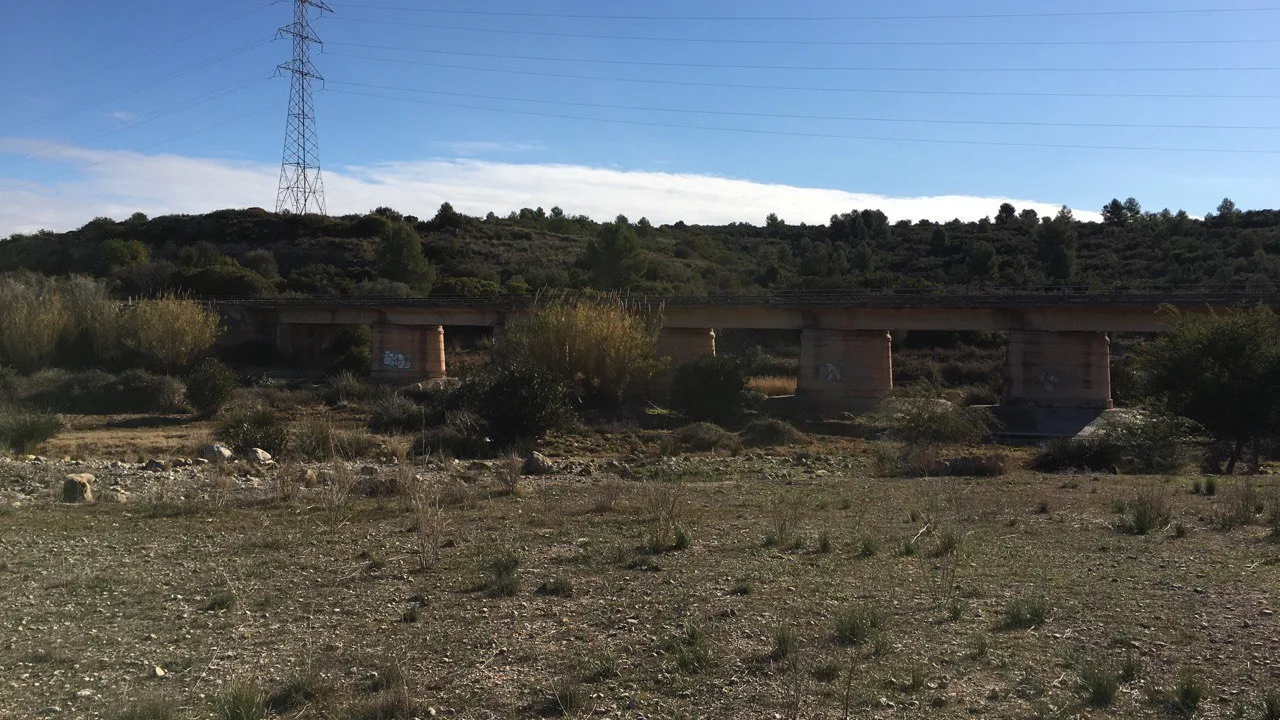
Every autumn Valencia gets a run of days where the sky turns the colour of a bruise and the forecast fills with warnings in three colours. Newcomers tend to read them the way they would read a weather app at home: as a rough guess about whether to take an umbrella.
That is the wrong frame. The Spanish warning system is not a forecast, it is a risk statement, and it is issued by one body while the decision to tell you to stay home is taken by another. Understanding the difference is worth more than any single number in this article.
What a DANA actually is
DANA stands for depresion aislada en niveles altos, an isolated depression at high levels. A pocket of very cold air detaches from the jet stream and parks over the peninsula while the Mediterranean below is still holding its summer heat.
The warm sea feeds moisture upward into the cold pocket, and the result is convection that can dump a season of rain on one comarca while the next one stays dry. The older Spanish name, gota fria, describes the same thing and is still what most people say.
The season runs roughly from September to November and peaks in October. It is not a freak event, it is the normal autumn behaviour of this coastline.
The four levels, and what they actually mean
AEMET, the state meteorological agency, issues warnings on a four-colour scale under a national plan called Meteoalerta. The wording below is AEMET's own logic, and it is worth reading closely, because none of it refers to a quantity of rain.
Green
No meteorological risk. Nothing is being warned about.
Normal life.
Yellow
No risk to the general population, but a real risk to specific activities. The phenomenon is usual for the area, and still potentially dangerous.
Do not plan a hike in a barranco, a beach day or a mountain drive. Otherwise carry on.
Orange
Important meteorological risk. The phenomenon is unusual for the area and carries a degree of danger for ordinary activities.
Move the car off the street if you park in a flood-prone spot, cancel the non-essential trip, keep the phone charged.
Red
Extreme meteorological risk. An unusual event of exceptional intensity, with a very high level of risk to the population.
Do not travel. Do not go to the garage. Assume the day is cancelled.
Why a yellow here is not a yellow somewhere else
This is the part that catches people out. The thresholds that trigger each colour are set per zone, not nationally, because the same rainfall does very different things to a dry inland valley and to a coastal plain with a drainage network built for it.
On the Valencian coast the rain thresholds sit roughly at 20mm in an hour for yellow and 30mm in an hour for orange, with red reserved for the order of 60mm in an hour or 120mm in twelve. Neighbouring zones use different numbers, and AEMET publishes the applicable ones alongside each warning.
So the useful habit is not to memorise a figure. It is to open the warning itself, which names the zone, the phenomenon, the threshold and the hours it applies to.
AEMET warns about rain. Somebody else warns about water.
This is the single most important thing in this guide, and almost nobody explains it to newcomers.
AEMET is a meteorological agency. It tells you how much water is expected to fall from the sky. It does not measure what that water does once it is on the ground.
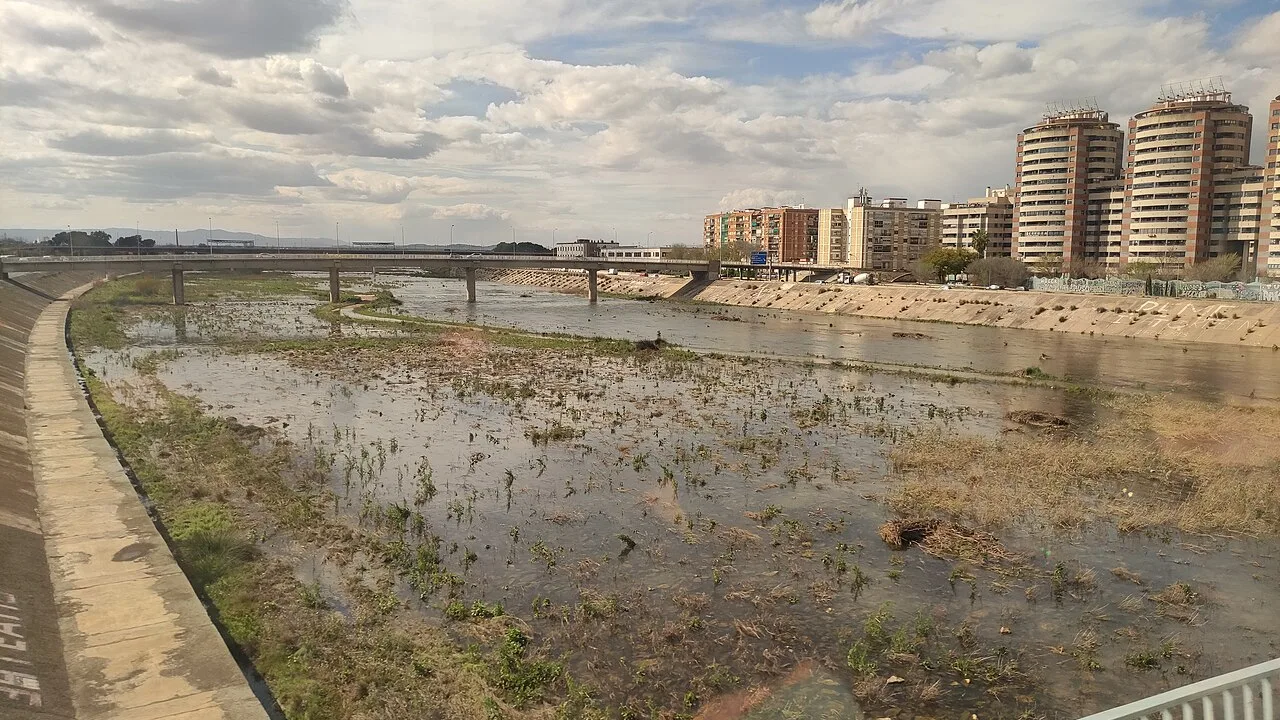
The rivers and ravines are watched by the Confederacion Hidrografica del Jucar, which runs the gauges. The decision to send an emergency message to every phone in the province belongs to the Generalitat's emergency coordination centre, through a system called ES-Alert.
Three different bodies, three different clocks. A red rain warning and a phone alert are not the same event and they do not arrive together.
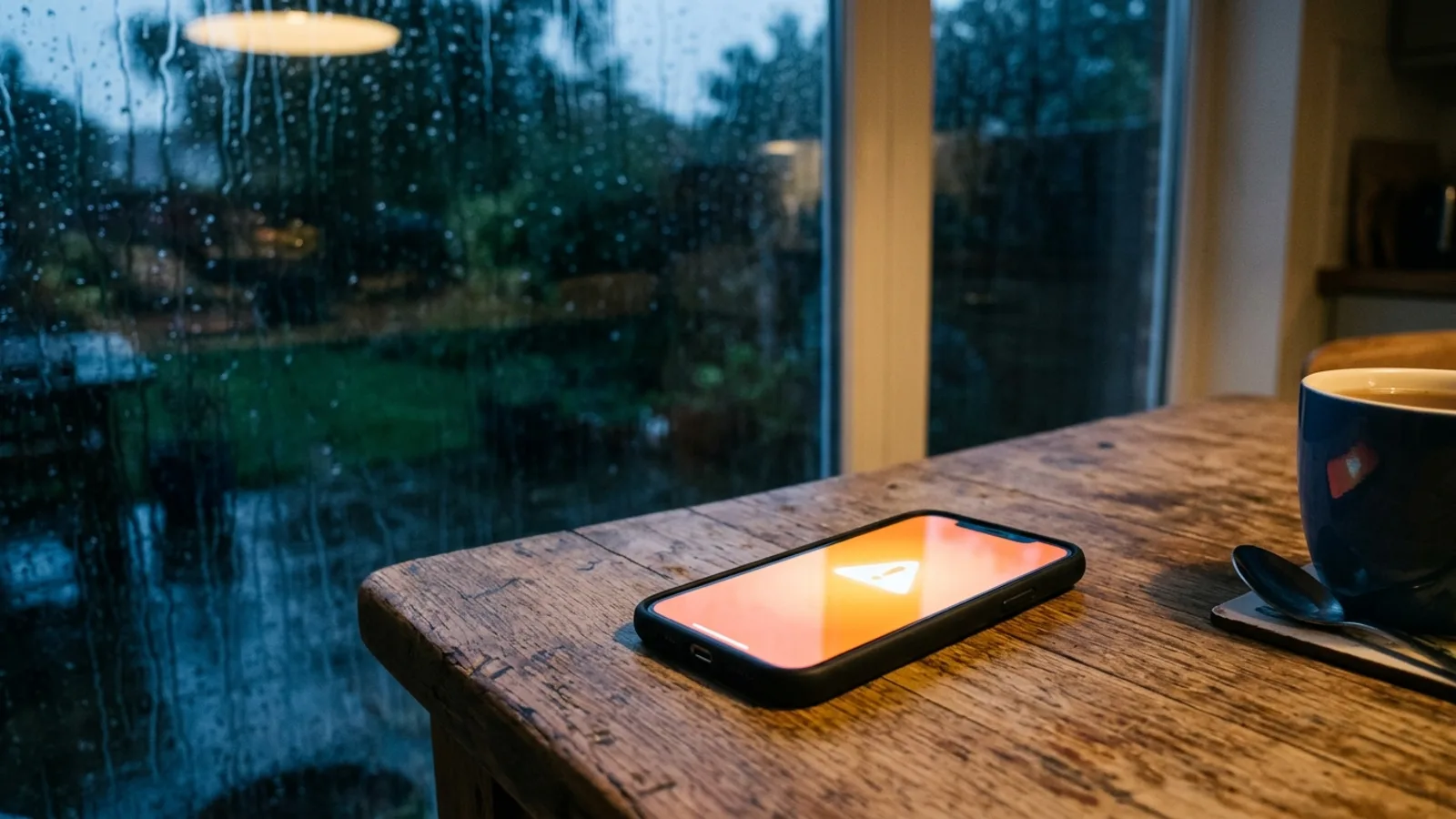
What 29 October 2024 showed
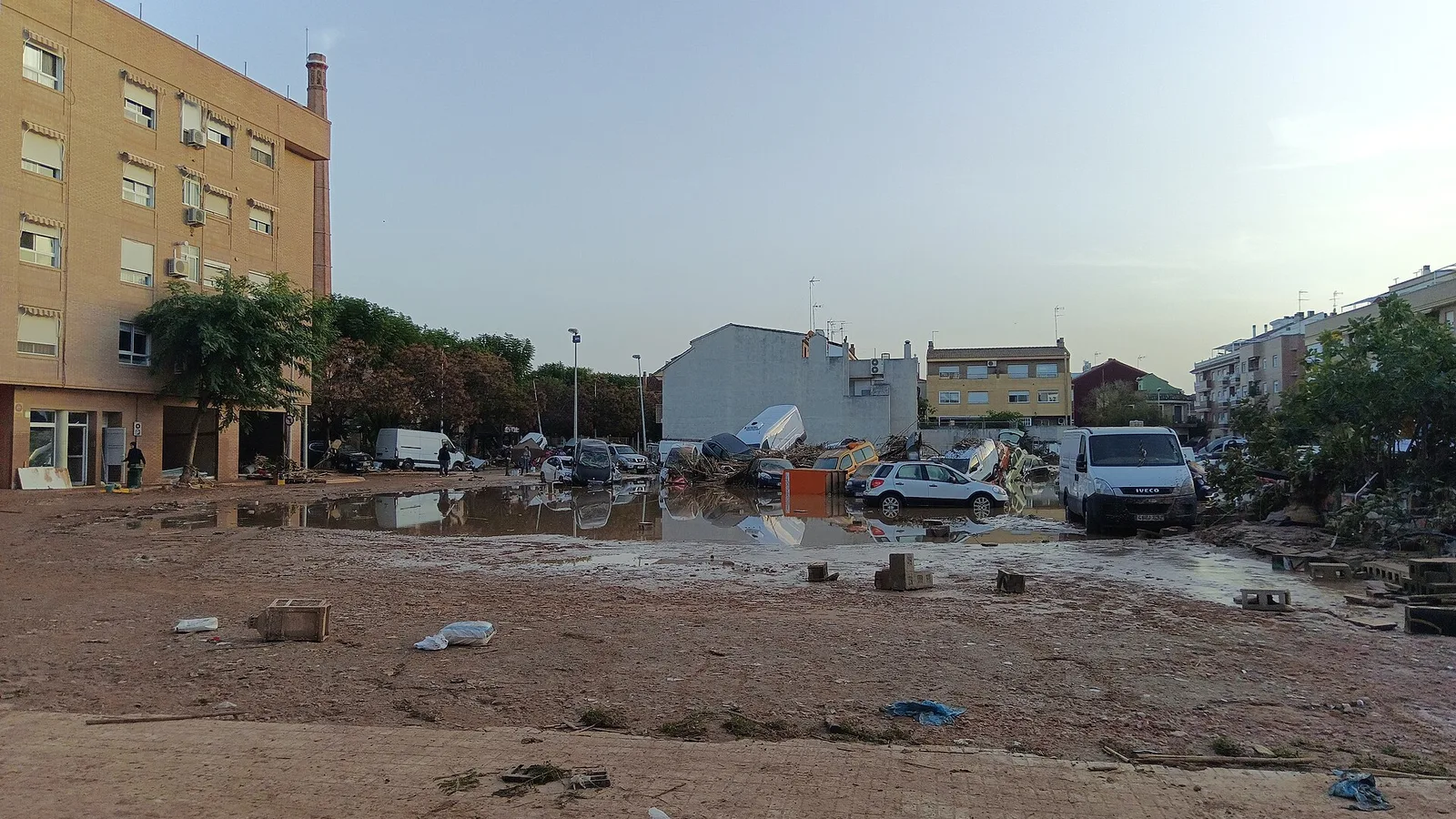
The 2024 DANA killed 221 people in the province of Valencia, a figure confirmed by the judicial data centre after every victim had been autopsied and identified. It is not a distant statistic here. Most readers of this page live within a few kilometres of somewhere that flooded.
The timeline is worth setting out plainly, because it explains the advice at the end of this article better than any instruction could.
07:31AEMET raises the warning to red
Extreme risk declared for the Valencia area, hours before the worst of the rain.
18:46The Poyo ravine gauge climbs steeply
1,686 cubic metres per second and rising fast.
18:55The gauge reads 2,280 cubic metres per second, then stops
The sensor was destroyed by the water it was measuring.
20:11The first ES-Alert reaches every phone in the province
Roughly twelve and a half hours after the red warning. By then ravines had already overflowed.
21:03A second alert goes to specific comarcas
Ribera Alta, Ribera Baixa, Hoya de Buñol and l'Horta Sud, telling people to move to higher floors.
The practical conclusion is not about blame, which is a matter for the courts and is being litigated. It is simpler and it is yours to act on: the red warning came twelve hours before the phone alert. If you wait for your phone to ring before you take a red warning seriously, you have given away the whole margin.
What to actually do
None of this requires equipment or preparation beyond knowing where to look and deciding in advance what each colour means for your day.
- Check the warning itself, not a weather app summary. AEMET publishes the current avisos by province and names the zone each one applies to.
- Know whether you are on a flood plain. Much of l'Horta Sud and the Ribera sit on one. Your building's insurance file or a neighbour who has lived there twenty years will tell you faster than any map.
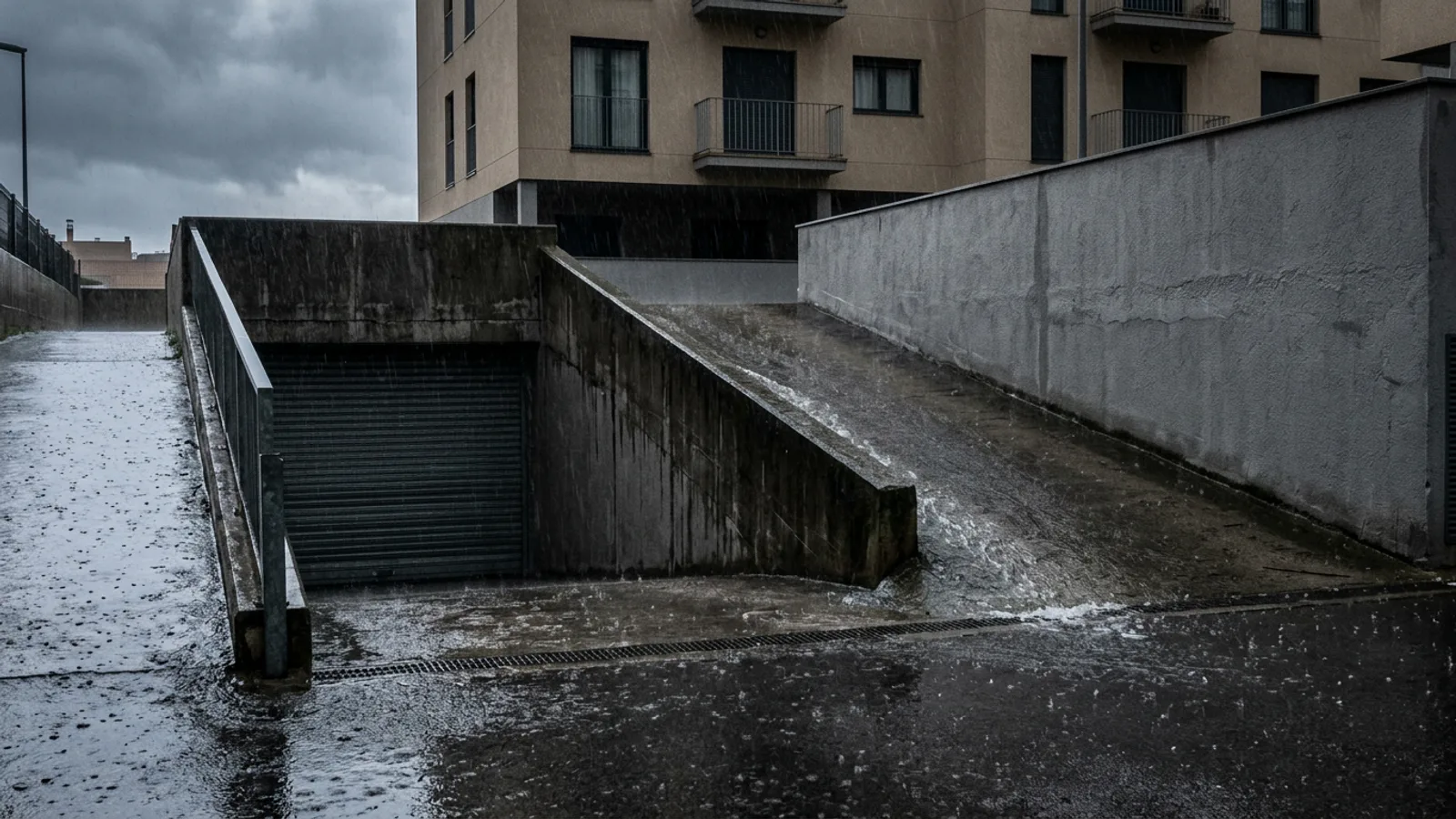
- Never go to the garage during an orange or red warning. Underground parking fills fast and it filled first in 2024. A car is replaceable.
- Never drive into standing water. Thirty centimetres will float most cars. This is the most common way people die in these events.
- If you live on a ground floor and a red warning is out, plan where you would go upstairs, and ask the neighbour above you before you need to.
- Keep the phone charged during the season. ES-Alert cannot be opted out of and it does not need signal from your own carrier, but it does need a working phone.
- Do not go to look at the barranco. It is the single most reliable way to become a casualty.
Valencia is not a dangerous place to live and the autumn is one of the best parts of its year. But it sits on a coastal plain crossed by watercourses that are dry for eleven months and then are not, and the system that warns you about that is genuinely good if you know how to read it.
Learn the four colours, learn which zone you are in, and remember that the sky is warned about by one body and the water by another.
Sources
Warning definitions and current avisos come from AEMET. The 29 October 2024 timings come from a published academic chronology and from contemporaneous reporting on the ES-Alert messages. The death toll is the official figure from the judicial data centre. Consulted August 2026.
- AEMET, meteorological warnings by province
- Universidad de Granada, DANA chronology 29 October 2024
- Poder Judicial, official victim figure from the Centro de Integracion de Datos
- Confederacion Hidrografica del Jucar
Working out whether a neighbourhood floods?
It is one of the questions we get asked most, and one of the hardest to answer from a listing photo. We know which streets went under and which did not.
Contact us
About the author
Michael Bastin
Founder, ValenciaMove - Valencia since 2016
Michael moved to Valencia in 2016 and has helped dozens of families relocate since. He writes every guide on this site personally and verifies every fact against Spanish government sources before publishing.
Buy Michael a coffeeNeed help with your move?
Contact us. We handle visa, admin, and housing so you can focus on the exciting part.