
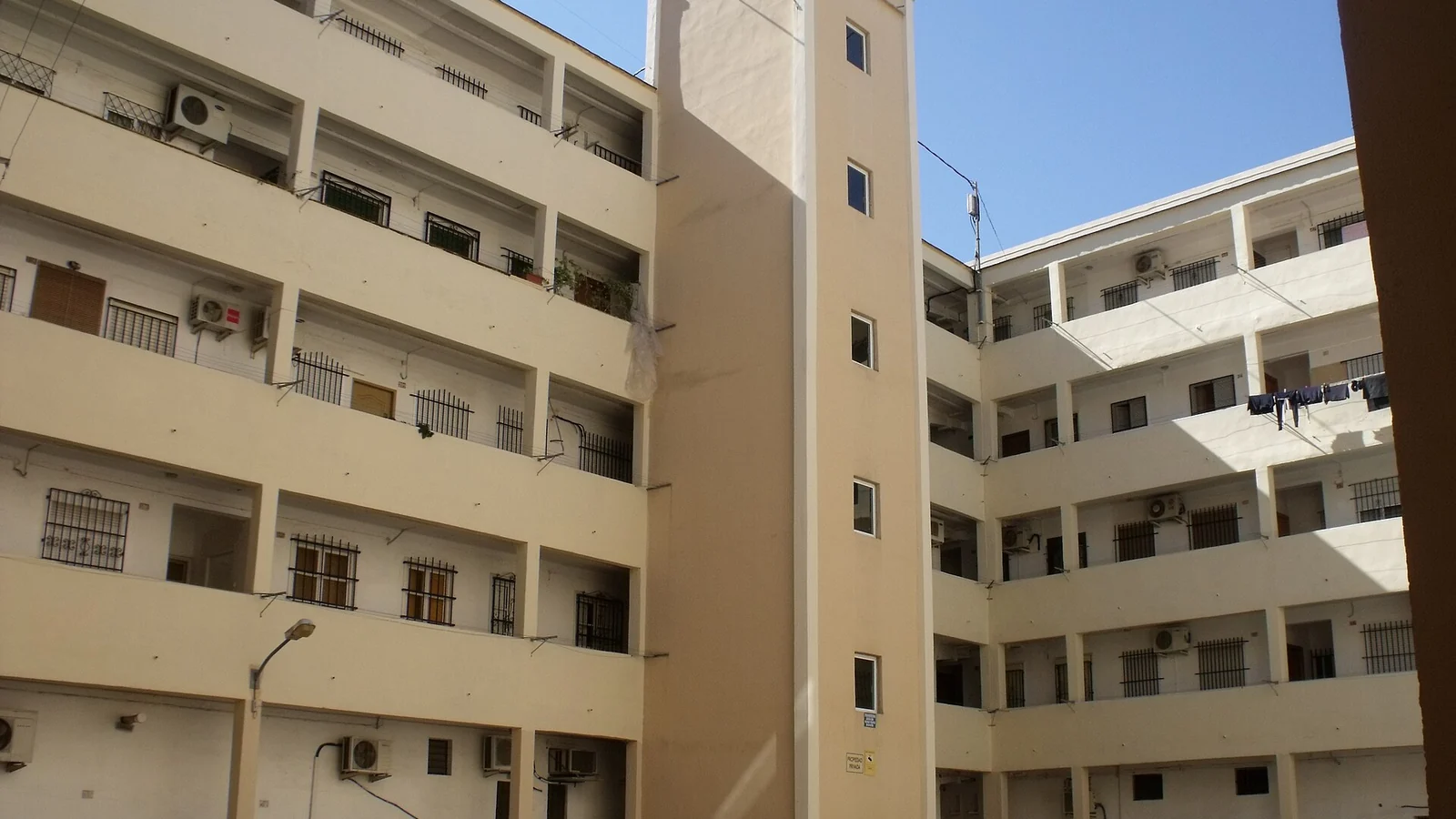
On paper, winter in Valencia is barely a winter. AEMET's climate normals for the city station give January an average of 11.8°C (about 53°F), with typical highs of 16.4°C (about 62°F) and lows of 7.1°C (about 45°F), and around 171 hours of sunshine.
Indoors is another story. In the INE's 2023 survey of housing conditions, 31.3 percent of households in the Comunitat Valenciana said they could not keep their home warm enough during the cold months, against 27.5 percent for Spain as a whole.
This guide follows on from our guide to electricity costs. It covers why a flat here feels colder than the forecast, the four ways people heat one, how to work out what each costs you, damp and mould, the bono social térmico (), and what to ask a landlord before you sign.
Why a Valencia flat feels colder than the forecast
Most flats here were built for the heat. Tiled floors, high ceilings and thin external walls keep a flat bearable in August, and they give the heat away just as easily in January. Many older blocks still have single glazing in aluminium frames.
The windows matter more than people expect. The IDAE, Spain's energy efficiency agency, estimates in its energy guide that 25 to 30 percent of a home's heating needs come from heat lost through the windows, that double glazing roughly halves that loss compared with single glazing, and that aluminium and iron frames let the cold straight through.
There is often no central system to fall back on either. In IDAE's 2011 study of household energy use, homes in the Mediterranean climate zone favoured electric equipment such as reversible heat pumps, heaters and radiators, and electricity was the main heating fuel there. The air is damp as well: AEMET puts the average relative humidity at 64 to 65 percent from December to February, which matters for condensation, as the section on damp explains.
The four ways people heat a flat here
The split air conditioner, run in reverse. If the wall unit is a heat pump, it heats as well as cools, and it is usually the cheapest heat in the flat. A heat pump moves heat rather than making it: IDAE's energy guide puts the output at 2 to 4 kWh of heat for every kWh of electricity, and its 2023 heat pump guide gives an average of about 4 for current equipment. They work less well when it is very cold outside, and inverter models cope better with low temperatures.
Electric radiators, convectors and oil filled heaters. They are cheap to buy and work wherever there is a socket, but each kWh of electricity becomes roughly one kWh of heat. IDAE says plainly that resistive electric heaters are not advisable from an efficiency point of view. They make sense for warming one room for an hour, not as the main heat for a whole flat.
A butane heater. The bombona de butano (), the orange cylinder you swap at a petrol station or have delivered, still heats many older flats. The heater has no flue, so its combustion gases and water vapour go into the room: follow the manufacturer's instructions on ventilation and keep the room aired.
Piped natural gas. Some buildings have it and many do not. Where a flat has a gas boiler, it may heat radiators as well as the hot water, which is as close to conventional central heating as most Valencia flats get.
What heating costs: work it out in kWh
Any euro figure for a winter of heating is a guess, because it depends on the flat, the weather, the hours you are at home and the price on your contract. What you can do is work out the kilowatt hours, then multiply them by the energy price printed on your own bill.
Take a 2,000 W electric radiator running four hours every evening. That is 8 kWh a day, or about 240 kWh over a 30 day month. A heat pump delivering the same heat at 2 to 4 kWh of heat per kWh uses 2 to 4 kWh a day instead, so 60 to 120 kWh a month. Same warmth, a quarter to half of the electricity.
Two things sit outside that sum. The power term on your bill is charged per contracted kilowatt per day whatever you consume, so heating only moves the energy half of the bill. And the radiator's 2 kW counts against your contracted power: on a 3.45 kW contract, a radiator, the oven and the kettle running together can trip the meter.
The cheapest kWh is still the one you do not use. IDAE estimates that each extra degree on the thermostat adds about 7 percent to heating energy, and that 19 to 21°C (about 66-70°F) is enough for most people during the day, with 15 to 17°C (about 59-63°F) in bedrooms at night.
Butane and natural gas: two regulated prices
The price of a standard butane cylinder is capped by the state and revised every two months, with each new price applying from the third Tuesday of the month. The September 2026 revision set the maximum at 123.4447 cents per kilo before tax from 15 September, which on a 12.5 kg (about 28 lb) cylinder comes to about 15.43 euros before taxes. The next revisions fall in November and January, so check the current figure before you compare.
Piped natural gas has a regulated option for small households, the TUR. Since 1 October 2026 the TUR.1 tariff, for up to 5,000 kWh a year, costs 3.83 euros a month plus 5.252590 cents per kWh, and TUR.2, for 5,000 to 15,000 kWh a year, costs 8.17 euros a month plus 5.042762 cents per kWh, all before tax. The ministry publishes a new TUR every quarter.
Those are prices per kWh of gas, not per kWh of heat, so they do not compare directly with an electricity price. Compare the heat you actually get from each option, which is why the heat pump usually comes out ahead.
Time your heating around the cheaper hours
On the 2.0TD tariff that covers almost every home, the weekday is split into three price bands. The awkward one for heating is the evening: 18:00 to 22:00 is the most expensive band, which is exactly when you come home cold. Midnight to 08:00, the whole weekend and the fixed national holidays are the cheapest.
A heat pump does not need to run flat out at 19:00 if it has been taking the edge off since 16:00, inside the cheaper 14:00 to 18:00 band. Most units have a timer, and every hour of heating you move out of the evening peak is billed at a lower rate. At the weekend every hour is in the cheapest band, so there is no reason to sit in a cold flat on a Sunday.
The free habits do the rest. IDAE says that about ten minutes with the windows open is enough to air a room, and that closing shutters and curtains at night avoids significant heat loss. If your windows have roller shutters, lowering them at dusk costs nothing.
Damp, condensation and mould
Condensation is the winter problem most newcomers do not see coming. Warm, moist air from cooking, showers, drying laundry and breathing meets a cold window or an external wall, the water comes out of the air, and a patch that never quite dries becomes black mould around the window frames, in the corners of wardrobes and behind the sofa.
The fixes are mostly habits. Air the flat every day, open the bathroom window or run the extractor after a shower, put lids on pans, and avoid drying laundry indoors with the windows shut. Leave a gap between furniture and cold external walls so the air can move behind it. A dehumidifier helps in a flat that stays damp, and many split air conditioners have a dry mode that does the same job more slowly.
Not all damp is condensation. A patch that grows after rain, a stain below a neighbour's bathroom or damp rising from the floor is a fault in the building. Under the tenancy law the landlord must carry out the repairs needed to keep the home habitable, except for damage the tenant caused, and the same article requires you to report the problem as soon as possible. Do it in writing, with photos.
Photo: Mia Primavera, CC0
The bono social térmico
The bono social térmico is a single yearly payment towards heating, hot water and cooking for vulnerable households, and you do not apply for it. Under the law that created it, the beneficiaries each year are the people who held the electricity bono social on 31 December of the previous year. The amount depends on the household's level of vulnerability and on the climate zone of the home where they are registered as residents.
In the Comunitat Valenciana the Generalitat pays it through its agency Ivace+i, straight into the bank account the electricity bill is paid from. The 2025 edition, for households that held the electricity discount on 31 December 2024, was paid to 193,629 people in several instalments, most of it in June 2026.
The practical lesson is the date. What counts is holding the electricity bono social on 31 December, so if you think you qualify, apply well before the end of the year rather than in the last week. Who qualifies, and how big the discount on the electricity bill is, is set out in our electricity guide.
What to ask before you sign
A viewing on a sunny November afternoon tells you nothing about January. Ask these questions before you sign, and get the answers in writing where you can.
- What heats the flat? If the answer is the air conditioning, check that the units are heat pumps and ask how old they are.
- Which rooms have a unit? A split in the living room does little for a bedroom at the end of the corridor.
- Can you see the energy performance certificate? Its rating has to appear in rental adverts, and a copy of the energy label is annexed to the rental contract.
- Are the windows single or double glazed, and do they close properly? Check for draughts around the frames.
- Is there any damp, and has there been? Look inside wardrobes, behind furniture and around the window frames, and ask what was done about it.
- Is the hot water heated by gas or by an electric water heater, and does the building have a piped gas supply at all?
- What is the contracted power? If you plan to run an electric radiator while the oven is on, 3.45 kW may not be enough.
- Who looks after the heating and air conditioning units? Repairs needed to keep the home habitable fall on the landlord, so check what the contract says about servicing.
A Valencia winter is short, and the cold weeks are manageable with the right equipment used at the right time. Use the heat pump if you have one, keep electric radiators for short bursts, air the flat for ten minutes every day, and deal with damp early.
If you are still choosing a flat, heating belongs on the viewing checklist next to the rent. Our guide to renting in Valencia covers the rest of what to check before you sign.
Looking for a flat in Valencia?
Our home finding service helps newcomers find and secure a long term rental in Valencia. Tell us what you need and we will explain how we can help.
Contact us
About the author
Michael Bastin
Founder, ValenciaMove - Valencia since 2016
Michael has lived in Valencia since 2016 and helps people move here.
Buy Michael a coffeeNeed help with your move?
Contact us. We handle visa, admin, and housing so you can focus on the exciting part.