
March is the month Valencia is famous for, and it earns it. The first daily mascletà () fires on 1 March, the monuments go up in the middle of the month, and by the night of the 19th the whole city is standing around bonfires. Between those two dates the weather turns properly spring-like, the last of the oranges leave the market, and anyone with an admin errand learns to plan around a week when the centre effectively closes.
This is the March entry in our month-by-month series. It sits between February and April, and if you want the other end of the year, August is the month everything shuts.
The weather in March
AEMET's climate normals for the Valencia city station give March an average temperature of 14.4C, with typical highs of 19.3C and lows of 9.6C. It rains on around four days in the month, about 33mm (about 1.3 in) in total, and the city gets roughly 215 hours of sunshine, so most Fallas afternoons are bright and mild rather than cold. Nights in the first half of the month still drop under 10C, which matters when you are outdoors at midnight for a cremà ().
The sea is at its coldest of the year, around 14C, so nobody swims. Think of March as a jacket-in-the-morning, T-shirt-by-two-o'clock month. The full year is in our Valencia climate guide, and the figures above come from AEMET's published normals.
Fallas: the whole month, not just a week
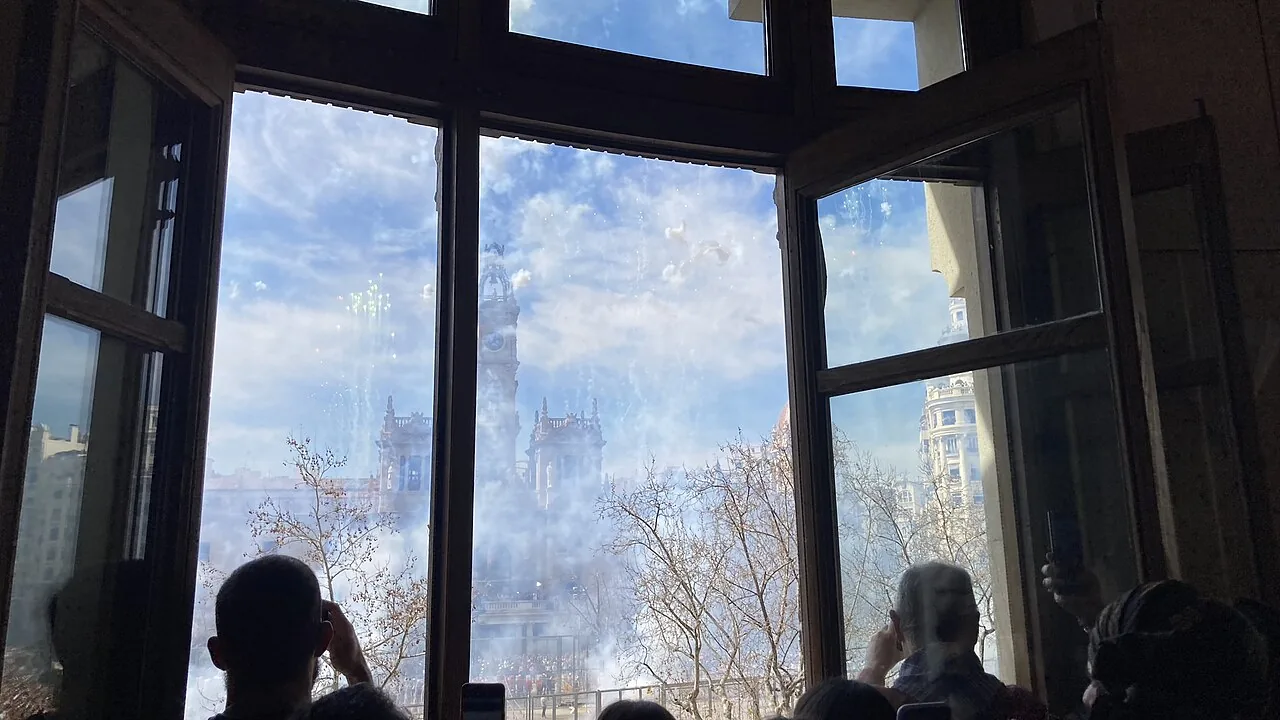
Photo: Bgasco, CC BY-SA 4.0
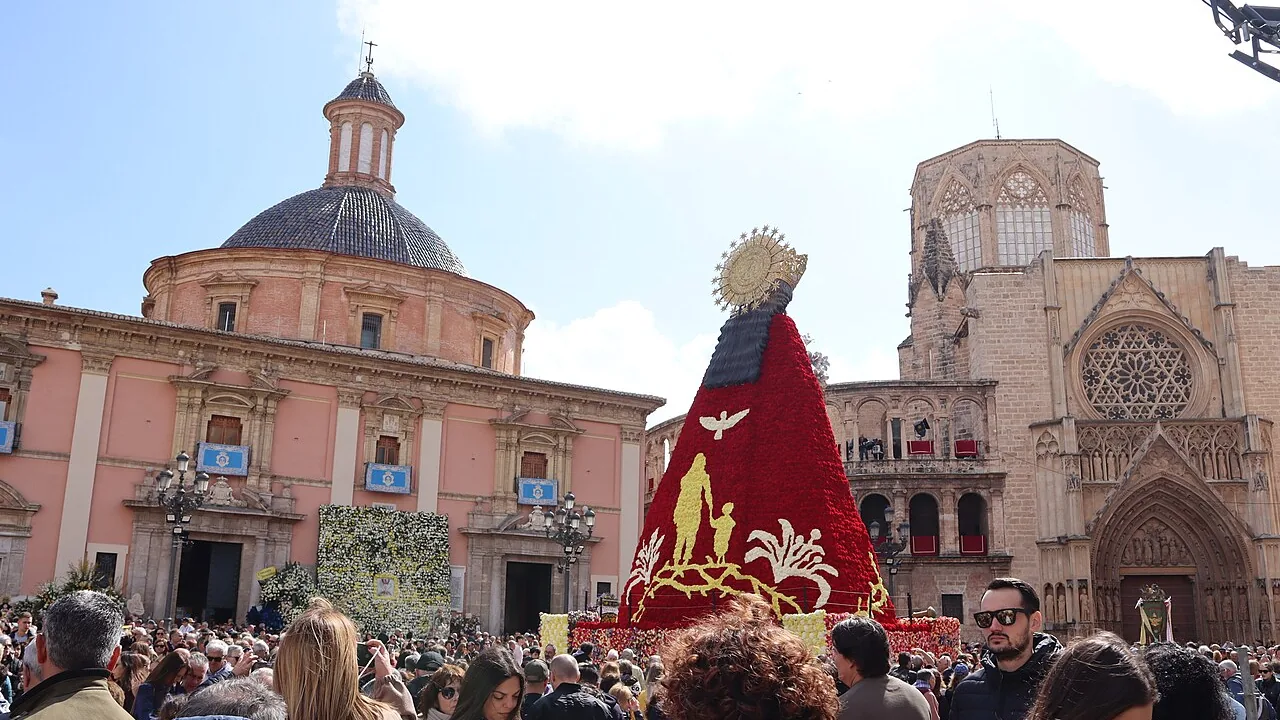
Fallas runs from 1 to 19 March, and the rhythm is fixed. Every day at 14:00 a mascletà fires in the Plaça de l'Ajuntament, a five-minute daytime firework display built for noise rather than light, and the square fills an hour before. The monuments themselves are planted on the night of 15 March, the Ofrena de Flors () fills the Plaça de la Mare de Déu with flowers on the 17th and 18th, and everything burns on the night of the 19th.
We keep the day-by-day programme, the firework nights and the survival advice on our Las Fallas guide, with a separate page on the mascletà and the firework nights and one on what the festival actually costs. If you are visiting rather than living here, the visitor guide covers where to stay and how to move around.
The last night and the morning after
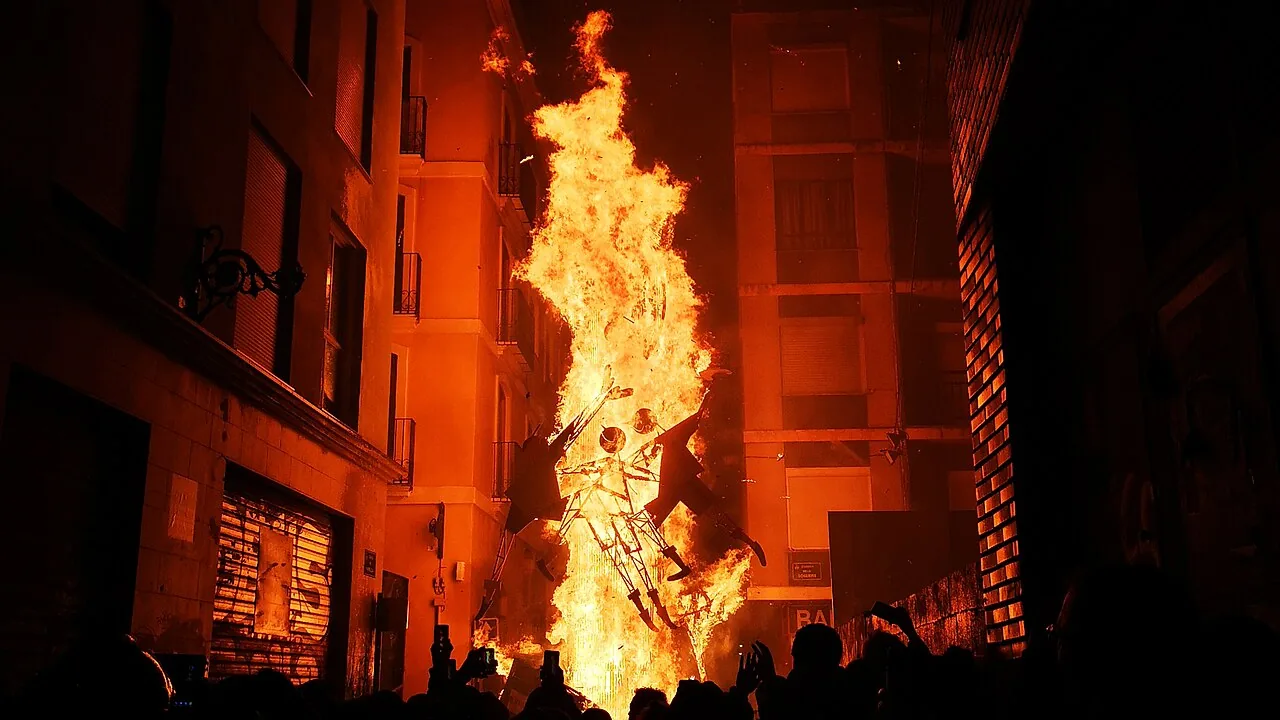
Photo: Monoyamonobooks, CC BY-SA 4.0
The cremà on 19 March is the part that surprises people who have only seen photographs. Each neighbourhood burns its own monument in its own street, usually from about 22:00, with the children's fallas first, the big ones later and the municipal falla in the Plaça de l'Ajuntament last, well after midnight. Firefighters hose down the facades on either side while it happens.
By the morning of 20 March the streets are being swept, the bars are open and the city goes back to normal with startling speed. 19 March is also Sant Josep, a regional public holiday, so the day itself is a day off for most people and the schools are closed.
What to eat in March
Fallas has one food and it is buñuelos de calabaza (), pumpkin fritters fried in the street and eaten with a cup of thick hot chocolate, usually standing up. The stalls appear in the first days of March and vanish on the 20th. Horchata starts to reappear on cafe menus around the same time, though the real season is summer.
At the market March is the end of the citrus year and the start of spring. The last Valencian oranges are still on the stalls, artichokes are finishing, and broad beans and peas take over. Our guide to the huerta and its seasons has the month-by-month table.
What changes for residents
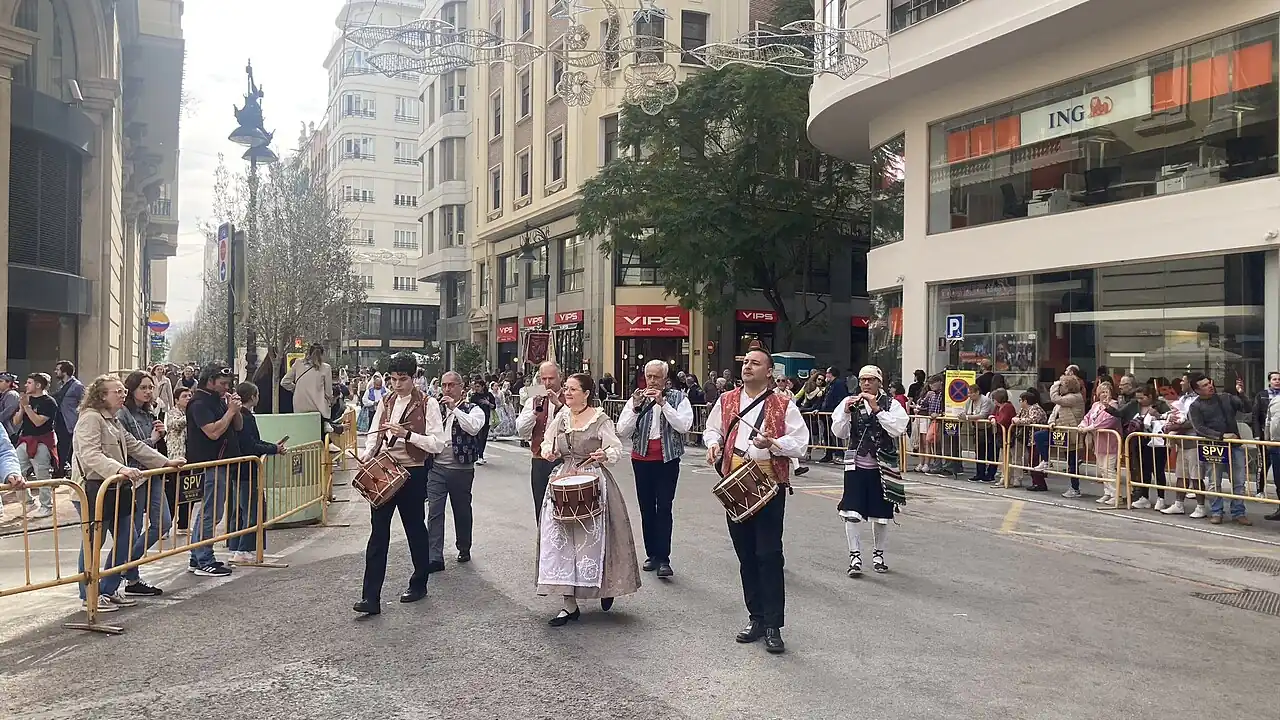
Photo: Bgasco, CC BY-SA 4.0
From about 15 March the centre is not a place to drive. Streets around the monuments close, the EMT reroutes buses, Metrovalencia runs through the night on the main days, and if you live inside the ring of the old riverbed you will hear firecrackers from breakfast onward. Many offices close from the 15th or the 18th to the 19th, and anything involving a public counter is better done in the first fortnight of the month.
Two smaller things. The clocks go forward on the last Sunday of March, so the evenings suddenly stretch. And if you are renting a flat that month, the letting agents work normally until Fallas week and then disappear for it, so a viewing planned for the 17th will move.
If you are moving this month
March is a good month to arrive if you accept that the third week is lost to the festival. Aim your removal, your first appointments and your bank visit at the first two weeks, then treat Fallas as your welcome party. Our moving to Valencia guide covers the order of the paperwork, and our take on the best time to move explains why spring is the season we usually recommend.
March asks something of you, mostly sleep, and gives a lot back. Know the dates, keep the admin to the first half of the month, and go and stand in the square at two o'clock at least once. April, with Easter and the Semana Santa Marinera, is the quiet exhale that follows.
Relocating around Fallas?
We help you time the paperwork, the house hunt and the move itself around the festival calendar, so March works for you instead of against you.
Contact us
About the author
Michael Bastin
Founder, ValenciaMove - Valencia since 2016
Michael has lived in Valencia since 2016 and helps people move here.
Buy Michael a coffeeNeed help with your move?
Contact us. We handle visa, admin, and housing so you can focus on the exciting part.