
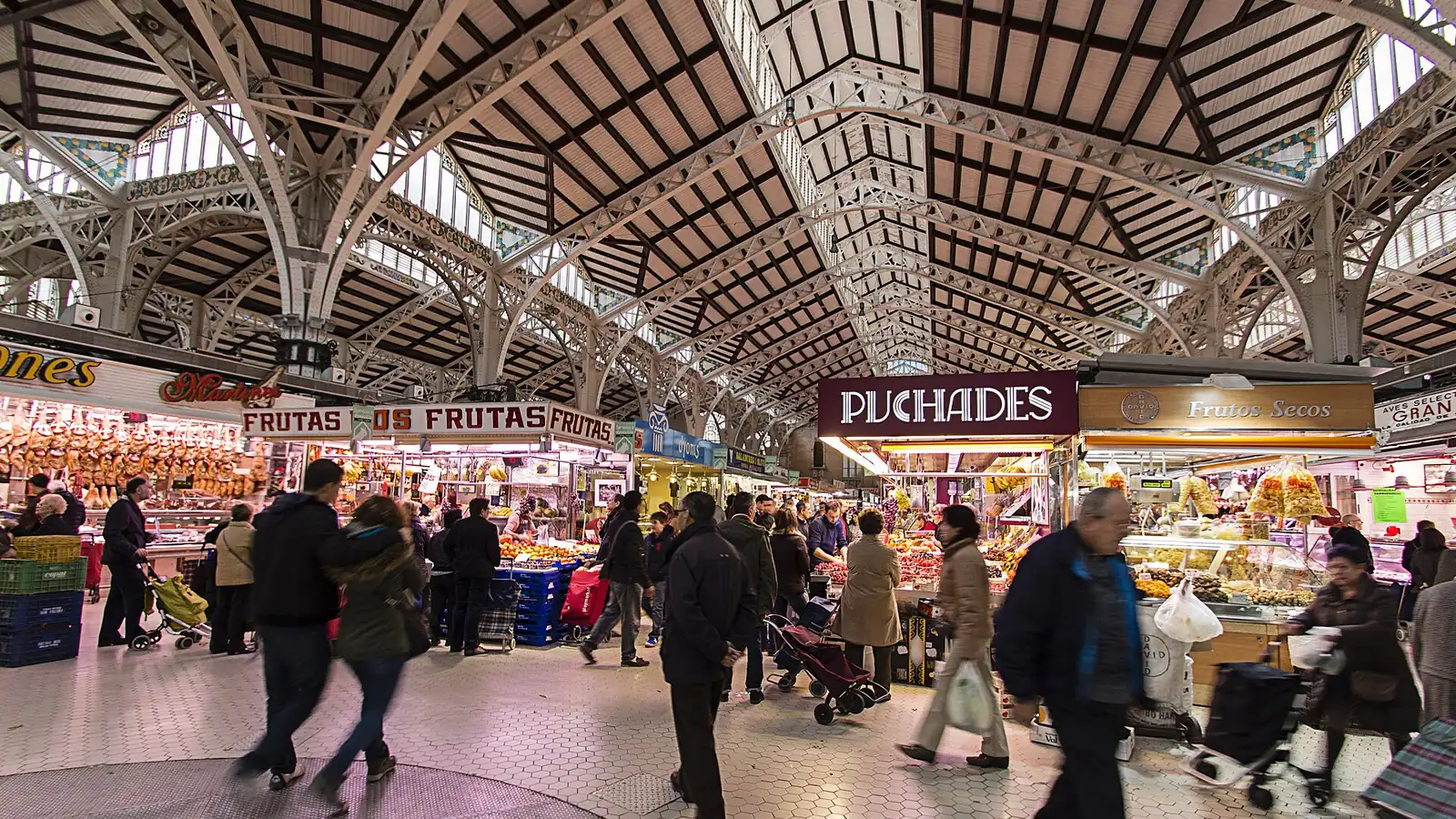
Valencia is one of the few European cities where the farmland starts where the last block of flats ends. The huerta () - l'horta in Valencian - is the ring of irrigated market gardens pressed up against the city, and most of what sits on a market counter here in a given week came out of it a few hours earlier. This guide covers what actually grows in it, when each thing is genuinely in season, and where to buy it without paying tourist prices.
What the Huerta Actually Is
The huerta is not a park or a protected view. It is a working farming landscape roughly 1,200 years old, built on an irrigation network laid out under Islamic rule and in continuous use ever since. In 2019 the FAO added the historical irrigation system of l'Horta de Valencia to its register of Globally Important Agricultural Heritage Systems, which is the agricultural equivalent of a heritage listing.
The scale is smaller than the reputation suggests, and that is the point. Around 11,000 hectares (about 27,182 acres) carry heritage protection, of which roughly 4,000 are in vegetables and a further 2,000 are rice paddies running south into the Albufera. It is worked by about 6,000 holdings, most of them under a single hectare. These are family plots, not agribusiness.
That fragmentation is what makes the huerta both extraordinary and fragile. A plot the size of a football pitch cannot compete on price with an industrial greenhouse, so the land only survives where the produce is sold close to home. Buying it at a Valencian market is not a sentimental gesture. It is the whole economic argument for the landscape still being there.
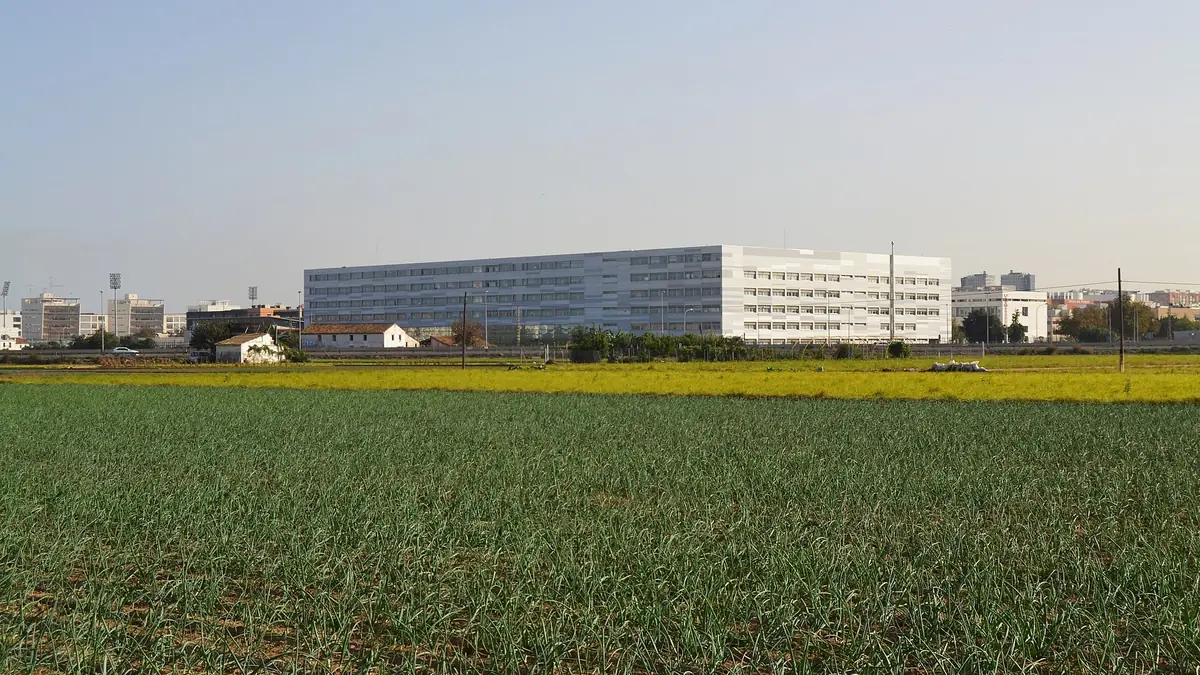
Photo: Joanbanjo, CC BY-SA 4.0
The Water, and the Court That Runs It
None of this works without irrigation. Eight historic canals, the acequias, draw from the Turia and fan out across the plain, and the Real Acequia de Moncada alone has been carrying water north of the city for over a thousand years. Water rights, more than soil, are what a huerta plot is really worth.
Those rights are still policed by the Tribunal de les Aigües, the Water Court of the Plain of Valencia, widely described as the oldest functioning judicial institution in Europe. Eight elected representatives, one per canal, hear disputes between irrigators. UNESCO inscribed it on the Representative List of the Intangible Cultural Heritage of Humanity in 2009.
It sits every Thursday at noon at the Porta dels Apòstols, the Gothic doorway on the Plaza de la Virgen side of the cathedral, and it is free to watch. Proceedings are entirely oral and in Valencian, with no lawyers, no written record and no appeal. When the Thursday falls on a public holiday the session moves forward to the Wednesday of the same week, which is the detail most visitors get wrong.

Photo: Rafa Esteve, CC BY-SA 4.0
The Crops Worth Knowing by Name
Plenty grows here. These are the ones with a real identity behind them: a protected designation, a local variety name, or a place in a dish you will actually be served.
Chufa, the Tiger Nut
The chufa () - xufa in Valencian - is a small sweet tuber and the most stubbornly Valencian thing in the ground. It has carried a Denominación de Origen since 25 September 1995, covering sixteen municipalities in the belt immediately north of the city: Alboraia, Almàssera, Meliana, Foios, Moncada and their neighbours. Nothing grown elsewhere may be sold as Chufa de Valencia.
It goes in the ground in April, stays there about nine months, and is lifted between November and January once the plant has dried off completely. Almost all of it becomes horchata, and our horchata and orxata guide covers what to buy and where to drink it.
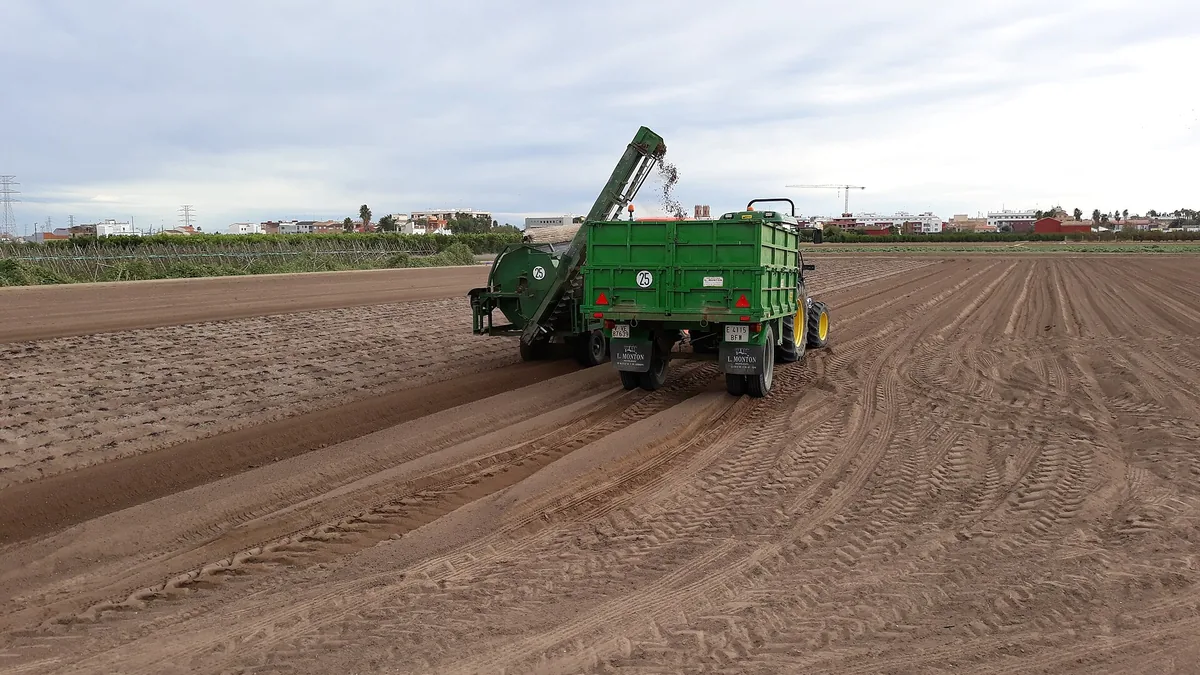
Photo: Pacopac, CC BY-SA 4.0
Rice from the Albufera
South of the city the huerta turns to water. The Denominación de Origen Arroz de Valencia, with a regulatory council running since 1998, protects three varieties grown in and around the Albufera Natural Park: senia, bomba and albufera, the last a cross of the first two. Bomba is the forgiving one that resists overcooking, senia absorbs more flavour and punishes a distracted cook. If you are making a paella valenciana, this is the aisle that matters most.
Oranges and Other Citrus
Citrus is what the region is known for internationally, and the IGP Cítricos Valencianos certifies oranges, mandarins and lemons grown across the Valencian Community. The local season runs roughly from late autumn through spring, which is exactly when the imported summer oranges on a supermarket shelf are at their worst. The story of how the fruit got its name is stranger than it looks, and we have told it separately in the real history of the Valencia orange.
Tomate Valenciano
The tomate valenciano is a large, ribbed, thin-skinned beef tomato from the huerta, sold properly ripe and meant to be eaten within a day or two. The season opens in late May with the early cuarenteno, runs through the valenciano and muchamiel varieties across the summer, and peaks between June and September.
You will also see tomata de penjar, the small hanging tomato sold strung in bunches that keeps fresh for months. Be precise about this one: it is a Balearic and Catalan landrace, and within the Valencian Community it is a Castellón speciality from Alcalà de Xivert carrying a regional quality mark, not a huerta crop with a designation of origin.
Artichokes, Onions and Winter Greens
The carxofa (), the artichoke, is a winter crop here, and the nearest protected one is the DOP Alcachofa de Benicarló up in Castellón, whose season runs from October to June. Onions, pumpkins, chard, cabbage and lettuce fill the huerta's winter beds. Those winter beds are the point: the growing year here peaks in the cold months, not the hot ones.
What Is in Season, Season by Season
A working calendar, written from what actually appears on the counters rather than from what is theoretically harvestable. Anything on sale outside its window is stored, greenhouse-grown or imported, and it will taste like it.
| Season | On the counters | What to prioritise |
|---|---|---|
| Winter (December to February) | Oranges, mandarins, lemons, artichokes, chard, cabbage, cauliflower, broad beans, spring onions, freshly lifted chufa | The best months of the year for citrus, and the only time to buy artichokes without regret. |
| Spring (March to May) | Late oranges, broad beans, peas, garlic shoots, lettuce, first courgettes, new potatoes, earliest tomatoes from late May | The hinge of the year. Citrus tails off just as the first summer crops arrive. |
| Summer (June to August) | Tomate valenciano, peppers, aubergines, courgettes, melon, watermelon, figs, green beans | Peak tomato. This is also when the Albufera rice is standing green in the water. |
| Autumn (September to November) | New-season rice, pumpkins, chufa from November, persimmon, pomegranate, the first mandarins | Rice is cut in September, and the first sharp mandarins arrive before the oranges do. |
Two crops break the pattern and are worth planning around. Chufa is lifted from November to January but is drunk as horchata mostly in summer, and rice is cut once in September and eaten all year.
Where to Actually Buy It
Valencia has a real market culture, but the three most famous buildings serve three completely different purposes and only two of them are for shopping.
Mercat Central
The Mercat Central opened to the public on 15 March 1928, covers a floor plate of over 8,000 square metres and holds more than 300 stalls under its modernista iron and glass roof. It is routinely called the largest fresh-produce market in Europe. It is also a major tourist attraction, and that shows in some of the prices near the doors.
It trades Monday to Saturday from 07:30 to 15:00 and closes on Sundays and public holidays, so a Sunday visit gets you the architecture and nothing else. Walk past the first two aisles. The stalls deeper inside are where residents shop and where the prices settle down.
Mercat de Russafa and the Barrio Markets
For weekly shopping, a neighbourhood market beats the Central every time. Russafa is the best known, but Mossèn Sorell, Cabanyal, Benicalap, Algirós and a dozen more run on the same model: a handful of greengrocers, a fishmonger, a butcher, and staff who will tell you what came in that morning if you ask. Broadly the same hours as the Central, and no queue of visitors photographing the ham.
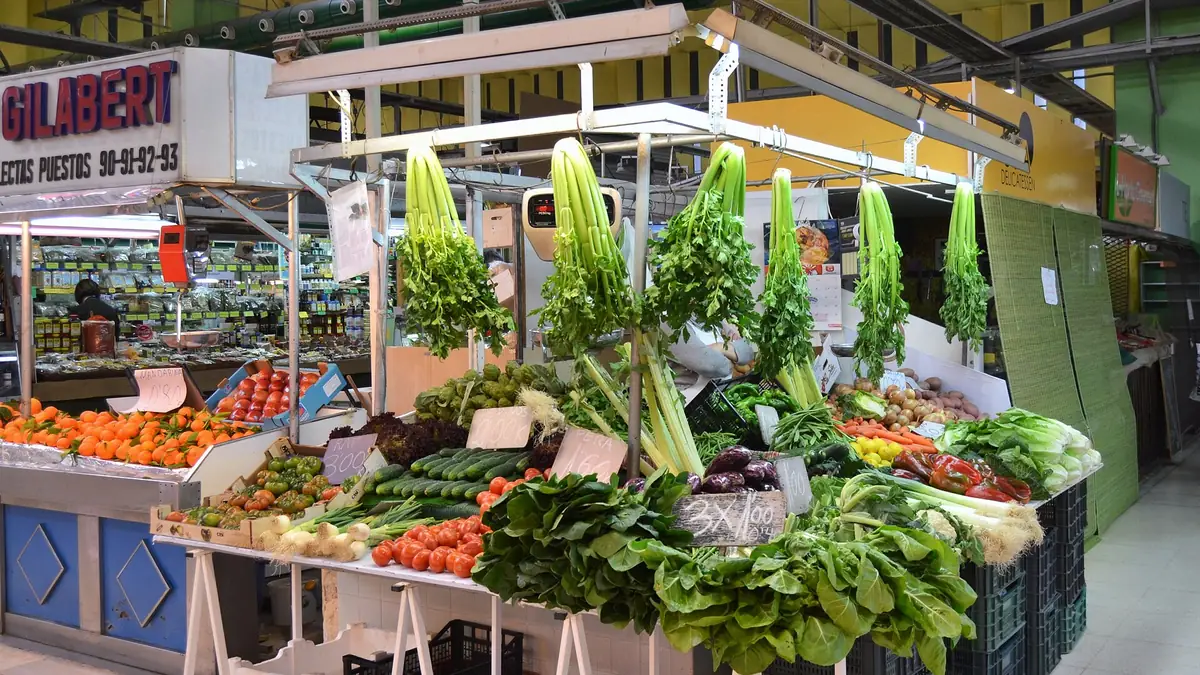
Photo: Joanbanjo, CC BY-SA 4.0
Mercat de Colón, Which Is Not a Food Market
Do not go to the Mercat de Colón for vegetables. The 1916 modernista building was restored between 1997 and 2003, winning a Europa Nostra award for the work, and reopened as a gastronomy and hospitality space. It is a lovely place for a horchata or a vermut and it sells almost no raw produce.
The Weekly Street Markets
Alongside the covered markets, the city licenses weekly open-air markets, the mercadillos, which rotate through the barrios on a fixed day each. They typically run from about 09:00 to 14:00 and skip public holidays. They are cheaper than the covered markets and the quality varies more, so buy on sight rather than by stall reputation, and check the city hall's current day-and-place list rather than an old blog post, because pitches move.
Buying Direct from the Huerta
The oldest arrangement is the tira de comptar (), the historic right of huerta growers to sell their own produce directly rather than through a wholesaler. It still runs. Growers hold direct-sale pitches at Mossèn Sorell on Saturdays and at Cabanyal from Thursday to Saturday, both roughly 08:00 to 14:00, and several hundred of them gather at Mercavalencia before dawn to supply the city's market stalls and small shops.
Beyond that there are co-operative and farmers'-union shops selling huerta produce with the grower named on the box, and a growing number of weekly veg-box schemes. If you want one quick test of whether a shop is the real thing, ask which town the tomatoes came from. A huerta seller will name a village.
How to Buy Without Getting It Wrong
Market shopping here has its own etiquette, and none of it is difficult once you have watched it done twice.
- Most stalls have no ticket machine. Arrive, ask who is last in the queue, and remember the face that answers.
- You will be asked when you plan to eat it. That is not small talk: the stallholder picks a riper tomato for tonight and a firmer one for Thursday.
- Do not handle the produce. Point, and let the seller pick. Rummaging through the display is the one thing that genuinely annoys a Valencian greengrocer.
- Buy small amounts by weight. Half a kilo of tomatoes is a perfectly normal order, because the point of a daily market is that you do not stockpile.
- Cash still moves faster than card at a lot of stalls, and the smaller street-market pitches may not take card at all.
- Bring your own bag. Plastic carriers are charged for, and a market haul is heavier than it looks.
What to Do With It
The huerta sits upstream of nearly every Valencian dish worth cooking. Rice, tomato, garlic, green beans and the local butter beans are the backbone of paella valenciana; artichokes, chard and broad beans carry the winter table; and citrus turns up in everything from a salad to a jug of Agua de Valencia. If you want the dishes rather than the ingredients, our guide to traditional Valencian dishes is the place to start, and the Valencia food guide covers where to eat them.

About the author
Michael Bastin
Founder, ValenciaMove - Valencia since 2016
Michael has lived in Valencia since 2016 and helps people move here.
Buy Michael a coffeeNeed help with your move?
Contact us. We handle visa, admin, and housing so you can focus on the exciting part.