
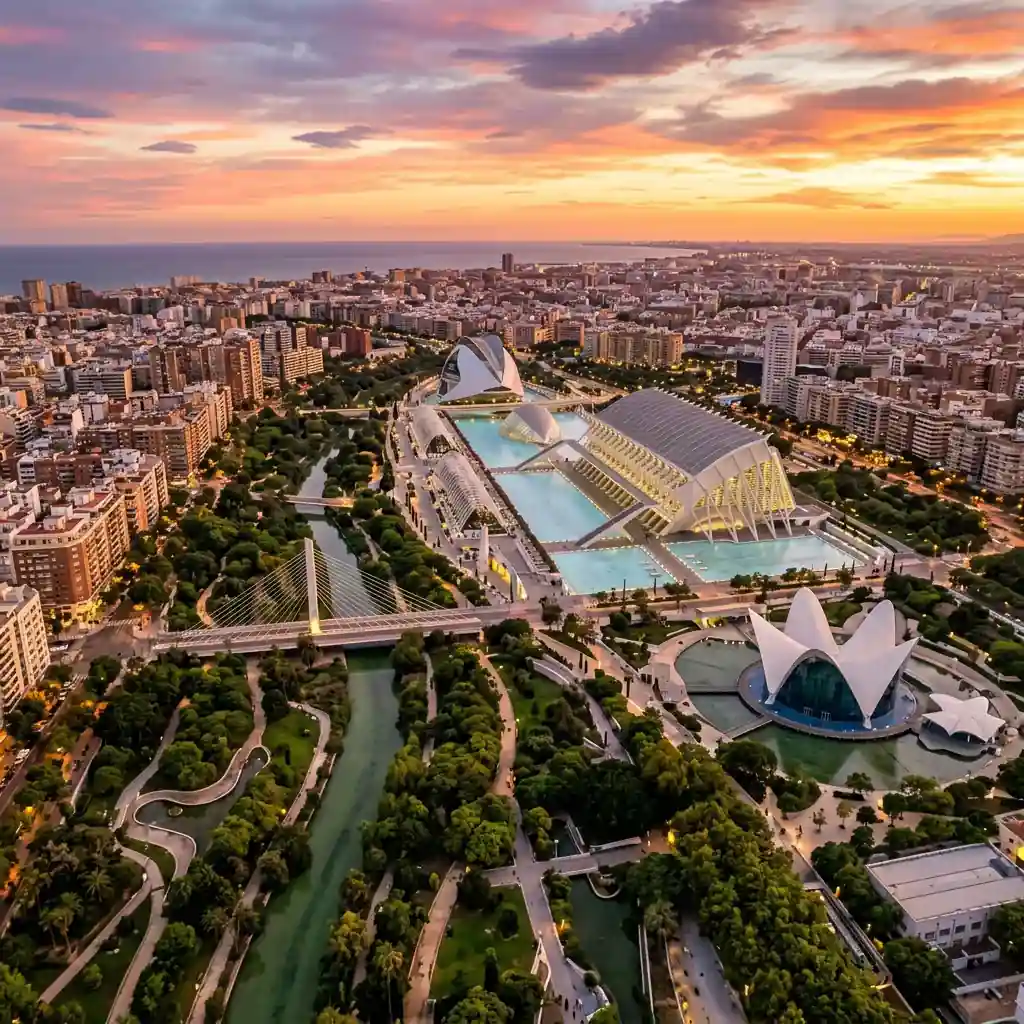
Photo: Diego Delso, CC BY-SA 3.0
Sagunto Day Trip from Valencia: Roman Theatre, Hilltop Castle and the Old Town
A Roman theatre still in use, close to a kilometre of castle walls running along the ridge above the town, and a medieval Jewish quarter below. All of it free to walk into, and a Cercanias train away.
Two thousand years of fortification on one ridge, half an hour north of Valencia
Sagunto is the rare day trip where the history is genuinely first rank and the entry price is nothing at all. The Generalitat runs the theatre, the castle and the town museum as one monumental complex, and admission to all three is free, with free guided tours that need no booking.
The town is also where the Second Punic War started. Hannibal besieged Saguntum in 219 BC for eight months, and because the city was allied to Rome its fall brought Rome into the war. The hill has been fortified more or less continuously ever since.
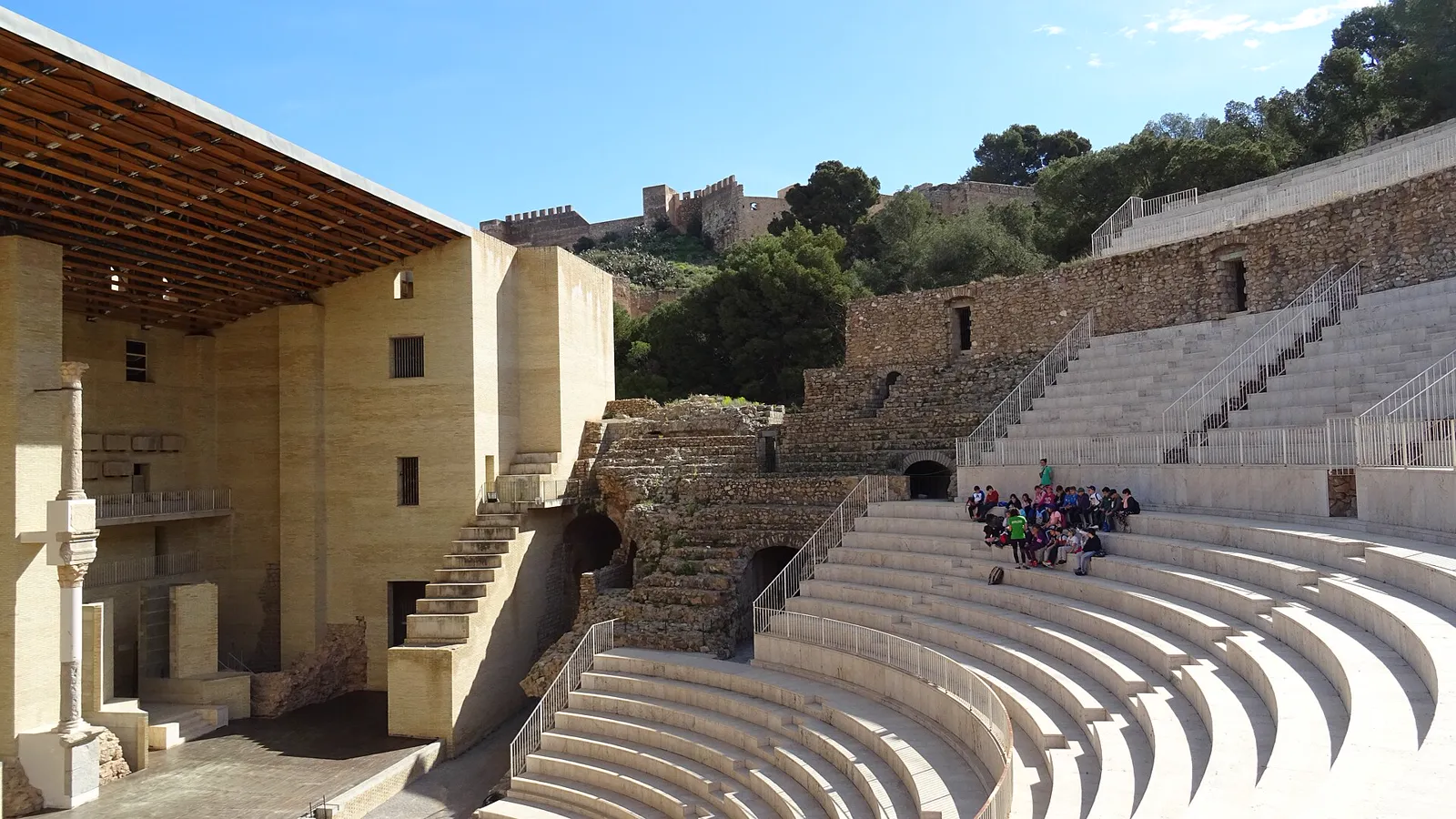
Photo: Pieter van Everdingen, CC BY-SA 4.0
What to see in Sagunto in a day
The Roman theatre, and the argument about how it was rebuilt
Built in the mid first century AD for an audience the Generalitat puts at around 4,000, and declared a national monument in 1896. What you walk into today is largely the 1990 to 1994 intervention by Giorgio Grassi and Manuel Portaceli, which the courts repeatedly ruled had no legal basis and ordered undone. The demolition never happened, so the theatre stands as rebuilt.
A castle enclosure close to a kilometre long
The standing perimeter is an eleventh-century Andalusi fortress, and inside it are Iberian, Roman, medieval and modern remains layered on the same hill. It runs the length of the ridge, so the walk is long and open, with the Mediterranean in view for most of it.
The Jewish quarter and the Portalet de la Sang
The old juderia keeps almost its original street plan, entered through a round-arched gate known since the fifteenth century as the Portalet de la Sang. A ritual bath survives, and a house on Carrer del Castell still has the hole for its mezuzah. Sagunto has been part of the Red de Juderias de Espana since 2019.
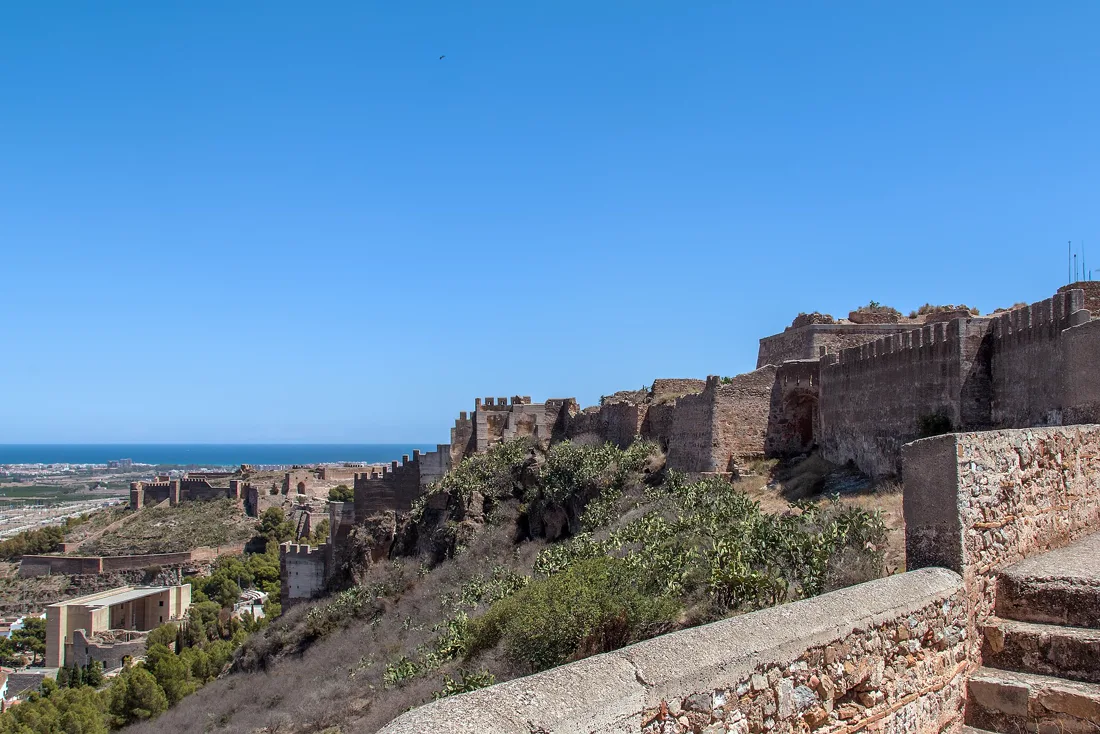
Photo: Mike1979 Russia, CC BY-SA 3.0
Getting to Sagunto from Valencia by train or car
Sagunt station is served by Cercanias from Valencia Estacio del Nord and sits at the junction of two branches, the coastal line toward Castello and the inland line toward Segorbe, so both the C-5 and the C-6 call there. It is in fare zone B, which means a Valencia to Sagunt trip crosses from zone A to zone B, and the town's own urban buses are inside the same integrated system. There is only one station: the port district has none, and is reached by the local bus.
Driving, note that the historic centre is closed to private vehicles, and Turisme Sagunt points drivers at the public parking by the Pabellon Deportivo Rene Marigil. The Generalitat's own opening-hours page covers the museum, theatre and castle together: Tuesday to Saturday 10:00 to 18:00 in winter and to 20:00 in summer, Sundays and holidays 10:00 to 14:00 all year, last entry thirty minutes before closing. Everything is closed on Mondays, on 1 January and on 25 December.
Official sources
- Generalitat Valenciana, opening hours and free admission for the museum, Roman theatre and castle
- Generalitat Valenciana, the Saguntum Roman city rooms, on the theatre's date and capacity
- Turisme Sagunt, the municipal tourism board on the castle, the theatre and the Jewish quarter
- BOE, Decreto 26/2024 declaring the Horno Alto number 2 at Puerto de Sagunto a Bien de Interes Cultural
Sagunto day trip FAQ
Is it free to visit Sagunto castle and the Roman theatre?
What day is Sagunto castle closed?
Can you get to Sagunto from Valencia by train?
Why is the Roman theatre at Sagunto controversial?
Is the Roman theatre open during the Sagunt a Escena festival?
Is there anything to see in Puerto de Sagunto?
Looking at the northern corridor to live in?
Sagunto anchors the Camp de Morvedre, and the Cercanias line through it serves Puçol, El Puig and Rafelbunyol on the way. A free consultation can help you compare the corridor against living in the city.
Book a free consultationOther day trips
L'Albufera
A boat out on the lagoon, sunset over the rice fields and lunch in El Palmar.
Cullera
A hilltop castle, a sandy beach and a quiet stretch of the Jucar, forty minutes south.
Peniscola
A walled old town and a clifftop castle on a rock peninsula, with two beaches either side.

Resident in Valencia since 2016. Founder of BeTranslated. 25+ years in translation, interpretation and multilingual SEO.
Reviewed 14 September 2026 by Michael Bastin