

Living in La Pobla de Vallbona
The second biggest town in the Camp de Turia after Betera, a working centre with a ring of urbanisations around it, and the only one of the three whose sale prices fell this year.
La Pobla de Vallbona () is the second largest municipality in the Camp de Turia, after Betera, () and the one that behaves least like a dormitory town. It has a working high street, three state primaries and a secondary of its own, and the metro at the end of it.
It also has the most useful price split of the three towns in this cluster. The nucleo urbano (), the town centre proper, indexed at 10 EUR per square metre for rent in September 2026 while the municipality as a whole indexed at 13, because the chalet urbanisations pull the average up.
The padrón counted 27,471 residents on 1 January 2025, up from 24,858 five years earlier. That is a 10 per cent rise in five years, the fastest of the three, and it shows in the amount of newer housing on the edges.
La Pobla de Vallbona at a glance
The six figures that decide whether this town belongs on your list. Every one of them is sourced at the foot of the page.
Commute
Metro Line 2 to Angel Guimera in about 40 minutes, from La Pobla de Vallbona or from Gallipont-Torre del Virrei.
Rent
13 EUR per square metre across the municipality in September 2026, but 10 EUR in the town centre itself.
Buying
2,004 EUR per square metre in September 2026, down 1.9 per cent on the year. The only one of the three that fell.
Schools
Three state primaries and IES La Vereda, plus three private and concertado schools. No international school in town.
People
27,471 residents on the INE padrón of 1 January 2025, the largest of the three towns and the fastest growing.
Fare zone
Zone B, so a commute into the city is an A plus B journey: 2.80 EUR single, or 1.20 EUR a ride on a TuiN card.
The commute: Metro Line 2 and the CV-35
The town is on Line 2, the Lliria to Torrent Avinguda line, with two stations serving it: La Pobla de Vallbona for the centre and Gallipont-Torre del Virrei on the border with L'Eliana. Which one you use is the first thing to check about any address here.
Reckon on about forty minutes to Angel Guimera. The train stops in the north west of the city at Empalme, Beniferri and Campanar before it reaches the centre, so a job at the hospital or the Nuevo Centro end of town is a shorter ride than the headline figure suggests.
Frequency is the number to look at. FGV's improvement plan sets a train every twelve minutes as far as L'Eliana and every twenty four minutes beyond it, and La Pobla sits on the far side of that split. A missed train here costs you more than a missed train one stop down the line.
The town is in fare zone B, so commuting into the city is an A plus B journey. Metrovalencia's tariff table, in force since 1 July 2025, prices that at 2.80 EUR for a single, 12.50 EUR for a ten trip SUMA 10 and 1.20 EUR a ride on the TuiN card, which stops charging after 53 EUR inside a calendar month.
By road it is the CV-35 into the north west of Valencia, about twenty two kilometres. If you plan to drive in regularly, read the low emission zone rules and price a car park before you count on it.
What it costs to rent
Fotocasa's rent index put the municipality at 13 EUR/m² in September 2026, 23.2 per cent up on the year, against 18 EUR/m² for the city of Valencia. The town centre on its own indexed lower, at 10 EUR/m², which is the single most useful number on this page.
The gap is the urbanisations. A chalet on a plot rents for more per square metre than a flat above a shop on Carrer Poeta Llorente, and there are enough of the former to lift the municipal average by three euros. If your budget is tight, the centre is where it stretches furthest.
At the centre rate, a 70 square metre two bedroom flat works out around 700 EUR a month and a 90 square metre three bedroom around 900 EUR. At the municipal rate a 200 square metre chalet with a garden comes out near 2,600 EUR. These are arithmetic on a published index, not quotes, so treat them as the shape of the market and check what a Spanish rental contract actually commits you to before you sign anything.
What it costs to buy
This is the one town of the three where buying got cheaper. Fotocasa had the municipality at 2,004 EUR per square metre in September 2026, down 1.9 per cent on the year, after peaking at 2,067 EUR in July.
That is roughly 60 per cent of the city of Valencia's rate in the same month, and about two thirds of what L'Eliana was asking one stop down the line. For the same money you get a bigger plot here, or a town centre flat with an actual town around it.
A 150 square metre semi detached house at that rate is around 300,000 EUR before purchase costs. Our buying guide sets out the transfer tax, notary and registry fees you add on top, which on a resale in the Comunitat Valenciana are not small.
Schools
The council lists three state infant and primary schools, CEIP Lluis Vives, CEIP Mas de Tous and CEIP El Campes, plus IES La Vereda for secondary, bachillerato and vocational cycles. For a town of 27,000 that is a normal, functioning state provision rather than an afterthought.
There are three private and concertado schools as well, Colegio San Rafael, Colegio San José and Colegio Color, and a handful of first cycle infant centres for the under threes. The admission window and points table work the same way here as anywhere in the Comunitat Valenciana.
What the town does not have is an international school. The nearest are IALE in L'Eliana, one stop down Line 2, and Mas Camarena in Betera, which is a drive rather than a train ride. Our international schools listing has the curricula and the fee ranges for both.
What the town is actually like
The centre is a working Valencian town, not a showpiece: a wide main street of shops and bank branches, a couple of squares, a Wednesday rhythm rather than a weekend one. Carrer Poeta Llorente is where most of the everyday shopping happens.
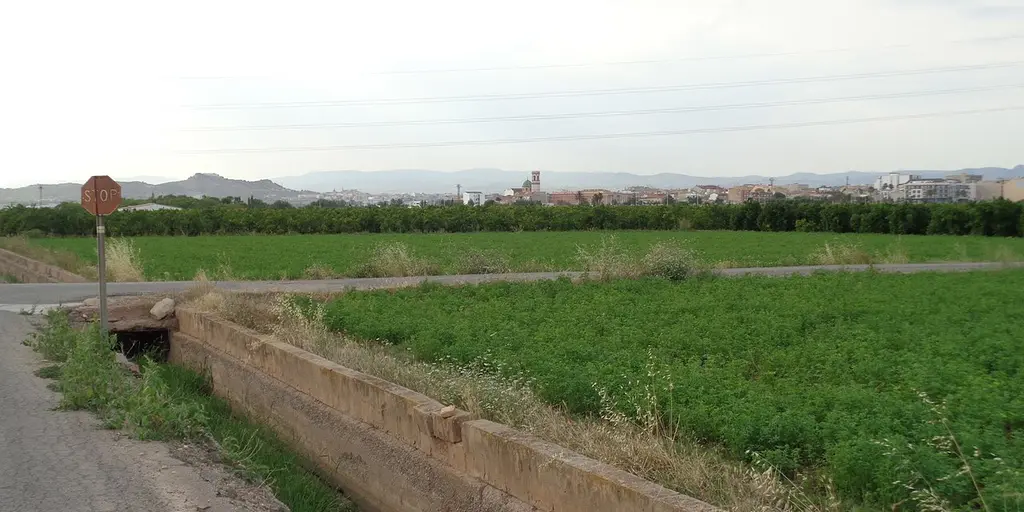
Around it sits a wide ring of urbanisations, La Conarda, Gallipont, Pla dels Aljubs, Rascanya, Les Penyes and others, most of them chalets on plots. That is where the population growth has gone, and it is why the town covers a lot of ground for its size.
Falles are taken seriously here, with the town's own commissions and its own calendar, and the council schedules the school holiday around them. If you want a town that is Valencian first and commuter second, this is the one of the three that reads that way.

Who it suits, and who it does not
It suits anyone who wants a town centre flat with shops underneath, a station at walking distance and a rent that is genuinely lower than the city's. On the centre index that is the cheapest realistic option in this cluster.
It suits families who are happy in the state system. Three primaries, a secondary and three concertados is real choice; an English language education means a daily trip out of town.
It suits you less if you want the polish of a garden suburb. This is a large, ordinary, growing town with industrial estates on its edges, and the pretty part is not the point. If that is what you are after, L'Eliana is one stop closer to the city and priced accordingly, and San Antonio de Benageber trades the station away entirely for the same effect.
Paperwork and practicalities
You register on the padrón at this ajuntament (), not Valencia's. The Ayuntamiento de La Pobla de Vallbona is at Avinguda de Colón 93, 46185, on 962 760 050, and it is the office that issues the certificate every other process asks for. Our padrón guide lists what to bring.
The council runs its own local TV and radio and publishes its notices there first, which is genuinely how you find out about roadworks, the fiestas calendar and the grant deadlines. It is worth following before you have even moved.
Water, bins and IBI are set here too, and a chalet on a plot is billed differently from a flat in the centre. Ask for the actual last year of bills on any property you are serious about rather than working from a city average.
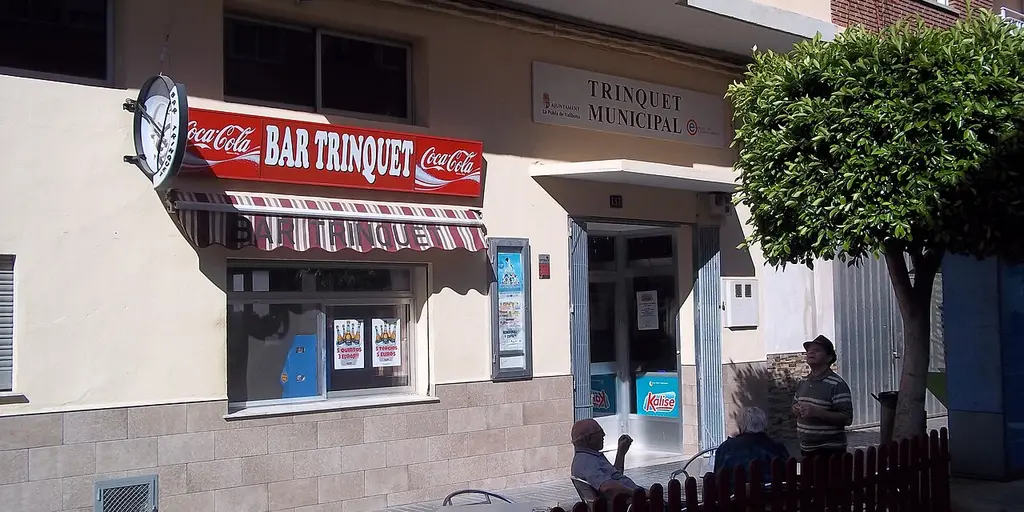
Photo: Pacopac, CC BY-SA 4.0
What people get wrong about La Pobla de Vallbona
Quoting the municipal rent figure for a town centre flat
The municipality indexed at 13 EUR per square metre in September 2026 and the centre at 10. Using the wrong one overstates a two bedroom flat by around 210 EUR a month.
Assuming the two stations are interchangeable
Gallipont-Torre del Virrei serves the L'Eliana side of the municipality. From some addresses it is the nearer platform, and from others it is a twenty minute walk in the wrong direction.
Expecting an international school
There is not one in the town. Budget for the daily run to L'Eliana or Betera, or plan on the state system, before you sign a lease.
Reading the falling sale index as a soft market
It fell 1.9 per cent on the year after rising through the spring. One year of index movement is not a trend, and it says nothing about a particular street.
How to test drive La Pobla de Vallbona before you commit
- 1
Walk the centre on a weekday morning
Carrer Poeta Llorente and the squares around it tell you within twenty minutes whether this is a town you want to shop in.
- 2
Work out which station an address really uses
Do it on foot from the door, not on a map. The two stations serve different halves of a large municipality.
- 3
Compare a centre flat against an urbanisation house
View one of each on the same day. The price gap is real and so is the difference in how you would live.
- 4
Call the schools you would actually use
Ask the state primaries about places in your child's year group, and ask IALE or Mas Camarena about the bus routes if you are going international.
- 5
Ask for last year's bills
IBI, water and rubbish for the specific property. On a plot with a garden these are the numbers that surprise people.

Resident in Valencia since 2016. Founder of BeTranslated. 25+ years in translation, interpretation and multilingual SEO.
Reviewed 5 September 2026 by Michael Bastin