

Photo: Raul2009, CC BY-SA 3.0
Living in Picassent
Half the rent of the city, on the metro, in the orange groves south of Valencia. The prison is real and it is not the thing that shapes the town.
Picassent () rents at half what the city of Valencia does and sits on Metrovalencia line 1. On price alone it is the strongest case in this cluster, and it is also the town people ask about most nervously, because they have heard about the prison.
It is a municipality of l'Horta Sud () about eighteen kilometres south of the city, with 23,202 residents on the 2025 padrón () and an unusually large territory of eighty-six square kilometres running up from the plain to nearly three hundred metres.
It has grown almost fourteen per cent since 2014, the fastest of the l'Horta towns in this cluster.
Most of that territory is citrus. The orange groves that surround the town are the working landscape here, fed by the Sequia Reial del Xucar, and they are the reason the built-up area stays compact.
There is also an industrial estate that has been running since 1973, a large prison complex out in the fields, and an international school. Each of those is a real fact about the town and none of them is the whole of it.
Picassent at a glance
The six figures that decide whether this town belongs on your list. Every one of them is sourced at the foot of the page.
Commute
Metrovalencia line 1, one station, in fare zone B. The station sits on the western edge of the town, not in the middle of it.
Rent
The rent index reads half the city of Valencia. That is the cheapest figure of any town with a metro station in this cluster.
Buy
The sale index is under half the city. Fotocasa publishes no zone breakdown here, so the municipal figure is all there is.
Green space
Eighty-six square kilometres, most of it citrus, rising to 279 metres (about 915 ft). The built-up area is a small part of the municipality.
Schools
State provision through secondary, plus Colegio Internacional Ausias March, an IB World School with its own bus network.
Population
23,202 residents on the 2025 padrón, up almost fourteen per cent since 2014.
Line 1, zone B, and a station on the edge
Picassent is on Metrovalencia line 1, the long north-south line that runs from Betera through the city and out to Castello. Picassent is one of the stops on that southern arm, and the station sits in fare zone B rather than the zone A or A-B overlap the closer towns enjoy.
That is a real cost difference on every trip, so price it before you fall for the rent.
The station is on the western side of the town rather than in the centre, which means the walk to a platform depends on your street in a way it does not in a smaller town. Ten minutes for some addresses and closer to twenty-five for others.
Walk it from the specific flat, at the hour you would actually do it, before you take anything.
One piece of recent history belongs on any page about this line. The whole southern arm was destroyed by the flood of 29 October 2024, and the section from Valencia Sud to Castello, which carries Paiporta, Picanya, Torrent and Picassent, was out of service for roughly eight months.
It reopened on 27 June 2025 and the line has run normally since. Nobody should choose a home here on the assumption that it cannot happen again, and nobody should assume the line is still broken either.
By road it is the V-31 and the A-7, and the drive into the city is short but heavily loaded at peak. MetroBus line 181 also connects the town. Valencia's low emission zone rules apply once you cross into the city.
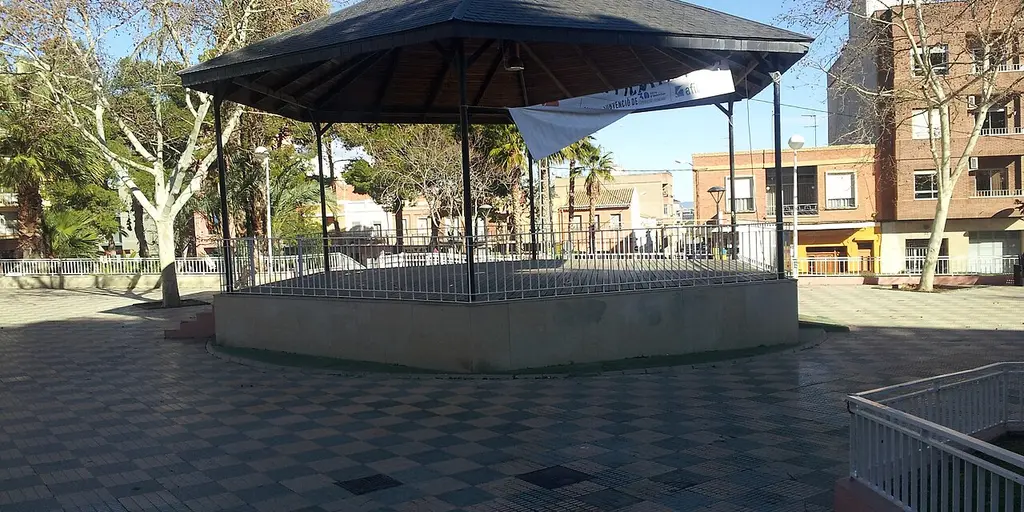
Photo: Coentor, CC BY-SA 3.0
Renting: half the city, and that is not a typo
Fotocasa's rent index puts Picassent at 9 EUR/m² in September 2026, 18.4 per cent down against a year earlier. The city of Valencia reads 18 EUR/m² on the same index in the same month.
That is half. It is the lowest figure of any town in this cluster that has a metro station, and it is the single fact that should put Picassent on a shortlist.
There is no zone detail to complicate it. Fotocasa publishes one row for Picassent and no sub-zones at all, which for once makes the number easier to use rather than harder: what you see is the whole municipality.
The honest caveat is that a single row for a town of twenty-three thousand across eighty-six square kilometres is a coarse instrument, and a chalet up the hill and a flat behind the market are not the same market.
On 9 EUR/m², a ninety square metre flat works out around 810 EUR a month before bills, community charges and the IBI. That is the sort of figure that changes what kind of home a household can consider, which is why the commute and the station walk deserve the scrutiny given above.
Buying: under half the city per square metre
Fotocasa's sale index reads 1,576 EUR per square metre for Picassent in September 2026. The city of Valencia reads 3,355 EUR on the same index in the same month, so the town runs at about 47 per cent of the city.
That is the second cheapest figure in this batch of seven guides, behind only Chiva out in the hills.
Again there is no zone breakdown, so the municipal number carries the whole weight. Treat it as an anchor rather than a valuation: an apartment in the compact centre, a house on the edge of the groves and a plot in the Tancat de l'Alter urbanisation will not converge on it.
What the figure does tell you reliably is the order of magnitude, and it is roughly half the city.
The other thing a low price per square metre buys here is land. Picassent's territory is large and much of it is agricultural, so detached houses with real plots exist in a way they simply do not in the city or in the dense towns immediately around it.

Photo: 19Tarrestnom65, CC BY-SA 3.0
The prison: what it is, where it is, and what it is not
The Centro Penitenciario de Valencia, opened in 1991, is in Picassent's municipal term, and it is one of the largest prison complexes in Spain. Anyone researching the town will find this, usually phrased alarmingly, so it is worth setting out plainly.
It is a fact about the municipality that is worth knowing and it is not a reason to strike the town off a list.
Geography does most of the work here. The complex sits out in the fields several kilometres from the built-up area, off the road toward the V-31, on its own site with its own access. You do not pass it going about a normal day in the town, and the town centre gives no sign of it.
What it does do is employ a substantial number of local people, which is part of why Picassent's economy is less dependent on commuting into Valencia than most towns this close in.
The practical advice is the same as for any large public facility: look at where it sits relative to the specific address you are considering, and if that matters to you, drive it. Do not decide the question from a map pin and a headline, in either direction.
Schools, including an IB school in the groves
The state system covers infant, primary and secondary inside the municipality, taught in Valencian and Spanish, alongside concertado and private centres. The Generalitat's centre directory is the list to check, since provision in a growing town changes with the cohorts.
Our state school guide explains how admission and zoning actually work.
The unusual entry is Colegio Internacional Ausias March, a private school in the Tancat de l'Alter urbanisation on the edge of the town. It is an authorised IB World School running the Middle Years and Diploma programmes, on a twenty thousand square metre campus, and it operates fifteen school bus routes covering the city and the surrounding municipalities.
That bus network is the point: the school draws from a wide catchment, so living in Picassent is not a prerequisite for using it, and using it is not a reason on its own to live here.
For families weighing this against the alternatives, our guide to international schools in Valencia sets out the wider field, including the British options north of the city in Puçol and the bilingual private schools in Torrent.
Who Picassent actually suits
It suits a household whose budget is the binding constraint and who still wants a metro station. At half the city's rent with a line 1 platform in the town, nothing else in this cluster offers that combination.
It suits people who want space: a large municipality with a small built-up core means houses and plots are genuinely available.
It suits families using the IB school, and it suits anyone whose work is in the southern industrial belt rather than in the city centre. It suits people who like a working agricultural landscape on the doorstep rather than a manicured one.
It suits a household with one car, because the town is compact and the metro handles the city.
It suits you less if you need a zone A fare or a short, reliable door-to-door commute, because zone B and an edge-of-town station add up. It suits you less if you want the sea, which is a drive rather than a walk. And if the prison is going to sit in the back of your mind, be honest about that now rather than after you sign.

Photo: Kokoo, CC BY-SA 3.0
The admin is Picassent's own
Picassent is a separate municipality, so your padrón () registration is done at the ajuntament () here and the certificate names Picassent. Your IBI rate, your refuse and water bills and your assigned health centre all follow from that.
None of it is harder than the Valencia city version, it is simply a different office and a different calendar.
Spelling catches people out on forms. The town is Picassent in Valencian and appears as Picasent in some older Castilian records and databases, with a single s.
If a portal cannot find your address, try the other spelling before you conclude something is wrong.
The NIE and residency paperwork are national and do not change with your town. Our empadronamiento guide covers the registration itself and the steps are identical in every ajuntament.
Four things people get wrong about Picassent
Deciding the town from the prison
The complex is real, large and several kilometres out in the fields on its own access road. It is invisible from the town and it is a significant local employer.
Forgetting the fare zone
Picassent is zone B, not zone A or an A-B overlap. The rent saving is large enough to absorb it, but do the arithmetic rather than assuming.
Assuming the station is central
It sits on the western edge. The walk is ten minutes from some addresses and twenty-five from others, and that is the whole commute for many people.
Believing line 1 is still broken
The southern arm was out for about eight months after the 2024 flood and reopened on 27 June 2025. It has run normally since.
How to work out whether Picassent fits
- 1
Walk from the address to the platform
The station is on the edge. Time the specific walk at the hour you would really do it, in both directions.
- 2
Price the zone B fare, not just the rent
Work out the monthly cost of the actual commute for everyone who would make it, then set that against what you save on the flat.
- 3
Drive past the prison once
If it is on your mind, resolve it with your own eyes rather than with a map. Fifteen minutes settles a question that otherwise nags for months.
- 4
Look at houses, not only flats
The reason to be here at this price is space. If you are only looking at apartments you are ignoring what the town is actually good at.
- 5
Check the school bus route before the school
Ausias March runs fifteen routes across the metropolitan area. Living in Picassent may not be necessary for it, and it may not be sufficient either.

Resident in Valencia since 2016. Founder of BeTranslated. 25+ years in translation, interpretation and multilingual SEO.
Reviewed 6 September 2026 by Michael Bastin