

Bringing a dog to Valencia, or getting one here, involves two administrations and one national law that is still being written. The Generalitat keeps the identification registry, the city council keeps its own dog census, and Ley 7/2023 adds obligations, insurance and a course among them, whose details are waiting on a regulation.
This guide walks through all of it in the order you will meet it: registering the dog, what the law actually requires today, the dog beach and its dates, the fenced parks district by district, what you can and cannot do on the metro and the bus, where to find a vet at 3 a.m., and how to rent a flat with a dog in a city where many landlords would rather you did not. For getting the animal into Spain in the first place, the pet relocation guide covers the border.
Registering a dog: microchip, RIVIA and the city census
Every dog in the Comunitat Valenciana must be microchipped and entered in RIVIA, the regional identification registry created under the Comunitat's own animal law, Ley 2/2023. A vet does both in one visit and the chip number goes on the animal's health card or EU pet passport. If your dog arrives already chipped, the vet still has to add it to RIVIA. Rabies vaccination is compulsory in the Comunitat and is recorded in the same passport.
Then comes the city. Valencia keeps a municipal dog census, and you must register within 15 days of acquiring the dog or of it turning three months old. The procedure is on the Sede Electrónica (file SA.SV.10) or in person at the Sanidad Animal office on Carrer d'Amadeu de Savoia 11. You upload the RIVIA registration and the health card, pay the municipal fee with form A201, and a numbered tag arrives by post for the collar.
Not registering is a minor infraction and it is fined. It is also the document the dog beach staff and the police ask for, so do it in the first month rather than when someone asks. If you move barrio within the city the census entry follows you; if you leave Valencia you register again with the new municipality.
Ley 7/2023: what applies now and what is still pending
Spain's animal welfare law, Ley 7/2023, has been in force since 29 September 2023. Two of its headline obligations for dog owners, third-party liability insurance for every dog and a free responsible-ownership course, depend on an implementing regulation that as of 2026 has still not been approved, so neither can be enforced yet. Insurers sell dog liability cover anyway and it is cheap; the sensible move is to take it out now and not wait for the deadline.
What does apply today: a dog may not be left alone for more than 24 consecutive hours, may not be tied up unattended in a public place, and may not be sold in a pet shop. Dogs classed as potentially dangerous under the older rules (the PPP list) still need a municipal licence, liability insurance of at least 120,000 euros, and a muzzle and a short lead in public; the new law is due to replace that list with a behaviour-based assessment once the same regulation lands. Breaches range from 500 euros for a minor infraction up to 200,000 for the most serious.
The city's own ordinance adds the everyday rules: a lead in every public space except the fenced dog areas, waste picked up immediately, and the census tag on the collar. Valencia enforces the waste rule more than most newcomers expect.
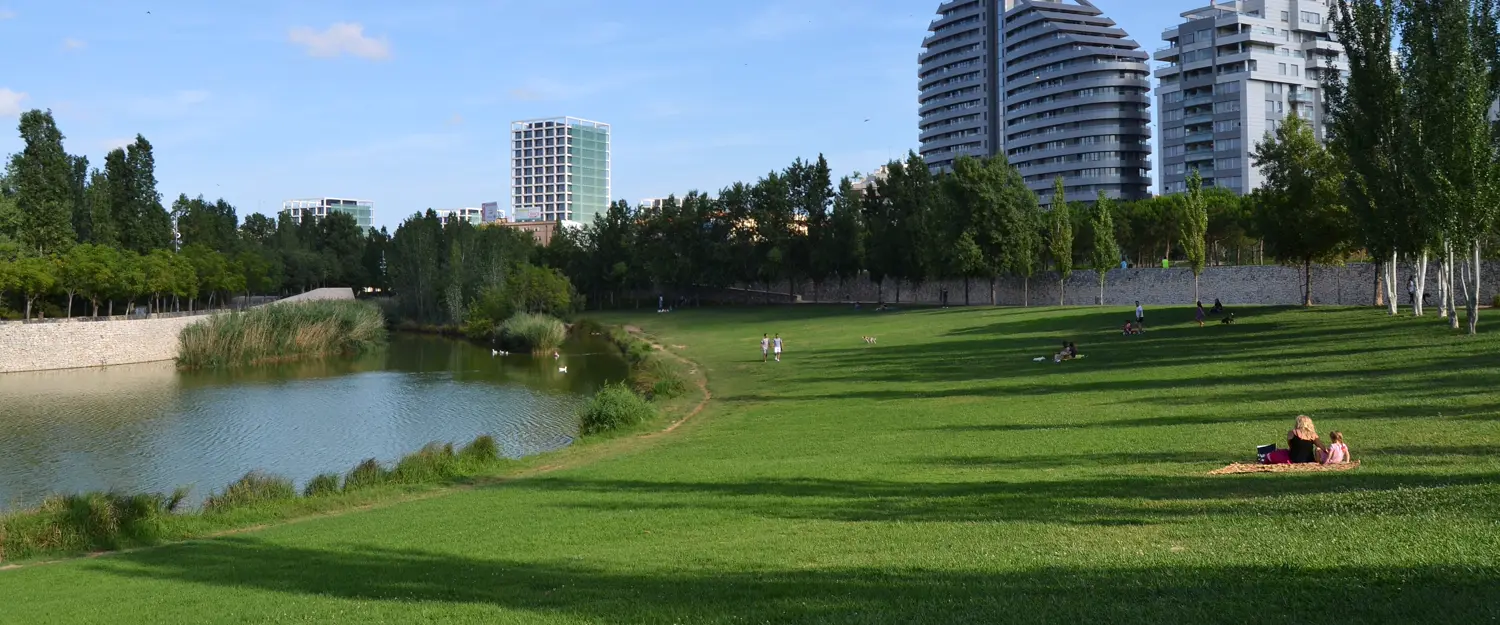
Photo: Joanbanjo, CC BY-SA 3.0
The dog beach: Playa Can de Pinedo
Valencia has one official dog beach, the Playa Can () at the northern end of Pinedo, just south of the port. It opens every summer from 15 June to 30 September, daily from 9:30 to 19:30, on a stretch of about 9,000 square metres marked off with stakes in the sand and buoys in the water. Outside those dates and that stretch, dogs are not allowed on the city's beaches.
The council staffs it: there is an information point, signs in Valencian, Spanish and English, a walkway over the sand, water bowls and hoses for the dogs, showers, bins with bags, and a kiosk. Dogs must stay on the lead inside the marked zone, potentially dangerous breeds must be muzzled, and you need the dog's papers with you. The easiest way there is by bike along the riverbed and the coast path or by car; EMT buses only take dogs in a carrier, which rules them out for anything larger than a terrier.

Photo: Boris Dzhingarov, CC BY 2.0
Dog parks by district
The city calls them zonas de socialización canina (); everyone else says pipicán (). They are the only public spaces where a dog can be off the lead. The council's parks department lists the main ones: in the Turia riverbed, an agility circuit under the Pont de les Arts in section IV and a socialisation zone in section VII; a fenced area in the Parc de Capçalera in Campanar; one of 726 square metres inside the Jardines del Real (Viveros) in La Saïdia; one of 1,382 square metres in Parc Central between Russafa and Malilla; and a smaller one in Nou Moles.
Further out there are fenced zones in Patraix (Plaça d'Enric Granados and Carrer de la Borrasca), in Vara de Quart, in Sant Pau by Campanar, and in La Rambleta park in Jesús, and the council has been adding more in Torrefiel, Malva-rosa and Tres Forques. If you are choosing a barrio with a dog, ask whether the nearest zone is fenced and lit; a strip of gravel with a sign is common, a proper enclosure with water is not.

Photo: Francesc Fort, CC BY-SA 4.0
Metro, tram and bus with a dog
Metrovalencia does not take dogs. Its travel rules admit assistance dogs with their owner or trainer, dogs working with the security forces, and small pets in a closed carrier at your feet, and nothing else. That covers the tram as well. A 20-kilo dog on a lead cannot board, whatever the hour.
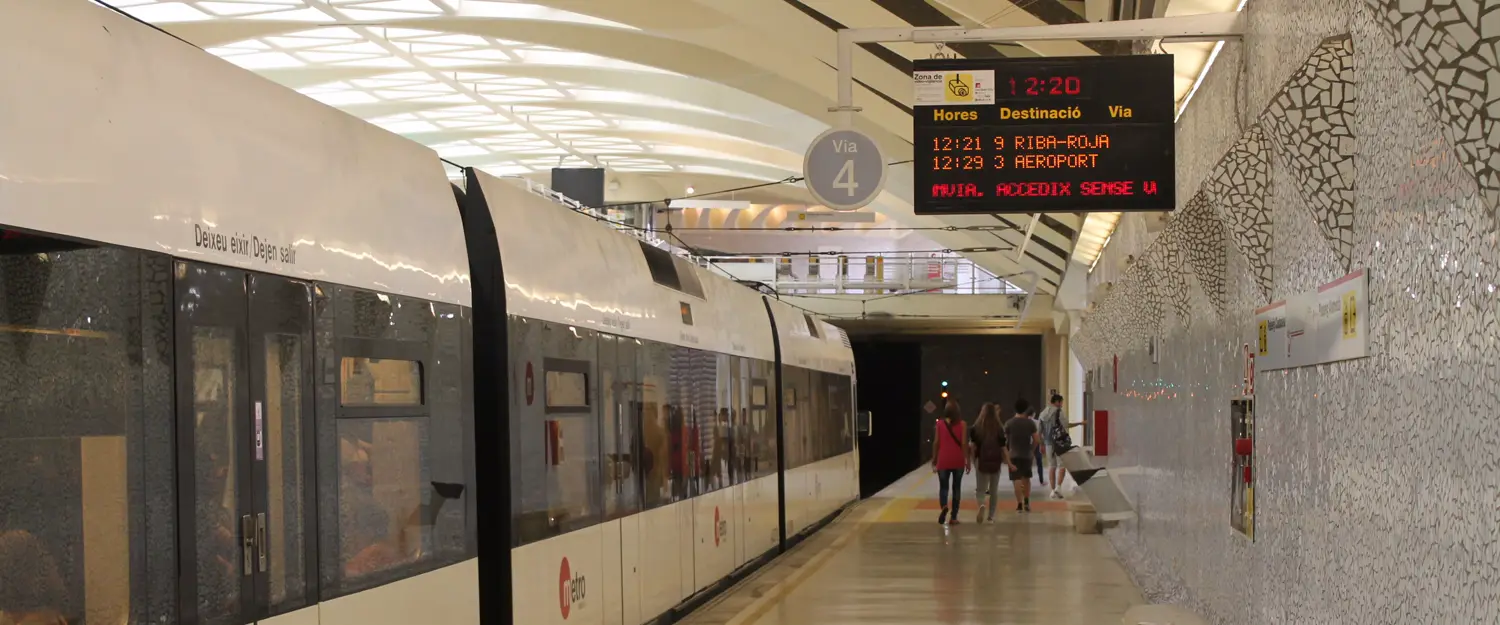
Alameda station. Only assistance dogs and animals in a closed carrier get past the barrier, whatever the board says.
Photo: V0ctor, CC BY-SA 4.0
EMT buses are slightly more open. With the EMT Mascota card, 5 euros for two years, a chipped animal of up to 15 kilos can ride any line inside a carrier no larger than 45 by 35 by 25 centimetres, on your lap or at your feet, up to three animals per bus. Guide dogs travel free without the card. For a larger dog the practical answers are walking, the bike lanes with a trailer, a taxi that agrees to take you, or a car.
Vets and the emergency clinic
There is a veterinary clinic in almost every barrio, and the pets directory lists ones where an English or French speaker will be understood. For an emergency at night, the veterinary teaching hospital of the CEU university in Alfara del Patriarca, fifteen minutes north of the city, runs a 24-hour service every day of the year, and several city clinics offer on-call cover for their own patients. Save one number before you need it.
Renting a flat with a dog
Nothing in Spanish law obliges a landlord to accept a pet, and many Valencia listings say no se admiten mascotas outright. The ones that do not say it are worth asking, because plenty of owners will accept a well-behaved dog if you raise it before the viewing rather than after the contract. Get the consent written into the lease; a verbal yes evaporates the first time a neighbour complains.
The deposit rules do not change for a dog: one month's fianza plus, at most, two further months of guarantee, whatever the landlord says about damage. Ground-floor flats with a patio, and the barrios closest to the riverbed and the beach, are where dog owners cluster. The renting guide covers the contract itself.
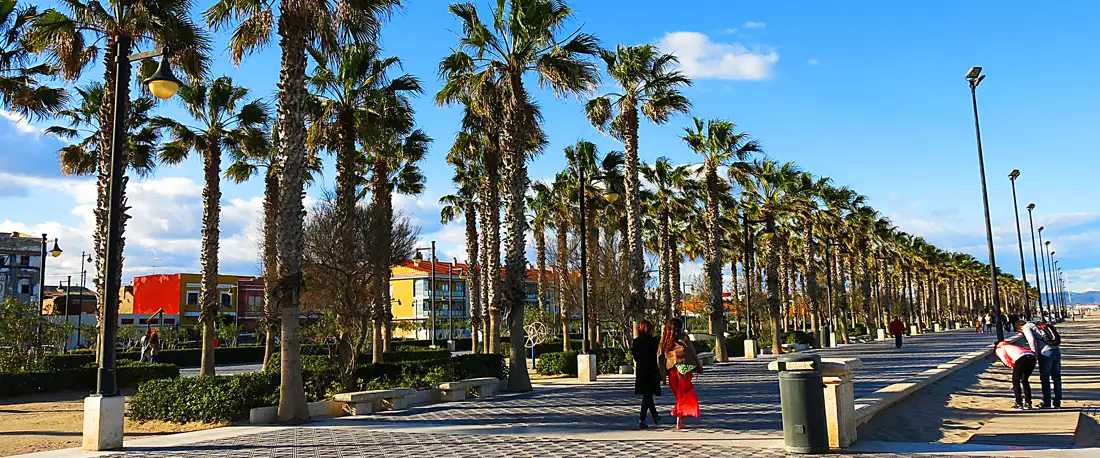
Photo: Enric, CC BY-SA 4.0
Daily life: terraces, shops and the heat
Most bar terraces accept a dog under the table, and a growing number of cafés let them inside; supermarkets and food shops do not. From June to September the pavements are too hot for paws by late morning, so the city's dogs walk at dawn and after nine at night, which is when the riverbed fills with them. Water fountains in the parks have low bowls for dogs, and the beach guide explains why the promenade is fine but the sand is not.
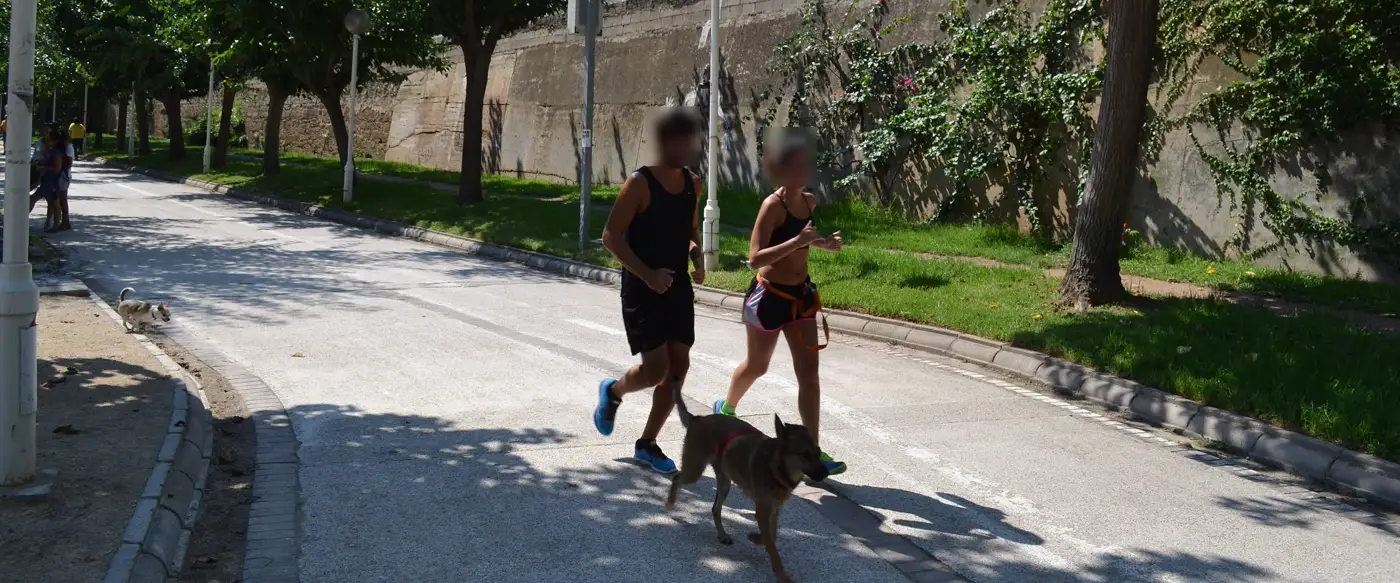
The Turia riverbed at midday, the one time of day it is quiet. Come back after nine and the same path belongs to the dogs.
Photo: Dorieo, CC BY-SA 3.0
Moving with a dog and want the admin off your plate?
The registrations, the padrón, the lease clause and the vet are the kind of small tasks that pile up in a first month. If you are relocating with an animal, we can fold them into the rest of the move.
Contact us
About the author
Michael Bastin
Founder, ValenciaMove - Valencia since 2016
Michael has lived in Valencia since 2016 and helps people move here.
Buy Michael a coffeeNeed help with your move?
Contact us. We handle visa, admin, and housing so you can focus on the exciting part.