
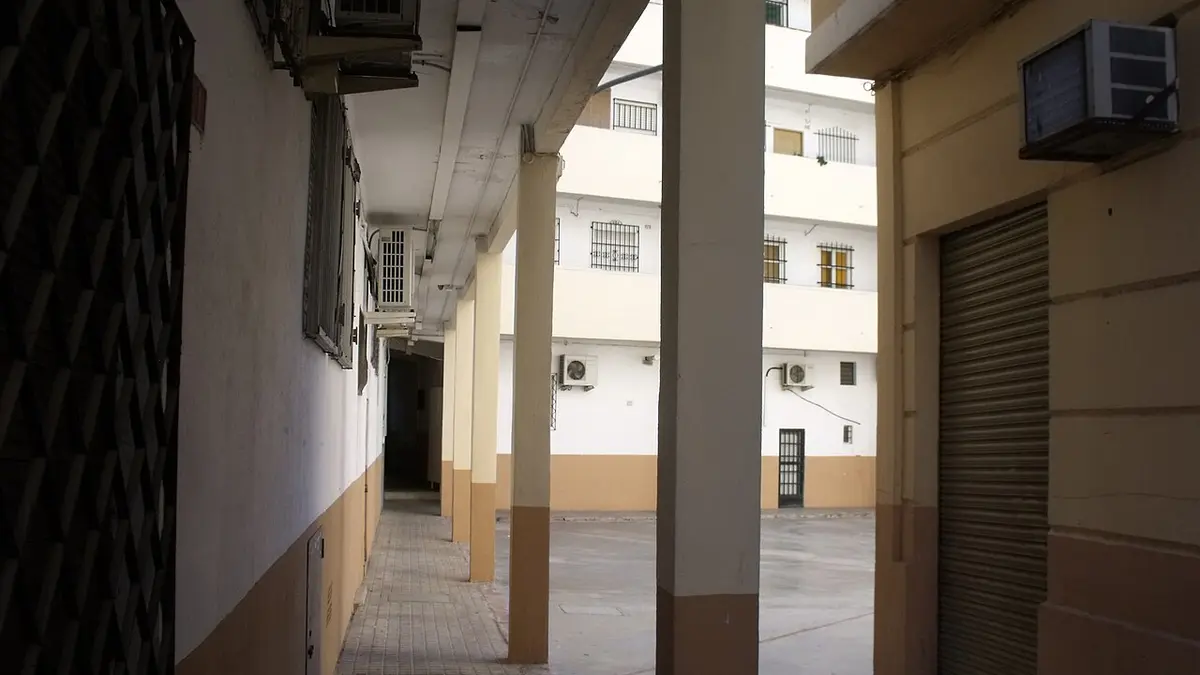
Photo: B25es, CC BY-SA 3.0
Living in El Calvari, Valencia: a neighborhood guide
One of Valencia's smallest barrios, a dense triangle in Campanar named after a Way of the Cross
Living in El Calvari
El Calvari () is one of the smallest barrios in Valencia: a near-triangle of 9.4 hectares in the Campanar district, framed by Avinguda de Burjassot and Avinguda del General Avilés and crossed by the start of Avinguda de Campanar. Benicalap lies to the north, Marxalenes to the east and Les Tendetes to the south-west.
In Castilian it is El Calvario. Both names mean "the Calvary": this land, halfway between the old villages of Campanar and Benicalap, held Campanar's calvari, a devotional route marked with the Stations of the Cross. Nothing of it survives, but the name stayed with the barrio.
The barrio grew where several old roads met, among them the road to Burjassot, now Avinguda de Burjassot, and the Camí de Trànsits, now Avinguda de Campanar. Its best-known building is the Grupo Agrifersa, a housing estate built in 1954 for the employees of the fertiliser company Agrios y Fertilizantes, which gave it its name.
According to the Ajuntament's municipal register, 5,360 people lived in El Calvari on 1 January 2025. On 9.4 hectares that is about 570 residents per hectare, several times the density of the Campanar barrio next door: this is a place of apartment blocks, not gardens.
Transport: tram line 4 stops at Trànsits and Benicalap, a few minutes' walk from the barrio, and the Campanar metro station on lines 1 and 2 is a short walk to the south-west.
Trade-offs: there is almost no green space inside the boundary and the avenues around it are busy. In return the barrio is compact and well connected, with Les Tendetes and the Turia gardens to the south and Marxalenes to the east.
What rent costs in El Calvari (September 2026)
El Calvari asks 20 EUR per m² a month on Fotocasa's rent index for September 2026, above the 18 EUR the city of Valencia averages. At that rate a 70 m² two-bedroom lists at around 1,400 EUR a month, before you negotiate. These are asking prices on new listings, not what sitting tenants pay.
Asking prices here are 8.1% above a year earlier, against 7% for the city as a whole.
This is the figure for the barrio itself. The Campanar district it belongs to reads 20 EUR on the same index.
Fotocasa publishes El Calvari as its own zone, but a barrio this small has few listings in any month, so a single renovated flat can move the figure. Read it alongside the Campanar district figure rather than on its own.
Our renting guide explains what landlords ask for and what the fianza and agency fee add on signing day, and the upfront cost calculator runs the maths for any rent.
Where El Calvari Sits in Valencia
What Living in El Calvari Is Really Like
Pros: What Residents Love
- Tram line 4 and metro lines 1 and 2 close by
- Compact and easy to walk
- Everyday shops along the main avenues
- Short walk to the Turia gardens
Cons: What to Know First
- Almost no green space inside the barrio
- Very dense housing
- Busy avenues on every side
- Small rental market with few listings
Typical Properties in El Calvari
Local Amenities
Transport
Tram line 4 at Trànsits and Benicalap
Landmark
Grupo Agrifersa housing estate, 1954
Name
From Campanar's calvari, a Way of the Cross
Population
5,360 residents on 9.4 hectares (padrón, 1 January 2025)
More neighborhoods
Les Tendetes
A compact Campanar barrio on the north bank of the Turia gardens, named after its old village shops
Explore Les TendetesMarxalenes
Riverbed-north La Saidia pocket with the Parc de Marxalenes and growing mid-tier appeal
Explore MarxalenesBenicalap
The northern budget growth area - lower rents, big new park, regeneration on the way
Explore BenicalapThinking about moving to El Calvari?
Get in touch with our Valencia relocation team. We will help you find the right apartment, navigate the paperwork, and get settled faster.

Resident in Valencia since 2016. Founder of BeTranslated. 25+ years in translation, interpretation and multilingual SEO.
Reviewed 5 September 2026 by Michael Bastin