
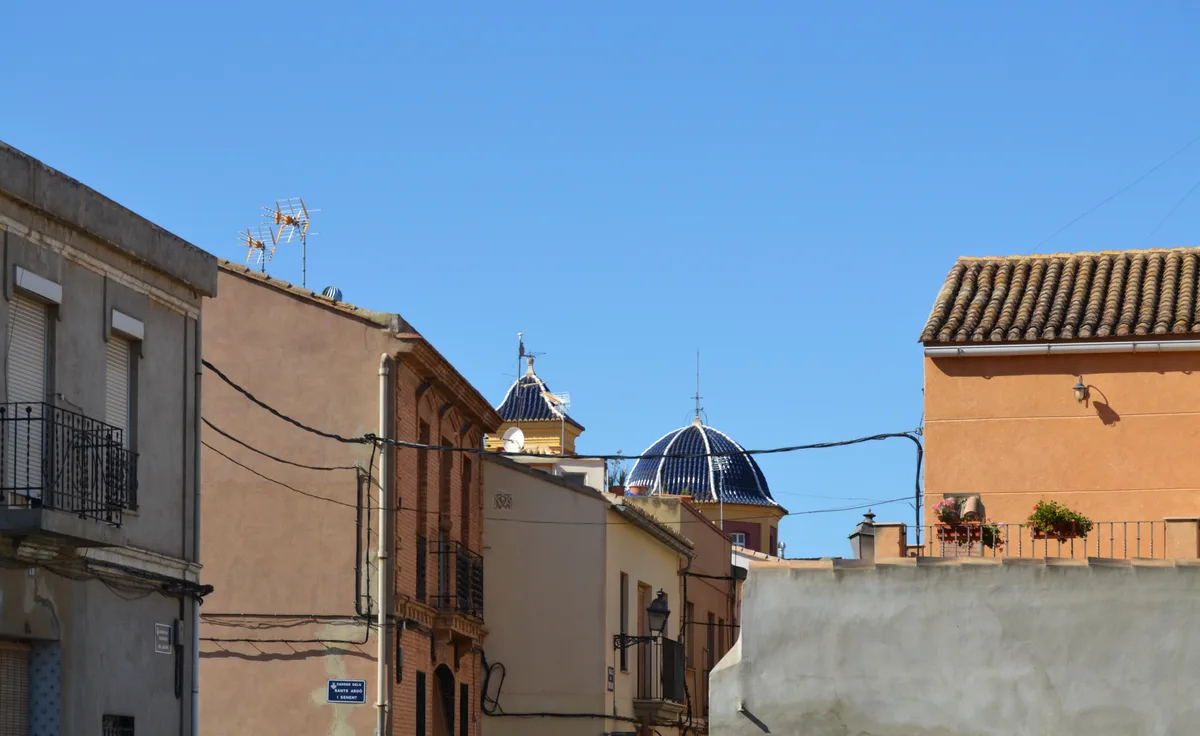
Photo: Joanbanjo, CC BY-SA 4.0
Living in Pobles del Nord: a Valencia neighborhood guide
Seven huerta villages inside the city boundary, separated from Valencia by working farmland
Living in Pobles del Nord
Pobles del Nord is district 17, and it is unlike anything else inside the Valencia city boundary. Seven small huerta villages sit north of the city, separated from it by working farmland rather than by suburbs.
Those villages are Benifaraig, Borbotó, Carpesa, Cases de Barcena, Mahuella, Massarrojos and Poble Nou. Together they hold roughly 7,000 residents, which is fewer than a single large inner-city barrio. Each keeps its own church, its own plaza and its own fiestas.
The housing is village houses, low-rise and the occasional restored alqueria, not apartment blocks. That makes this one of the few places on the Valencia padron where a rental with a garden and a garage is a normal expectation rather than a luxury.
The trade-off is transport. There is no metro, EMT bus frequencies thin out in the evening and at weekends, and a car is close to essential. If you work from home that is a manageable cost. If you need to be in the centre at nine every morning, it is not.
These are not new suburbs. Borbotó turns up in documents as far back as the 13th century, and the naturalist Cavanilles wrote about it alongside Benifaraig and Carpesa in his 1795 survey of the Kingdom of Valencia. Through the 19th century the seven villages lived on silk, wheat, hemp, beans and vegetables, with stone quarrying around Massarrojos on top of that. The agricultural identity has not fully disappeared: the city's Cultura a les Pedanies programme runs every May and June with music, theatre and folk-dance groups performing in the same village plazas that hosted markets a century ago.
What rent costs in Pobles del Nord (September 2026)
Fotocasa publishes no single figure for the Pobles del Nord district. Its villages read between 9 EUR and 11 EUR per m² a month in September 2026, against 18 EUR for the city of Valencia as a whole.
Pobles del Nord has no index page of its own, and its seven villages would not usefully share one: Massarrojos and Poble Nou have a metro stop, Casas de Barcena and Benifaraig have farm lanes. What is actually let across all of them is village houses and restored alquerias with a garden and a garage, a different product from a city flat and priced like one. Turnover is slow and listings are few, so the practical route in is asking in the village rather than refreshing a portal.
Our renting guide explains what landlords ask for and what the fianza and agency fee add on signing day, and the upfront cost calculator runs the maths for any rent.
Living in the Pobles del Nord district
Getting around
There is no metro. EMT bus lines and the CV-315 connect the seven villages to the city, and services thin out considerably in the evening and at weekends.
A car is close to essential here. Budget for it, along with the fact that the nearest large supermarket may be a 10 minute drive rather than a walk.
What sets it apart
These are seven huerta villages that sit inside the Valencia city boundary but are physically separated from it by farmland. Each one keeps its own church, its own plaza and its own fiestas.
Massarrojos and Carpesa are the largest. Mahuella and Cases de Barcena are small enough that everyone knows who has moved in. The housing is village houses and low-rise, not blocks.
Who it suits
People who want a house with land and outdoor space, are happy to drive everywhere, and still want to be registered on the Valencia city padron.
It suits families and remote workers far better than anyone who needs to be in the centre daily or wants a social life within walking distance.
Barrios in Pobles del Nord
Every barrio inside this district has its own guide. Rent, transport and character vary a lot from one street grid to the next, so start with the one closest to where you actually want to live.
Benifaraig
Tiny Pobles del Nord huerta village 8 km north of the centre
Explore BenifaraigBorbotó
Small huerta village in District 17 known for its orange groves
Explore BorbotóCarpesa
One of the largest historic Pobles del Nord villages, anchored by the church of Saints Abdon and Sennen
Explore CarpesaCasas de Barcena
One of the smallest Pobles del Nord barrios - farmhouses along the old Barcelona road in deep huerta
Explore Casas de BarcenaMahuella
Northeast Pobles del Nord barrio combining four huerta hamlets in two enclaves, one of them on the Mediterranean coast
Explore MahuellaMassarrojos
Largest Pobles del Nord village, with a metro stop and a working community feel
Explore MassarrojosPoble Nou
Small Pobles del Nord village on the Cami de Montcada, linked to the centre by EMT bus 26
Explore Poble NouWhere Pobles del Nord Sits in Valencia
What Living in Pobles del Nord Is Really Like
Pros: What Residents Love
- Village houses with land and real outdoor space
- Own church, plaza and fiestas in every village
- Valencia city padron without city density
- Among the lowest per-square-metre prices inside the boundary
Cons: What to Know First
- No metro, and evening bus frequencies drop sharply
- A car is close to essential for daily life
- Very limited shops, dining and nightlife
- Long journey to the beach and to the centre
Typical Properties in Pobles del Nord

Local Amenities
Buses
EMT lines and the CV-315 link the villages to the city
Huerta
Working farmland separates each village from the next
Village life
All seven villages run their own fiestas and processions
Housing
Village houses and alquerias rather than apartment blocks
More neighborhoods
Pobles de l'Oest
Benimamet and Beniferri: the only Pobles district with a full metro service
Explore Pobles de l'OestPobles del Sud
The Albufera district: rice fields, the Devesa pine dunes and the lake villages
Explore Pobles del SudRascanya
Far-north working-class district with strong barrio culture and the lowest rents in central Valencia
Explore RascanyaThinking about moving to Pobles del Nord?
Get in touch with our Valencia relocation team. We will help you find the right apartment, navigate the paperwork, and get settled faster.

Resident in Valencia since 2016. Founder of BeTranslated. 25+ years in translation, interpretation and multilingual SEO.
Reviewed 5 September 2026 by Michael Bastin